Industrial relation
Presentation
WAQAR AHMED CHANNA
2k13/bba/169
Industrial Relation & Human resource
Industrial Relation :
 The term ‘Industrial
Relations’ (IR) is made up
of the two words
‘Industry’ and ‘Relations.’
 It simply means the
relationships that exist
between the stakeholders
within the industry.
OR
 It is essentially the
relationship between
management and labor.
Human resource:
 Human resources may be
defined as the total
knowledge, skills,
creative abilities, talents
and aptitudes of an
organization’s workforce.
 In the organizational
context, HRM refers to
the utilization of human
resources in order to
achieve
organizational goals and
objectives.
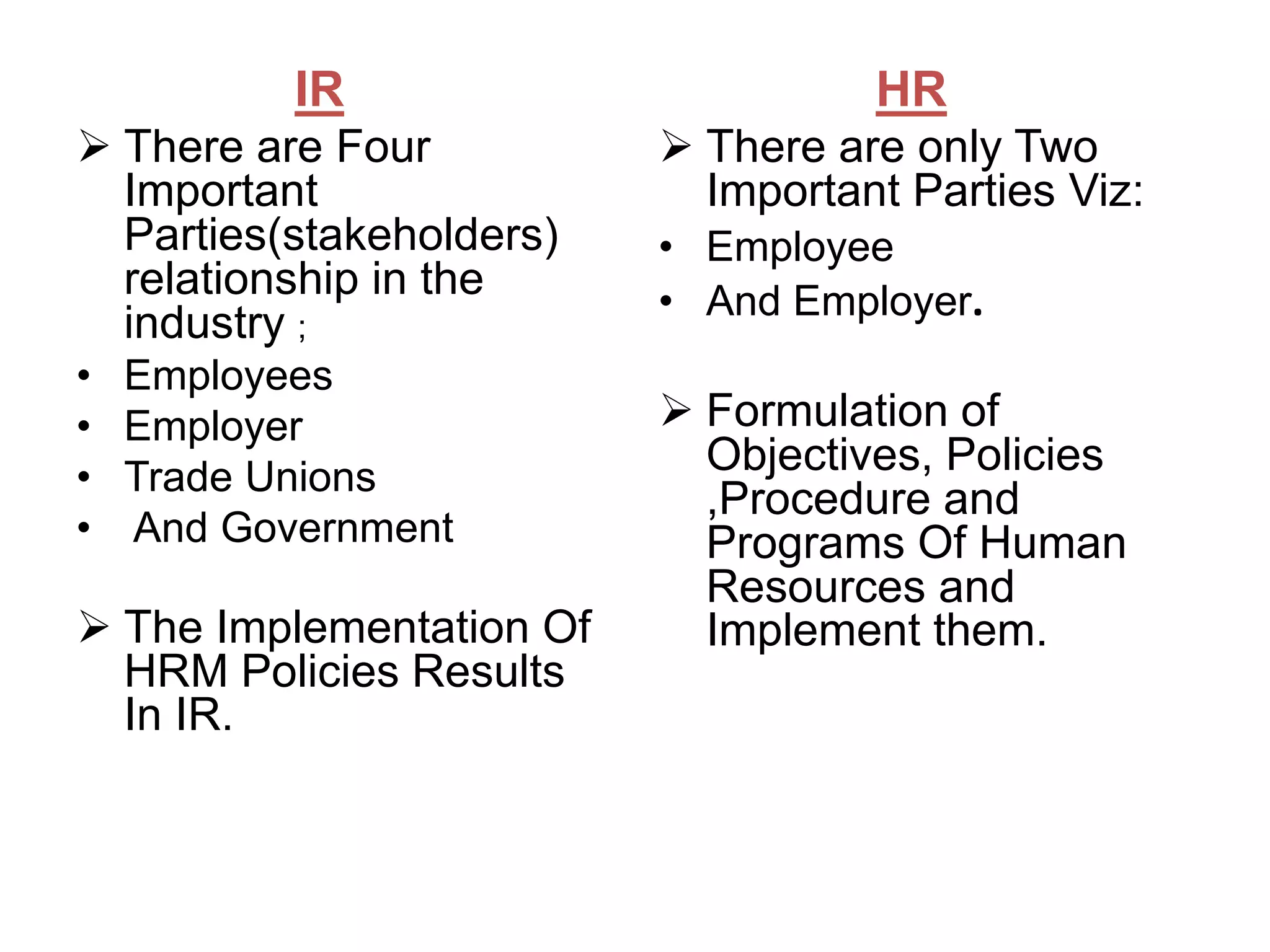
IR
 There are Four
Important
Parties(stakeholders)
relationship in the
industry ;
• Employees
• Employer
• Trade Unions
• And Government
 The Implementation Of
HRM Policies Results
In IR.
HR
 There are only Two
Important Parties Viz:
• Employee
• And Employer.
 Formulation of
Objectives, Policies
,Procedure and
Programs Of Human
Resources and
Implement them.
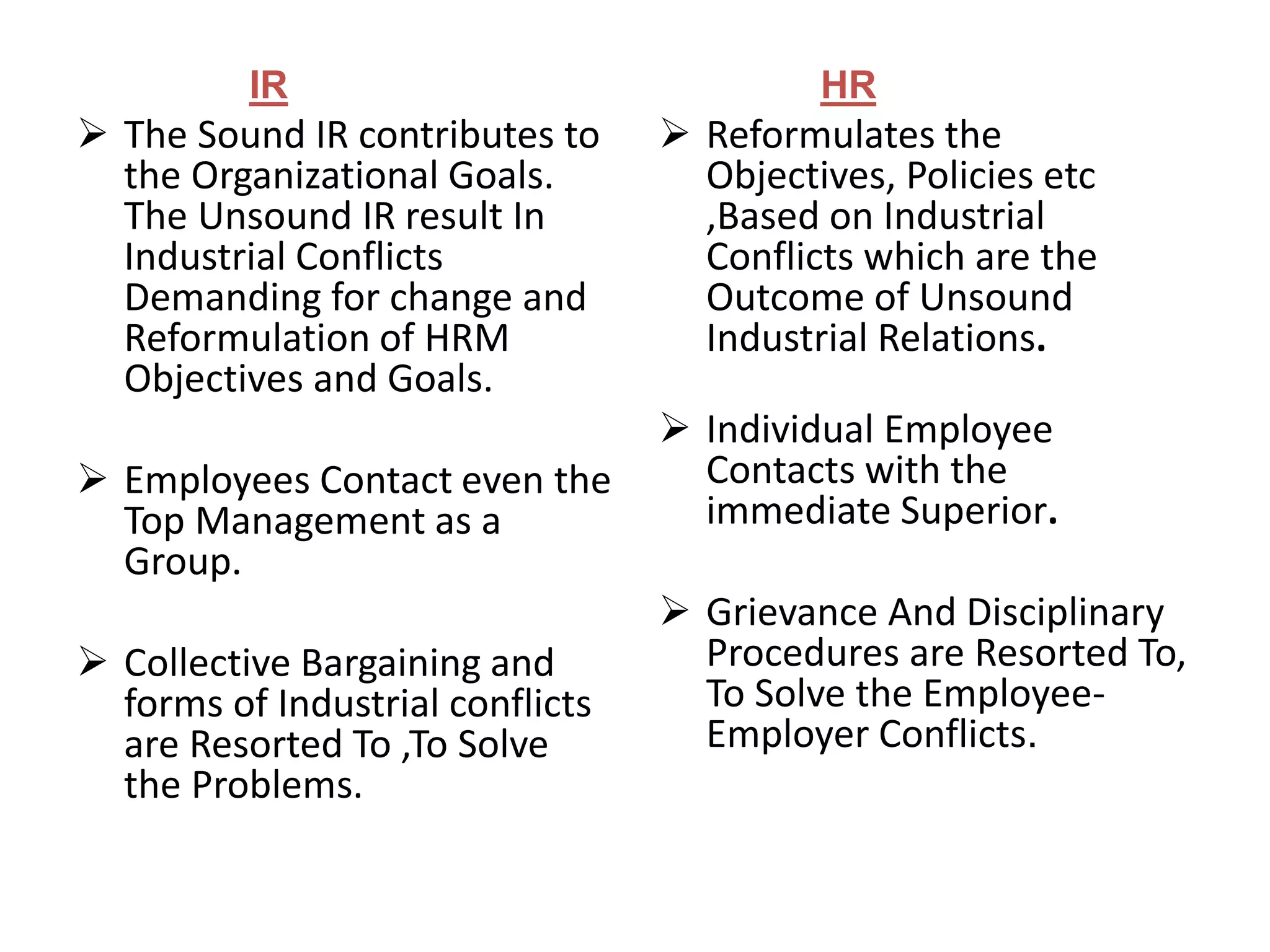
IR
 The Sound IR contributes to
the Organizational Goals.
The Unsound IR result In
Industrial Conflicts
Demanding for change and
Reformulation of HRM
Objectives and Goals.
 Employees Contact even the
Top Management as a
Group.
 Collective Bargaining and
forms of Industrial conflicts
are Resorted To ,To Solve
the Problems.
HR
 Reformulates the
Objectives, Policies etc
,Based on Industrial
Conflicts which are the
Outcome of Unsound
Industrial Relations.
 Individual Employee
Contacts with the
immediate Superior.
 Grievance And Disciplinary
Procedures are Resorted To,
To Solve the Employee-
Employer Conflicts.
IR Objectives & HR Objectives
 To promote and develop
congenial labor
management relations.
 To enhance the economic
status of the worker by
improving wages, benefits
and by helping the worker
in evolving sound budget.
 To regulate the
production by minimizing
industrial conflicts
through state control.
 To help the organization
reach its goals.
 To ensure utilization and
maximum development
of human resources.
 To ensure respect for
human beings. To identify
and satisfy the needs of
individuals.
 To socialize industries by
making the government as
an employer
 To provide an opportunity
to the workers to have a say
in the management and
decision-making.
 To improve workers’
strength with a view to
solve their problems
through mutual
negotiations and
consultation with the
management.
 To provide the organization
with well-trained and well-
motivated employees.
 To increase to the fullest the
employee’s job satisfaction
and self-actualization.
 To develop and maintain a
quality of work life.
 To be ethically and socially
responsive to the needs of
society.
 To encourage and develop
trade unions in order to
improve the workers’
strength
 To avoid industrial conflict
and their consequences.
 To extend and maintain
industrial democracy.
 To develop overall
personality of each
employee in its
multidimensional aspect.
 To enhance employee’s
capabilities to perform the
present job.
 To equip the employees
with precision and clarity in
trans¬action of business.
 To inculcate the sense of
team spirit, team work and
inter-team collaboration.
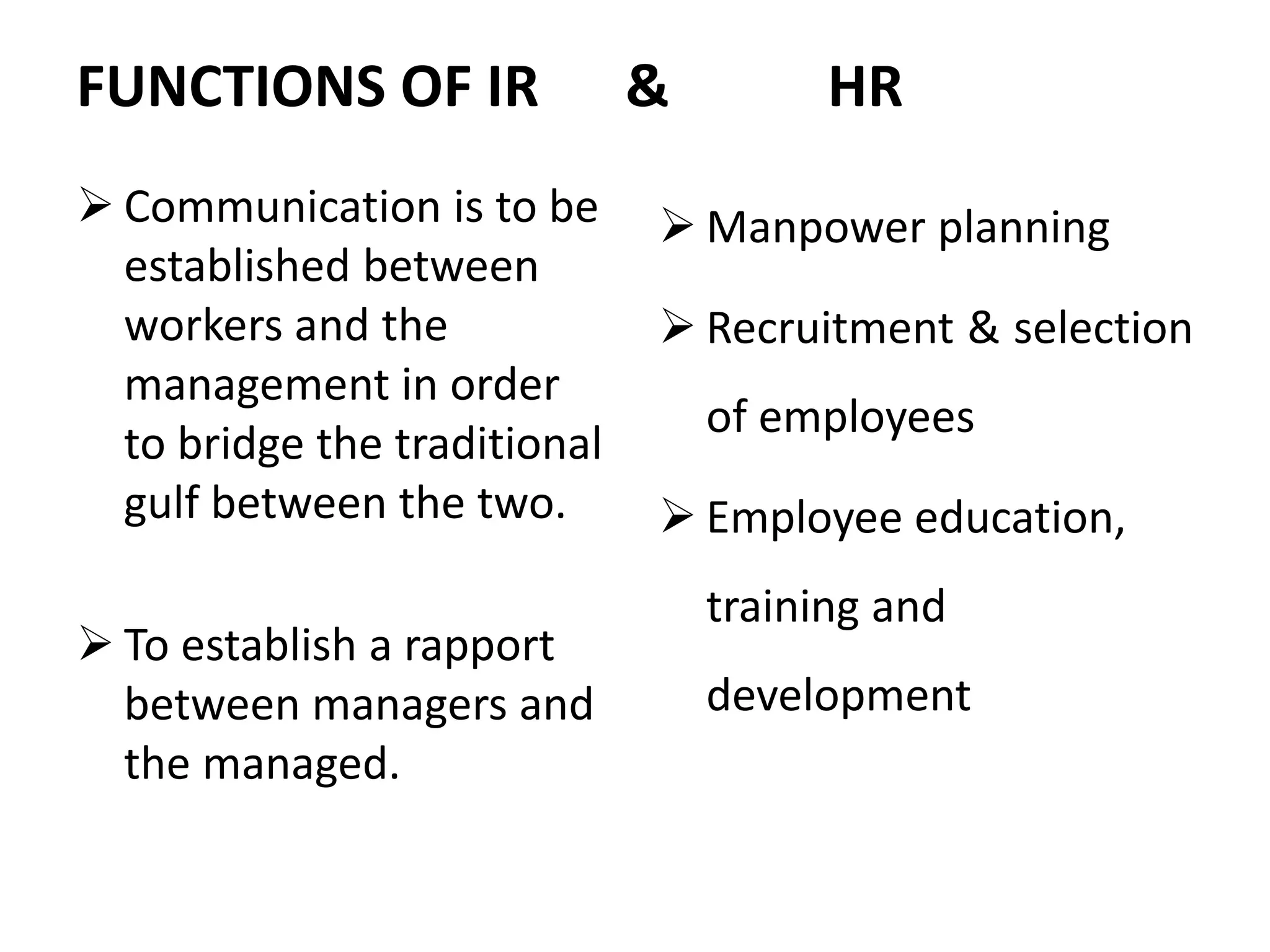
FUNCTIONS OF IR & HR
 Communication is to be
established between
workers and the
management in order
to bridge the traditional
gulf between the two.
 To establish a rapport
between managers and
the managed.
 Manpower planning
 Recruitment & selection
of employees
 Employee education,
training and
development
Continue…
 To ensure creative
contribution of trade
unions to avoid industrial
conflicts.
 To avoid unhealthy,
unethical atmosphere in
an industry.
 Better workers’
participation, to raise the
industrial productivity.
 Compensation &Benefits
(Employee motivation)
 Performance Appraisal
(Employee evaluation)
 Industrial relations
 Provision of employee
services (safety &Health
Benefit)
Factor affecting on IR & HR
Institutional Factors
 State policy, labour laws,
collective bargaining
agreement, labour
unions.
Economic Factors
 Type of business
organization sole
proprietorship,
partnership, MNC, Govt
Economic Policies, labour
supply in market.
 Size of the workforce.
 Rising employees’
expectations
 Drastic changes in the
technology as well as
Life-style changes
Continue……….
Social Factors
 Cast, colour, social values,
norms, social status.
Technological
Factors
 Introduction of new and
improved technology.
Psychological
Factors
 Owners attitude, perception
of workforce, motivation,
morale.
 Composition of
workforce. New skills
required.
 Environmental
challenges.
 Lean and mean
organizations.
Continue……….
Political Factors
 Political system, system of
government political
philosophy, attitude of
government towards
trade unions.
Global Factors
 international relations,
global conflicts,
international labour
agreements.
 Downsizing and
rightsizing of the
organizations.
 Culture prevailing in the
organization etc.

Presentation

  • 1.
  • 2.
    Industrial Relation &Human resource Industrial Relation :  The term ‘Industrial Relations’ (IR) is made up of the two words ‘Industry’ and ‘Relations.’  It simply means the relationships that exist between the stakeholders within the industry. OR  It is essentially the relationship between management and labor. Human resource:  Human resources may be defined as the total knowledge, skills, creative abilities, talents and aptitudes of an organization’s workforce.  In the organizational context, HRM refers to the utilization of human resources in order to achieve organizational goals and objectives.
  • 3.
    IR  There areFour Important Parties(stakeholders) relationship in the industry ; • Employees • Employer • Trade Unions • And Government  The Implementation Of HRM Policies Results In IR. HR  There are only Two Important Parties Viz: • Employee • And Employer.  Formulation of Objectives, Policies ,Procedure and Programs Of Human Resources and Implement them.
  • 4.
    IR  The SoundIR contributes to the Organizational Goals. The Unsound IR result In Industrial Conflicts Demanding for change and Reformulation of HRM Objectives and Goals.  Employees Contact even the Top Management as a Group.  Collective Bargaining and forms of Industrial conflicts are Resorted To ,To Solve the Problems. HR  Reformulates the Objectives, Policies etc ,Based on Industrial Conflicts which are the Outcome of Unsound Industrial Relations.  Individual Employee Contacts with the immediate Superior.  Grievance And Disciplinary Procedures are Resorted To, To Solve the Employee- Employer Conflicts.
  • 5.
    IR Objectives &HR Objectives  To promote and develop congenial labor management relations.  To enhance the economic status of the worker by improving wages, benefits and by helping the worker in evolving sound budget.  To regulate the production by minimizing industrial conflicts through state control.  To help the organization reach its goals.  To ensure utilization and maximum development of human resources.  To ensure respect for human beings. To identify and satisfy the needs of individuals.
  • 6.
     To socializeindustries by making the government as an employer  To provide an opportunity to the workers to have a say in the management and decision-making.  To improve workers’ strength with a view to solve their problems through mutual negotiations and consultation with the management.  To provide the organization with well-trained and well- motivated employees.  To increase to the fullest the employee’s job satisfaction and self-actualization.  To develop and maintain a quality of work life.  To be ethically and socially responsive to the needs of society.
  • 7.
     To encourageand develop trade unions in order to improve the workers’ strength  To avoid industrial conflict and their consequences.  To extend and maintain industrial democracy.  To develop overall personality of each employee in its multidimensional aspect.  To enhance employee’s capabilities to perform the present job.  To equip the employees with precision and clarity in trans¬action of business.  To inculcate the sense of team spirit, team work and inter-team collaboration.
  • 8.
    FUNCTIONS OF IR& HR  Communication is to be established between workers and the management in order to bridge the traditional gulf between the two.  To establish a rapport between managers and the managed.  Manpower planning  Recruitment & selection of employees  Employee education, training and development
  • 9.
    Continue…  To ensurecreative contribution of trade unions to avoid industrial conflicts.  To avoid unhealthy, unethical atmosphere in an industry.  Better workers’ participation, to raise the industrial productivity.  Compensation &Benefits (Employee motivation)  Performance Appraisal (Employee evaluation)  Industrial relations  Provision of employee services (safety &Health Benefit)
  • 10.
    Factor affecting onIR & HR Institutional Factors  State policy, labour laws, collective bargaining agreement, labour unions. Economic Factors  Type of business organization sole proprietorship, partnership, MNC, Govt Economic Policies, labour supply in market.  Size of the workforce.  Rising employees’ expectations  Drastic changes in the technology as well as Life-style changes
  • 11.
    Continue………. Social Factors  Cast,colour, social values, norms, social status. Technological Factors  Introduction of new and improved technology. Psychological Factors  Owners attitude, perception of workforce, motivation, morale.  Composition of workforce. New skills required.  Environmental challenges.  Lean and mean organizations.
  • 12.
    Continue………. Political Factors  Politicalsystem, system of government political philosophy, attitude of government towards trade unions. Global Factors  international relations, global conflicts, international labour agreements.  Downsizing and rightsizing of the organizations.  Culture prevailing in the organization etc.