FRANCISCO FERNÁNDEZ MAYOR 
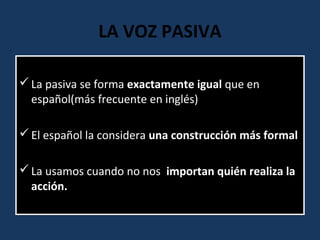
LA VOZ PASIVA
LA VOZ PASIVA 
La pasiva se forma exactamente igual que en 
español(más frecuente en inglés) 
El español la considera una construcción más formal 
La usamos cuando no nos importan quién realiza la 
acción.
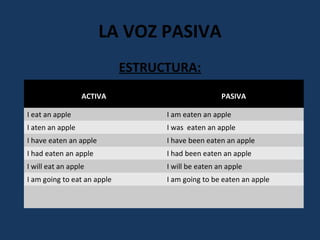
LA VOZ PASIVA 
ESTRUCTURA: 
ACTIVA PASIVA 
I eat an apple I am eaten an apple 
I aten an apple I was eaten an apple 
I have eaten an apple I have been eaten an apple 
I had eaten an apple I had been eaten an apple 
I will eat an apple I will be eaten an apple 
I am going to eat an apple I am going to be eaten an apple
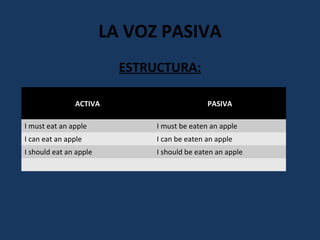
LA VOZ PASIVA 
ESTRUCTURA: 
ACTIVA PASIVA 
I must eat an apple I must be eaten an apple 
I can eat an apple I can be eaten an apple 
I should eat an apple I should be eaten an apple
LA VOZ PASIVA 
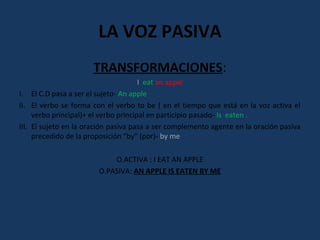
TRANSFORMACIONES: 
I eat an apple 
I. El C.D pasa a ser el sujeto- An apple 
II. El verbo se forma con el verbo to be ( en el tiempo que está en la voz activa el 
verbo principal)+ el verbo principal en participio pasado- is eaten . 
III. El sujeto en la oración pasiva pasa a ser complemento agente en la oración pasiva 
precedido de la proposición “by” (por)- by me 
O.ACTIVA : I EAT AN APPLE 
O.PASIVA: AN APPLE IS EATEN BY ME
LA VOZ PASIVA 
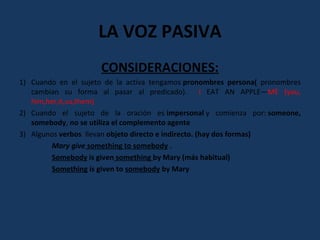
CONSIDERACIONES: 
1) Cuando en el sujeto de la activa tengamos pronombres persona( pronombres 
cambian su forma al pasar al predicado). I EAT AN APPLE—ME (you, 
him,her,it,us,them) 
2) Cuando el sujeto de la oración es impersonal y comienza por: someone, 
somebody, no se utiliza el complemento agente 
3) Algunos verbos llevan objeto directo e indirecto. (hay dos formas) 
Mary give something to somebody . 
Somebody is given something by Mary (más habitual) 
Something is given to somebody by Mary
LA VOZ PASIVA 
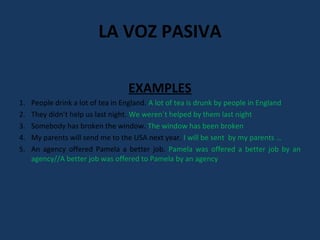
EXAMPLES 
1. People drink a lot of tea in England. A lot of tea is drunk by people in England 
2. They didn’t help us last night. We weren´t helped by them last night 
3. Somebody has broken the window. The window has been broken 
4. My parents will send me to the USA next year. I will be sent by my parents … 
5. An agency offered Pamela a better job. Pamela was offered a better job by an 
agency//A better job was offered to Pamela by an agency

Presentación voz pasiva.Francisco Fernández Mayor

  • 1.
  • 2.
    LA VOZ PASIVA La pasiva se forma exactamente igual que en español(más frecuente en inglés) El español la considera una construcción más formal La usamos cuando no nos importan quién realiza la acción.
  • 3.
    LA VOZ PASIVA ESTRUCTURA: ACTIVA PASIVA I eat an apple I am eaten an apple I aten an apple I was eaten an apple I have eaten an apple I have been eaten an apple I had eaten an apple I had been eaten an apple I will eat an apple I will be eaten an apple I am going to eat an apple I am going to be eaten an apple
  • 4.
    LA VOZ PASIVA ESTRUCTURA: ACTIVA PASIVA I must eat an apple I must be eaten an apple I can eat an apple I can be eaten an apple I should eat an apple I should be eaten an apple
  • 5.
    LA VOZ PASIVA TRANSFORMACIONES: I eat an apple I. El C.D pasa a ser el sujeto- An apple II. El verbo se forma con el verbo to be ( en el tiempo que está en la voz activa el verbo principal)+ el verbo principal en participio pasado- is eaten . III. El sujeto en la oración pasiva pasa a ser complemento agente en la oración pasiva precedido de la proposición “by” (por)- by me O.ACTIVA : I EAT AN APPLE O.PASIVA: AN APPLE IS EATEN BY ME
  • 6.
    LA VOZ PASIVA CONSIDERACIONES: 1) Cuando en el sujeto de la activa tengamos pronombres persona( pronombres cambian su forma al pasar al predicado). I EAT AN APPLE—ME (you, him,her,it,us,them) 2) Cuando el sujeto de la oración es impersonal y comienza por: someone, somebody, no se utiliza el complemento agente 3) Algunos verbos llevan objeto directo e indirecto. (hay dos formas) Mary give something to somebody . Somebody is given something by Mary (más habitual) Something is given to somebody by Mary
  • 7.
    LA VOZ PASIVA EXAMPLES 1. People drink a lot of tea in England. A lot of tea is drunk by people in England 2. They didn’t help us last night. We weren´t helped by them last night 3. Somebody has broken the window. The window has been broken 4. My parents will send me to the USA next year. I will be sent by my parents … 5. An agency offered Pamela a better job. Pamela was offered a better job by an agency//A better job was offered to Pamela by an agency