“Not everything is allowed”: what do citizenship in Madrid think about opinion in media and freedom of expressionSusana Herrera Damas, Ph. D.Carlos MaciáBarber, Ph. D.Universidad Carlos III de Madrid (Spain) ECREA, Hamburg, October 12−15th 2010
Summary:IntroductionMethodologyResultsConclusions
IntroductionAim: to describe the perceptions of citizens at the Madrid Region regarding opinion in media and freedom of expressionWhat do ethical codes say? To avoid the spreading of messages that incite violenceTo reduce the presence of issues that may be distastefulTo avoid views that promote racism, intolerance or xenophobiaTo respect and encourage human rights   
MethodologyThis paper is part of a larger research project finished last March3 goals: a) To take an inventory of the standards that make up the doctrine of the ethical practice of journalismb) To contrast said norms with the prevailing values interiorized by media professionalsc) To determine to which extent the norms and the prevailing value system are shared by the citizenry in Madrid (7 focus groups and 407 phone surveys)
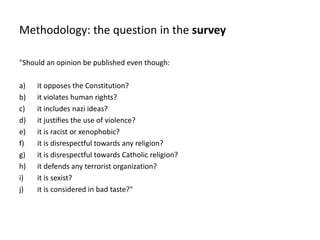
Methodology: thequestionin thesurvey"Should an opinion be published even though:  it opposes the Constitution? it violates human rights? it includes nazi ideas?it justifies the use of violence?it is racist or xenophobic?it is disrespectful towards any religion? it is disrespectful towards Catholic religion?it defends any terrorist organization? it is sexist?it is considered in bad taste?" 
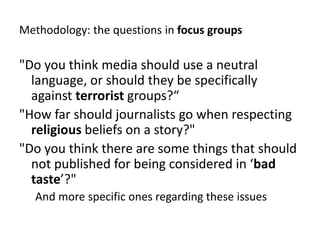
Methodology: thequestions in focusgroups"Do you think media should use a neutral language, or should they be specifically against terrorist groups?“"How far should journalists go when respecting religious beliefs on a story?" "Do you think there are some things that should not published for being considered in ‘bad taste’?" And more specific ones regarding these issues
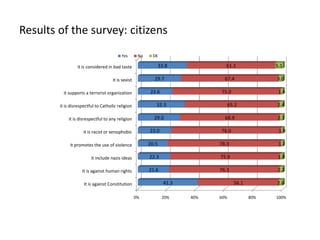
Results of thesurvey: citizens
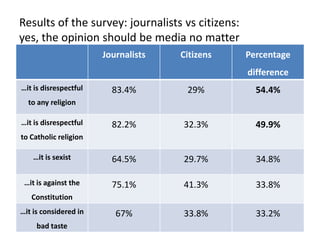
Results of thesurvey: journalists vs citizens:yes, theopinionshouldbe media no matter
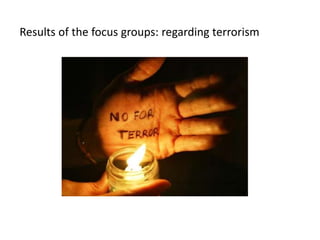
Results of thefocusgroups: regardingterrorism
Regardingterrorismcitizens are also more critical than journalistsstill, participants are divided between the need for media to report objectively, and the feeling that media offer too much impact about their activitiesfor young people, journalists should abandon their objectivity when referring to this issueadults point out that the Government should provide some guidelines that should be followed by every media
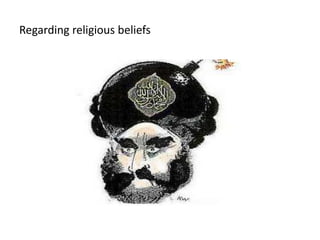
Regardingreligiousbeliefscitizens are in favor of respecting all creedshowever, tolerance should not be a pretext to censor information or to provide any special treatmentmedia should try not to offend the sensibilities of believers, but religious institutions should be given the same status as any other public institutionyoung people do not care much about this issue for most adults and older people, religious beliefs involve a special treatmentthey also point out to differences when media speak about different religion
Regardingreligiousbeliefscitizens are in favor of respecting all creeds and not to offend sensibilitieshowever, tolerance should not be a pretext to censor informationandreligious institutions should be given the same status as any other public institutionyoung people do not care much about this issue for most adults and older people, religious beliefs involve a special treatmentthey also point out to differences when media speak about different religion
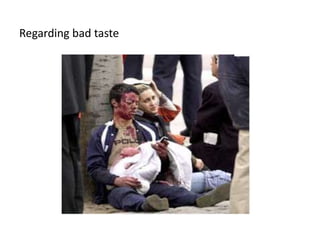
Regardingbad taste
Regardingbad tastecitizens openly reject the spreading of such contentthey agree that is commonly used by media to feed the morbid curiosity citizens would rather protect children from bad taste, profanity, violent images, satires and coarse languageyoung people also disagree with the publication of dead people or intimate moments only exception: “social learning”however, compared to professionals, the differences were less significantboth citizens and professional point out to common sense and the morals of each professional as the best limit
Conclusions1. Citizens were twice as critical as journalists with the possibility of media including opinions that: 	a) violate human rights, 	b) express racist ideas, 	d) encourage the use of violence, 	e) or support terrorists organization Citizens are even more critical than professionals: 	a) in religious matter, 	b) if the views are sexist, 	c) if they are against  the Constitution or 	d) are considered in bad tasteHere the differences are between 30 and 50 points. 
Conclusions 2. Significant variables when it comes to understand the different perceptions: 		a) age 		b) professional status 		c) preference in media consumption 	d) ideological position
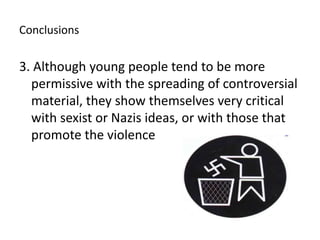
Conclusions3. Althoughyoungpeopletendtobe more permissivewiththespreading of controversial material, they show themselvesverycriticalwithsexist or Nazis ideas, or with those that promote the violence
Conclusions4. The most critical with insulting opinions were: a) employees with non manual work, 	b) housewives and 	c) retired people 
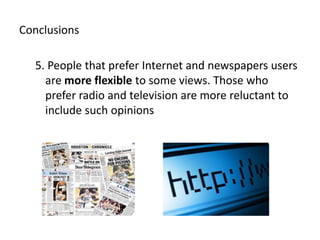
Conclusions5. PeoplethatpreferInternet and newspapers users are more flexible to some views. Those who prefer radio and television are more reluctant to include such opinions
Conclusions6. Finally, people who considered themselves progressives seem more willing to accept speeches supporting terrorist organizations. Conservatives tend to be more lax with the use of violence. 
Theenddherrera@hum.uc3m.es@susanaherrera (twitter)Academia.edu/SusanaHerreracmacia@hum.uc3m.esThankyouverymuchforyourattention

Presentación hamburgo, ética

  • 1.
     “Not everything isallowed”: what do citizenship in Madrid think about opinion in media and freedom of expressionSusana Herrera Damas, Ph. D.Carlos MaciáBarber, Ph. D.Universidad Carlos III de Madrid (Spain) ECREA, Hamburg, October 12−15th 2010
  • 2.
  • 3.
    IntroductionAim: to describethe perceptions of citizens at the Madrid Region regarding opinion in media and freedom of expressionWhat do ethical codes say? To avoid the spreading of messages that incite violenceTo reduce the presence of issues that may be distastefulTo avoid views that promote racism, intolerance or xenophobiaTo respect and encourage human rights   
  • 4.
    MethodologyThis paper ispart of a larger research project finished last March3 goals: a) To take an inventory of the standards that make up the doctrine of the ethical practice of journalismb) To contrast said norms with the prevailing values interiorized by media professionalsc) To determine to which extent the norms and the prevailing value system are shared by the citizenry in Madrid (7 focus groups and 407 phone surveys)
  • 5.
    Methodology: thequestionin thesurvey"Shouldan opinion be published even though:  it opposes the Constitution? it violates human rights? it includes nazi ideas?it justifies the use of violence?it is racist or xenophobic?it is disrespectful towards any religion? it is disrespectful towards Catholic religion?it defends any terrorist organization? it is sexist?it is considered in bad taste?" 
  • 6.
    Methodology: thequestions infocusgroups"Do you think media should use a neutral language, or should they be specifically against terrorist groups?“"How far should journalists go when respecting religious beliefs on a story?" "Do you think there are some things that should not published for being considered in ‘bad taste’?" And more specific ones regarding these issues
  • 7.
  • 8.
    Results of thesurvey:journalists vs citizens:yes, theopinionshouldbe media no matter
  • 9.
    Results of thefocusgroups:regardingterrorism
  • 10.
    Regardingterrorismcitizens are alsomore critical than journalistsstill, participants are divided between the need for media to report objectively, and the feeling that media offer too much impact about their activitiesfor young people, journalists should abandon their objectivity when referring to this issueadults point out that the Government should provide some guidelines that should be followed by every media
  • 11.
    Regardingreligiousbeliefscitizens are infavor of respecting all creedshowever, tolerance should not be a pretext to censor information or to provide any special treatmentmedia should try not to offend the sensibilities of believers, but religious institutions should be given the same status as any other public institutionyoung people do not care much about this issue for most adults and older people, religious beliefs involve a special treatmentthey also point out to differences when media speak about different religion
  • 12.
    Regardingreligiousbeliefscitizens are infavor of respecting all creeds and not to offend sensibilitieshowever, tolerance should not be a pretext to censor informationandreligious institutions should be given the same status as any other public institutionyoung people do not care much about this issue for most adults and older people, religious beliefs involve a special treatmentthey also point out to differences when media speak about different religion
  • 13.
  • 14.
    Regardingbad tastecitizens openlyreject the spreading of such contentthey agree that is commonly used by media to feed the morbid curiosity citizens would rather protect children from bad taste, profanity, violent images, satires and coarse languageyoung people also disagree with the publication of dead people or intimate moments only exception: “social learning”however, compared to professionals, the differences were less significantboth citizens and professional point out to common sense and the morals of each professional as the best limit
  • 15.
    Conclusions1. Citizens were twiceas critical as journalists with the possibility of media including opinions that: a) violate human rights, b) express racist ideas, d) encourage the use of violence, e) or support terrorists organization Citizens are even more critical than professionals: a) in religious matter, b) if the views are sexist, c) if they are against the Constitution or d) are considered in bad tasteHere the differences are between 30 and 50 points. 
  • 16.
    Conclusions 2. Significant variables whenit comes to understand the different perceptions: a) age b) professional status c) preference in media consumption d) ideological position
  • 17.
    Conclusions3. Althoughyoungpeopletendtobe morepermissivewiththespreading of controversial material, they show themselvesverycriticalwithsexist or Nazis ideas, or with those that promote the violence
  • 18.
    Conclusions4. The mostcritical with insulting opinions were: a) employees with non manual work, b) housewives and c) retired people 
  • 19.
    Conclusions5. PeoplethatpreferInternet andnewspapers users are more flexible to some views. Those who prefer radio and television are more reluctant to include such opinions
  • 20.
    Conclusions6. Finally, people whoconsidered themselves progressives seem more willing to accept speeches supporting terrorist organizations. Conservatives tend to be more lax with the use of violence. 
  • 21.