PRESENT SIMPLE (PrS)

1. EXAMPLES
AFFIRMATIVE               I speak Spanish.             Paul speaks Spanish.
NEGATIVE                  You don´t speak German.      He doesn´t speak German.
INTERROGATIVE             Do you speak English?        Does Susan speak English?
SHORT ANSWER              Yes, she does                No, she doesn´t

2. STRUCTURE
AFFIRMATIVE               subject + verb (he/she/it +s ) + complements
NEGATIVE                  subject + don´t / doesn´t + verb + compl.
INTERROGATIVE             (Question Word)+ do/ does + subject + verb + compl.?
SHORT ANSWER               Yes, subject (pronoun) + do /does
                           No, subject (pronoun) + don´t /doesn´t

3. USES
1. HÁBITOS Y RUTINAS→ Normalmente con ADVERBIOS y EXPRESIONES DE FRECUENCIA.
- I drink orange juice every morning.      - He goes to the language school on Mondays.
- She plays with her siter every day.       – We often watch films at home.
2. GUSTOS Y PREFERENCIAS (LIKES AND PREFERENCES)
 - I like comedy films.                – He hates the high school.
 - She likes swimming.                  – They love football.
3. HECHOS Y ESTADOS PERMANENTES (PERMANENT FACTS AND STATES)
 - The sun sets in the west.              – The earth goes round the sun.
 - He is very thin.
4. HORARIOS (TIMETABLES)
 - Our train arrives at six o´clock.
 - The shop opens at half past nine.

4. TIME EXPRESSIONS

a) FREQUENCY ADVERBS (Adverbios de frecuencia):
always = siempre                   sometimes = a veces, algunas veces
usually = normalmente              rarely = rara vez
often = a menudo, con frecuencia   hardly ever = casi nunca
                                   never = nunca
1→DELANTE DEL VERBO = BEFORE THE VERB:
- They usually study in the library.
- She always goes to bed late.
2→DESPUÉS DEL VERBO “TO BE”= AFTER THE VERB “TO BE”:
- You are never at home.
- She is always happy.

b) OTHER TIME EXPRESSIONS: (siempre suelen colocarse al final de la oración)
- every day / week / month / year   - AT + hora del reloj
- once a day / week / month / year   - ON+ días de la semana
- twice a day / week / month / year - IN + mes /año
- three / four times a day ...      (IN the morning, afternoon, evening/ AT night)

- I brush my teeth three times a day.
- My father goes to the swimming pool once a week.
- We meet at the disco on Fridays.

HOW OFTEN? = ¿CON QUÉ FREQUENCIA?
How often do you go to the cinema? I go to the cinema once a month. /I never go to the cinema.
PRESENT CONTINUOUS (PrC)

1. EXAMPLES
AFFIRMATIVE          I´m listening to music.        She is listening to music.
NEGATIVE             You aren´t listening to music. She isn´t listening to music.
INTERROGATIVE        What are you doing?            Are you listening to music?
SHORT ANSWER          Yes, I am                   No, I am not.

2. STRUCTURE
AFFIRMATIVE           Subject + am /is /are + verb-ing + compl.
NEGATIVE              Subject + am not/ isn´t /aren´t + verb-ing + compl.
INTERROGATIVE        (Question Word)+ am /is /are + subject + verb-ing + compl.?
SHORT ANSWER          Yes, subject (pr.) + am /is /are
                      No, subject (pr.) + ´m not/ isn´t /aren´t

3. USES

1. ACCIONES QUE ESTÁN OCURRIENDO EN EL MOMENTO (ACTIONS HAPPENING NOW)
- You´re studying English now.
- Are you watching tv now?


4. TIME EXPRESSIONS
- now = ahora                                - these days = Hoy en día
- at the moment = en este momento            - this week/month = Esta semana, este mes
- right now = ahora mismo, justo ahora


Para diferenciar bien el PRESENT SIMPLE del PRESENT CONTINUOUS es necesario:

   1. Fijarse en las expresiones de tiempo.

   2. Si no hay expresiones de tiempo, distinguir entre una rutina o hábito (I always clean
       my teeth before I go to bed) y algo que se supone que está sucediendo en el
       momento (I´m cleaning my teeth now. I can´t talk)

       I usually study at home, but today I’m studying at the library.

Present S - Present C Basic

  • 1.
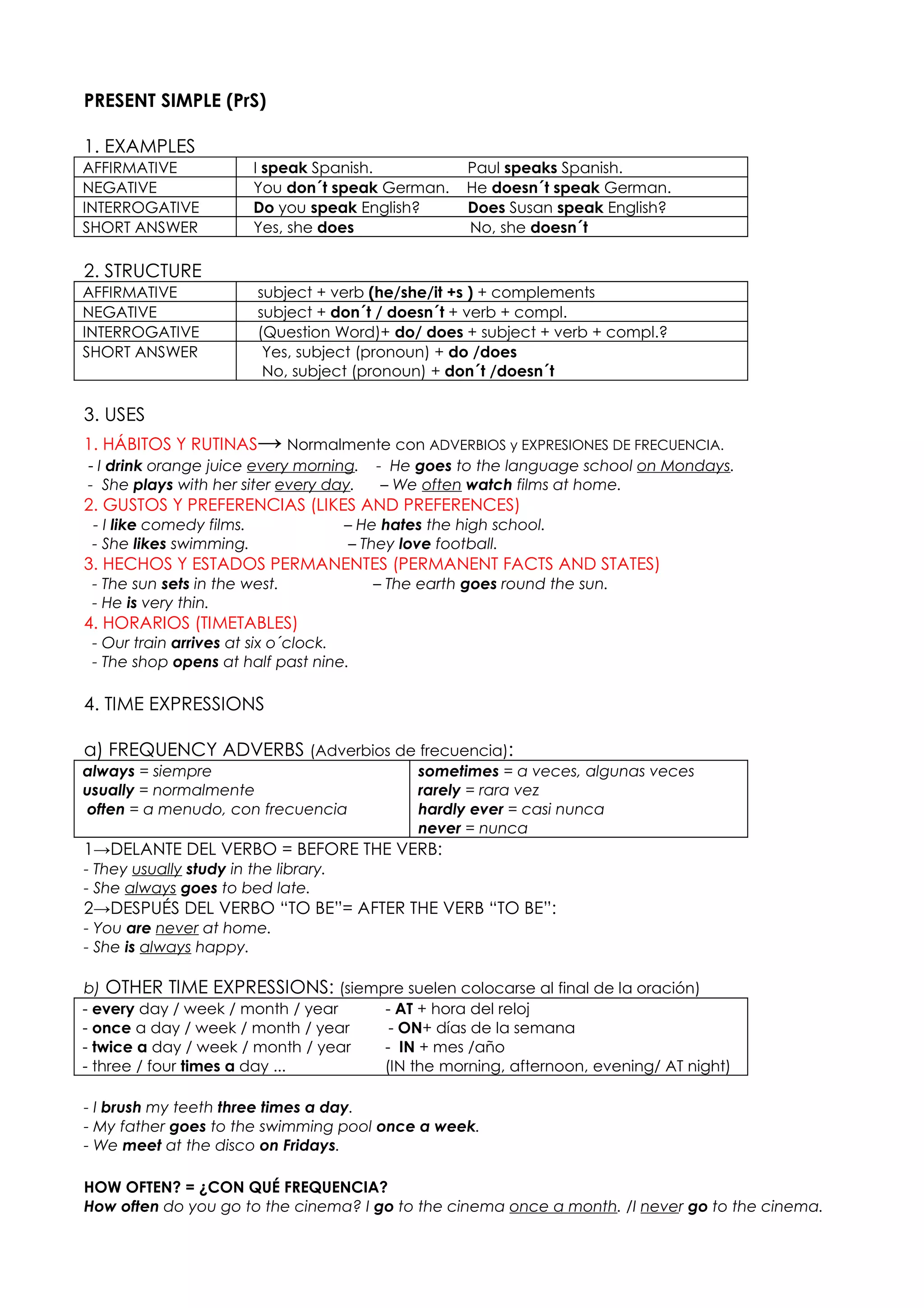
    PRESENT SIMPLE (PrS) 1.EXAMPLES AFFIRMATIVE I speak Spanish. Paul speaks Spanish. NEGATIVE You don´t speak German. He doesn´t speak German. INTERROGATIVE Do you speak English? Does Susan speak English? SHORT ANSWER Yes, she does No, she doesn´t 2. STRUCTURE AFFIRMATIVE subject + verb (he/she/it +s ) + complements NEGATIVE subject + don´t / doesn´t + verb + compl. INTERROGATIVE (Question Word)+ do/ does + subject + verb + compl.? SHORT ANSWER Yes, subject (pronoun) + do /does No, subject (pronoun) + don´t /doesn´t 3. USES 1. HÁBITOS Y RUTINAS→ Normalmente con ADVERBIOS y EXPRESIONES DE FRECUENCIA. - I drink orange juice every morning. - He goes to the language school on Mondays. - She plays with her siter every day. – We often watch films at home. 2. GUSTOS Y PREFERENCIAS (LIKES AND PREFERENCES) - I like comedy films. – He hates the high school. - She likes swimming. – They love football. 3. HECHOS Y ESTADOS PERMANENTES (PERMANENT FACTS AND STATES) - The sun sets in the west. – The earth goes round the sun. - He is very thin. 4. HORARIOS (TIMETABLES) - Our train arrives at six o´clock. - The shop opens at half past nine. 4. TIME EXPRESSIONS a) FREQUENCY ADVERBS (Adverbios de frecuencia): always = siempre sometimes = a veces, algunas veces usually = normalmente rarely = rara vez often = a menudo, con frecuencia hardly ever = casi nunca never = nunca 1→DELANTE DEL VERBO = BEFORE THE VERB: - They usually study in the library. - She always goes to bed late. 2→DESPUÉS DEL VERBO “TO BE”= AFTER THE VERB “TO BE”: - You are never at home. - She is always happy. b) OTHER TIME EXPRESSIONS: (siempre suelen colocarse al final de la oración) - every day / week / month / year - AT + hora del reloj - once a day / week / month / year - ON+ días de la semana - twice a day / week / month / year - IN + mes /año - three / four times a day ... (IN the morning, afternoon, evening/ AT night) - I brush my teeth three times a day. - My father goes to the swimming pool once a week. - We meet at the disco on Fridays. HOW OFTEN? = ¿CON QUÉ FREQUENCIA? How often do you go to the cinema? I go to the cinema once a month. /I never go to the cinema.
  • 2.
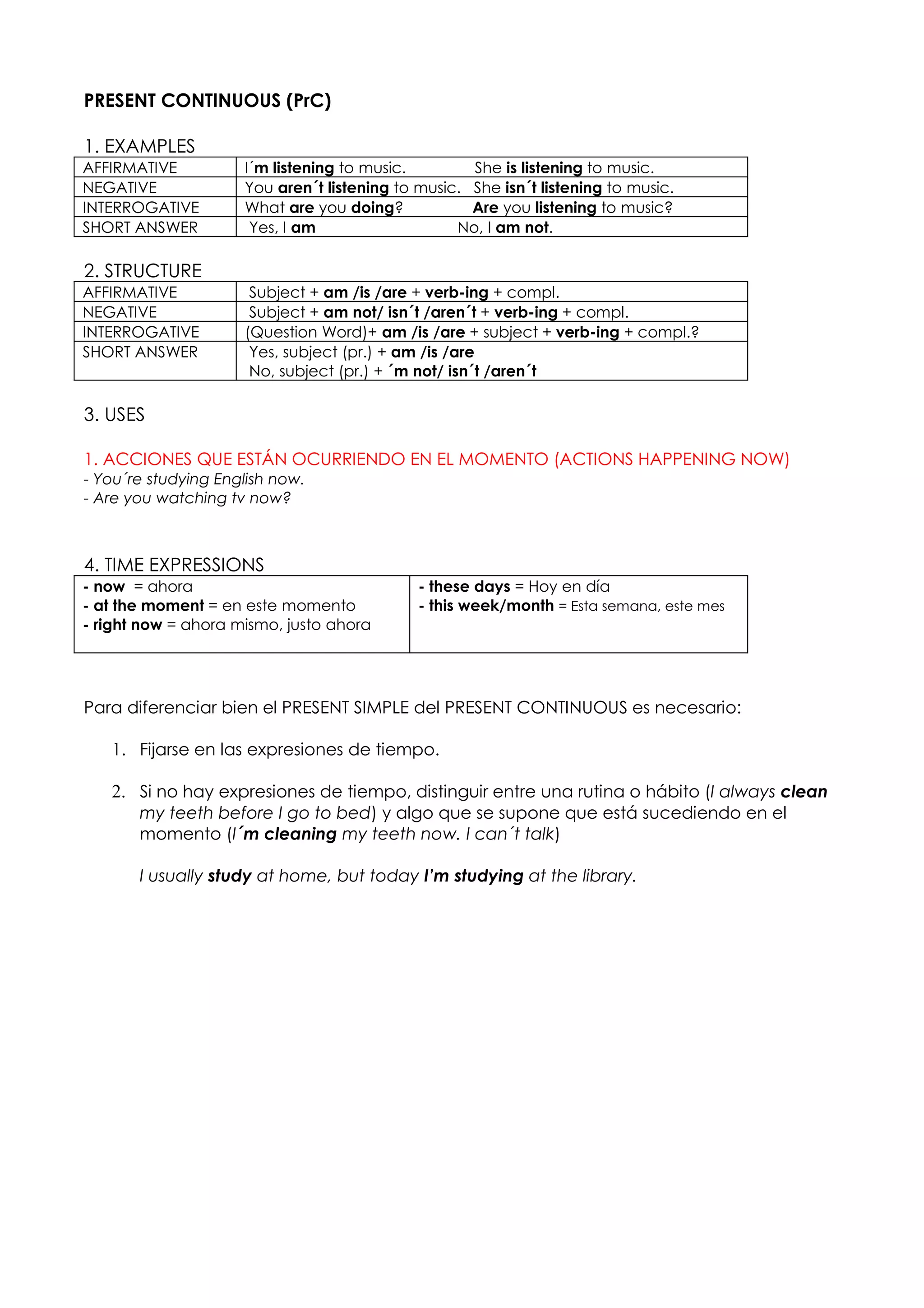
    PRESENT CONTINUOUS (PrC) 1.EXAMPLES AFFIRMATIVE I´m listening to music. She is listening to music. NEGATIVE You aren´t listening to music. She isn´t listening to music. INTERROGATIVE What are you doing? Are you listening to music? SHORT ANSWER Yes, I am No, I am not. 2. STRUCTURE AFFIRMATIVE Subject + am /is /are + verb-ing + compl. NEGATIVE Subject + am not/ isn´t /aren´t + verb-ing + compl. INTERROGATIVE (Question Word)+ am /is /are + subject + verb-ing + compl.? SHORT ANSWER Yes, subject (pr.) + am /is /are No, subject (pr.) + ´m not/ isn´t /aren´t 3. USES 1. ACCIONES QUE ESTÁN OCURRIENDO EN EL MOMENTO (ACTIONS HAPPENING NOW) - You´re studying English now. - Are you watching tv now? 4. TIME EXPRESSIONS - now = ahora - these days = Hoy en día - at the moment = en este momento - this week/month = Esta semana, este mes - right now = ahora mismo, justo ahora Para diferenciar bien el PRESENT SIMPLE del PRESENT CONTINUOUS es necesario: 1. Fijarse en las expresiones de tiempo. 2. Si no hay expresiones de tiempo, distinguir entre una rutina o hábito (I always clean my teeth before I go to bed) y algo que se supone que está sucediendo en el momento (I´m cleaning my teeth now. I can´t talk) I usually study at home, but today I’m studying at the library.