Present Perfect Continuous and
         Past Perfect


              Prof Marcos Dias
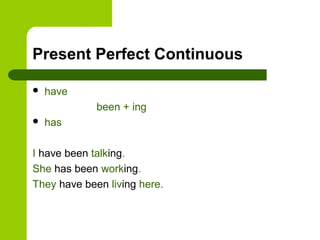
Present Perfect Continuous

   have
             been + ing
   has

I have been talking.
She has been working.
They have been living here.
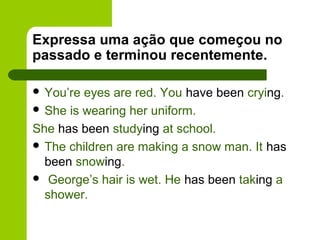
Expressa uma ação que começou no
passado e terminou recentemente.

 You’re eyes are red. You have been crying.
 She is wearing her uniform.

She has been studying at school.
 The children are making a snow man. It has
  been snowing.
 George’s hair is wet. He has been taking a
  shower.
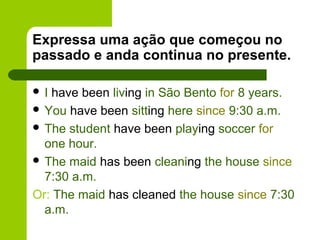
Expressa uma ação que começou no
passado e anda continua no presente.

I have been living in São Bento for 8 years.
 You have been sitting here since 9:30 a.m.
 The student have been playing soccer for
  one hour.
 The maid has been cleaning the house since
  7:30 a.m.
Or: The maid has cleaned the house since 7:30
  a.m.
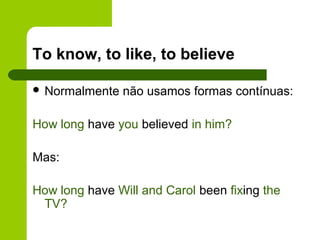
To know, to like, to believe

 Normalmente   não usamos formas contínuas:

How long have you believed in him?

Mas:

How long have Will and Carol been fixing the
 TV?
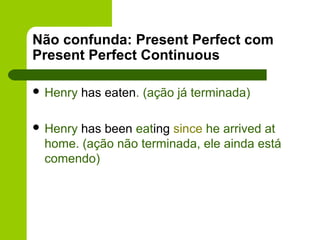
Não confunda: Present Perfect com
Present Perfect Continuous

 Henry   has eaten. (ação já terminada)

 Henryhas been eating since he arrived at
 home. (ação não terminada, ele ainda está
 comendo)
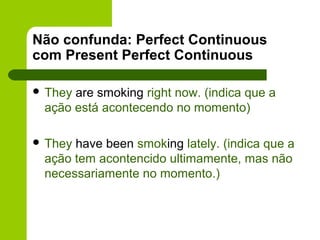
Não confunda: Perfect Continuous
com Present Perfect Continuous

 Theyare smoking right now. (indica que a
 ação está acontecendo no momento)

 Theyhave been smoking lately. (indica que a
 ação tem acontencido ultimamente, mas não
 necessariamente no momento.)
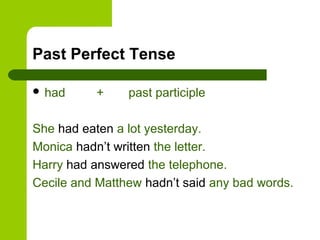
Past Perfect Tense

 had      +    past participle

She had eaten a lot yesterday.
Monica hadn’t written the letter.
Harry had answered the telephone.
Cecile and Matthew hadn’t said any bad words.
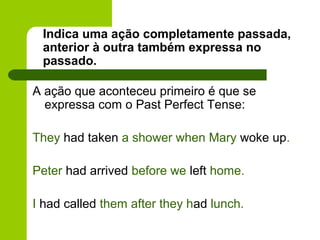
Indica uma ação completamente passada,
 anterior à outra também expressa no
 passado.

A ação que aconteceu primeiro é que se
  expressa com o Past Perfect Tense:

They had taken a shower when Mary woke up.

Peter had arrived before we left home.

I had called them after they had lunch.
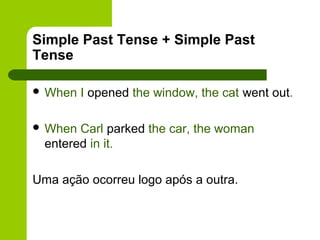
Simple Past Tense + Simple Past
Tense

 When   I opened the window, the cat went out.

 When  Carl parked the car, the woman
  entered in it.

Uma ação ocorreu logo após a outra.

Present perfect continuos and past perfect

  • 1.
    Present Perfect Continuousand Past Perfect Prof Marcos Dias
  • 2.
    Present Perfect Continuous  have been + ing  has I have been talking. She has been working. They have been living here.
  • 3.
    Expressa uma açãoque começou no passado e terminou recentemente.  You’re eyes are red. You have been crying.  She is wearing her uniform. She has been studying at school.  The children are making a snow man. It has been snowing.  George’s hair is wet. He has been taking a shower.
  • 4.
    Expressa uma açãoque começou no passado e anda continua no presente. I have been living in São Bento for 8 years.  You have been sitting here since 9:30 a.m.  The student have been playing soccer for one hour.  The maid has been cleaning the house since 7:30 a.m. Or: The maid has cleaned the house since 7:30 a.m.
  • 5.
    To know, tolike, to believe  Normalmente não usamos formas contínuas: How long have you believed in him? Mas: How long have Will and Carol been fixing the TV?
  • 6.
    Não confunda: PresentPerfect com Present Perfect Continuous  Henry has eaten. (ação já terminada)  Henryhas been eating since he arrived at home. (ação não terminada, ele ainda está comendo)
  • 7.
    Não confunda: PerfectContinuous com Present Perfect Continuous  Theyare smoking right now. (indica que a ação está acontecendo no momento)  Theyhave been smoking lately. (indica que a ação tem acontencido ultimamente, mas não necessariamente no momento.)
  • 8.
    Past Perfect Tense had + past participle She had eaten a lot yesterday. Monica hadn’t written the letter. Harry had answered the telephone. Cecile and Matthew hadn’t said any bad words.
  • 9.
    Indica uma açãocompletamente passada, anterior à outra também expressa no passado. A ação que aconteceu primeiro é que se expressa com o Past Perfect Tense: They had taken a shower when Mary woke up. Peter had arrived before we left home. I had called them after they had lunch.
  • 10.
    Simple Past Tense+ Simple Past Tense  When I opened the window, the cat went out.  When Carl parked the car, the woman entered in it. Uma ação ocorreu logo após a outra.