LESSON 3
PREPARING AND COOKING EGG-
BASED DISHES
 Boiling – cooking in liquid at a temperature of
200°F.
 Poaching – cooking in an open pan at
simmering points with sufficient seasoned
liquid to cover.
 Frying – the process of cooking food in hot fat
or oil.
 Scramble – to cook egg while stirring together
white and yolk
 Baked (Shirred) – cooking in the oven by dry
heat.
 Bind – to fasten or encircle
 Setting –putting in a particular place or
position
 Coating – covering food which is to be
fried with flour, eggs or bread crumbs
 Enrich – improve quality, productivity,
decoration or nutritive value.
 Emulsify – to disperse uniformly
 Glaze – to cover with a smooth surface
or coating
 Clarify– to make clean, trim impurities
 Garnishing – is a way of decorating food
by the addition of other items.
 Thicken– to make and to become thick
or thickens.
Eggs are poultry products from chicken,
ducks and quail that are eaten as food.
Chicken eggs is the most widely
consumed type of eggs in the world,
while duck egg is the next most popular
Nutritive Value of Egg
1.Eggs are protein foods
2.Fresh eggs contain all the Vitamins except
Vitamin C.
3.Important sources of iron, phosphorous
and trace minerals
4.It contains low calcium and found in the
shell which is not edible.
5.It is also a source of Vitamin D
6.Egg yolk has iron and riboflavin
Preparing and cooking egg according to
standard recipes
I. Grading
a.Marketing
sorting
characteristics – quality and weight
b.Grading according to
egg shell color
characteristics – quality and weight
quality – grouping and sorting
II. Cookery Method
a.Preparation of egg and uses
food
garnishes
ingredients
CLASSIFICATION OF EGG COOKERY
1.Egg cooked in the shell – a good cooked egg is tender.
The yolk is well centered, completely coagulated and
has no yolk darkening. It is easy to peel.
a.Boiled Egg as garnish
 pansit
 paella
 embutido
 Sarciado
 relyeno
 morcon
 tamales
Note: Peeling ability of eggs is improved by bringing
egg temperature to room temperature prior to
cooling and cooking. The cooked egg is immediately
placed in tap running water.
2. Egg cooked out of the shell
Peeled eggs are broken out of the shell
and carefully dropped into boiling water.
3. Fried eggs – sometimes called eggs
cooked sunny side up. The eggs are
broken out of the shell and pan fried
in a small amount of cooking oil
without breaking the yolk.
4. Scrambled eggs – prepared by
whipping the whole egg out of the
shell and then pan frying just like
fried egg.
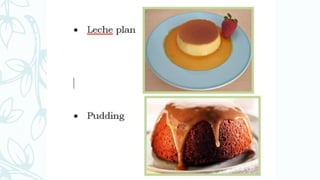
As thickening agent (like in
custard)
FUNCTIONS OF EGGS
a.food color
b.leavening agent
Preparation:
slightly beaten egg white
shift foam
stiff egg
STORAGE OF EGGS
Preservation – During the dry
season, when there is an abundance
of eggs, preservation measures to
prolong keeping quality, maybe
applied through the following:
• Refrigeration – involves a temperature of 4°C (40°F).
• Salt curing – preserved in saturated salt solution for 2
weeks, the salt gradually penetrates the egg through its
porous shell.
• Pickling – hard cooked eggs are placed in glass jars and
garnished with green and red pepper, pickling solution
consists of vinegar, refined sugar, salt and juices are
added.
• Oil coating – involves clogging the egg shell pores by
submerging the eggs in mineral oil to prevent moisture
More Tips about Eggs
1.Overcooking toughens eggs. Cook them under
low to medium heat. But if you want sunny-side-
ups that are curved up at the edges drop them
into boiling hot oil.
1.“Balut” and ordinary chicken eggs have the
same nutrient. Although balut has more vitamin
A and calcium. Open your “balut” at the rounded
end and get its full sumptuous taste by putting it
whole in the mouth.
• Eggs are easy to digest and so may be eaten
even by infants, Some babies, though, may
have an allergy, so don’t give them too early.
• Dip hard boiled eggs immediately in cold
water to peel the shell easily. This also
prevents a dark ring from forming around
the yolk.
• People with hypertension should limit or
avoid the yolk where the fat is.

Preparing egg based dishes

  • 1.
    LESSON 3 PREPARING ANDCOOKING EGG- BASED DISHES
  • 2.
     Boiling –cooking in liquid at a temperature of 200°F.  Poaching – cooking in an open pan at simmering points with sufficient seasoned liquid to cover.  Frying – the process of cooking food in hot fat or oil.  Scramble – to cook egg while stirring together white and yolk  Baked (Shirred) – cooking in the oven by dry heat.
  • 3.
     Bind –to fasten or encircle  Setting –putting in a particular place or position  Coating – covering food which is to be fried with flour, eggs or bread crumbs  Enrich – improve quality, productivity, decoration or nutritive value.
  • 4.
     Emulsify –to disperse uniformly  Glaze – to cover with a smooth surface or coating  Clarify– to make clean, trim impurities  Garnishing – is a way of decorating food by the addition of other items.  Thicken– to make and to become thick or thickens.
  • 5.
    Eggs are poultryproducts from chicken, ducks and quail that are eaten as food. Chicken eggs is the most widely consumed type of eggs in the world, while duck egg is the next most popular
  • 6.
    Nutritive Value ofEgg 1.Eggs are protein foods 2.Fresh eggs contain all the Vitamins except Vitamin C. 3.Important sources of iron, phosphorous and trace minerals 4.It contains low calcium and found in the shell which is not edible. 5.It is also a source of Vitamin D 6.Egg yolk has iron and riboflavin
  • 7.
    Preparing and cookingegg according to standard recipes I. Grading a.Marketing sorting characteristics – quality and weight b.Grading according to egg shell color characteristics – quality and weight quality – grouping and sorting
  • 8.
    II. Cookery Method a.Preparationof egg and uses food garnishes ingredients
  • 9.
    CLASSIFICATION OF EGGCOOKERY 1.Egg cooked in the shell – a good cooked egg is tender. The yolk is well centered, completely coagulated and has no yolk darkening. It is easy to peel. a.Boiled Egg as garnish  pansit  paella  embutido  Sarciado  relyeno  morcon  tamales
  • 10.
    Note: Peeling abilityof eggs is improved by bringing egg temperature to room temperature prior to cooling and cooking. The cooked egg is immediately placed in tap running water. 2. Egg cooked out of the shell Peeled eggs are broken out of the shell and carefully dropped into boiling water.
  • 11.
    3. Fried eggs– sometimes called eggs cooked sunny side up. The eggs are broken out of the shell and pan fried in a small amount of cooking oil without breaking the yolk.
  • 12.
    4. Scrambled eggs– prepared by whipping the whole egg out of the shell and then pan frying just like fried egg. As thickening agent (like in custard)
  • 15.
    FUNCTIONS OF EGGS a.foodcolor b.leavening agent Preparation: slightly beaten egg white shift foam stiff egg
  • 16.
    STORAGE OF EGGS Preservation– During the dry season, when there is an abundance of eggs, preservation measures to prolong keeping quality, maybe applied through the following:
  • 17.
    • Refrigeration –involves a temperature of 4°C (40°F). • Salt curing – preserved in saturated salt solution for 2 weeks, the salt gradually penetrates the egg through its porous shell. • Pickling – hard cooked eggs are placed in glass jars and garnished with green and red pepper, pickling solution consists of vinegar, refined sugar, salt and juices are added. • Oil coating – involves clogging the egg shell pores by submerging the eggs in mineral oil to prevent moisture
  • 18.
    More Tips aboutEggs 1.Overcooking toughens eggs. Cook them under low to medium heat. But if you want sunny-side- ups that are curved up at the edges drop them into boiling hot oil. 1.“Balut” and ordinary chicken eggs have the same nutrient. Although balut has more vitamin A and calcium. Open your “balut” at the rounded end and get its full sumptuous taste by putting it whole in the mouth.
  • 19.
    • Eggs areeasy to digest and so may be eaten even by infants, Some babies, though, may have an allergy, so don’t give them too early. • Dip hard boiled eggs immediately in cold water to peel the shell easily. This also prevents a dark ring from forming around the yolk. • People with hypertension should limit or avoid the yolk where the fat is.