

Figures of recent studies in
Belgium show that burnout
represents a huge potential
cost to organizations and a
huge personal risk for
employees.
(Calculated on capacity of
the main room at DIS2017)
In this presentation we’ll
cover the 4 main reasons
for the success of the
project
This looks cheasy, but there is
much more to cracking the case
than having a superhero data
scientist. We had an excellent
team of sponsors, domain
experts, data experts, project
managers and a data scientist
Since burnout is not
registered in the data
(privacy reasons), we
predicted a proxy:
unplanned absenteeism
Within the whole
team, we created a
huge number of ideas
for potential
predictors. We were
later able to turn 85%
of ideas into data.
We benchmarked several
algorithms, some more
complex than others, but
we always focused on
presenting our results in a
way that business experts
understood technical
experts and vice versa
For this, we used for
example predictor insights
graphs (following slides)
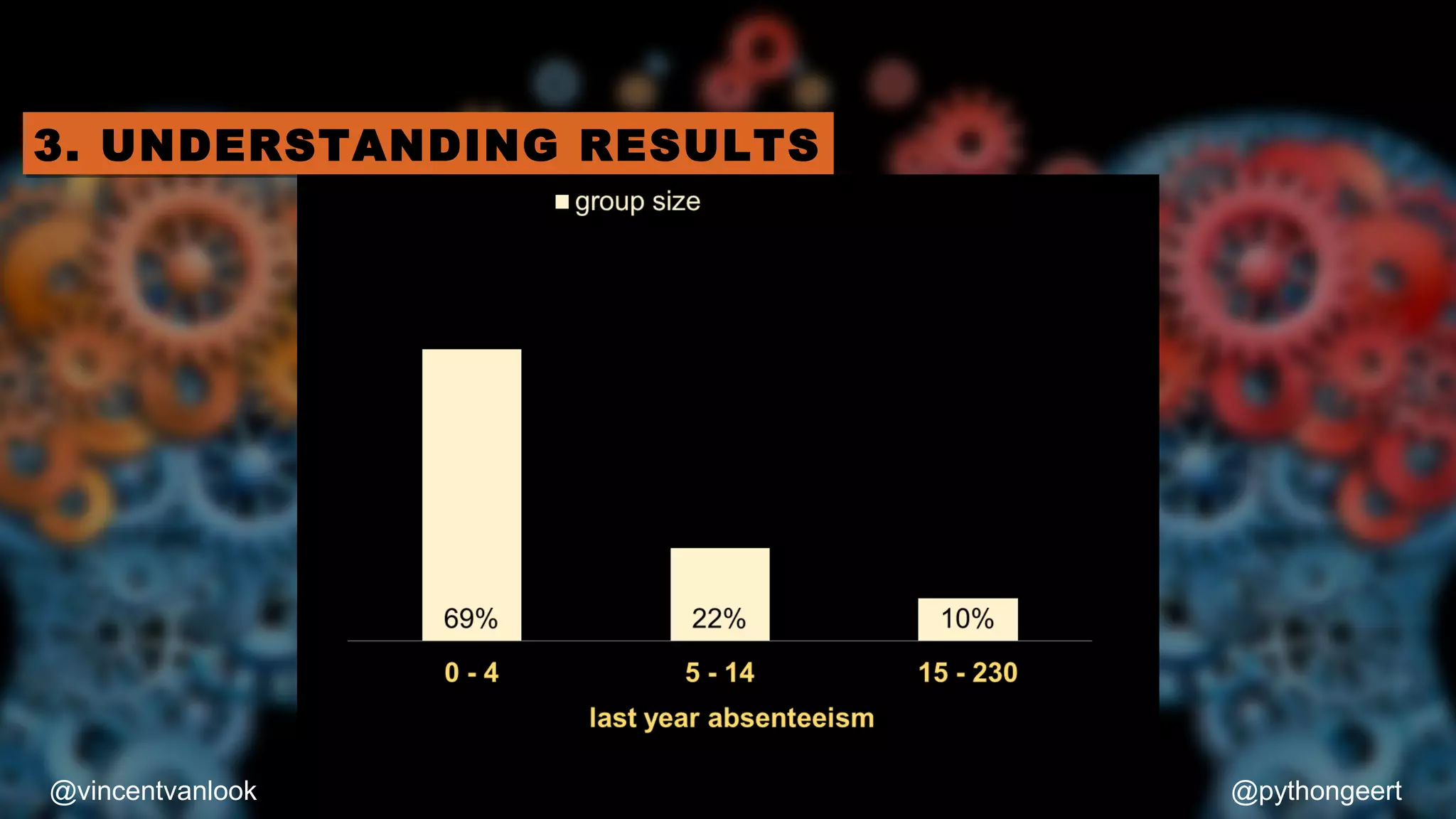
69% of employees had 0 to
4 days of absenteeism in
the last year
Starting to explain
predictor insights graphs
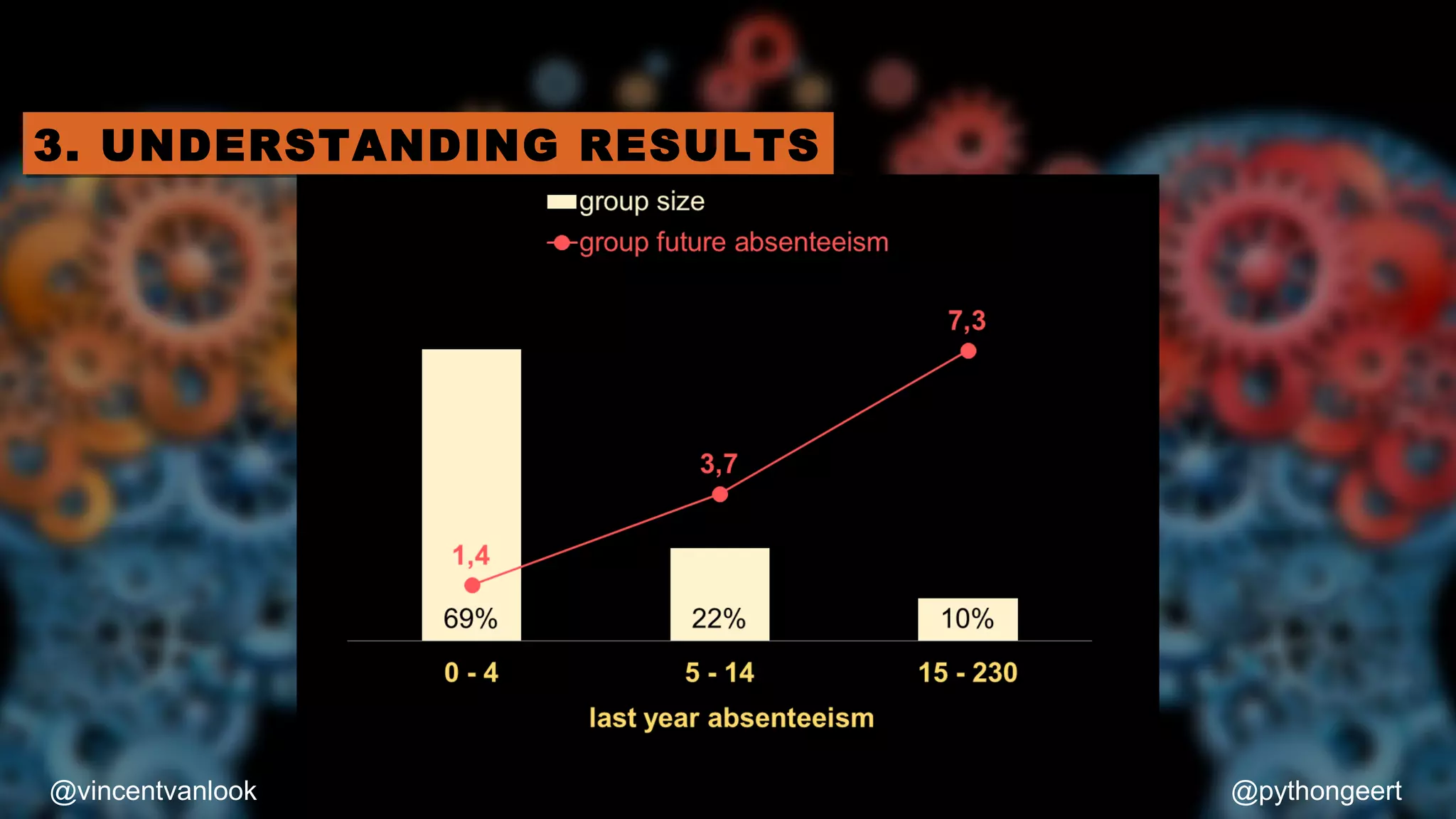
Those employees who
were absent 0 – 4 days in
the previous year, were on
average absent for 1.4 day
during the next quarter
As expected, previous
absenteeism is a good
predictor of future
absenteeism
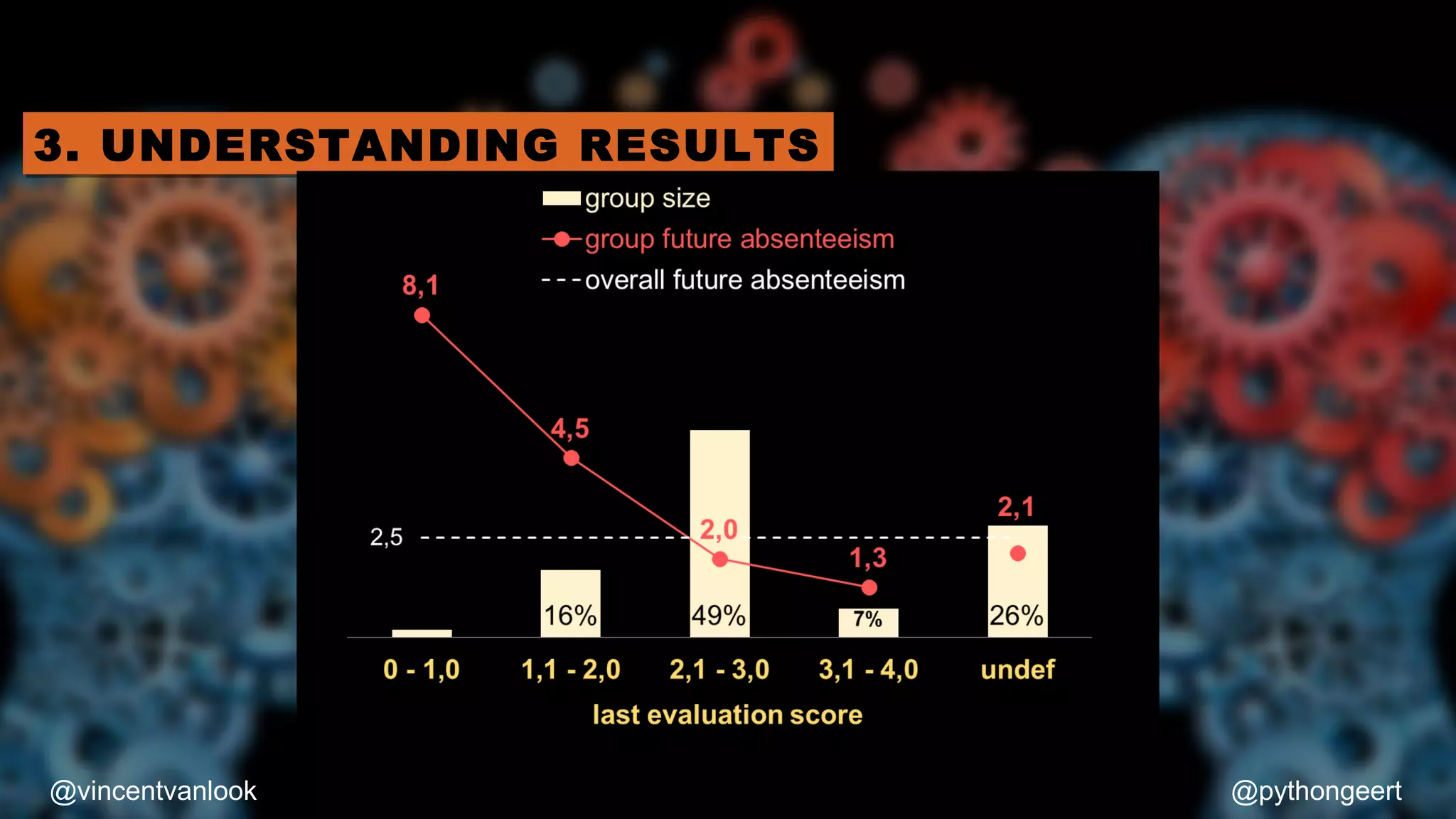
We also add the overall
average number of days of
absenteeism during next
quarter
Low evaluation scores are
related to higher future
absenteeism
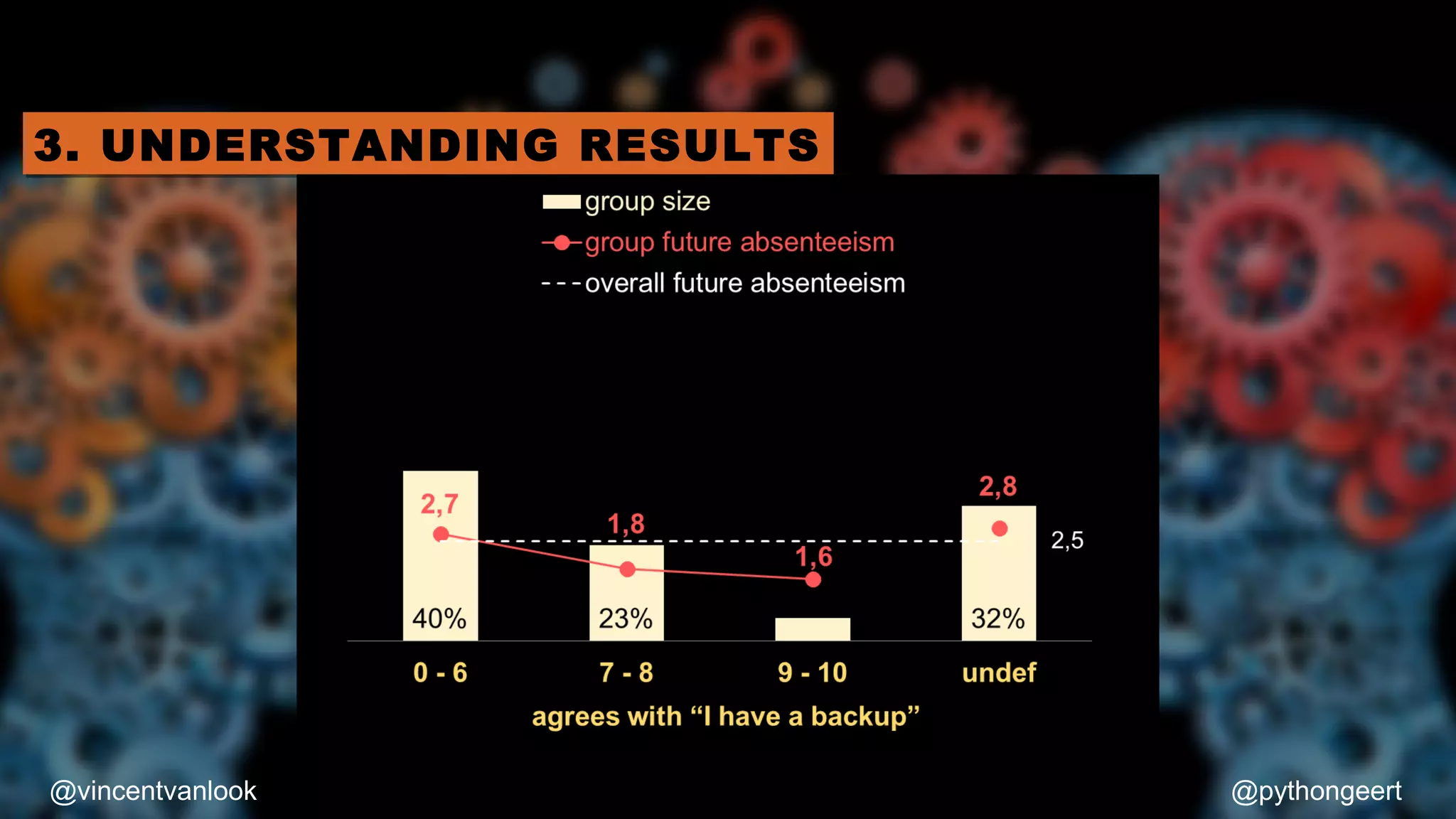
People who feel they have
a backup tend to be less
absent
The project was executed
in the environment of SD
Worx, so the scoring and
monitoring of this model
can be performed without
external intervention
We started the project
with a non-technical
training for the whole
team about projects in
predictive analytics and
ended the project with a
technical training for data
scientists – how they can
perform similar exercises
autonomously
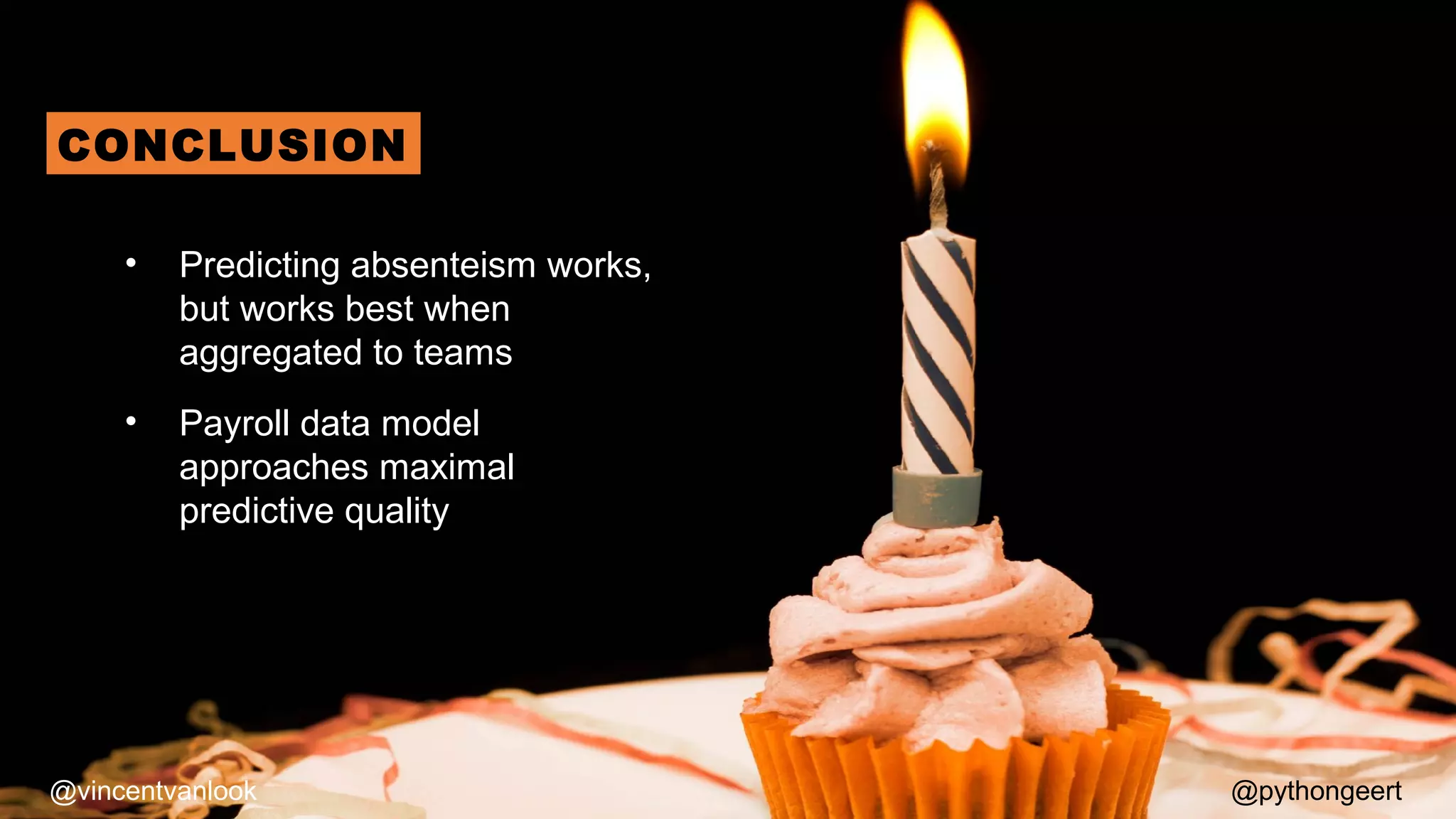
We noticed there is a
lot of variation in
individual
absenteeism, but our
prediction works very
well when aggregated
SD Worx is able to roll
this out towards their
current clients
without external help

Predicting employee burnout

  • 2.
    Figures of recentstudies in Belgium show that burnout represents a huge potential cost to organizations and a huge personal risk for employees. (Calculated on capacity of the main room at DIS2017)
  • 3.
    In this presentationwe’ll cover the 4 main reasons for the success of the project
  • 4.
    This looks cheasy,but there is much more to cracking the case than having a superhero data scientist. We had an excellent team of sponsors, domain experts, data experts, project managers and a data scientist
  • 5.
    Since burnout isnot registered in the data (privacy reasons), we predicted a proxy: unplanned absenteeism Within the whole team, we created a huge number of ideas for potential predictors. We were later able to turn 85% of ideas into data.
  • 6.
    We benchmarked several algorithms,some more complex than others, but we always focused on presenting our results in a way that business experts understood technical experts and vice versa For this, we used for example predictor insights graphs (following slides)
  • 7.
    69% of employeeshad 0 to 4 days of absenteeism in the last year Starting to explain predictor insights graphs
  • 8.
    Those employees who wereabsent 0 – 4 days in the previous year, were on average absent for 1.4 day during the next quarter As expected, previous absenteeism is a good predictor of future absenteeism
  • 9.
    We also addthe overall average number of days of absenteeism during next quarter
  • 10.
    Low evaluation scoresare related to higher future absenteeism
  • 11.
    People who feelthey have a backup tend to be less absent
  • 12.
    The project wasexecuted in the environment of SD Worx, so the scoring and monitoring of this model can be performed without external intervention We started the project with a non-technical training for the whole team about projects in predictive analytics and ended the project with a technical training for data scientists – how they can perform similar exercises autonomously
  • 13.
    We noticed thereis a lot of variation in individual absenteeism, but our prediction works very well when aggregated SD Worx is able to roll this out towards their current clients without external help