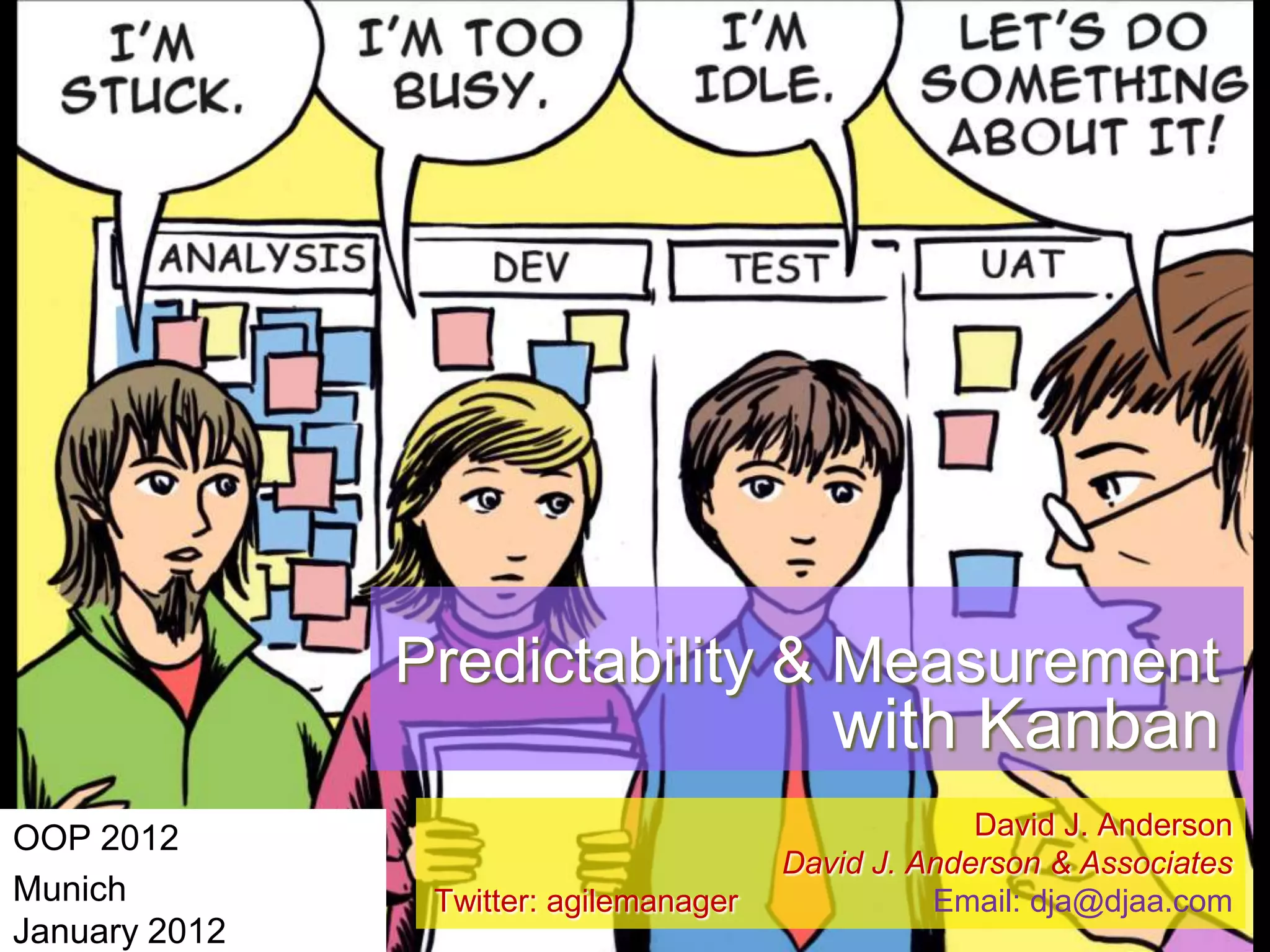







Predictability & Measurement

with Kanban
OOP 2012
Munich
January 2012

Twitter: agilemanager

David J. Anderson
David J. Anderson & Associates
Email: dja@djaa.com
Book Published
April 2010

Available from
djaa.com

Advanced
Kanban

A 72,000 word
intro to the topic
German
published January, 2011

Kanban
2012

Translation by
Arne Roock &
Henning Wolf
of IT-Agile
http://leankanbanuniversity.com
http://www.limitedwipsociety.org

LinkedIn Groups: Software Kanban

Yahoo! Groups: kanbandev
Yahoo! Groups: kanbanops
Delivering predictability with
Kanban
requires some different techniques
for different types of work such as
software maintenance and support
or
Advanced
Kanban

major project work
Service-oriented work

Advanced
Kanban
Create a regular delivery cadence
Develop a strong config management capability

Develop capability to deploy effectively
Build code with high quality

Advanced
Kanban
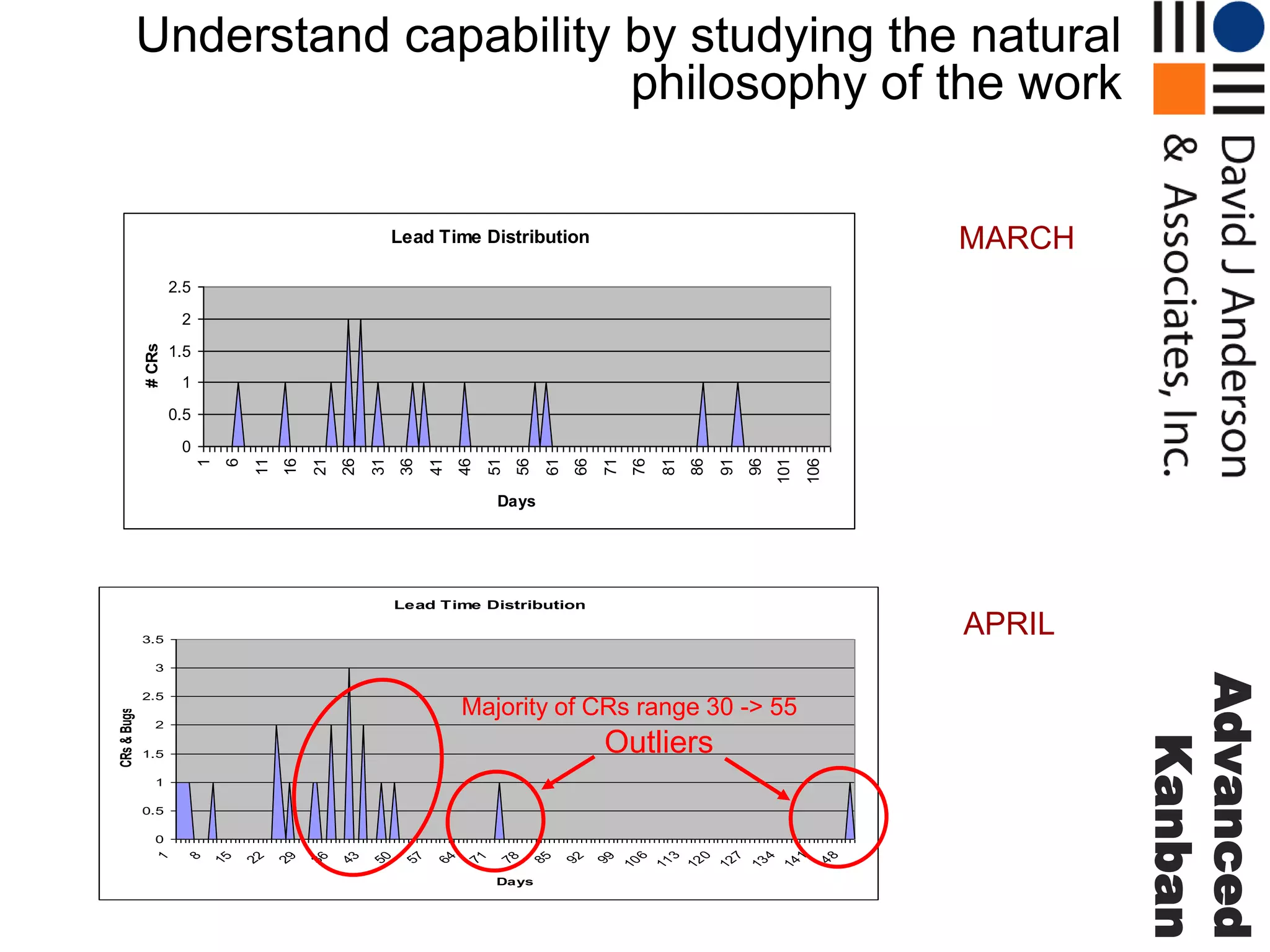
Understand capability by studying the natural
philosophy of the work
MARCH

Lead Time Distribution
2.5

# CRs

2
1.5
1
0.5

106

101

96

91

86

81

76

71

66

61

56

51

46

41

36

31

26

21

16

11

6

1

0
Days

Lead Time Distribution

APRIL

3.5

Majority of CRs range 30 -> 55

2

Outliers

1.5
1
0.5

Days

8
14

1
14

4
13

0

3

6

7
12

12

11

10

99

92

85

78

71

64

57

50

43

36

29

22

15

8

0

1

CRs & Bugs

2.5

Advanced
Kanban

3
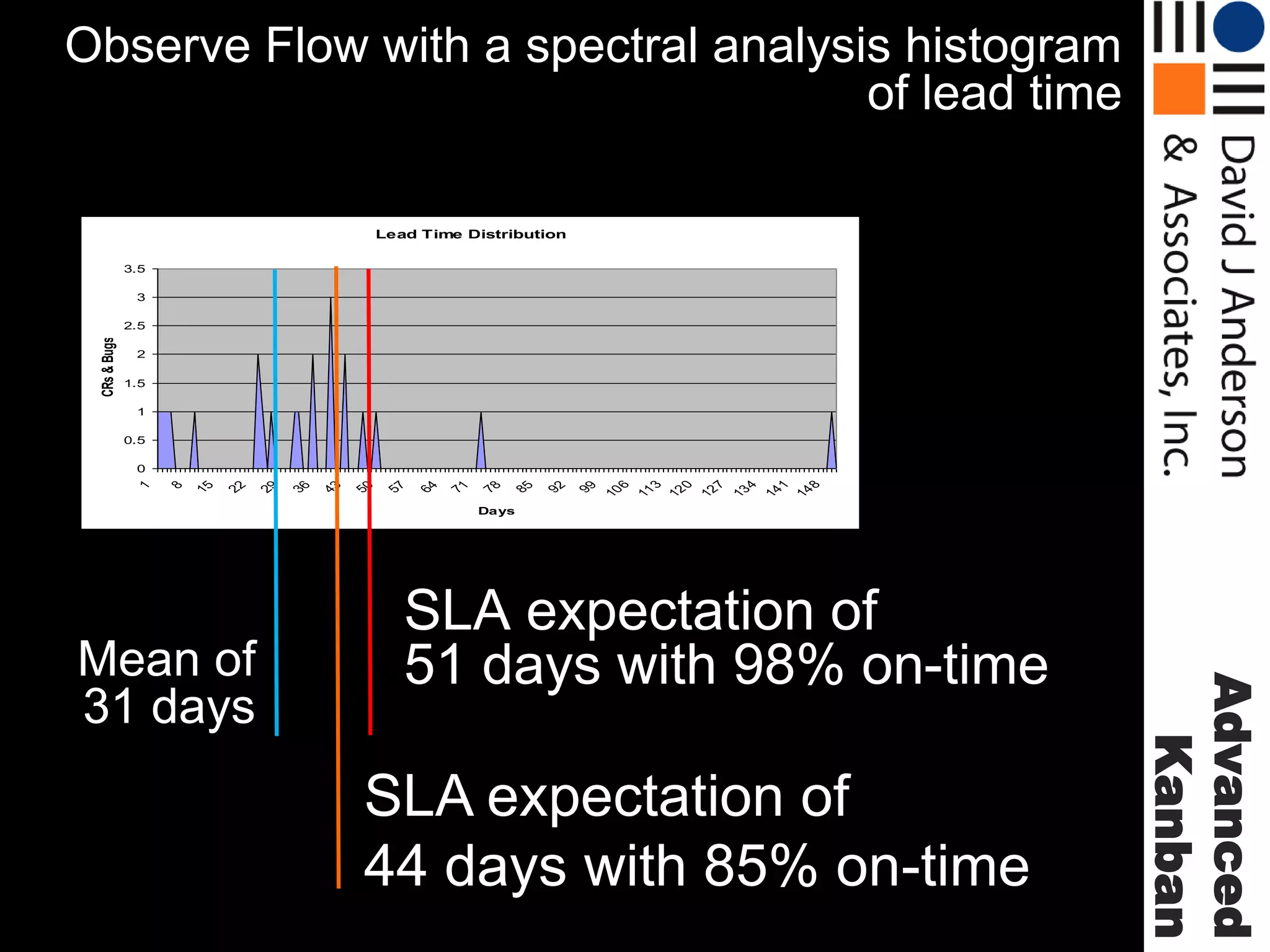
Observe Flow with a spectral analysis histogram
of lead time
Lead Time Distribution
3.5
3

CRs & Bugs

2.5
2
1.5
1
0.5

1

4

7

0

3

6

8
14

14

13

12

12

11

10

99

92

85

78

71

64

57

50

43

36

29

22

8

15

1

0

Days

SLA expectation of
44 days with 85% on-time

Advanced
Kanban

Mean of
31 days

SLA expectation of
51 days with 98% on-time
44 or 51 days will not be good enough for some
feature requests, so offer a package of classes of
service

Advanced
Kanban
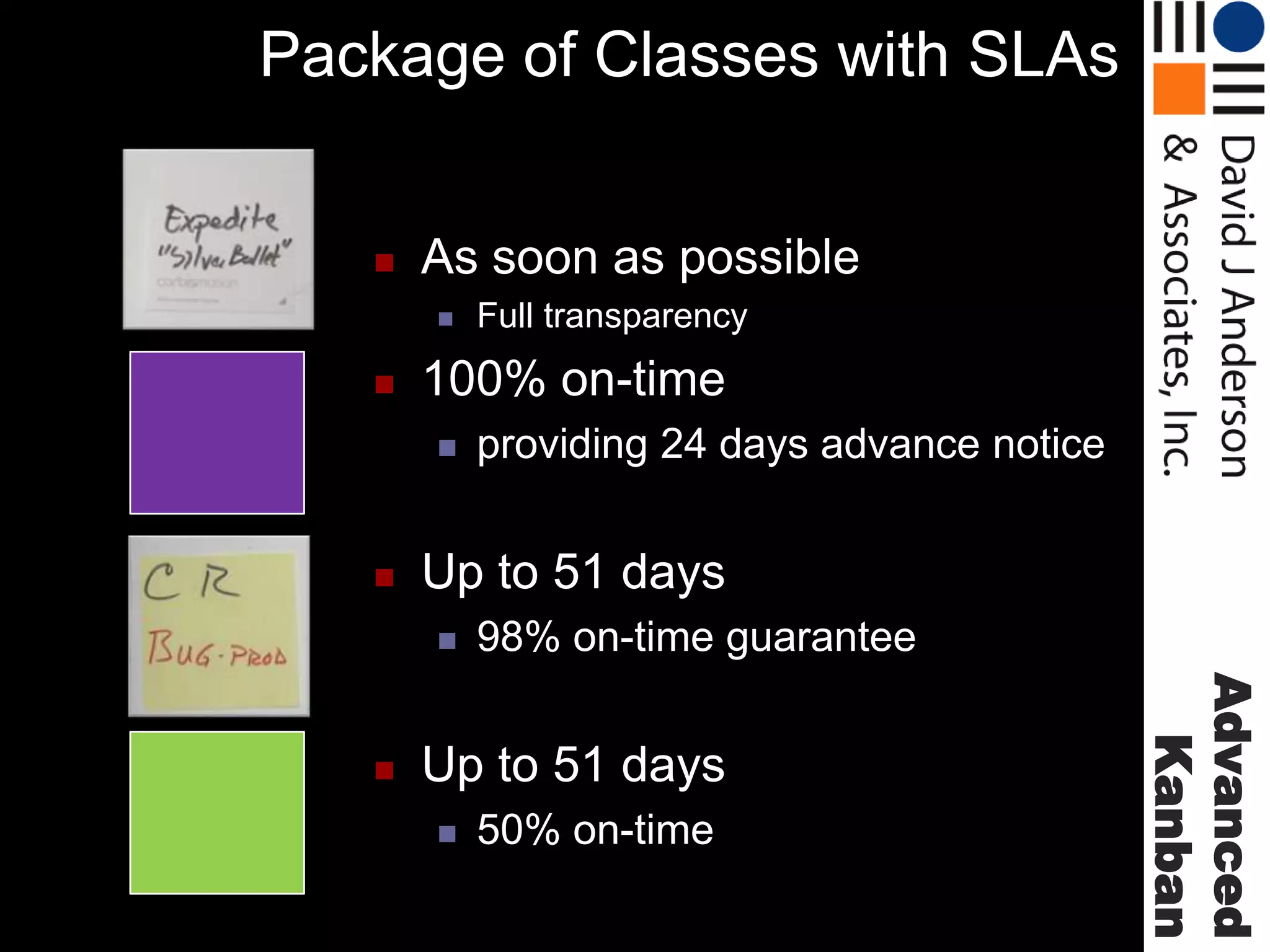
Package of Classes with SLAs


As soon as possible




100% on-time




providing 24 days advance notice

Up to 51 days


98% on-time guarantee

Up to 51 days


50% on-time

Advanced
Kanban



Full transparency
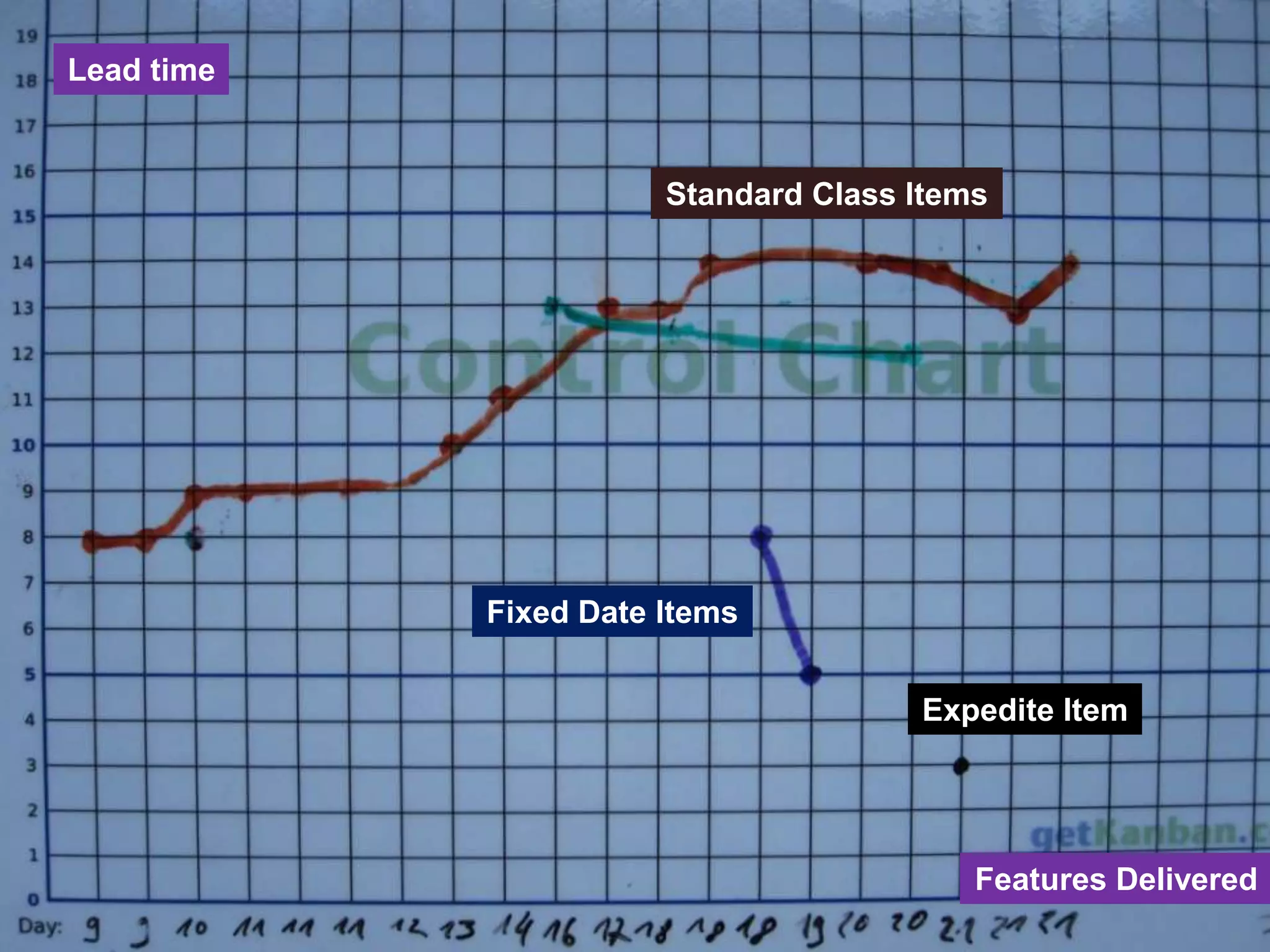
Lead time

Standard Class Items

Fixed Date Items

Advanced
Kanban

Expedite Item

Features Delivered
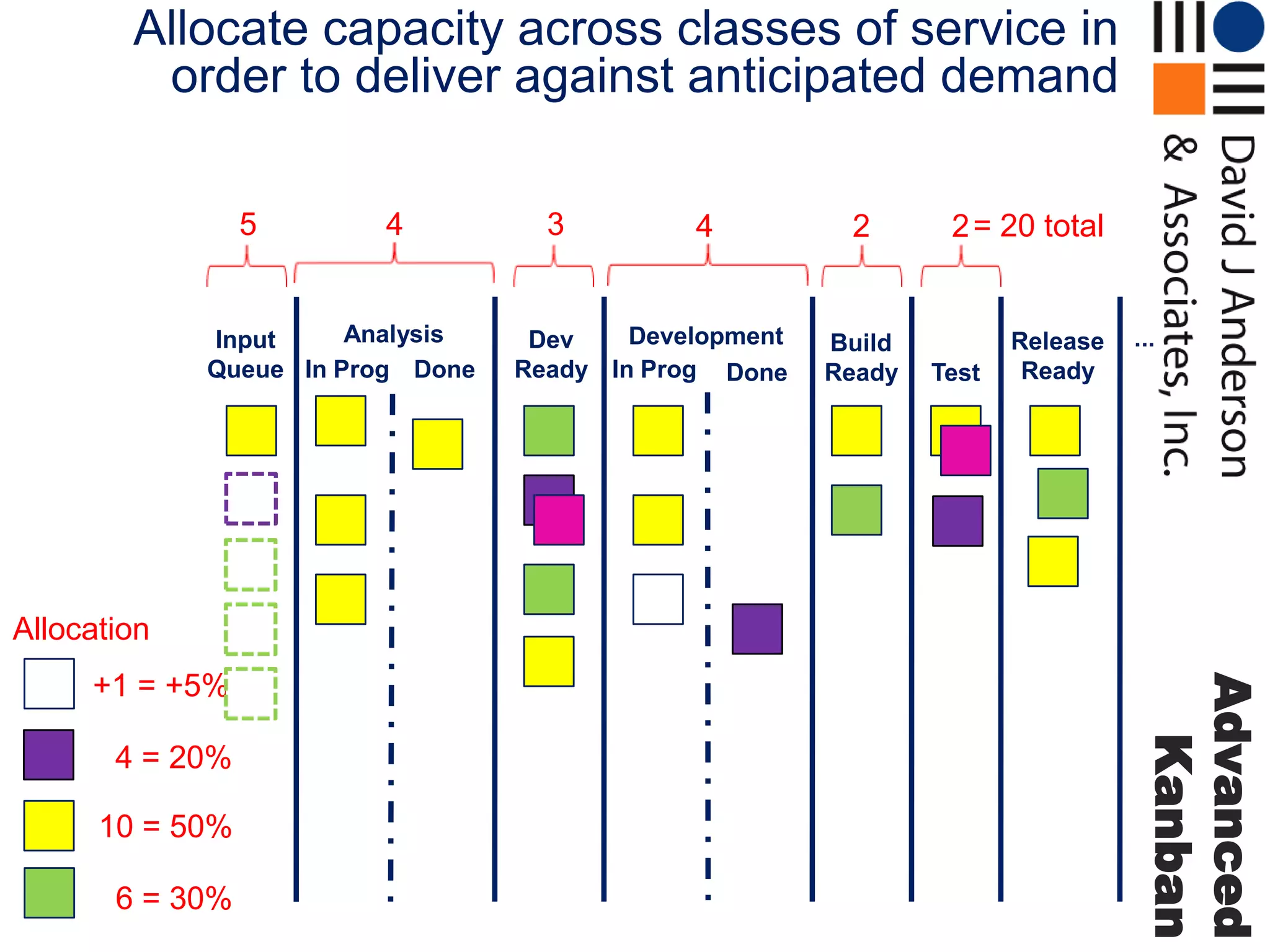
Allocate capacity across classes of service in
order to deliver against anticipated demand
5

4

Analysis
Input
Queue In Prog Done

3

4

Development
Dev
Ready In Prog Done

2

Build
Ready

2 = 20 total

Test

Release
Ready

...

Allocation

4 = 20%
10 = 50%
6 = 30%

Advanced
Kanban

+1 = +5%
Major Project Work

Advanced
Kanban
Requires all the same underlying
data as used in service oriented
work
plus

Advanced
Kanban
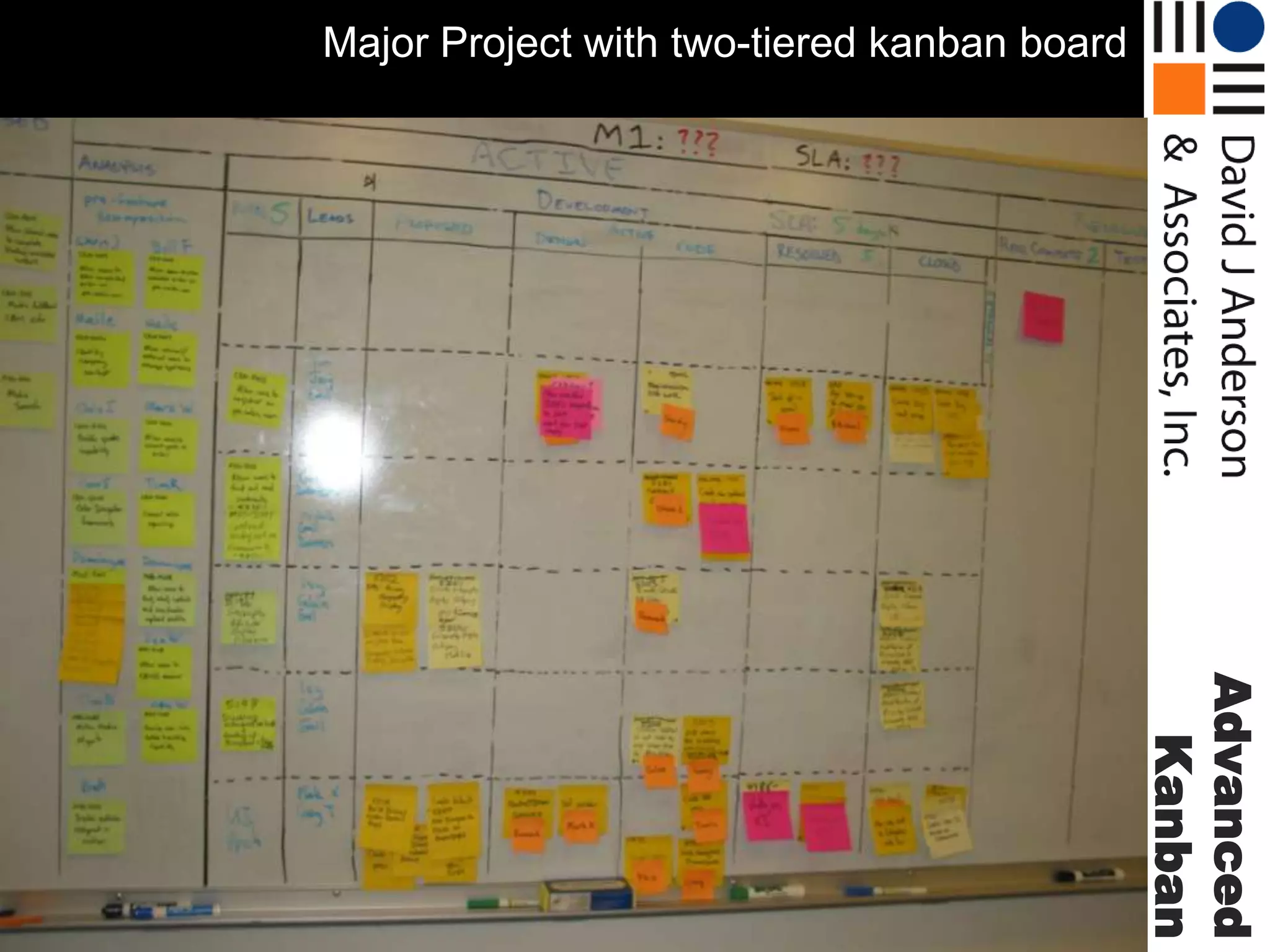
Major Project with two-tiered kanban board

Advanced
Kanban
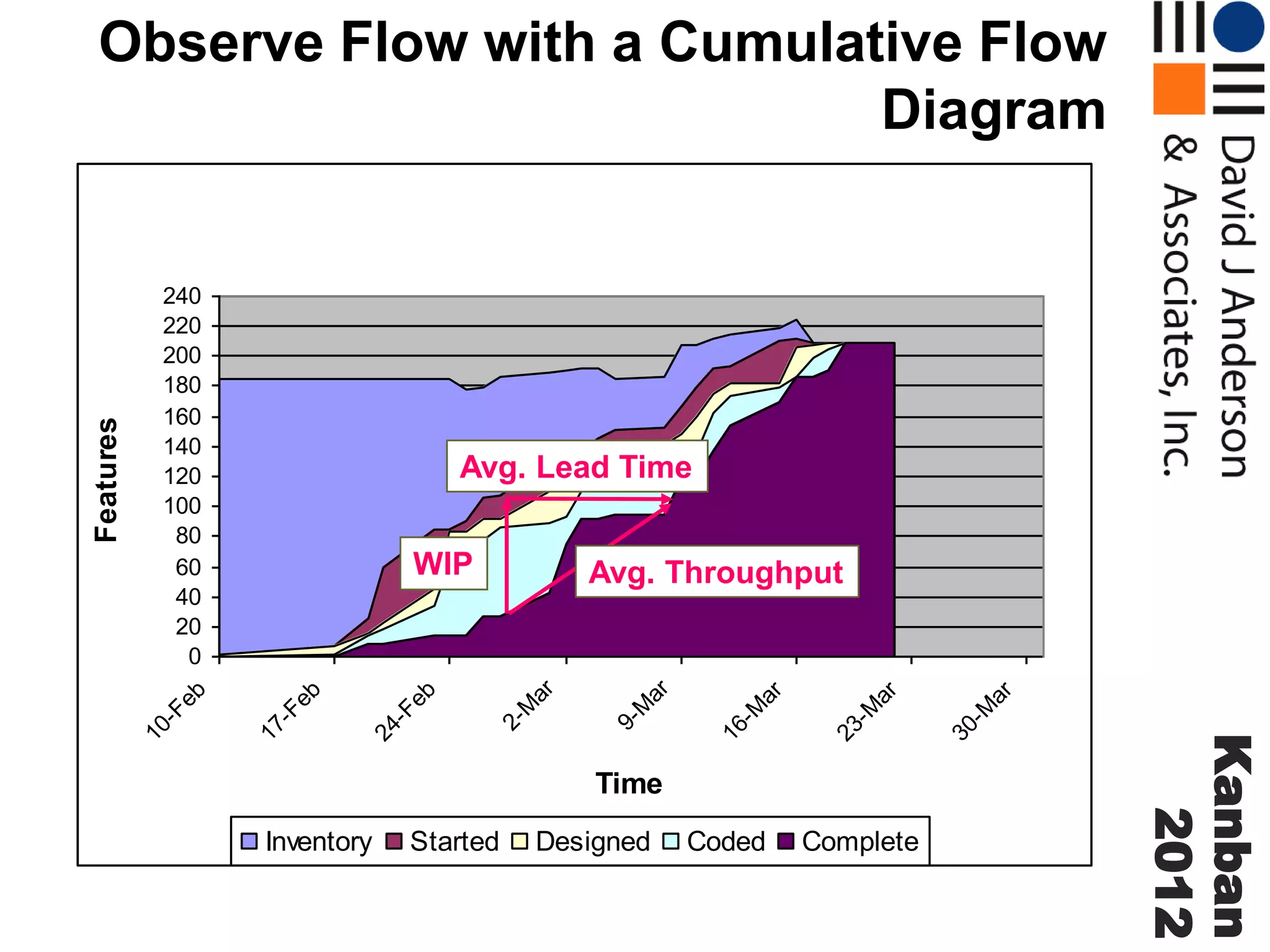
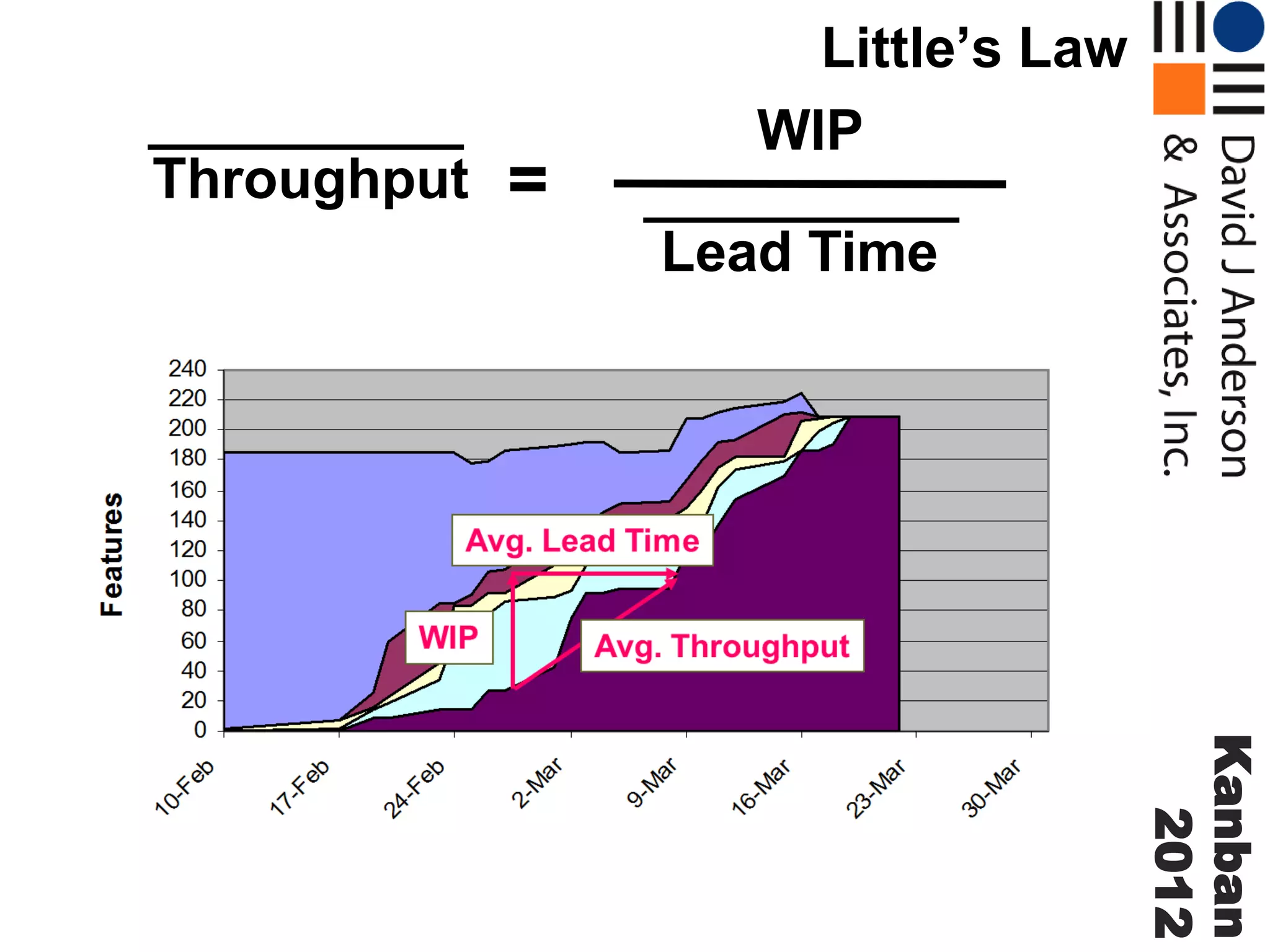
Observe Flow with a Cumulative Flow
Diagram

Avg. Lead Time

Time
Inventory

Started

Designed

Coded

Complete

30
-M
ar

23
-M
ar

16
-M
ar

9M
ar

2M
ar

eb

Avg. Throughput

Kanban
2012

24
-F

eb

WIP

17
-F

eb

240
220
200
180
160
140
120
100
80
60
40
20
0

10
-F

Features

Device Management Ike II Cumulative Flow
Throughput

=

Little’s Law
WIP
Lead Time

Kanban
2012
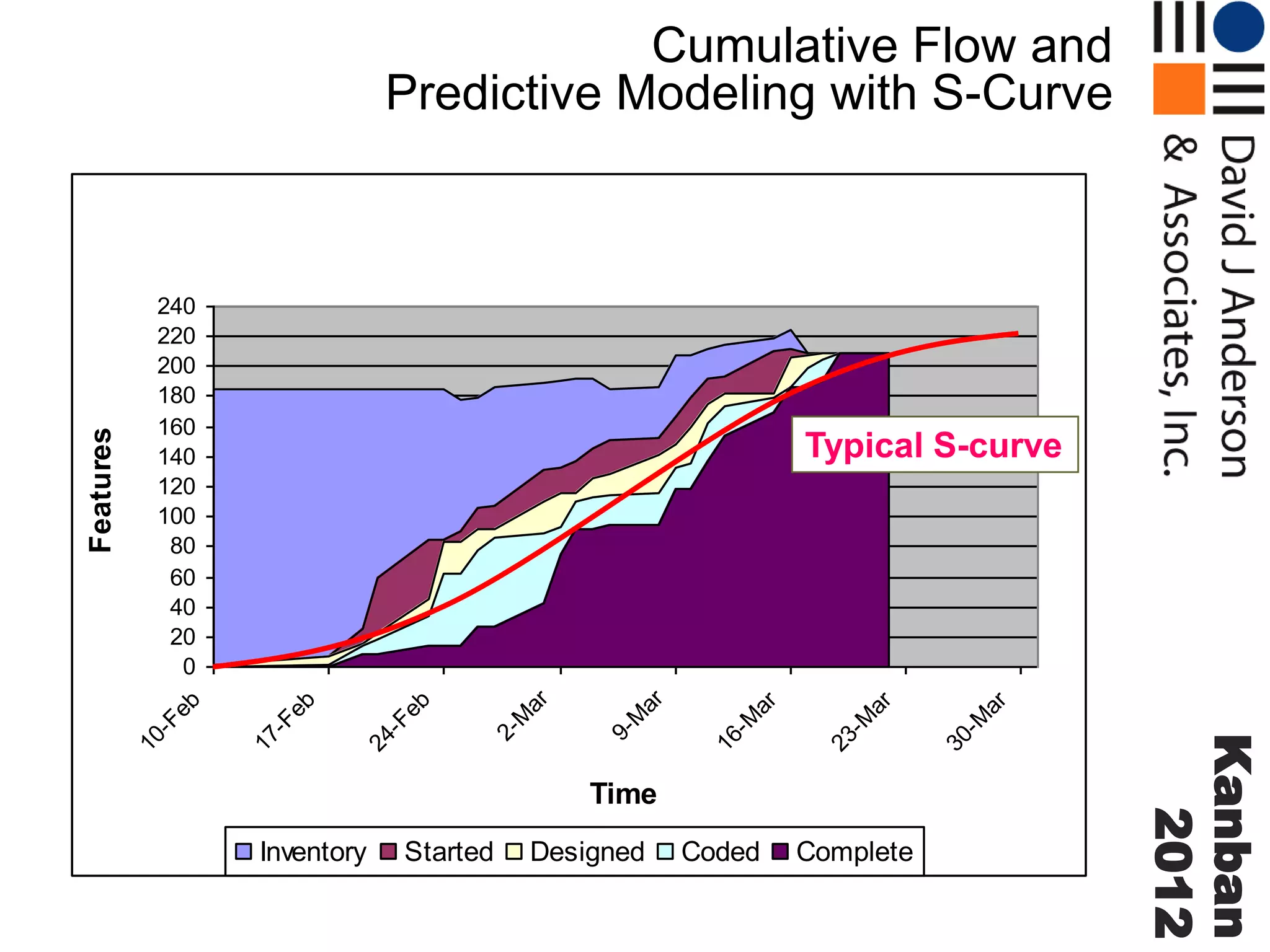
Cumulative Flow and
Predictive Modeling with S-Curve

Inventory

Started

Designed

Coded

Complete

30
-M
ar

23
-M
ar

16
-M
ar

9M
ar

2M
ar

eb

Time

Kanban
2012

24
-F

eb

Typical S-curve

17
-F

eb

240
220
200
180
160
140
120
100
80
60
40
20
0

10
-F

Features

Device Management Ike II Cumulative Flow
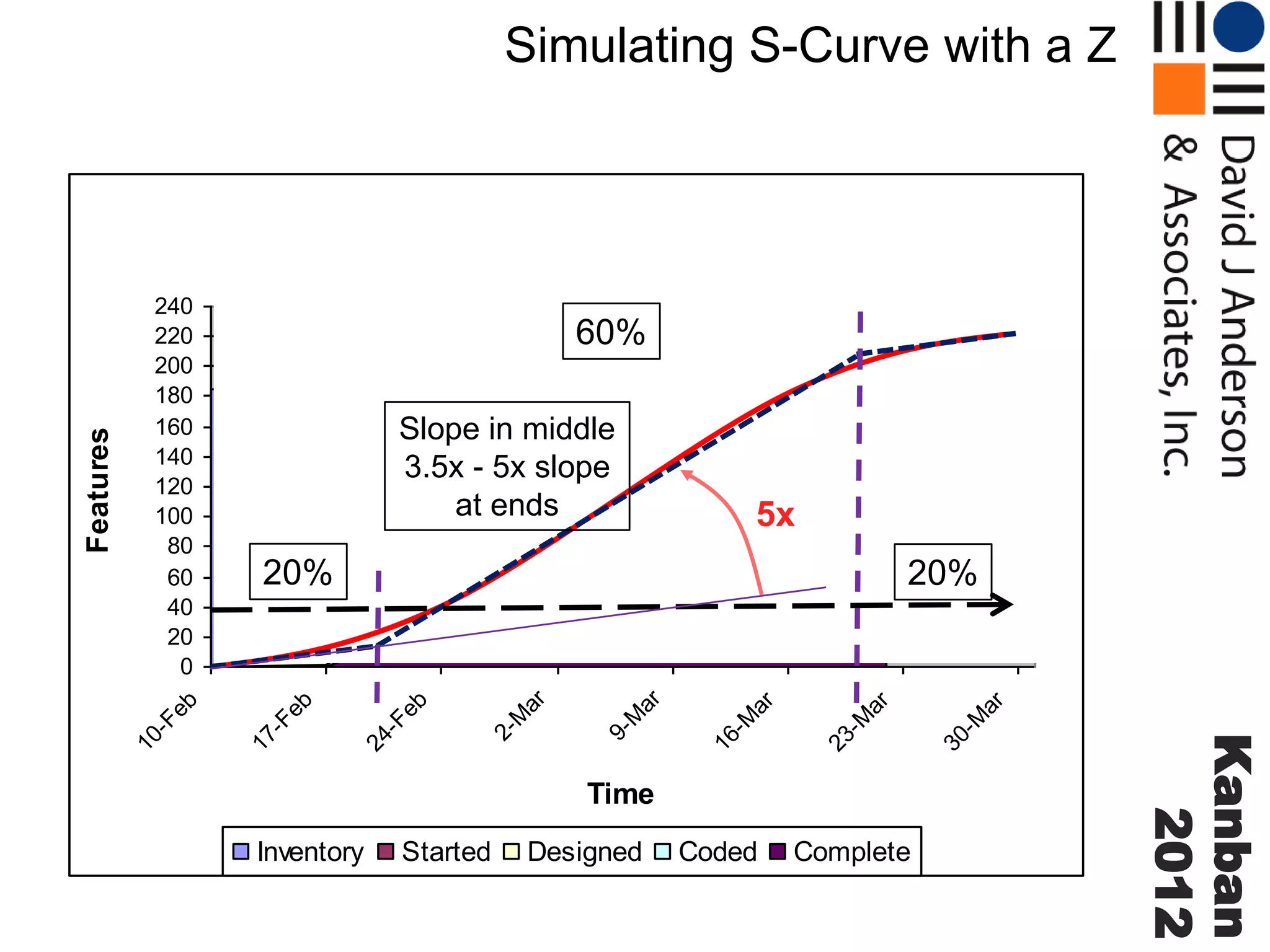
Simulating S-Curve with a Z

60%
Slope in middle
3.5x - 5x slope
at ends

5x

20%

Time
Inventory

Started

Designed

Coded

Complete

30
-M
ar

23
-M
ar

16
-M
ar

9M
ar

2M
ar

eb
24
-F

eb

20%

Kanban
2012

17
-F

eb

240
220
200
180
160
140
120
100
80
60
40
20
0

10
-F

Features

Device Management Ike II Cumulative Flow
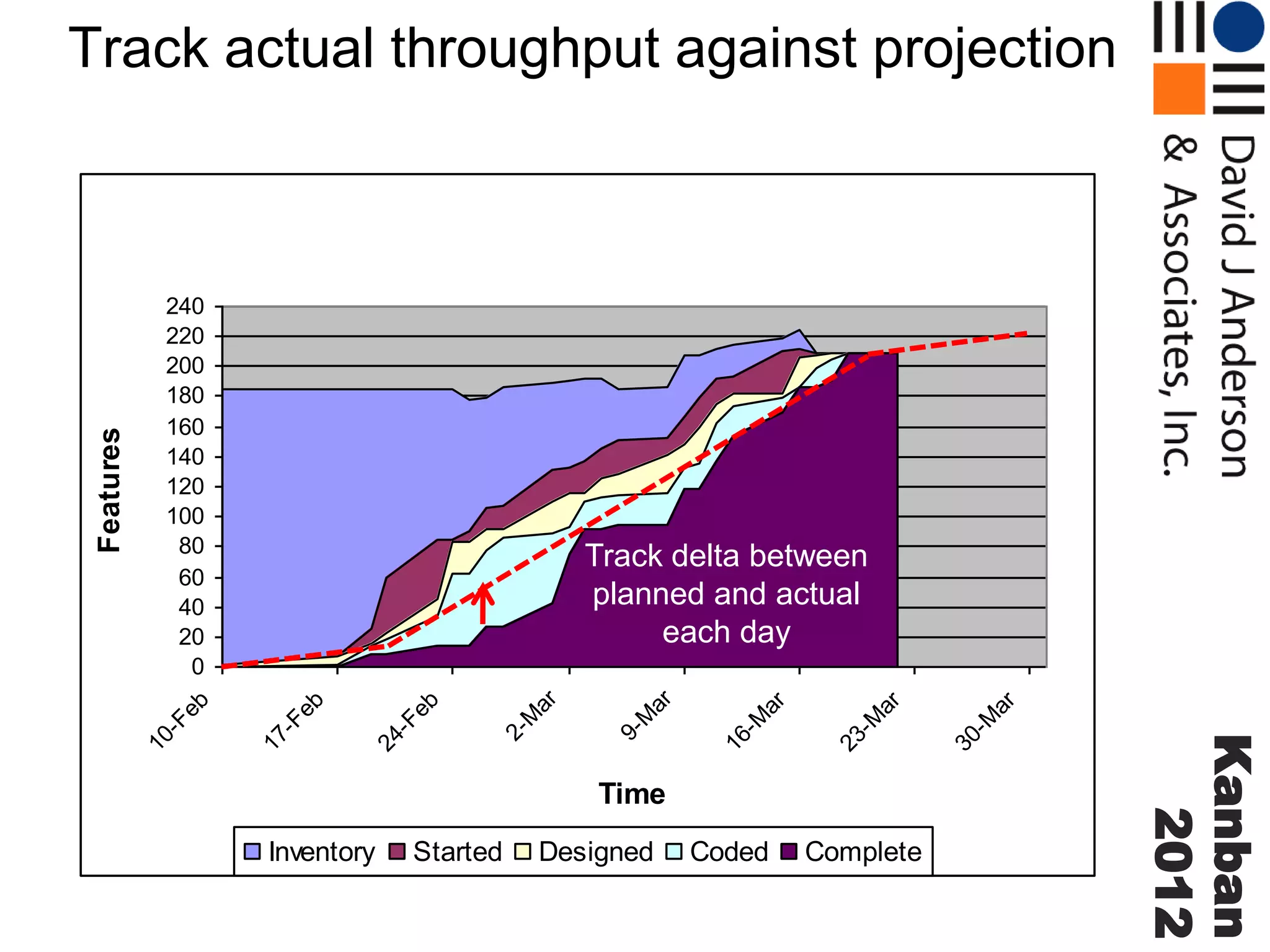
Track actual throughput against projection

Inventory

Started

Designed

Coded

Complete

30
-M
ar

23
-M
ar

16
-M
ar

9M
ar

2M
ar

eb

Time

Kanban
2012

24
-F

eb

Track delta between
planned and actual
each day
17
-F

eb

240
220
200
180
160
140
120
100
80
60
40
20
0

10
-F

Features

Device Management Ike II Cumulative Flow
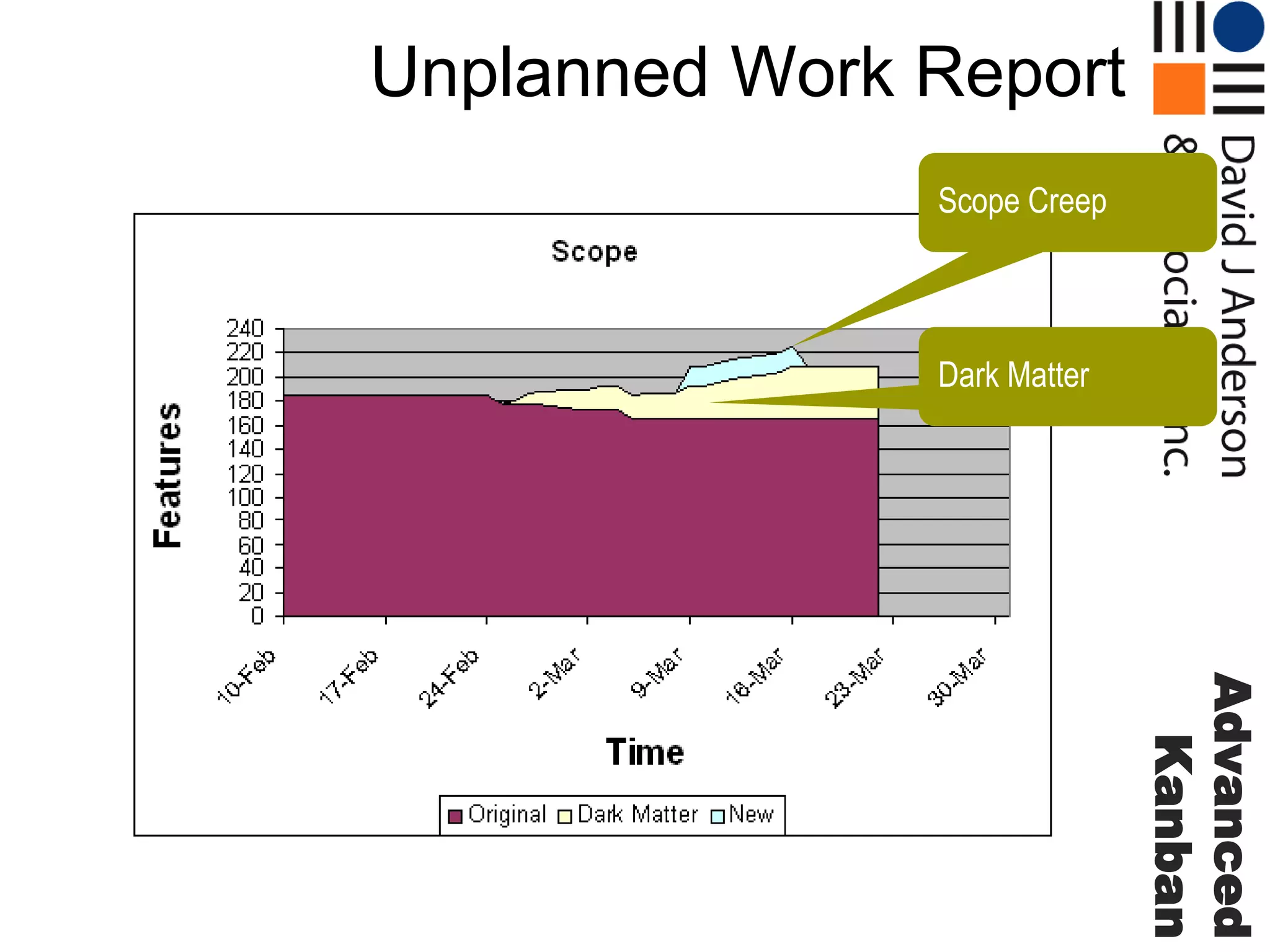
Unplanned Work Report
Scope Creep

Dark Matter

Advanced
Kanban
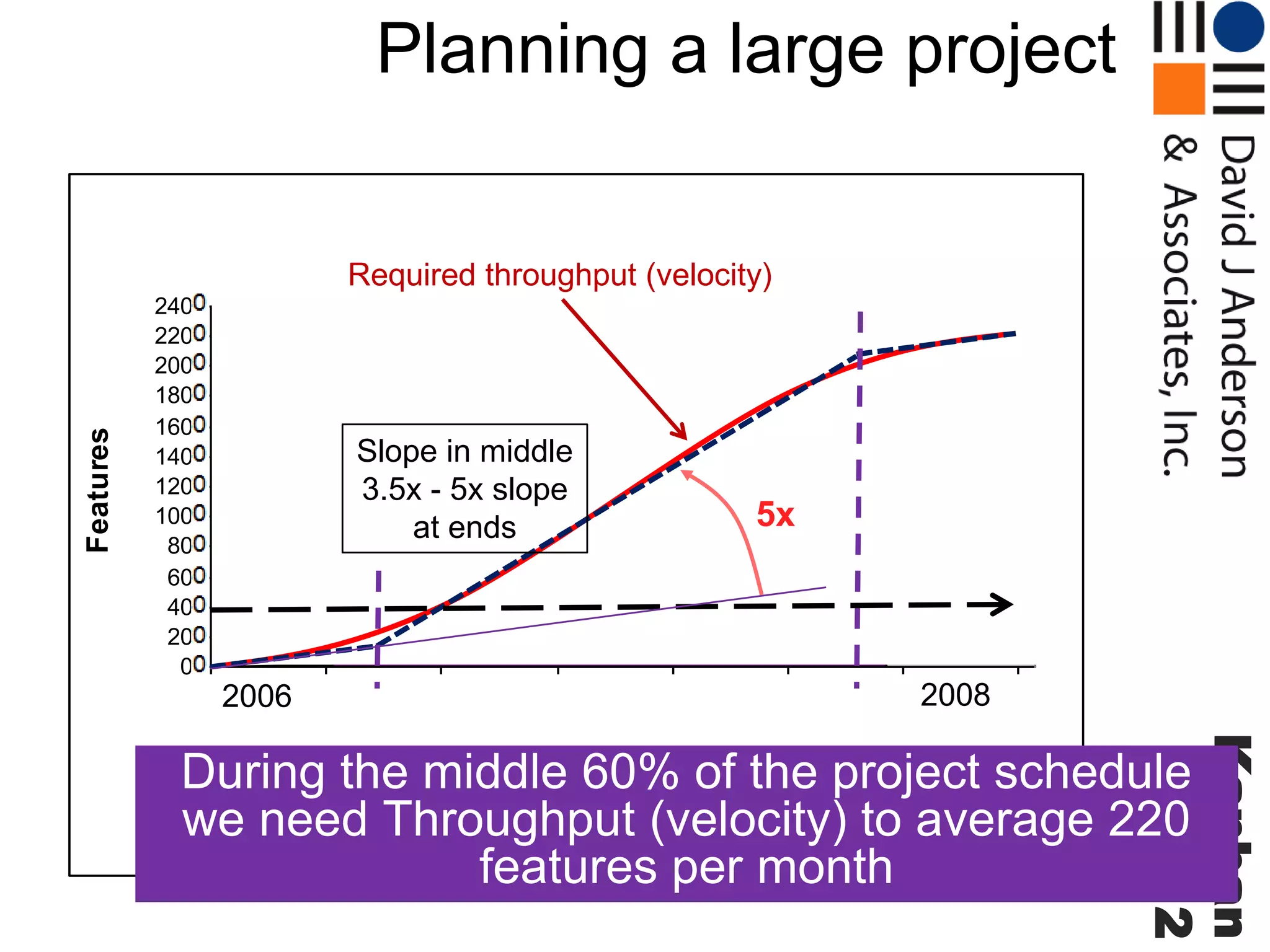
Planning a large project
Device Management Ike II Cumulative Flow

2008

30
-M
ar

23
-M
ar

16
-M
ar

9M
ar

2M
ar

5x

Kanban
2012

24
-F

eb

2006

eb

Slope in middle
3.5x - 5x slope
at ends

17
-F

eb

240
220
200
180
160
140
120
100
80
60
40
20
0

10
-F

Features

Required throughput (velocity)

During the middle 60% of the project schedule
Time
we need Throughput (velocity) to average 220
Inventory Started Designed Coded Complete
features per month
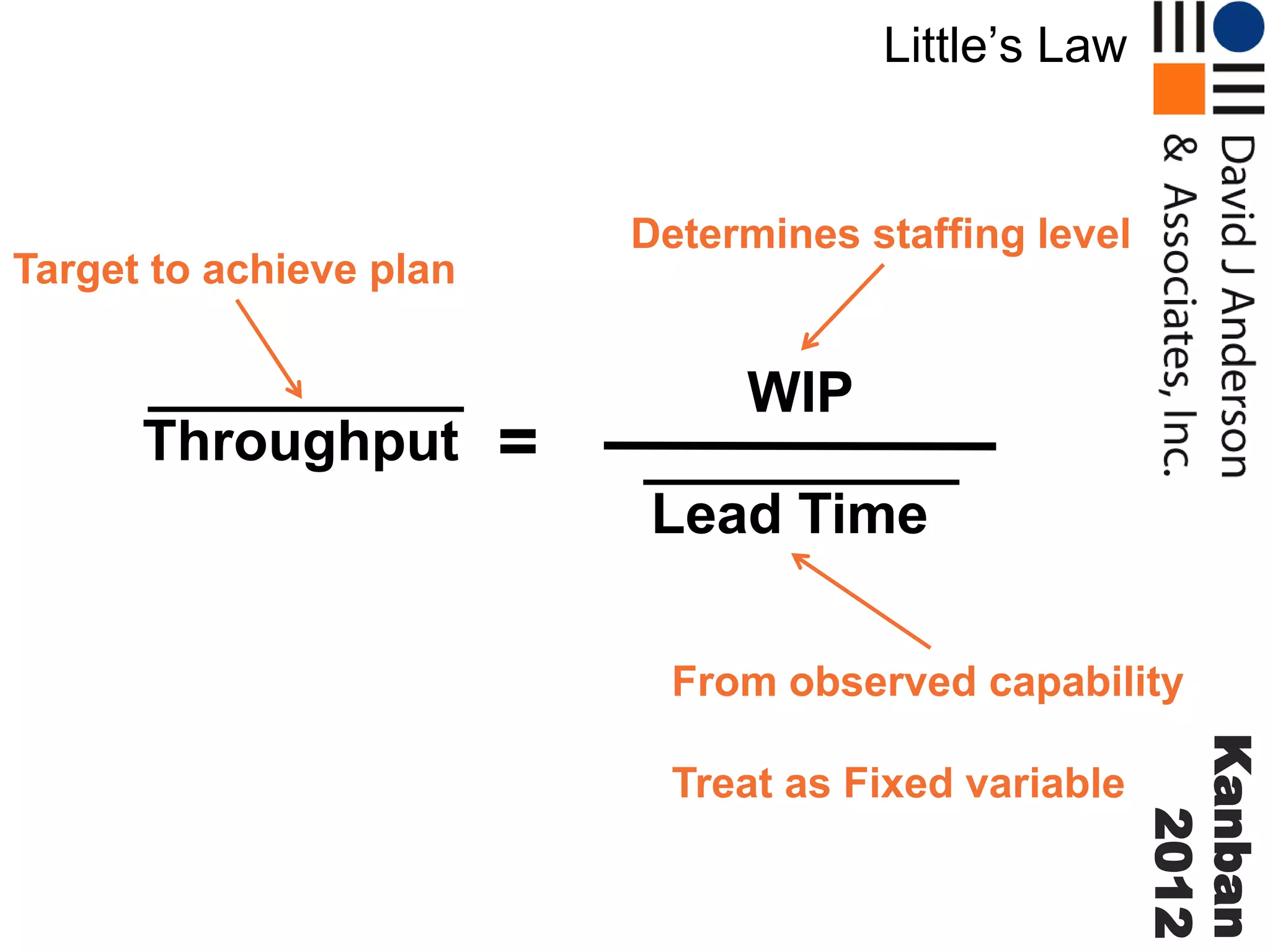
Little’s Law

Determines staffing level

Target to achieve plan

Throughput

=

WIP
Lead Time
From observed capability

Kanban
2012

Treat as Fixed variable
Changing the WIP limit without
maintaining the staffing level ratio
represents a change to the way of
working. It is a change to the
system design. And will produce a
change in the observed ‘common
cause’ capability of the system

Kanban
2012
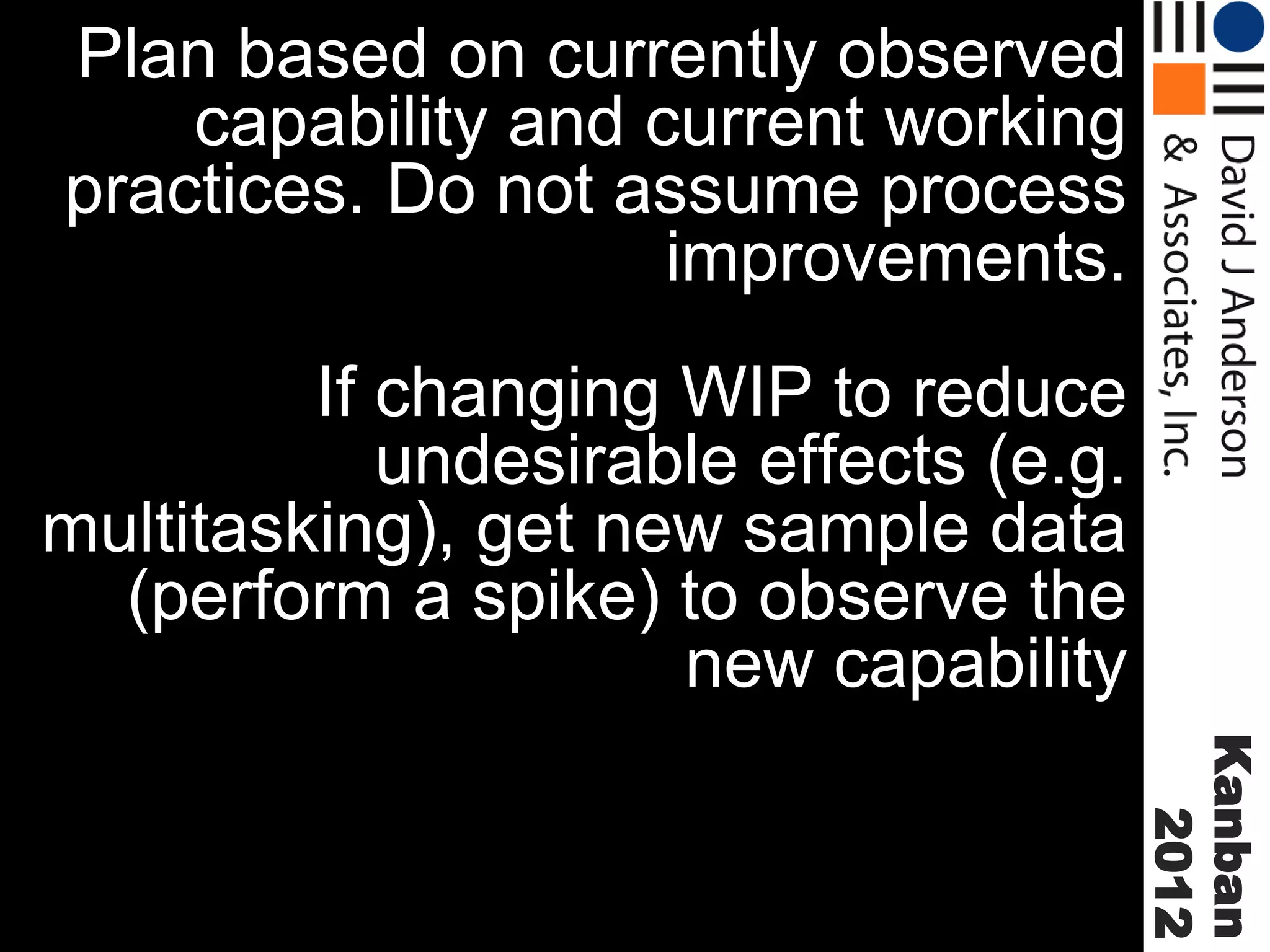
Plan based on currently observed
capability and current working
practices. Do not assume process
improvements.
If changing WIP to reduce
undesirable effects (e.g.
multitasking), get new sample data
(perform a spike) to observe the
new capability
Kanban
2012
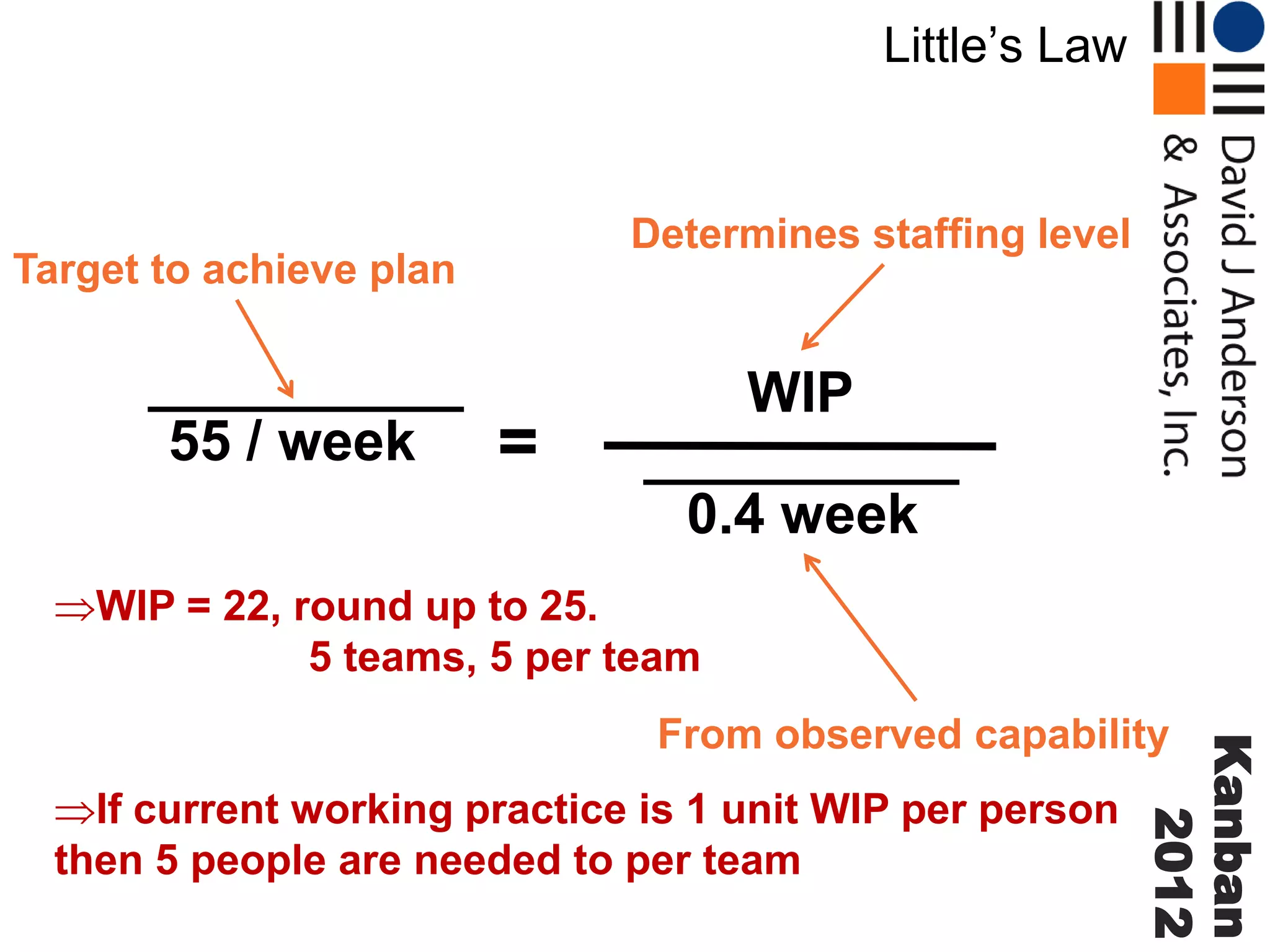
Little’s Law

Determines staffing level

Target to achieve plan

55 / week

WIP

=

0.4 week
WIP = 22, round up to 25.
5 teams, 5 per team

If current working practice is 1 unit WIP per person
then 5 people are needed to per team

Kanban
2012

From observed capability
Conclusions

Advanced
Kanban
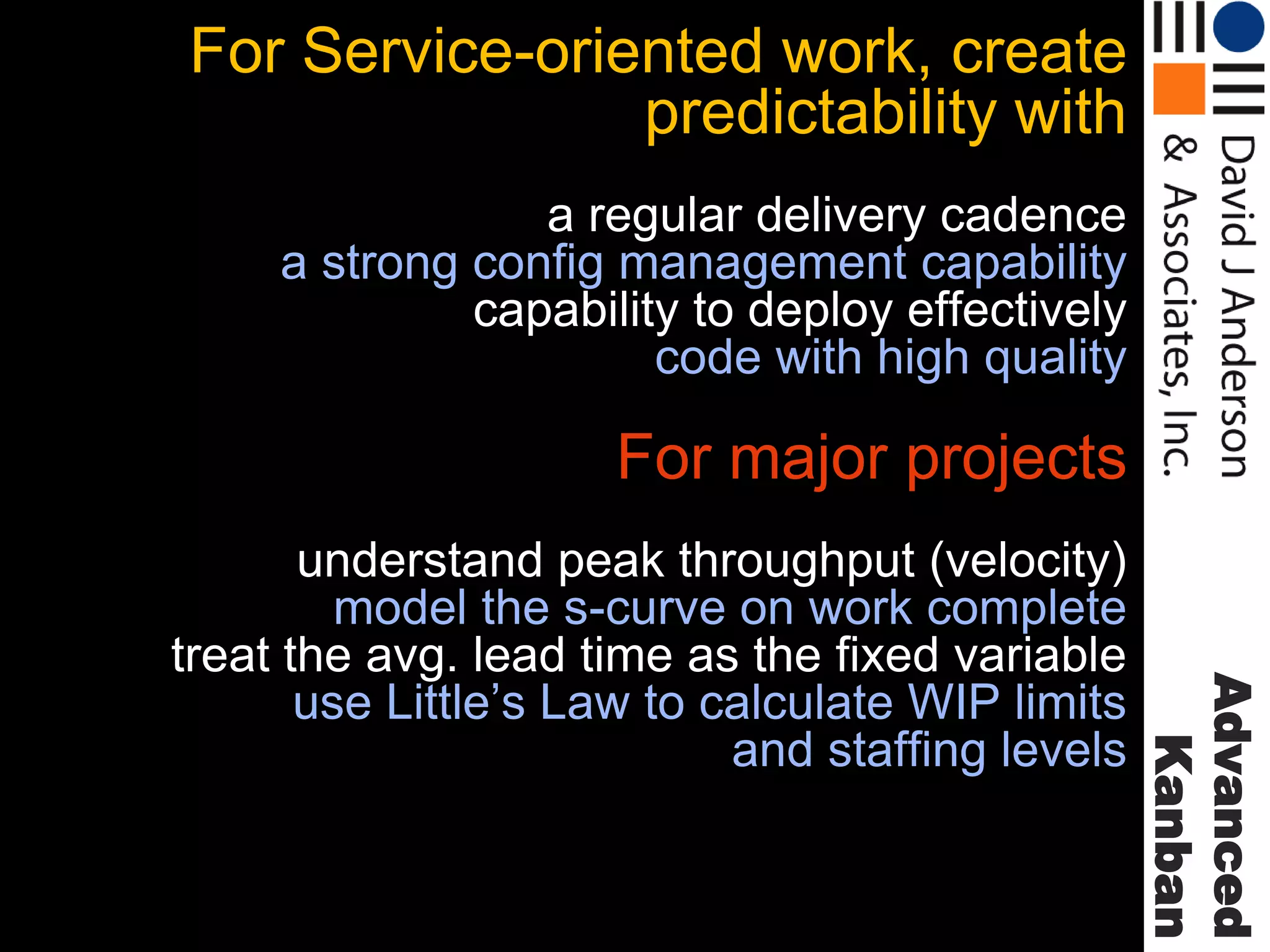
For Service-oriented work, create
predictability with
a regular delivery cadence
a strong config management capability
capability to deploy effectively
code with high quality

For major projects

Advanced
Kanban

understand peak throughput (velocity)
model the s-curve on work complete
treat the avg. lead time as the fixed variable
use Little’s Law to calculate WIP limits
and staffing levels
Thank you!

Advanced
Kanban

dja@djaa.com
http://djaa.com/
About…
David Anderson is a thought leader in
managing effective software teams. He leads
a consulting, training and publishing
business dedicated to developing,
promoting and implementing sustainable
evolutionary approaches for management of
knowledge workers.

He has 30 years experience in the high
technology industry starting with computer
games in the early 1980’s. He has led software
teams delivering superior productivity and
quality using innovative agile methods at large
companies such as Sprint and Motorola.

David is a founder of the Lean Kanban
University, a business dedicated to assuring
quality of training in Lean and Kanban
throughout the world.
http://leankanbanuniversity.com
Email: dja@djaa.com Twitter: agilemanager

Advanced
Kanban

David is the author of two books, Agile
Management for Software Engineering –
Applying the Theory of Constraints for Business
Results, and Kanban – Successful Evolutionary
Change for your Technology Business.

OOP 2012 - Predictability & Meansurement with Kanban

  • 1.
    Predictability & Measurement withKanban OOP 2012 Munich January 2012 Twitter: agilemanager David J. Anderson David J. Anderson & Associates Email: dja@djaa.com
  • 2.
    Book Published April 2010 Availablefrom djaa.com Advanced Kanban A 72,000 word intro to the topic
  • 3.
    German published January, 2011 Kanban 2012 Translationby Arne Roock & Henning Wolf of IT-Agile
  • 4.
  • 5.
    Delivering predictability with Kanban requiressome different techniques for different types of work such as software maintenance and support or Advanced Kanban major project work
  • 6.
  • 7.
    Create a regulardelivery cadence Develop a strong config management capability Develop capability to deploy effectively Build code with high quality Advanced Kanban
  • 8.
    Understand capability bystudying the natural philosophy of the work MARCH Lead Time Distribution 2.5 # CRs 2 1.5 1 0.5 106 101 96 91 86 81 76 71 66 61 56 51 46 41 36 31 26 21 16 11 6 1 0 Days Lead Time Distribution APRIL 3.5 Majority of CRs range 30 -> 55 2 Outliers 1.5 1 0.5 Days 8 14 1 14 4 13 0 3 6 7 12 12 11 10 99 92 85 78 71 64 57 50 43 36 29 22 15 8 0 1 CRs & Bugs 2.5 Advanced Kanban 3
  • 9.
    Observe Flow witha spectral analysis histogram of lead time Lead Time Distribution 3.5 3 CRs & Bugs 2.5 2 1.5 1 0.5 1 4 7 0 3 6 8 14 14 13 12 12 11 10 99 92 85 78 71 64 57 50 43 36 29 22 8 15 1 0 Days SLA expectation of 44 days with 85% on-time Advanced Kanban Mean of 31 days SLA expectation of 51 days with 98% on-time
  • 10.
    44 or 51days will not be good enough for some feature requests, so offer a package of classes of service Advanced Kanban
  • 11.
    Package of Classeswith SLAs  As soon as possible   100% on-time   providing 24 days advance notice Up to 51 days  98% on-time guarantee Up to 51 days  50% on-time Advanced Kanban  Full transparency
  • 12.
    Lead time Standard ClassItems Fixed Date Items Advanced Kanban Expedite Item Features Delivered
  • 13.
    Allocate capacity acrossclasses of service in order to deliver against anticipated demand 5 4 Analysis Input Queue In Prog Done 3 4 Development Dev Ready In Prog Done 2 Build Ready 2 = 20 total Test Release Ready ... Allocation 4 = 20% 10 = 50% 6 = 30% Advanced Kanban +1 = +5%
  • 14.
  • 15.
    Requires all thesame underlying data as used in service oriented work plus Advanced Kanban
  • 16.
    Major Project withtwo-tiered kanban board Advanced Kanban
  • 17.
    Observe Flow witha Cumulative Flow Diagram Avg. Lead Time Time Inventory Started Designed Coded Complete 30 -M ar 23 -M ar 16 -M ar 9M ar 2M ar eb Avg. Throughput Kanban 2012 24 -F eb WIP 17 -F eb 240 220 200 180 160 140 120 100 80 60 40 20 0 10 -F Features Device Management Ike II Cumulative Flow
  • 18.
  • 19.
    Cumulative Flow and PredictiveModeling with S-Curve Inventory Started Designed Coded Complete 30 -M ar 23 -M ar 16 -M ar 9M ar 2M ar eb Time Kanban 2012 24 -F eb Typical S-curve 17 -F eb 240 220 200 180 160 140 120 100 80 60 40 20 0 10 -F Features Device Management Ike II Cumulative Flow
  • 20.
    Simulating S-Curve witha Z 60% Slope in middle 3.5x - 5x slope at ends 5x 20% Time Inventory Started Designed Coded Complete 30 -M ar 23 -M ar 16 -M ar 9M ar 2M ar eb 24 -F eb 20% Kanban 2012 17 -F eb 240 220 200 180 160 140 120 100 80 60 40 20 0 10 -F Features Device Management Ike II Cumulative Flow
  • 21.
    Track actual throughputagainst projection Inventory Started Designed Coded Complete 30 -M ar 23 -M ar 16 -M ar 9M ar 2M ar eb Time Kanban 2012 24 -F eb Track delta between planned and actual each day 17 -F eb 240 220 200 180 160 140 120 100 80 60 40 20 0 10 -F Features Device Management Ike II Cumulative Flow
  • 22.
    Unplanned Work Report ScopeCreep Dark Matter Advanced Kanban
  • 23.
    Planning a largeproject Device Management Ike II Cumulative Flow 2008 30 -M ar 23 -M ar 16 -M ar 9M ar 2M ar 5x Kanban 2012 24 -F eb 2006 eb Slope in middle 3.5x - 5x slope at ends 17 -F eb 240 220 200 180 160 140 120 100 80 60 40 20 0 10 -F Features Required throughput (velocity) During the middle 60% of the project schedule Time we need Throughput (velocity) to average 220 Inventory Started Designed Coded Complete features per month
  • 24.
    Little’s Law Determines staffinglevel Target to achieve plan Throughput = WIP Lead Time From observed capability Kanban 2012 Treat as Fixed variable
  • 25.
    Changing the WIPlimit without maintaining the staffing level ratio represents a change to the way of working. It is a change to the system design. And will produce a change in the observed ‘common cause’ capability of the system Kanban 2012
  • 26.
    Plan based oncurrently observed capability and current working practices. Do not assume process improvements. If changing WIP to reduce undesirable effects (e.g. multitasking), get new sample data (perform a spike) to observe the new capability Kanban 2012
  • 27.
    Little’s Law Determines staffinglevel Target to achieve plan 55 / week WIP = 0.4 week WIP = 22, round up to 25. 5 teams, 5 per team If current working practice is 1 unit WIP per person then 5 people are needed to per team Kanban 2012 From observed capability
  • 28.
  • 29.
    For Service-oriented work,create predictability with a regular delivery cadence a strong config management capability capability to deploy effectively code with high quality For major projects Advanced Kanban understand peak throughput (velocity) model the s-curve on work complete treat the avg. lead time as the fixed variable use Little’s Law to calculate WIP limits and staffing levels
  • 30.
  • 31.
    About… David Anderson isa thought leader in managing effective software teams. He leads a consulting, training and publishing business dedicated to developing, promoting and implementing sustainable evolutionary approaches for management of knowledge workers. He has 30 years experience in the high technology industry starting with computer games in the early 1980’s. He has led software teams delivering superior productivity and quality using innovative agile methods at large companies such as Sprint and Motorola. David is a founder of the Lean Kanban University, a business dedicated to assuring quality of training in Lean and Kanban throughout the world. http://leankanbanuniversity.com Email: dja@djaa.com Twitter: agilemanager Advanced Kanban David is the author of two books, Agile Management for Software Engineering – Applying the Theory of Constraints for Business Results, and Kanban – Successful Evolutionary Change for your Technology Business.