PUNE ADVENTIST HOSPITAL
PRE - OPERATIVE
CHECKLIST
Perioperative nursing phases
• Preoperative phase – begins when the
decision to have the surgery is made and ends
when the patient is transferred to the OR
table
• Intraoperative phase – from initiation of
surgical procedure to when the patient is
shifted to PACU
• Postoperative – from when patient is received
in the PACU to when healing is complete
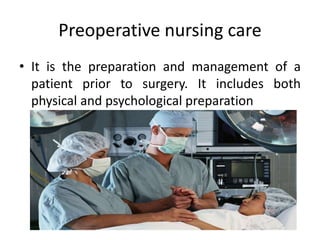
Preoperative nursing care
• It is the preparation and management of a
patient prior to surgery. It includes both
physical and psychological preparation
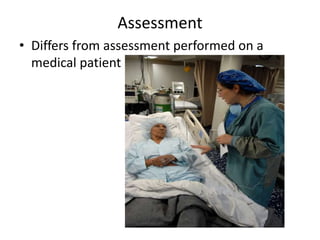
Assessment
• Differs from assessment performed on a
medical patient
• Assess current health status
• Allergies
• medications
• Previous surgeries
• Understanding of the surgical procedure and
anaesthesia
• Alcohol and other altering substances
• Social resources
• Cultural consideration
Physical assessment
• Cardiovascular system
• Respiratory system
• Renal system
• Neurological system
• Musculoskeletal system
• Nutritional status
Psychosocial assessment
• Level of anxiety
• Coping ability
• Support systems
Consent
• Nature and intention of surgery
• Name and qualifications of the person
performing the surgery
• Risks including tissue damage, disfigurement
or even death
• Chances of success
• Right of the patient to refuse or later
withdraw consent
Investigations
• CBC, blood grouping and cross match
• Fasting blood sugar
• Serum creatinine
• Urinalysis
• Chest X ray
• ECG
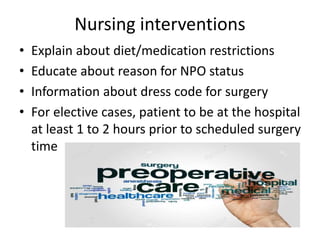
Nursing interventions
• Explain about diet/medication restrictions
• Educate about reason for NPO status
• Information about dress code for surgery
• For elective cases, patient to be at the hospital
at least 1 to 2 hours prior to scheduled surgery
time
Pre operative learning/teaching needs
• Deep breathing exercises, coughing, leg exercises,
ambulation
• Pain control and medications
• Cognitive control to decrease anxiety and enhance
relaxation
• Recovery room orientation
• Probable post operative therapies
Final preparation for surgery
• All personal belongings identified and secured
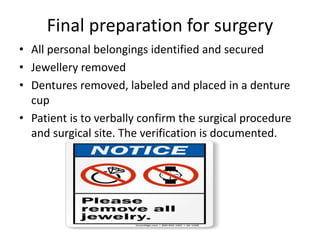
• Jewellery removed
• Dentures removed, labeled and placed in a denture
cup
• Patient is to verbally confirm the surgical procedure
and surgical site. The verification is documented.
Pre operative checklist

Pre operative checklist

  • 1.
    PUNE ADVENTIST HOSPITAL PRE- OPERATIVE CHECKLIST
  • 2.
    Perioperative nursing phases •Preoperative phase – begins when the decision to have the surgery is made and ends when the patient is transferred to the OR table • Intraoperative phase – from initiation of surgical procedure to when the patient is shifted to PACU • Postoperative – from when patient is received in the PACU to when healing is complete
  • 3.
    Preoperative nursing care •It is the preparation and management of a patient prior to surgery. It includes both physical and psychological preparation
  • 4.
    Assessment • Differs fromassessment performed on a medical patient
  • 5.
    • Assess currenthealth status • Allergies • medications • Previous surgeries • Understanding of the surgical procedure and anaesthesia • Alcohol and other altering substances • Social resources • Cultural consideration
  • 6.
    Physical assessment • Cardiovascularsystem • Respiratory system • Renal system • Neurological system • Musculoskeletal system • Nutritional status
  • 7.
    Psychosocial assessment • Levelof anxiety • Coping ability • Support systems
  • 8.
    Consent • Nature andintention of surgery • Name and qualifications of the person performing the surgery • Risks including tissue damage, disfigurement or even death • Chances of success • Right of the patient to refuse or later withdraw consent
  • 9.
    Investigations • CBC, bloodgrouping and cross match • Fasting blood sugar • Serum creatinine • Urinalysis • Chest X ray • ECG
  • 10.
    Nursing interventions • Explainabout diet/medication restrictions • Educate about reason for NPO status • Information about dress code for surgery • For elective cases, patient to be at the hospital at least 1 to 2 hours prior to scheduled surgery time
  • 11.
    Pre operative learning/teachingneeds • Deep breathing exercises, coughing, leg exercises, ambulation • Pain control and medications • Cognitive control to decrease anxiety and enhance relaxation • Recovery room orientation • Probable post operative therapies
  • 12.
    Final preparation forsurgery • All personal belongings identified and secured • Jewellery removed • Dentures removed, labeled and placed in a denture cup • Patient is to verbally confirm the surgical procedure and surgical site. The verification is documented.