C _ _ _ _i t _ _
_ s
S _ h e _ _ c
_ _
C _ l _ _ d _ y _
_ _
P _ _ _ l l _ _ - _
_a t _
P _ t _ _ _ _ _ l
D _ f _ _ _ _ n
c _
CAPACITOR
S
Objective of the Lesson:
Describe a capacitor and explain capacitance
Perform some calculations regarding
capacitance
 Deduce the effects of simple capacitors (e.g.,
parallel-plate, spherical, cylindrical) on the
capacitance, charge, and potential difference
when the size, potential difference, or charge is
changed (STEM_GP12EM-IIId-23 )
CAPACITORS
•Capacitors
are devices
that store
electric
charges and
energy.
Capacitors
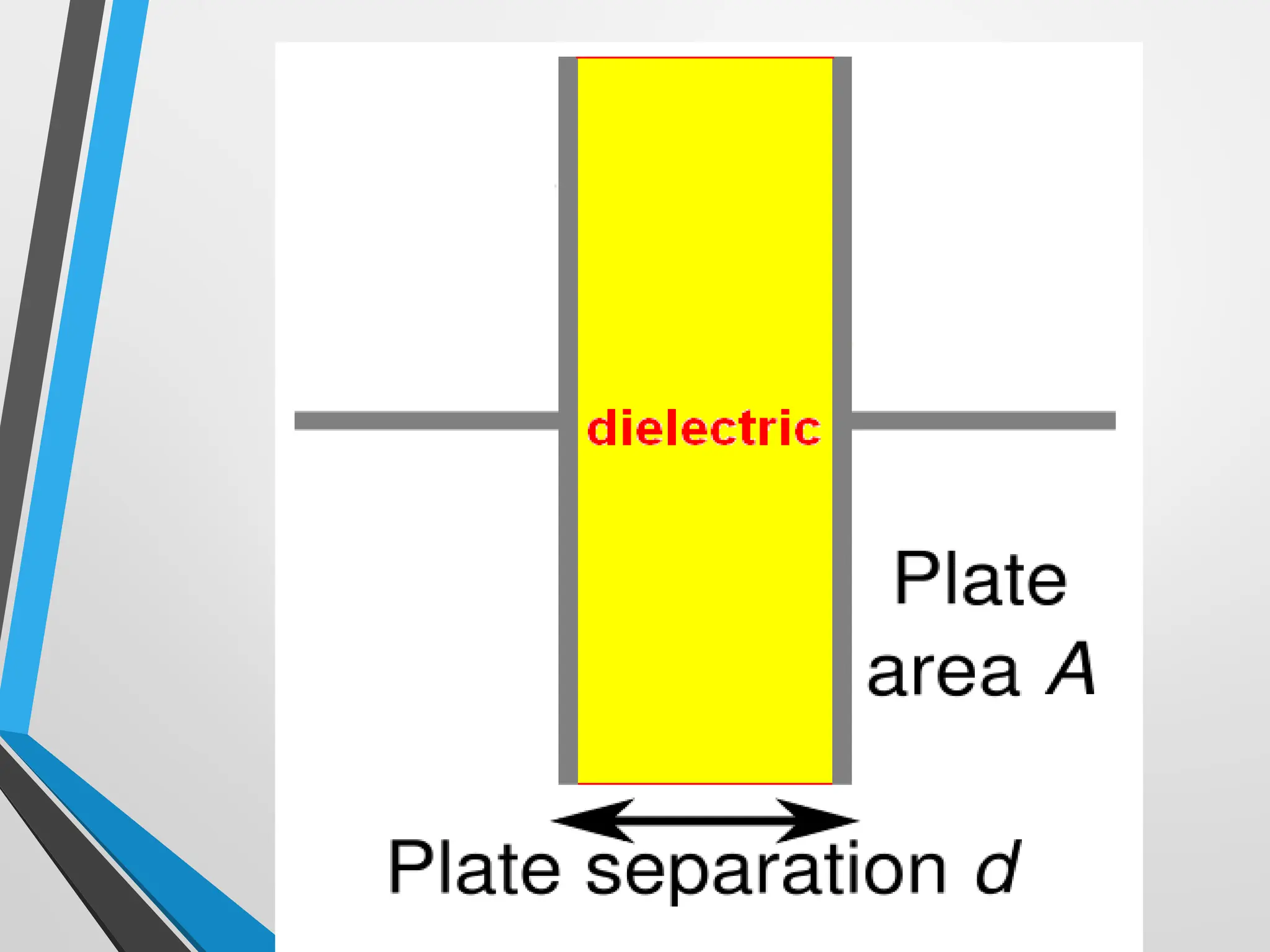
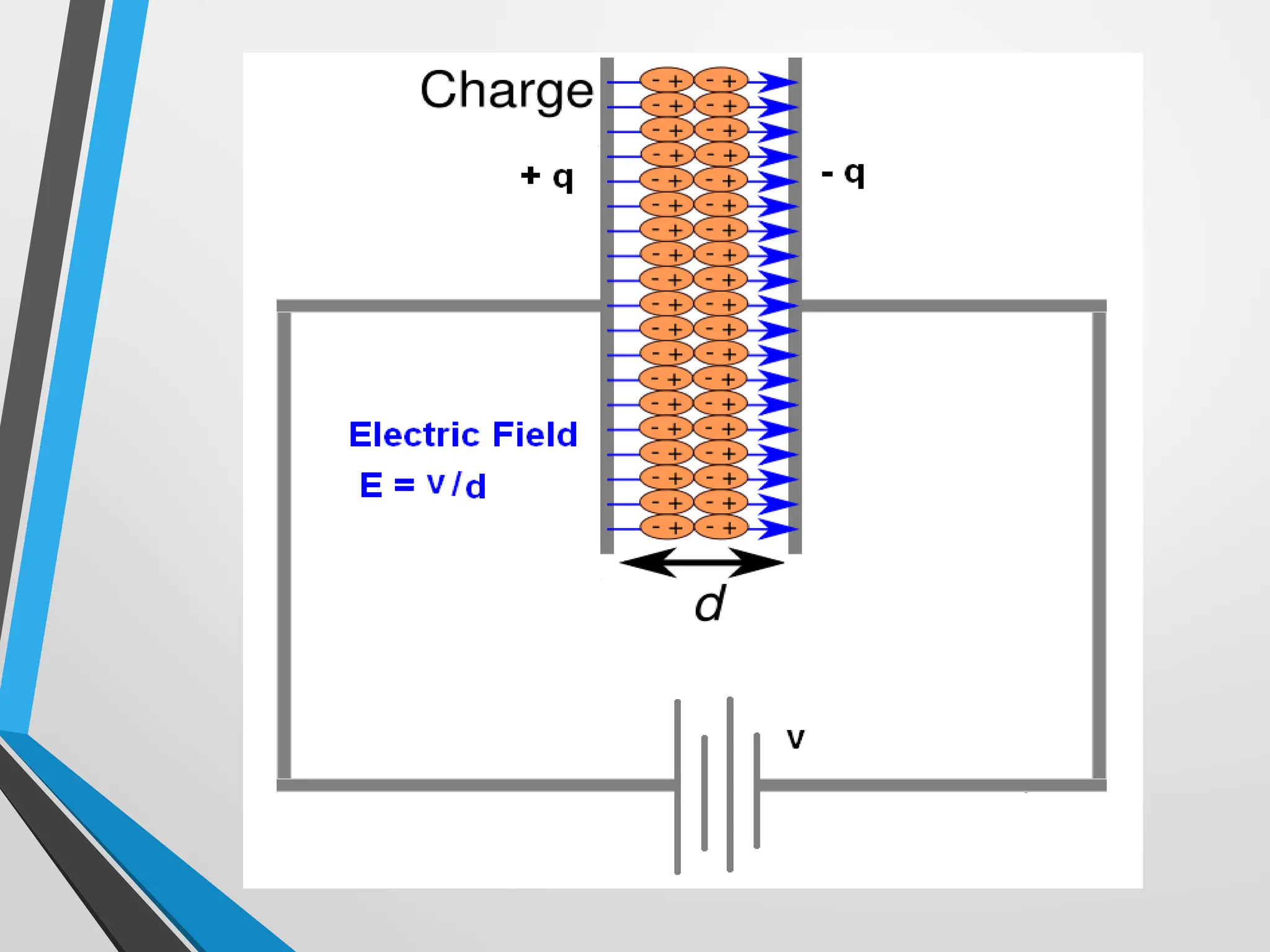
•Composed of two conductive
plates separated by an insulator
(or dielectric).
• Commonly illustrated as two
parallel metal plates separated
by a distance, d.
• One of the capacitor’s property
is the capacitance.
Capacitance
-the ability of a capacitor to store
charge
Electrical energy can be stored by
putting opposite charges on a pair
of isolated conductors. Being
conductors, the respective surfaces
of these two objects has potential
difference between them.
CALCULATING
CAPACITANCE
•A capacitor has capacitance
25 mF and is initially
uncharged. The battery
provides a potential difference
of 120 V. After switch is closed,
how much charge will pass
through it?
CALCULATING CAPACITANCE
PARALLEL- PLATE
CAPACITOR
C= ε0 A
d
 SPHERICAL CAPACITOR
C= 4 πεO ab
b-a
 CYLINDRICAL
CAPACITOR
C= 2πεO __L__
ln(b/a)
1. A parallel-plate capacitor has
circular plates of 8.2 cm radius
and 1.3 mm separation.
(a) Calculate the capacitance.
(b) What charge will appear on
the plates if a potential
difference of 120 V is applied?
2. You have two flat metal plates, each
of area 1.0 x 10^10 m^2, with which to
construct a parallel-plate capacitor. If
the capacitance of the device is 9.00F,
what must be the separation between
plates? Could this capacitor actually
be constructed?
(*Note: capacitor cannot be
constructed if the exponent has
smaller value than 10^-10 )
3. If a spherical capacitor has an
inner sphere of radius 12 cm and
13cm.
a.) Calculate the capacitance
b.) Compute for the charge if the
voltage is 240 V.
•Capacitors
are devices
that store
electric
charges and
energy.
Where do
we usually
find a
Capacitor?
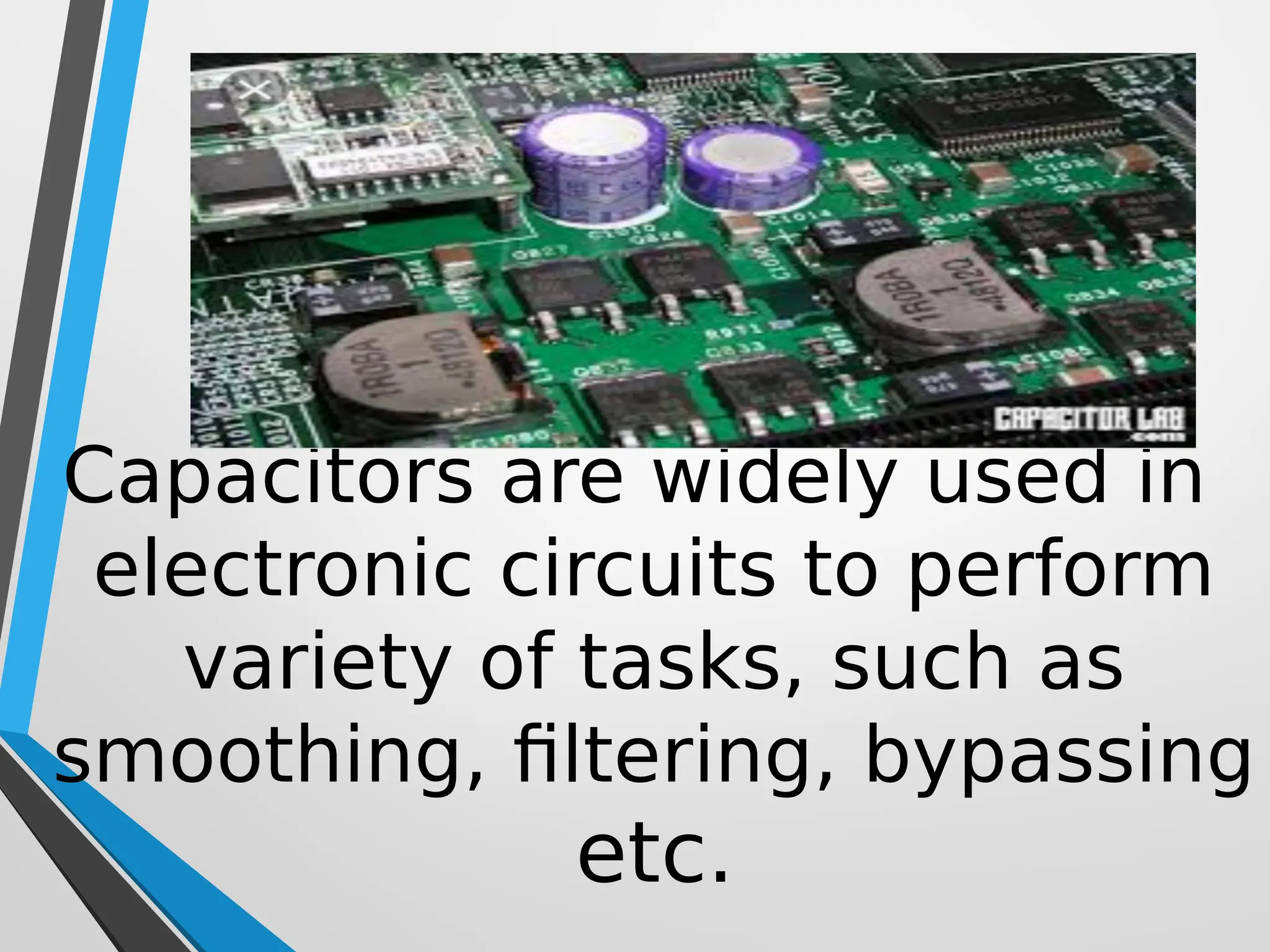
Capacitors are widely used in
electronic circuits to perform
variety of tasks, such as
smoothing, filtering, bypassing
etc.
One type of capacitor may
not be suitable for all
applications. Such as
ceramic capacitors,
generally superior than
other types and therefore
can be used in a vast
ranges of application.
What do the size,
shape and color of the
capacitor tell us?

PPT on capacitors and its application and simplifications

  • 1.
    C _ __ _i t _ _ _ s
  • 2.
    S _ he _ _ c _ _
  • 3.
    C _ l_ _ d _ y _ _ _
  • 4.
    P _ __ l l _ _ - _ _a t _
  • 5.
    P _ t_ _ _ _ _ l D _ f _ _ _ _ n c _
  • 6.
  • 7.
    Objective of theLesson: Describe a capacitor and explain capacitance Perform some calculations regarding capacitance  Deduce the effects of simple capacitors (e.g., parallel-plate, spherical, cylindrical) on the capacitance, charge, and potential difference when the size, potential difference, or charge is changed (STEM_GP12EM-IIId-23 )
  • 8.
  • 9.
  • 10.
    Capacitors •Composed of twoconductive plates separated by an insulator (or dielectric). • Commonly illustrated as two parallel metal plates separated by a distance, d. • One of the capacitor’s property is the capacitance.
  • 15.
    Capacitance -the ability ofa capacitor to store charge Electrical energy can be stored by putting opposite charges on a pair of isolated conductors. Being conductors, the respective surfaces of these two objects has potential difference between them.
  • 16.
    CALCULATING CAPACITANCE •A capacitor hascapacitance 25 mF and is initially uncharged. The battery provides a potential difference of 120 V. After switch is closed, how much charge will pass through it?
  • 18.
  • 19.
  • 20.
  • 21.
    1. A parallel-platecapacitor has circular plates of 8.2 cm radius and 1.3 mm separation. (a) Calculate the capacitance. (b) What charge will appear on the plates if a potential difference of 120 V is applied?
  • 22.
    2. You havetwo flat metal plates, each of area 1.0 x 10^10 m^2, with which to construct a parallel-plate capacitor. If the capacitance of the device is 9.00F, what must be the separation between plates? Could this capacitor actually be constructed? (*Note: capacitor cannot be constructed if the exponent has smaller value than 10^-10 )
  • 23.
    3. If aspherical capacitor has an inner sphere of radius 12 cm and 13cm. a.) Calculate the capacitance b.) Compute for the charge if the voltage is 240 V.
  • 25.
  • 26.
  • 27.
    Capacitors are widelyused in electronic circuits to perform variety of tasks, such as smoothing, filtering, bypassing etc.
  • 28.
    One type ofcapacitor may not be suitable for all applications. Such as ceramic capacitors, generally superior than other types and therefore can be used in a vast ranges of application.
  • 29.
    What do thesize, shape and color of the capacitor tell us?