INTRODUCTION ……
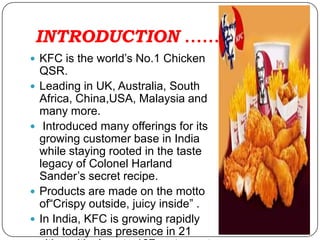
 KFC is the world’s No.1 Chicken
    QSR.
   Leading in UK, Australia, South
    Africa, China,USA, Malaysia and
    many more.
    Introduced many offerings for its
    growing customer base in India
    while staying rooted in the taste
    legacy of Colonel Harland
    Sander’s secret recipe.
   Products are made on the motto
    of“Crispy outside, juicy inside” .
   In India, KFC is growing rapidly
    and today has presence in 21
HISTORICAL
BACKGROUND……
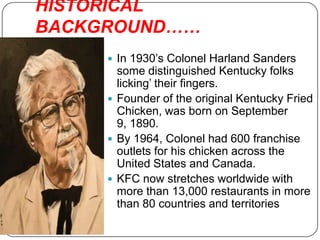
      In 1930’s Colonel Harland Sanders
       some distinguished Kentucky folks
       licking’ their fingers.
      Founder of the original Kentucky Fried
       Chicken, was born on September
       9, 1890.
      By 1964, Colonel had 600 franchise
       outlets for his chicken across the
       United States and Canada.
      KFC now stretches worldwide with
       more than 13,000 restaurants in more
       than 80 countries and territories
PROBLEMS FACED……
 Why doesn't KFC use healthier
  oil?: the oil does have dangerous
  trans-fatty acids.
 Is KFC's food really that
  unhealthy?: a three-piece extra-
  crispy combo meal contains as
  much as 15 g of Trans fat--more
  than a person should ingest in a
  week.
 What are other chains doing?: the
  Cheesecake Factory is doing so
  already, McDonald's backpedaled
  on a promise to cut Trans fats and
  says it's studying alternative
  oils, as is Burger King.
PROBLEMS FACED IN
INDIA…..
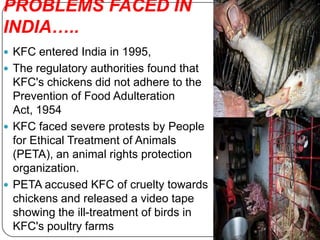
 KFC entered India in 1995,
 The regulatory authorities found that
  KFC's chickens did not adhere to the
  Prevention of Food Adulteration
  Act, 1954
 KFC faced severe protests by People
  for Ethical Treatment of Animals
  (PETA), an animal rights protection
  organization.
 PETA accused KFC of cruelty towards
  chickens and released a video tape
  showing the ill-treatment of birds in
  KFC's poultry farms
RE-ENTRY OF KFC……
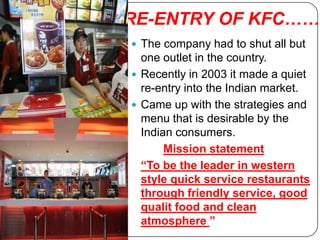
 The company had to shut all but
  one outlet in the country.
 Recently in 2003 it made a quiet
  re-entry into the Indian market.
 Came up with the strategies and
  menu that is desirable by the
  Indian consumers.
       Mission statement
  “To be the leader in western
  style quick service restaurants
  through friendly service, good
  qualit food and clean
  atmosphere ”
GOALS OF KFC…..
 Build an organization dedicated to
    excellence.
   Deliver superior quality and value in
    our products and services.
    Maintain a commitment to innovation
   Generate consistently superior
    financial returns and benefits our
    owner and employees.
   Establish in India our position as
    leading WQSR (Western Quick
    Service Restaurant) chain, serving
    good value.
STRENGHTS….
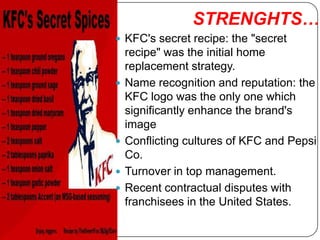
 KFC's secret recipe: the "secret
    recipe" was the initial home
    replacement strategy.
   Name recognition and reputation: the
    KFC logo was the only one which
    significantly enhance the brand's
    image
   Conflicting cultures of KFC and Pepsi
    Co.
   Turnover in top management.
   Recent contractual disputes with
    franchisees in the United States.
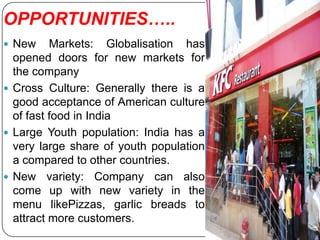
OPPORTUNITIES…..
 New     Markets: Globalisation has
  opened doors for new markets for
  the company
 Cross Culture: Generally there is a
  good acceptance of American culture
  of fast food in India
 Large Youth population: India has a
  very large share of youth population
  a compared to other countries.
 New variety: Company can also
  come up with new variety in the
  menu likePizzas, garlic breads to
  attract more customers.
THREATS….
 Competition: Competitor companies
  like McDonalds are fast catching up
  with the market.
 Organizations like PETA People for
  Ethnic Treatment for Animals have
  given a bad name to the company
 Saturated US Market: Now KFC
  cannot rely on just its home market to
  generate sales. As the US markets
  are already saturated and leave no or
  little scope for growth,
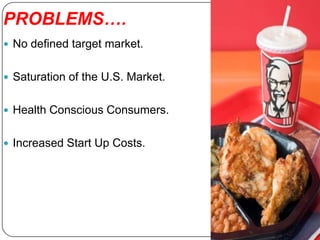
PROBLEMS….
 No defined target market.


 Saturation of the U.S. Market.


 Health Conscious Consumers.


 Increased Start Up Costs.
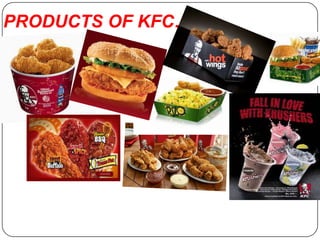
PRODUCTS OF KFC….
THANK YOU…….

Presentation on KFC

  • 2.
    INTRODUCTION ……  KFCis the world’s No.1 Chicken QSR.  Leading in UK, Australia, South Africa, China,USA, Malaysia and many more.  Introduced many offerings for its growing customer base in India while staying rooted in the taste legacy of Colonel Harland Sander’s secret recipe.  Products are made on the motto of“Crispy outside, juicy inside” .  In India, KFC is growing rapidly and today has presence in 21
  • 3.
    HISTORICAL BACKGROUND……  In 1930’s Colonel Harland Sanders some distinguished Kentucky folks licking’ their fingers.  Founder of the original Kentucky Fried Chicken, was born on September 9, 1890.  By 1964, Colonel had 600 franchise outlets for his chicken across the United States and Canada.  KFC now stretches worldwide with more than 13,000 restaurants in more than 80 countries and territories
  • 4.
    PROBLEMS FACED……  Whydoesn't KFC use healthier oil?: the oil does have dangerous trans-fatty acids.  Is KFC's food really that unhealthy?: a three-piece extra- crispy combo meal contains as much as 15 g of Trans fat--more than a person should ingest in a week.  What are other chains doing?: the Cheesecake Factory is doing so already, McDonald's backpedaled on a promise to cut Trans fats and says it's studying alternative oils, as is Burger King.
  • 5.
    PROBLEMS FACED IN INDIA….. KFC entered India in 1995,  The regulatory authorities found that KFC's chickens did not adhere to the Prevention of Food Adulteration Act, 1954  KFC faced severe protests by People for Ethical Treatment of Animals (PETA), an animal rights protection organization.  PETA accused KFC of cruelty towards chickens and released a video tape showing the ill-treatment of birds in KFC's poultry farms
  • 6.
    RE-ENTRY OF KFC…… The company had to shut all but one outlet in the country.  Recently in 2003 it made a quiet re-entry into the Indian market.  Came up with the strategies and menu that is desirable by the Indian consumers. Mission statement “To be the leader in western style quick service restaurants through friendly service, good qualit food and clean atmosphere ”
  • 7.
    GOALS OF KFC….. Build an organization dedicated to excellence.  Deliver superior quality and value in our products and services.  Maintain a commitment to innovation  Generate consistently superior financial returns and benefits our owner and employees.  Establish in India our position as leading WQSR (Western Quick Service Restaurant) chain, serving good value.
  • 8.
    STRENGHTS….  KFC's secretrecipe: the "secret recipe" was the initial home replacement strategy.  Name recognition and reputation: the KFC logo was the only one which significantly enhance the brand's image  Conflicting cultures of KFC and Pepsi Co.  Turnover in top management.  Recent contractual disputes with franchisees in the United States.
  • 9.
    OPPORTUNITIES…..  New Markets: Globalisation has opened doors for new markets for the company  Cross Culture: Generally there is a good acceptance of American culture of fast food in India  Large Youth population: India has a very large share of youth population a compared to other countries.  New variety: Company can also come up with new variety in the menu likePizzas, garlic breads to attract more customers.
  • 10.
    THREATS….  Competition: Competitorcompanies like McDonalds are fast catching up with the market.  Organizations like PETA People for Ethnic Treatment for Animals have given a bad name to the company  Saturated US Market: Now KFC cannot rely on just its home market to generate sales. As the US markets are already saturated and leave no or little scope for growth,
  • 11.
    PROBLEMS….  No definedtarget market.  Saturation of the U.S. Market.  Health Conscious Consumers.  Increased Start Up Costs.
  • 12.
  • 13.