How to Read your
Body Language
If the eyes are the windows of the soul, then the
body is the mirror of our feelings.

7% of the information we receive is from what they
actually say.
38% of information we receive is from the tone,
inflection and speed of their voice.
A staggering 55% of the information we receive is
from their body language.
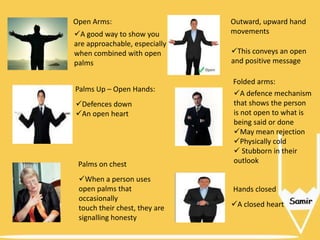
Open Arms:
A good way to show you
are approachable, especially
when combined with open
palms
Palms Up – Open Hands:

Defences down
An open heart

Palms on chest
When a person uses
open palms that
occasionally
touch their chest, they are
signalling honesty

Outward, upward hand
movements
This conveys an open
and positive message
Folded arms:
A defence mechanism
that shows the person
is not open to what is
being said or done
May mean rejection
Physically cold
 Stubborn in their
outlook

Hands closed
A closed heart
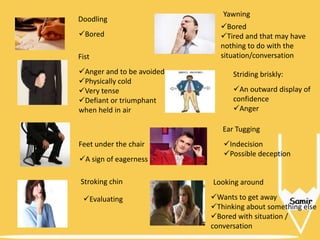
Doodling
Bored

Fist
Anger and to be avoided
Physically cold
Very tense
Defiant or triumphant
when held in air

Yawning

Bored
Tired and that may have
nothing to do with the
situation/conversation
Striding briskly:
An outward display of
confidence
Anger
Ear Tugging

Feet under the chair
A sign of eagerness
Stroking chin

Evaluating

Indecision
Possible deception

Looking around
Wants to get away
Thinking about something else
Bored with situation /
conversation
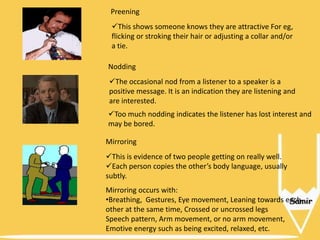
Preening

This shows someone knows they are attractive For eg,
flicking or stroking their hair or adjusting a collar and/or
a tie.
Nodding
The occasional nod from a listener to a speaker is a
positive message. It is an indication they are listening and
are interested.
Too much nodding indicates the listener has lost interest and
may be bored.
Mirroring
This is evidence of two people getting on really well.
Each person copies the other’s body language, usually
subtly.
Mirroring occurs with:
•Breathing, Gestures, Eye movement, Leaning towards each
other at the same time, Crossed or uncrossed legs
Speech pattern, Arm movement, or no arm movement,
Emotive energy such as being excited, relaxed, etc.
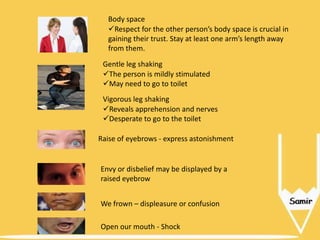
Body space
Respect for the other person’s body space is crucial in
gaining their trust. Stay at least one arm’s length away
from them.
Gentle leg shaking
The person is mildly stimulated
May need to go to toilet
Vigorous leg shaking
Reveals apprehension and nerves
Desperate to go to the toilet
Raise of eyebrows - express astonishment

Envy or disbelief may be displayed by a
raised eyebrow
We frown – displeasure or confusion
Open our mouth - Shock
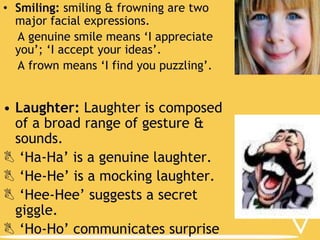
• Smiling: smiling & frowning are two
major facial expressions.
A genuine smile means ‘I appreciate
you’; ‘I accept your ideas’.
A frown means ‘I find you puzzling’.

• Laughter: Laughter is composed
of a broad range of gesture &
sounds.
 ‘Ha-Ha’ is a genuine laughter.
 ‘He-He’ is a mocking laughter.
 ‘Hee-Hee’ suggests a secret
giggle.
 ‘Ho-Ho’ communicates surprise
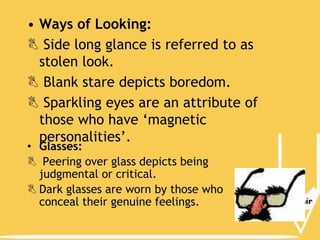
• Ways of Looking:
 Side long glance is referred to as
stolen look.
 Blank stare depicts boredom.
 Sparkling eyes are an attribute of
those who have ‘magnetic
personalities’.
• Glasses:
 Peering over glass depicts being
judgmental or critical.
 Dark glasses are worn by those who
conceal their genuine feelings.
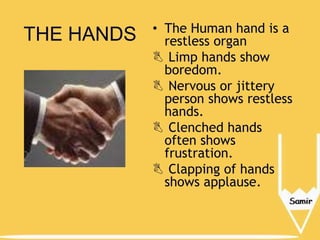
THE HANDS

• The Human hand is a
restless organ
 Limp hands show
boredom.
 Nervous or jittery
person shows restless
hands.
 Clenched hands
often shows
frustration.
 Clapping of hands
shows applause.
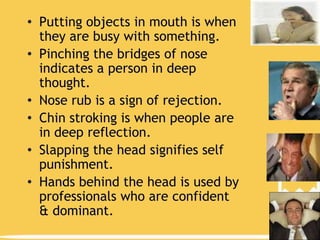
• Putting objects in mouth is when
they are busy with something.
• Pinching the bridges of nose
indicates a person in deep
thought.
• Nose rub is a sign of rejection.
• Chin stroking is when people are
in deep reflection.
• Slapping the head signifies self
punishment.
• Hands behind the head is used by
professionals who are confident
& dominant.
Thank You 

Ppt for budy language

  • 1.
    How to Readyour Body Language
  • 2.
    If the eyesare the windows of the soul, then the body is the mirror of our feelings. 7% of the information we receive is from what they actually say. 38% of information we receive is from the tone, inflection and speed of their voice. A staggering 55% of the information we receive is from their body language.
  • 3.
    Open Arms: A goodway to show you are approachable, especially when combined with open palms Palms Up – Open Hands: Defences down An open heart Palms on chest When a person uses open palms that occasionally touch their chest, they are signalling honesty Outward, upward hand movements This conveys an open and positive message Folded arms: A defence mechanism that shows the person is not open to what is being said or done May mean rejection Physically cold  Stubborn in their outlook Hands closed A closed heart
  • 4.
    Doodling Bored Fist Anger and tobe avoided Physically cold Very tense Defiant or triumphant when held in air Yawning Bored Tired and that may have nothing to do with the situation/conversation Striding briskly: An outward display of confidence Anger Ear Tugging Feet under the chair A sign of eagerness Stroking chin Evaluating Indecision Possible deception Looking around Wants to get away Thinking about something else Bored with situation / conversation
  • 5.
    Preening This shows someoneknows they are attractive For eg, flicking or stroking their hair or adjusting a collar and/or a tie. Nodding The occasional nod from a listener to a speaker is a positive message. It is an indication they are listening and are interested. Too much nodding indicates the listener has lost interest and may be bored. Mirroring This is evidence of two people getting on really well. Each person copies the other’s body language, usually subtly. Mirroring occurs with: •Breathing, Gestures, Eye movement, Leaning towards each other at the same time, Crossed or uncrossed legs Speech pattern, Arm movement, or no arm movement, Emotive energy such as being excited, relaxed, etc.
  • 6.
    Body space Respect forthe other person’s body space is crucial in gaining their trust. Stay at least one arm’s length away from them. Gentle leg shaking The person is mildly stimulated May need to go to toilet Vigorous leg shaking Reveals apprehension and nerves Desperate to go to the toilet Raise of eyebrows - express astonishment Envy or disbelief may be displayed by a raised eyebrow We frown – displeasure or confusion Open our mouth - Shock
  • 7.
    • Smiling: smiling& frowning are two major facial expressions. A genuine smile means ‘I appreciate you’; ‘I accept your ideas’. A frown means ‘I find you puzzling’. • Laughter: Laughter is composed of a broad range of gesture & sounds.  ‘Ha-Ha’ is a genuine laughter.  ‘He-He’ is a mocking laughter.  ‘Hee-Hee’ suggests a secret giggle.  ‘Ho-Ho’ communicates surprise
  • 8.
    • Ways ofLooking:  Side long glance is referred to as stolen look.  Blank stare depicts boredom.  Sparkling eyes are an attribute of those who have ‘magnetic personalities’. • Glasses:  Peering over glass depicts being judgmental or critical.  Dark glasses are worn by those who conceal their genuine feelings.
  • 9.
    THE HANDS • TheHuman hand is a restless organ  Limp hands show boredom.  Nervous or jittery person shows restless hands.  Clenched hands often shows frustration.  Clapping of hands shows applause.
  • 10.
    • Putting objectsin mouth is when they are busy with something. • Pinching the bridges of nose indicates a person in deep thought. • Nose rub is a sign of rejection. • Chin stroking is when people are in deep reflection. • Slapping the head signifies self punishment. • Hands behind the head is used by professionals who are confident & dominant.
  • 11.