Globalization  / International StrategyProf. S P DasM. Phil (Economics), M.B.A. (Finance), M.A. (Economics), MCCP, PGDM, PGDFM, DBM, DHMCT, B.Com, UGC-SET (Economics)
Globalization?Globalization may be defined as “the process of integration of economies across the world through cross-border flow of factors, products and information.”The IMF defines globalization as “the growing interdependence of countries worldwide through increasing volume and variety of cross-border transactions in goods and services and of international capital flows, and also through the more rapid and widespread diffusion of technology.Prof. S P Das
Levels of GlobalizationMicro Level – Globalization of Business and FirmMacro Level – Globalization of the World EconomyProf. S P Das
Features  of GlobalizationOperates and Plans to expand all over the worldRemoving differences between domestic and foreign marketsBuying and Selling across the globeManufacturing and Production any where as per the economy of scaleProduct planning and development based on market consideration of entire worldFactors of production are sourced from around the globeCreation of global culture among the minds of employeesCarries both promises and threats at the national, regional, organization and individual level.Prof. S P Das
Drivers of GlobalizationIncreasing International TradeProduction Sharing / Global OutsourcingInternational Investments and ProductionCross Border Mergers & AcquisitionsEconomic Integration though Trade PactsRapid Increase in Communications and expansion of technologyDevelopment of supporting servicesConsumer PressuresIncrease in Global CompetitionProf. S P Das
Approaches to GlobalizationEthnocentric ApproachPolycentric ApproachRegion-centric ApproachGeocentric ApproachProf. S P Das
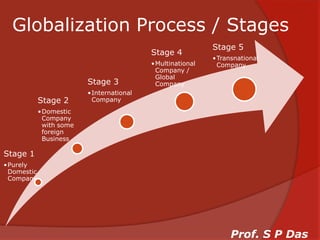
Globalization Process / StagesProf. S P Das
Benefits of GlobalizationFree Flow of CapitalFree Flow of TechnologySpreading out of Manufacturing FacilitiesBalance Development of world EconomyIncrease in Production and ConsumptionLow Prices with High QualityCultural Exchange and Demand for Variety of ProductsIncrease in Employment and IncomeHigh Standard of LivingBalance Human DevelopmentIncrease in welfare and prosperityProf. S P Das
Ill Effects of GlobalizationGlobal dominance of industries by MNCMay kill domestic IndustriesExploitation of Human ResourcesUnder employment / unemploymentDecline in Demand for domestic productsIncreasing inequality between classesTransfer of Natural ResourcesCommercial and Political ColonialismThreat to National Sovereignty / SecurityProf. S P Das
Globalization Policy Suggestions  of UNDPManage Trade and Capital Flows more carefullyInvest in Poor PeopleFoster Small EnterprisesProperly Manage New TechnologyReduce Poverty and introduce safety netsInfluence GovernanceProf. S P Das
Strengths of IndiaSkilled & Cheaper Human ResourcesWide Base / MarketGrowing EntrepreneurshipGrowing Domestic MarketNiche MarketsEconomic LiberalizationCompetitionProf. S P Das
Challenges for IndiaBureaucratic policy and proceduresHigh cost of many vital inputsPoor / Inadequate infrastructureTechnological ObsolescenceResistance to changePoor Quality imageLimited R & DLack of experience in managing International BusinessProf. S P Das
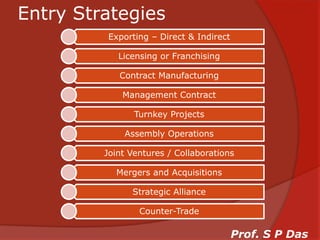
Entry StrategiesProf. S P Das
AssignmentSelect any company of your choice having international business activities. Evaluate the International Business Expansion / Entry Strategy adopted by the selected company. Prof. S P Das
Thank youProf. S P Das

Ppt 02 international strategy

  • 1.
    Globalization /International StrategyProf. S P DasM. Phil (Economics), M.B.A. (Finance), M.A. (Economics), MCCP, PGDM, PGDFM, DBM, DHMCT, B.Com, UGC-SET (Economics)
  • 2.
    Globalization?Globalization may bedefined as “the process of integration of economies across the world through cross-border flow of factors, products and information.”The IMF defines globalization as “the growing interdependence of countries worldwide through increasing volume and variety of cross-border transactions in goods and services and of international capital flows, and also through the more rapid and widespread diffusion of technology.Prof. S P Das
  • 3.
    Levels of GlobalizationMicroLevel – Globalization of Business and FirmMacro Level – Globalization of the World EconomyProf. S P Das
  • 4.
    Features ofGlobalizationOperates and Plans to expand all over the worldRemoving differences between domestic and foreign marketsBuying and Selling across the globeManufacturing and Production any where as per the economy of scaleProduct planning and development based on market consideration of entire worldFactors of production are sourced from around the globeCreation of global culture among the minds of employeesCarries both promises and threats at the national, regional, organization and individual level.Prof. S P Das
  • 5.
    Drivers of GlobalizationIncreasingInternational TradeProduction Sharing / Global OutsourcingInternational Investments and ProductionCross Border Mergers & AcquisitionsEconomic Integration though Trade PactsRapid Increase in Communications and expansion of technologyDevelopment of supporting servicesConsumer PressuresIncrease in Global CompetitionProf. S P Das
  • 6.
    Approaches to GlobalizationEthnocentricApproachPolycentric ApproachRegion-centric ApproachGeocentric ApproachProf. S P Das
  • 7.
    Globalization Process /StagesProf. S P Das
  • 8.
    Benefits of GlobalizationFreeFlow of CapitalFree Flow of TechnologySpreading out of Manufacturing FacilitiesBalance Development of world EconomyIncrease in Production and ConsumptionLow Prices with High QualityCultural Exchange and Demand for Variety of ProductsIncrease in Employment and IncomeHigh Standard of LivingBalance Human DevelopmentIncrease in welfare and prosperityProf. S P Das
  • 9.
    Ill Effects ofGlobalizationGlobal dominance of industries by MNCMay kill domestic IndustriesExploitation of Human ResourcesUnder employment / unemploymentDecline in Demand for domestic productsIncreasing inequality between classesTransfer of Natural ResourcesCommercial and Political ColonialismThreat to National Sovereignty / SecurityProf. S P Das
  • 10.
    Globalization Policy Suggestions of UNDPManage Trade and Capital Flows more carefullyInvest in Poor PeopleFoster Small EnterprisesProperly Manage New TechnologyReduce Poverty and introduce safety netsInfluence GovernanceProf. S P Das
  • 11.
    Strengths of IndiaSkilled& Cheaper Human ResourcesWide Base / MarketGrowing EntrepreneurshipGrowing Domestic MarketNiche MarketsEconomic LiberalizationCompetitionProf. S P Das
  • 12.
    Challenges for IndiaBureaucraticpolicy and proceduresHigh cost of many vital inputsPoor / Inadequate infrastructureTechnological ObsolescenceResistance to changePoor Quality imageLimited R & DLack of experience in managing International BusinessProf. S P Das
  • 13.
  • 14.
    AssignmentSelect any companyof your choice having international business activities. Evaluate the International Business Expansion / Entry Strategy adopted by the selected company. Prof. S P Das
  • 15.