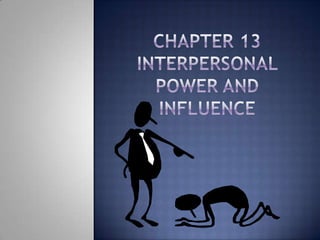
Chapter 13 Interpersonal Power and Influence
Principles of power and influenceWhat is Power?Power is the ability of one person to influence what another person thinks or does.Some people are more powerful than others Power can be sharedPower can be increased or decreasedPower follows the principle of less interestPower generates Privilege Power has a Cultural dimension
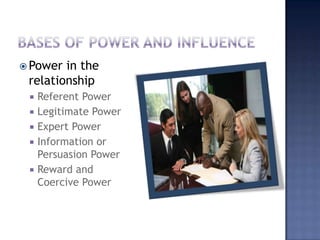
Bases of power and influencePower in the relationshipReferent PowerLegitimate PowerExpert PowerInformation or Persuasion PowerReward and Coercive Power
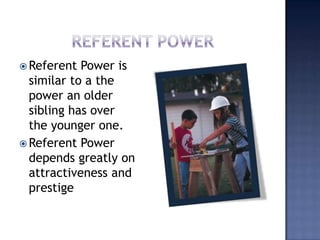
Referent PowerReferent Power is similar to a the power an older sibling has over the younger one.Referent Power depends greatly on attractiveness and prestige
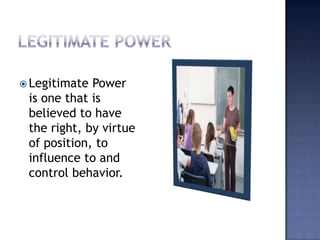
Legitimate PowerLegitimate Power is one that is believed to have the right, by virtue of position, to influence to and control behavior.
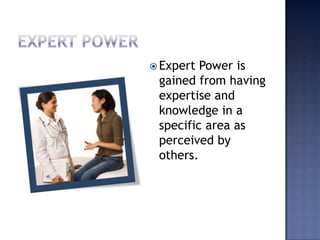
Expert powerExpert Power is gained from having expertise and knowledge in a specific area as perceived by others.
Power in the relationshipInformation or Persuasion Power is assigned when others see you as having the ability to communicate logically and persuasively.Reward and Coercive Power is gained when one has the ability to reward another.
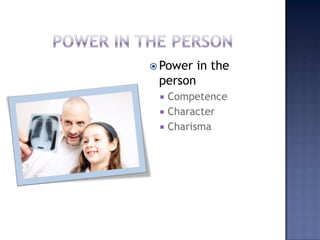
Power in the personPower in the personCompetenceCharacterCharisma
Power in the messageSpeaking PowerThe power one has in their specific languageSpeaking Strategies:General Verbal StrategiesSpecific LanguageCompliance-Gaming StrategiesNonverbal PowerThe power one has without any verbal communication. This can be clothing, and or other artifactualsymbols of authority that can influence others.
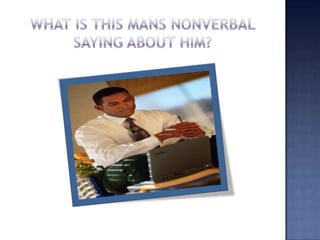
What is this mans nonverbal saying about him?
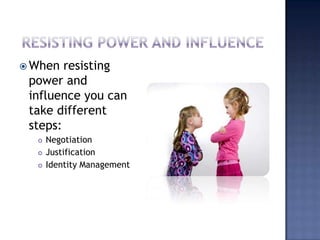
Resisting Power and InfluenceWhen resisting power and influence you can take different steps:NegotiationJustificationIdentity Management
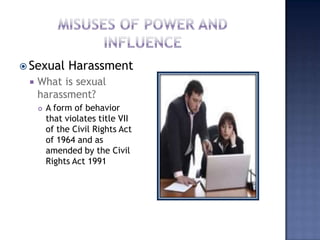
Misuses of power and influenceSexual HarassmentWhat is sexual harassment?A form of behavior that violates title VII of the Civil Rights Act of 1964 and as amended by the Civil Rights Act 1991
Sexual HarassmentRecognizing Sexual HarassmentIs it real?Is it job related?Did you reject this behavior?Have these types of messages persisted?Avoiding Sexual HarassmentBegin with the assumption that coworkers are not interested in your sexual advances, jokes, or stories.Listen and watch negative reactions to any sex-related discussion.Avoid saying or doing anything offensive in behavior.
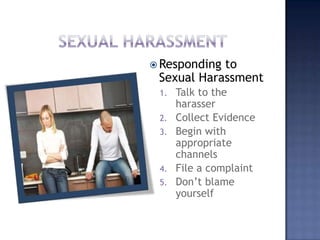
Sexual HarassmentResponding to Sexual HarassmentTalk to the harasserCollect EvidenceBegin with appropriate channelsFile a complaintDon’t blame yourself
Power playsWhat are power plays? Patterns of behaviors that are used repeatedly by one person to take unfair advantage of another person.Identifying Power PlaysResponding to Power PlaysExpress your feelingsDescribe the behavior to which you objectState a cooperative

Chapter 13 Interpersonal Power and Influence Power Point

  • 1.
    Chapter 13 InterpersonalPower and Influence
  • 2.
    Principles of powerand influenceWhat is Power?Power is the ability of one person to influence what another person thinks or does.Some people are more powerful than others Power can be sharedPower can be increased or decreasedPower follows the principle of less interestPower generates Privilege Power has a Cultural dimension
  • 3.
    Bases of powerand influencePower in the relationshipReferent PowerLegitimate PowerExpert PowerInformation or Persuasion PowerReward and Coercive Power
  • 4.
    Referent PowerReferent Poweris similar to a the power an older sibling has over the younger one.Referent Power depends greatly on attractiveness and prestige
  • 5.
    Legitimate PowerLegitimate Poweris one that is believed to have the right, by virtue of position, to influence to and control behavior.
  • 6.
    Expert powerExpert Poweris gained from having expertise and knowledge in a specific area as perceived by others.
  • 7.
    Power in therelationshipInformation or Persuasion Power is assigned when others see you as having the ability to communicate logically and persuasively.Reward and Coercive Power is gained when one has the ability to reward another.
  • 8.
    Power in thepersonPower in the personCompetenceCharacterCharisma
  • 9.
    Power in themessageSpeaking PowerThe power one has in their specific languageSpeaking Strategies:General Verbal StrategiesSpecific LanguageCompliance-Gaming StrategiesNonverbal PowerThe power one has without any verbal communication. This can be clothing, and or other artifactualsymbols of authority that can influence others.
  • 10.
    What is thismans nonverbal saying about him?
  • 11.
    Resisting Power andInfluenceWhen resisting power and influence you can take different steps:NegotiationJustificationIdentity Management
  • 12.
    Misuses of powerand influenceSexual HarassmentWhat is sexual harassment?A form of behavior that violates title VII of the Civil Rights Act of 1964 and as amended by the Civil Rights Act 1991
  • 13.
    Sexual HarassmentRecognizing SexualHarassmentIs it real?Is it job related?Did you reject this behavior?Have these types of messages persisted?Avoiding Sexual HarassmentBegin with the assumption that coworkers are not interested in your sexual advances, jokes, or stories.Listen and watch negative reactions to any sex-related discussion.Avoid saying or doing anything offensive in behavior.
  • 14.
    Sexual HarassmentResponding toSexual HarassmentTalk to the harasserCollect EvidenceBegin with appropriate channelsFile a complaintDon’t blame yourself
  • 15.
    Power playsWhat arepower plays? Patterns of behaviors that are used repeatedly by one person to take unfair advantage of another person.Identifying Power PlaysResponding to Power PlaysExpress your feelingsDescribe the behavior to which you objectState a cooperative