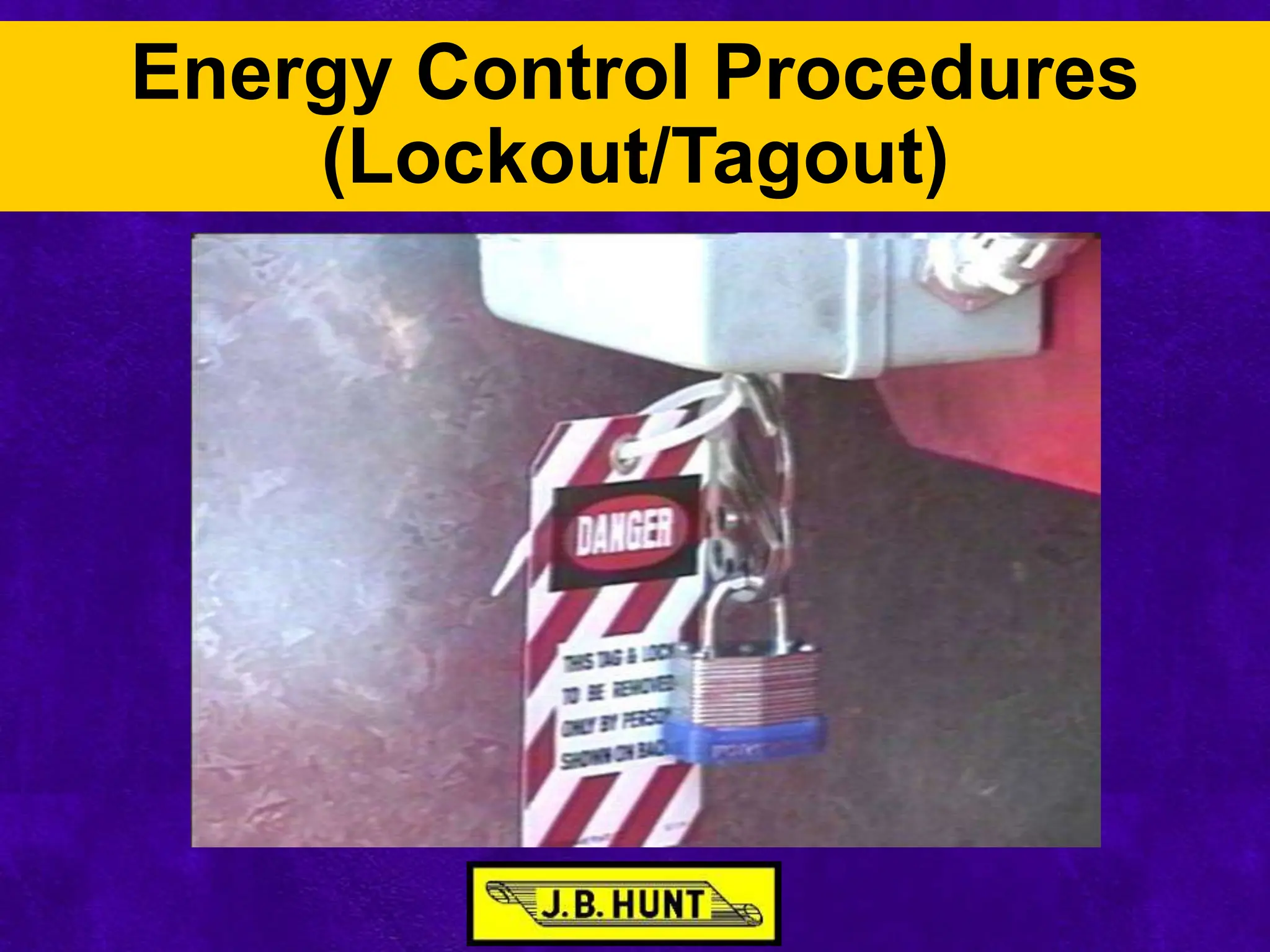
Energy Control Procedures
(Lockout/Tagout)
What is Lockout/Tagout?
 Procedure for a safe shut down and restart of
equipment that is serviced or maintained
 Lockout protects employees who service and
maintain equipment
 Tagout warns employees of the shut down
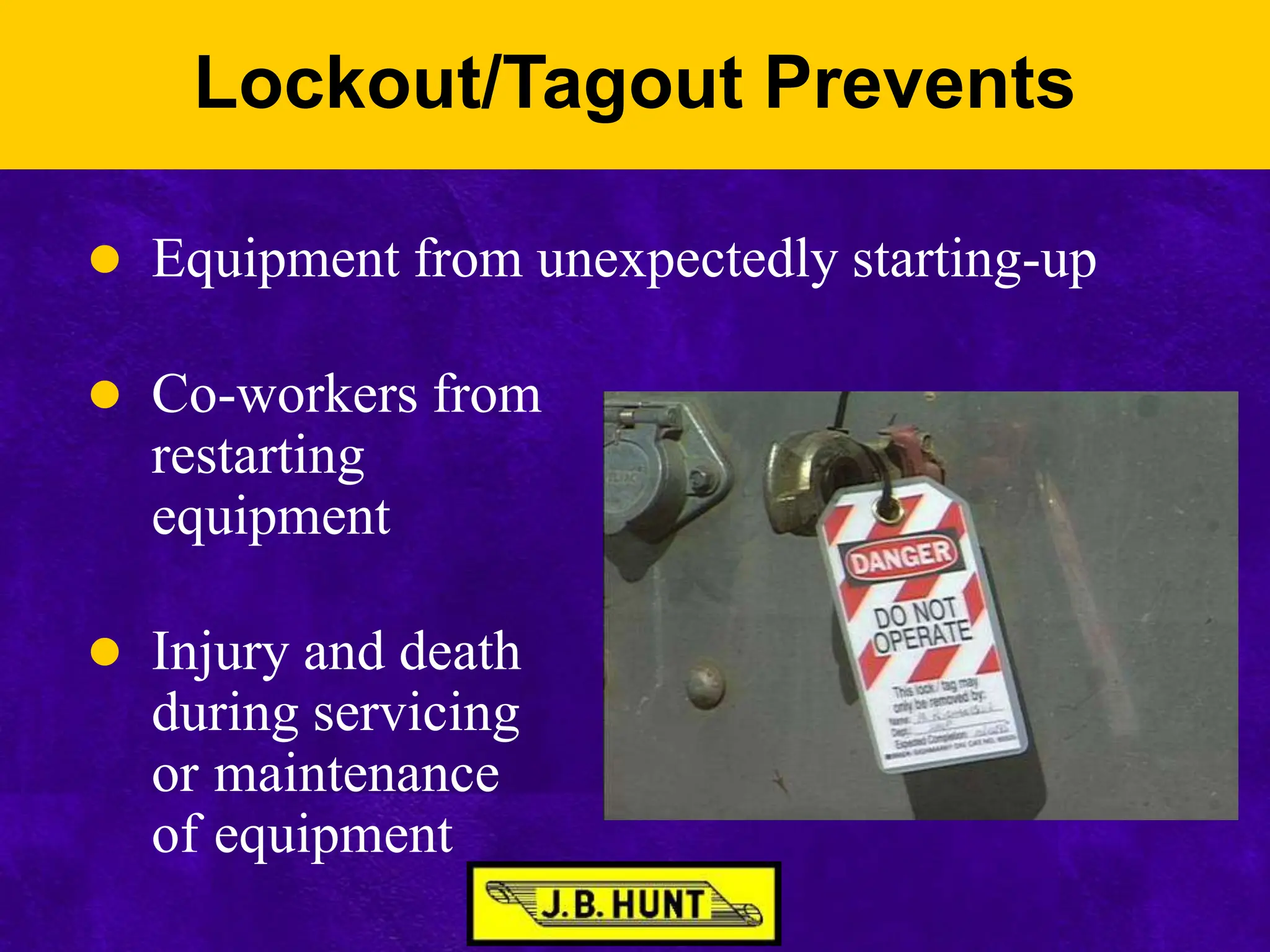
Lockout/Tagout Prevents
 Equipment from unexpectedly starting-up
 Co-workers from
restarting
equipment
 Injury and death
during servicing
or maintenance
of equipment
Leading Causes of
Lockout/Tagout Injuries
 Failure to shut off equipment
 Failure to disconnect from power source
 Unexpected restarting of equipment
 Failure to clear work area before restarting
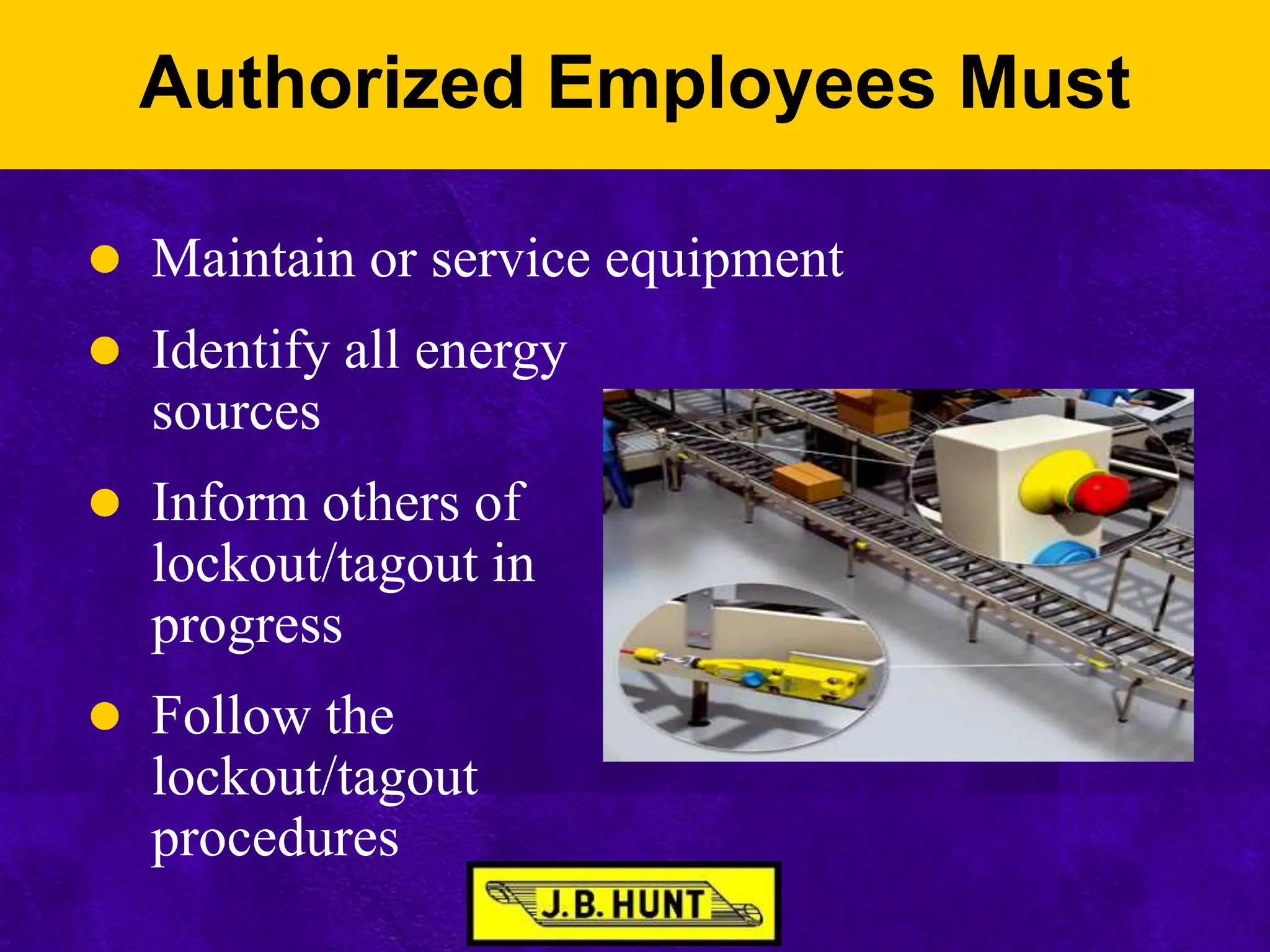
Authorized Employees Must
 Maintain or service equipment
 Identify all energy
sources
 Inform others of
lockout/tagout in
progress
 Follow the
lockout/tagout
procedures
Affected Employees
 Operate or use equipment
 Understand all lockout/tagout procedures
 Never remove locks or tags
 Never restart equipment with lock or tag
Other Employees (Office personnel)
 Are not authorized or affected employees
 Must be able to identify locks and tags
 Must be aware of lockout/tagout procedures
 Never restart equipment with lock/tag
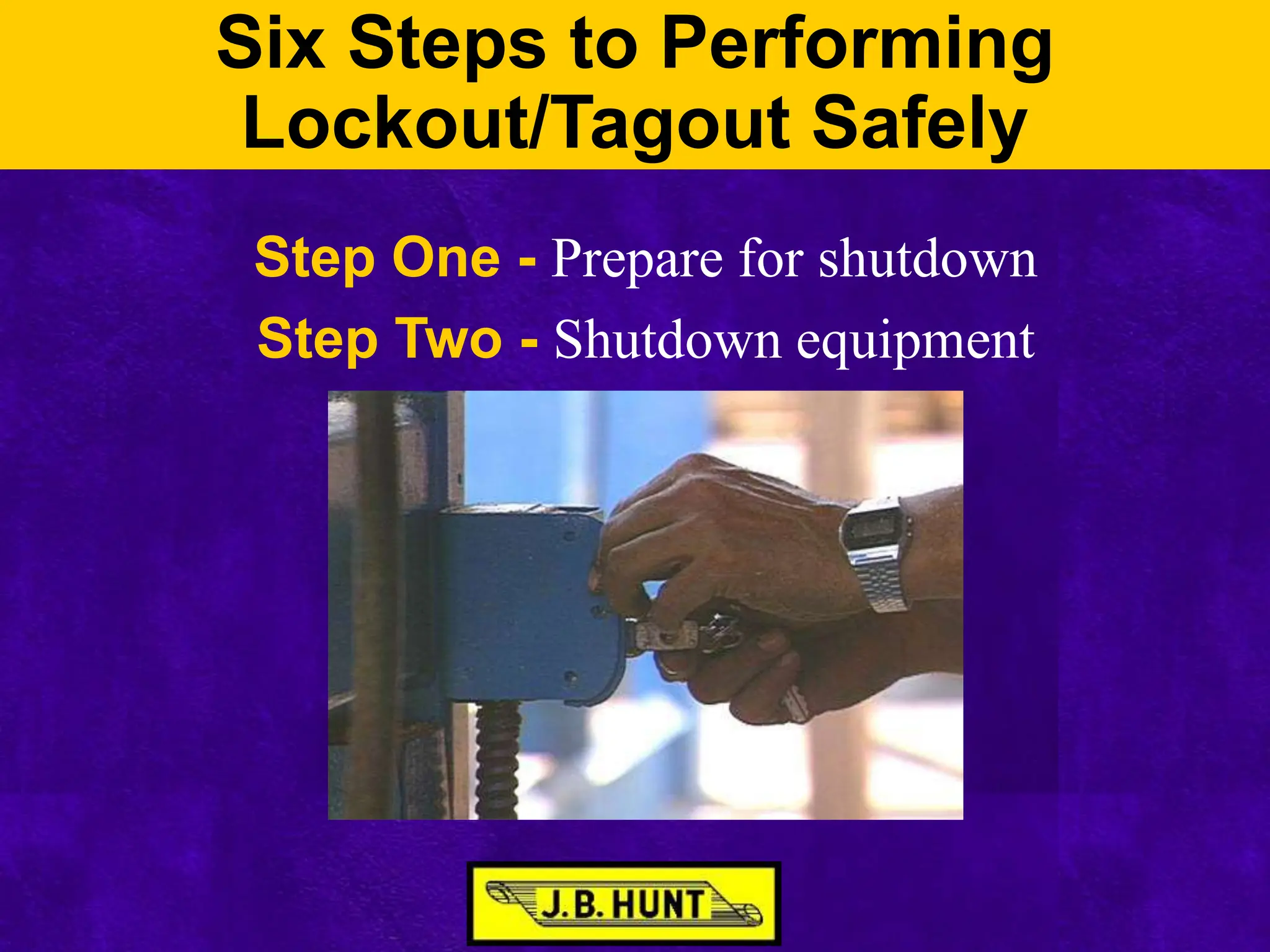
Six Steps to Performing
Lockout/Tagout Safely
Step One - Prepare for shutdown
Step Two - Shutdown equipment
Six Steps to Performing
Lockout/Tagout Safely
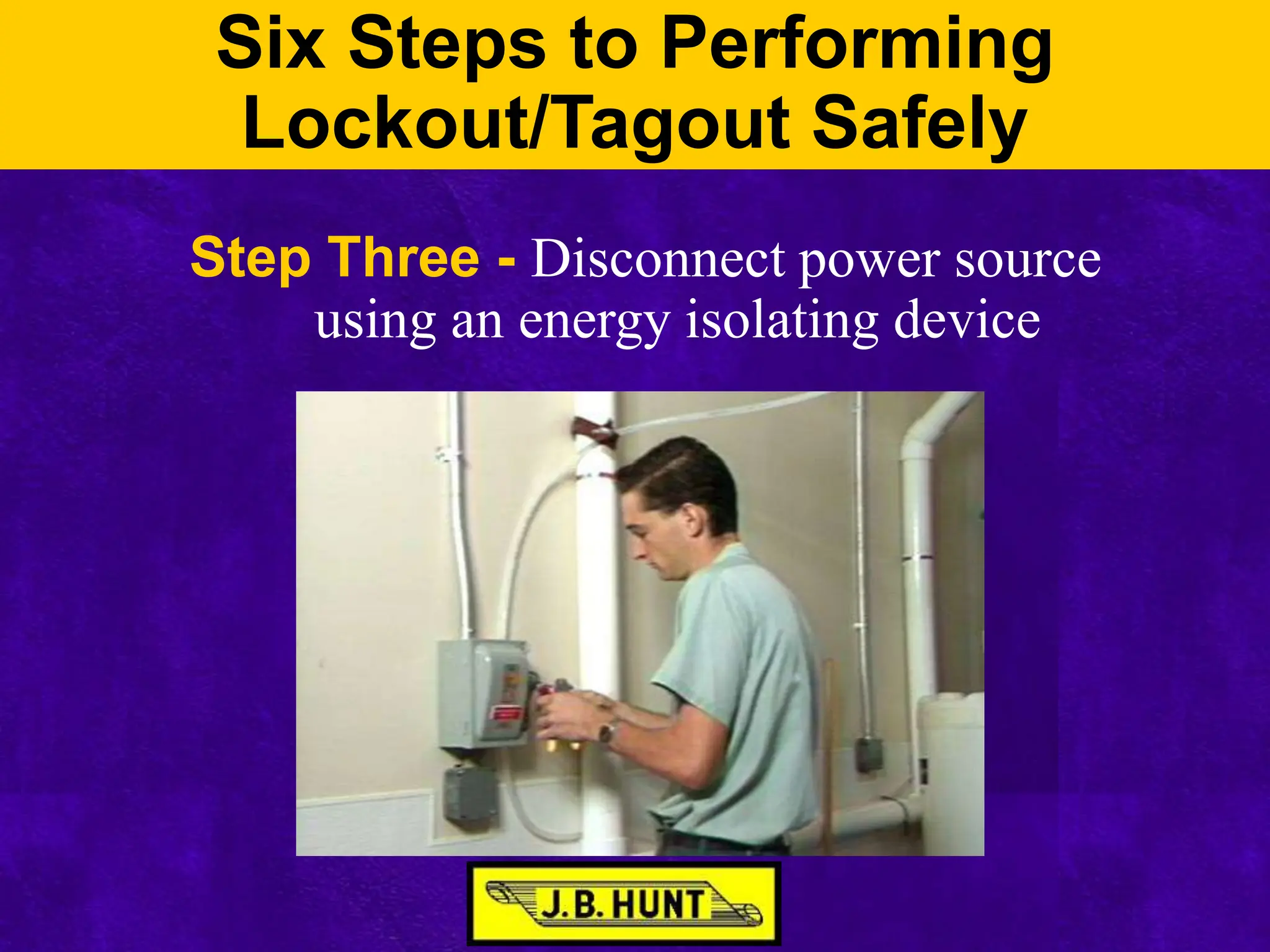
Step Three - Disconnect power source
using an energy isolating device
Six Steps to Performing
Lockout/Tagout Safely
Step Four - Apply lockout/tagout devices
 Only applied by authorized employees
 Locks hold power source in “off” position
 Locks must be used if equipment is capable
of being locked out
 If locks cannot be used – tags must be used
Six Steps to Performing
Lockout/Tagout Safely
Step Four - Apply lockout/tagout devices
Devices must be:
 Standardized
 Identifiable
 Durable
 Not used for other purposes
Six Steps to Performing
Lockout/Tagout Safely
Step Four - Apply lockout/tagout devices
Limitation of tags:
 Only a warning device
 Equipment can still be started-up
 False sense of security
Six Steps to Performing
Lockout/Tagout Safely
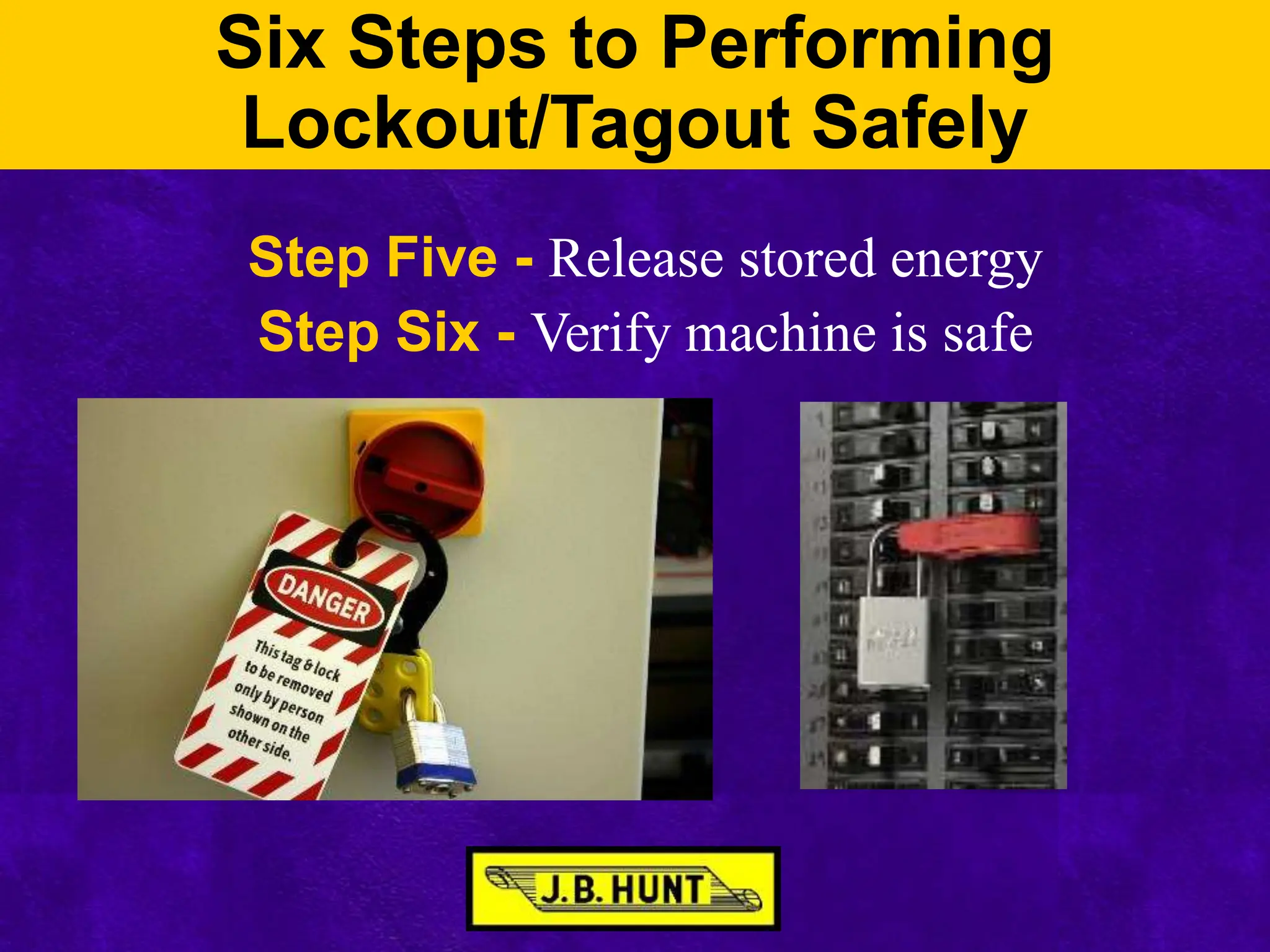
Step Five - Release stored energy
Step Six - Verify machine is safe
Restarting the Equipment
 Inspect work area
 Notify employees
 Remove devices
 Test equipment
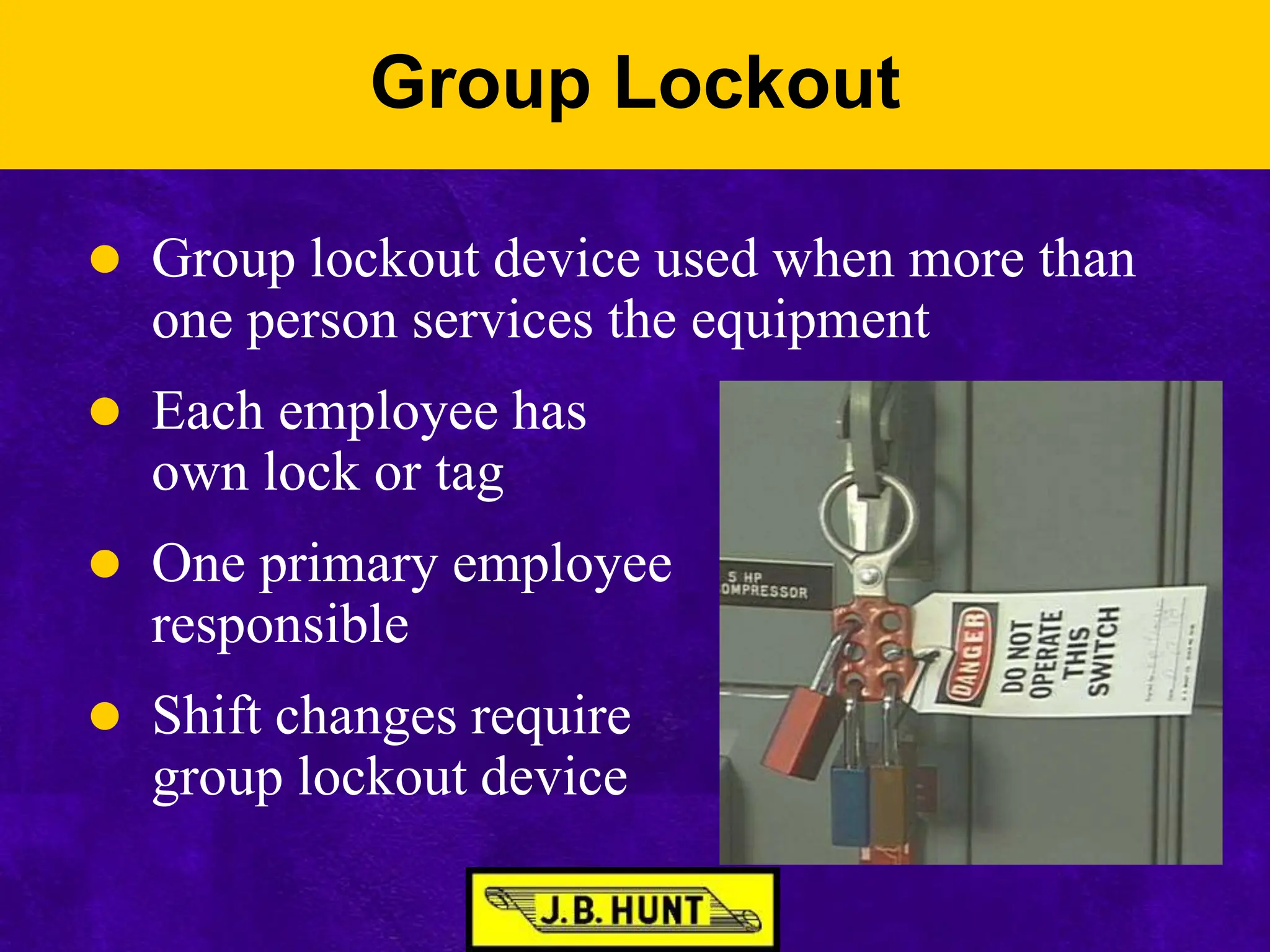
Group Lockout
 Group lockout device used when more than
one person services the equipment
 Each employee has
own lock or tag
 One primary employee
responsible
 Shift changes require
group lockout device
Removing Another Employee’s
Lock or Tag
If a lock or tag needs to be removed and the
employee cannot be found:
 Verify employee is not in facility
 Make reasonable effort to contact employee
 Tell employee about removal
Summary
 Lockout/tagout is a warning and
prevention system
 Failure to perform lockout/tagout can kill you
 Know the six steps of lockout/tagout
 Never remove another employee’s lock/tag
Quiz

Power Point Presentation - Lockout - Tagout

  • 1.
  • 2.
    What is Lockout/Tagout? Procedure for a safe shut down and restart of equipment that is serviced or maintained  Lockout protects employees who service and maintain equipment  Tagout warns employees of the shut down
  • 3.
    Lockout/Tagout Prevents  Equipmentfrom unexpectedly starting-up  Co-workers from restarting equipment  Injury and death during servicing or maintenance of equipment
  • 4.
    Leading Causes of Lockout/TagoutInjuries  Failure to shut off equipment  Failure to disconnect from power source  Unexpected restarting of equipment  Failure to clear work area before restarting
  • 5.
    Authorized Employees Must Maintain or service equipment  Identify all energy sources  Inform others of lockout/tagout in progress  Follow the lockout/tagout procedures
  • 6.
    Affected Employees  Operateor use equipment  Understand all lockout/tagout procedures  Never remove locks or tags  Never restart equipment with lock or tag
  • 7.
    Other Employees (Officepersonnel)  Are not authorized or affected employees  Must be able to identify locks and tags  Must be aware of lockout/tagout procedures  Never restart equipment with lock/tag
  • 8.
    Six Steps toPerforming Lockout/Tagout Safely Step One - Prepare for shutdown Step Two - Shutdown equipment
  • 9.
    Six Steps toPerforming Lockout/Tagout Safely Step Three - Disconnect power source using an energy isolating device
  • 10.
    Six Steps toPerforming Lockout/Tagout Safely Step Four - Apply lockout/tagout devices  Only applied by authorized employees  Locks hold power source in “off” position  Locks must be used if equipment is capable of being locked out  If locks cannot be used – tags must be used
  • 11.
    Six Steps toPerforming Lockout/Tagout Safely Step Four - Apply lockout/tagout devices Devices must be:  Standardized  Identifiable  Durable  Not used for other purposes
  • 12.
    Six Steps toPerforming Lockout/Tagout Safely Step Four - Apply lockout/tagout devices Limitation of tags:  Only a warning device  Equipment can still be started-up  False sense of security
  • 13.
    Six Steps toPerforming Lockout/Tagout Safely Step Five - Release stored energy Step Six - Verify machine is safe
  • 14.
    Restarting the Equipment Inspect work area  Notify employees  Remove devices  Test equipment
  • 15.
    Group Lockout  Grouplockout device used when more than one person services the equipment  Each employee has own lock or tag  One primary employee responsible  Shift changes require group lockout device
  • 16.
    Removing Another Employee’s Lockor Tag If a lock or tag needs to be removed and the employee cannot be found:  Verify employee is not in facility  Make reasonable effort to contact employee  Tell employee about removal
  • 17.
    Summary  Lockout/tagout isa warning and prevention system  Failure to perform lockout/tagout can kill you  Know the six steps of lockout/tagout  Never remove another employee’s lock/tag
  • 18.