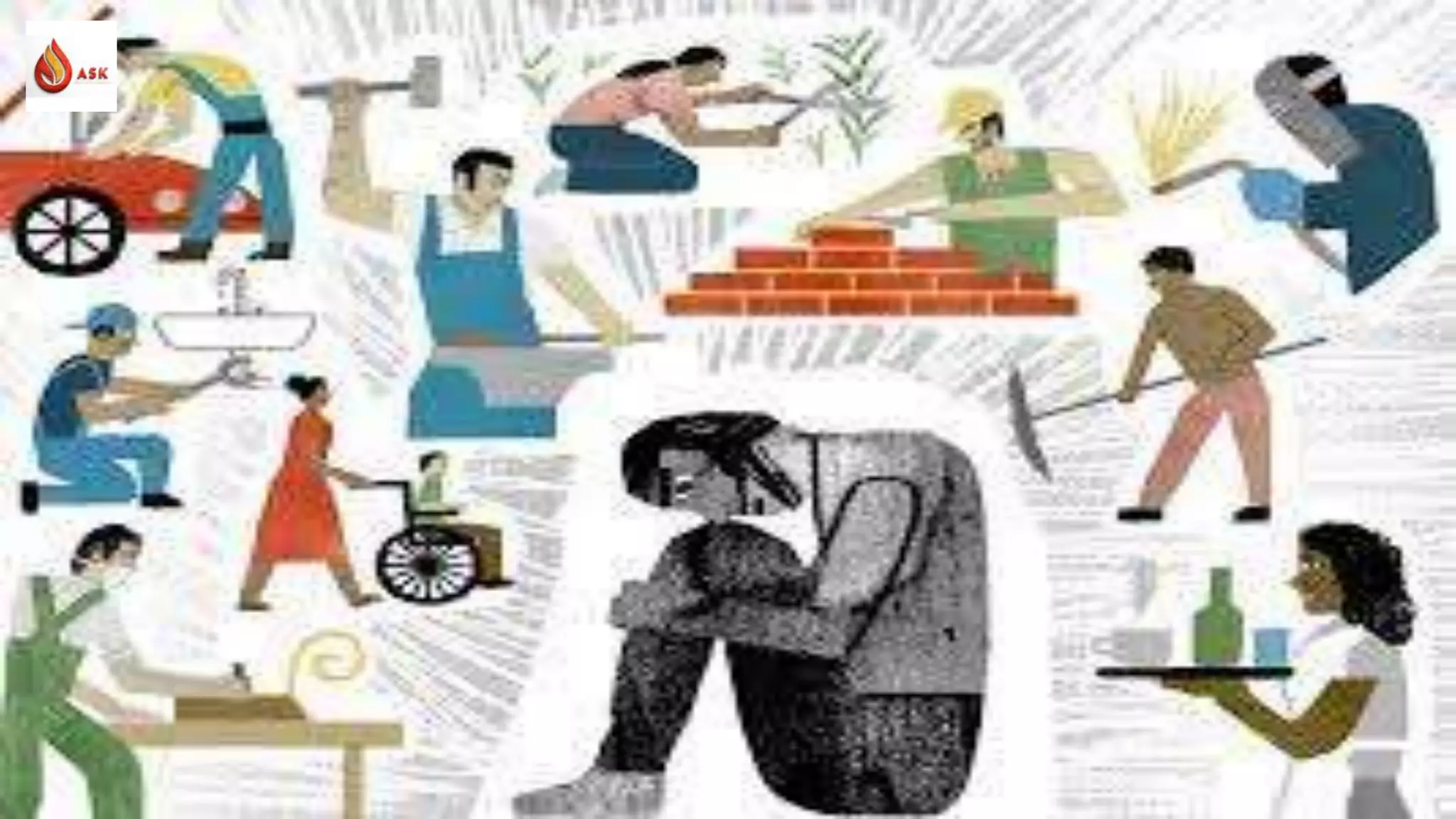
POVERTY
DISCRIMINATION
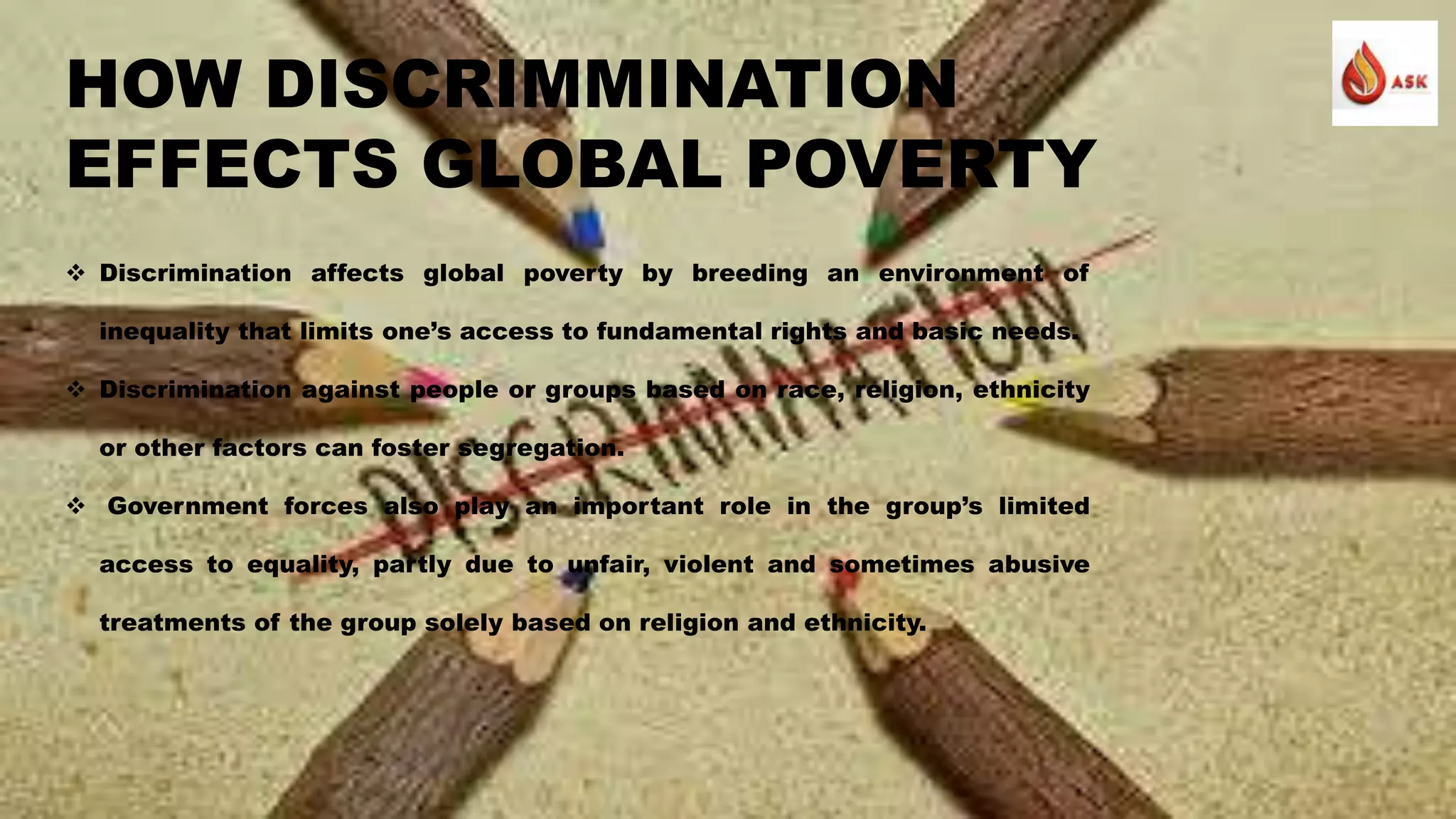
HOW DISCRIMMINATION
EFFECTS GLOBAL POVERTY
 Discrimination affects global poverty by breeding an environment of
inequality that limits one’s access to fundamental rights and basic needs.
 Discrimination against people or groups based on race, religion, ethnicity
or other factors can foster segregation.
 Government forces also play an important role in the group’s limited
access to equality, partly due to unfair, violent and sometimes abusive
treatments of the group solely based on religion and ethnicity.
The Sustainable Development
Agenda
 Ending extreme poverty
 Reducing poverty by at least 50%
 Implementing social protection systems
 Guaranteeing equal rights to basic services and ownership
 Developing pro-poor and gender-sensitive policy frameworks
Enhancing employment does not, in
and of itself, reduce poverty
As a consequence, job growth has tended to result in rising living
standards around and above the middle, but not in the lower
segments of the distribution, increasing the gap between the poor
and the rest.
Enhancing employment does not, in
and of itself, reduce poverty
 Equality and non-discrimination lie at the heart of sustainable
development
 Discrimination is listed as both a cause and a consequence of
poverty
 subject to discriminatory attitudes and stigmatization from public
authorities and private actors precisely because of their economic
status.
What is the relationship between poverty, inequality,
and human rights?
When a person isn’t able to feed themselves or
house their family, if they can’t access clean
water or a decent job, or when kids have no
choice but to drop out of school or get married
because they’re living in poverty, these are all
examples of human rights abuses.
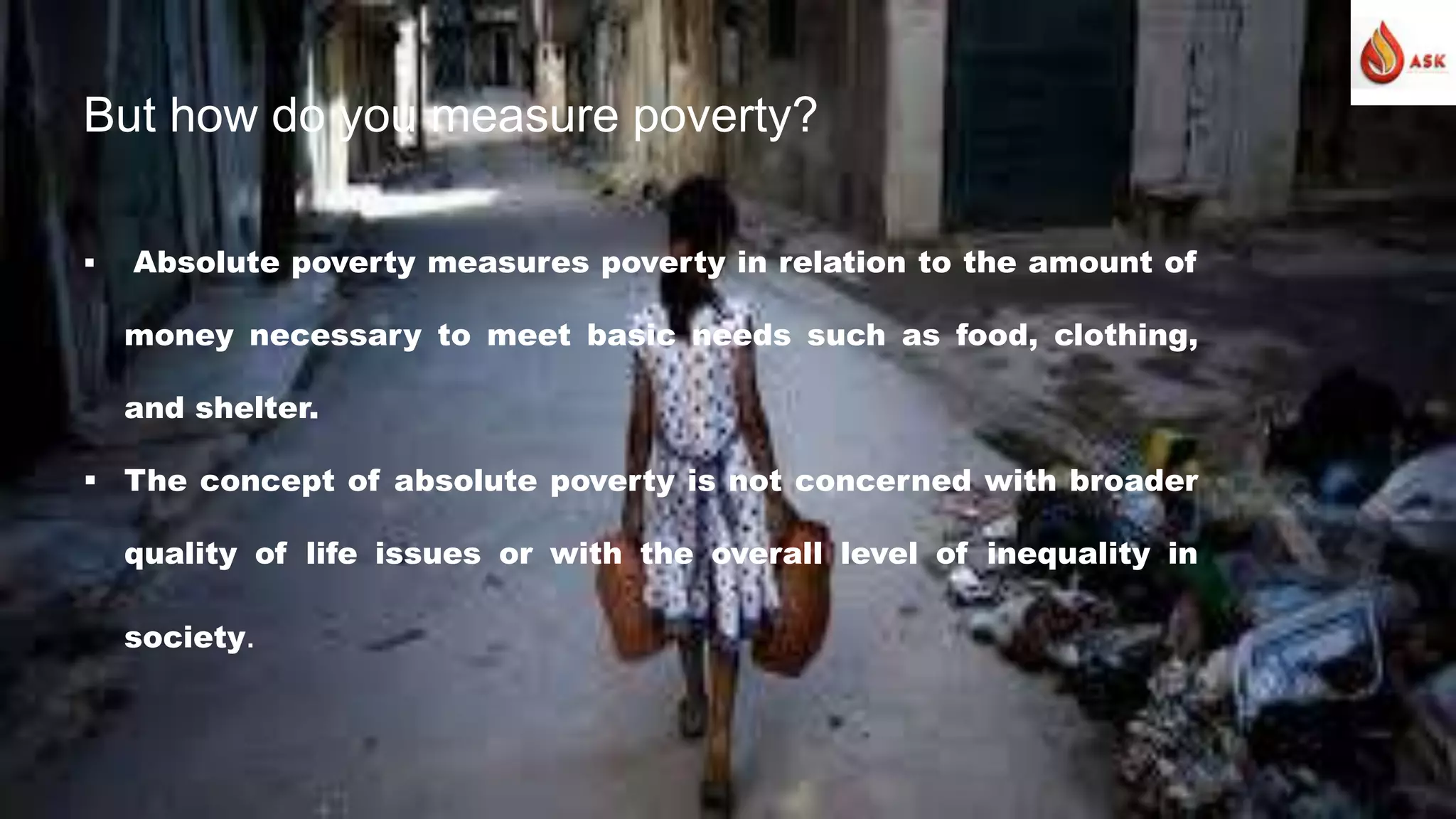
But how do you measure poverty?
 Absolute poverty measures poverty in relation to the amount of
money necessary to meet basic needs such as food, clothing,
and shelter.
 The concept of absolute poverty is not concerned with broader
quality of life issues or with the overall level of inequality in
society.
How are governments to blame for poverty?
1. Governments around the world carry an immense
responsibility to support people and help them reach an
adequate standard of living, a basic human right.
2. But governments do the opposite when they fail to rein in
powerful people or companies from actions that result in
people living in destitution.
3. And when governments fail to enforce labor standards or
roll back policies preventing deforestation or pollution,
they’re contributing to the loss of livelihood and a healthy
How else can governments help
people get out of poverty?
This includes worker, environmental, consumer,
criminal, or anti-discrimination protections and
policies. For example, governments can raise the
minimum wages so that they are genuine living
wages that help meet the needs of workers and
their families.
What if governments can’t afford to provide all
this for their people?
• Governments should prioritize the needs of the poorest, ensuring
that everyone has the adequate support to access food, housing,
water, education, and other essentials for a decent life.
• For example, providing affordable internet access to low-income
families could buffer them from future poverty, as does offering
quality public education along with other continuing education
courses designed to improve access to better jobs.
How would you answer people who say it’s people’s
own fault that they’re living in poverty?
Over 70 percent of the world’s population live in countries
that recently experienced growing inequality. There is no
reason why a person should have to work multiple shifts or
jobs to make ends meet.
"Poverty Discrimination"

"Poverty Discrimination"

  • 1.
  • 3.
    HOW DISCRIMMINATION EFFECTS GLOBALPOVERTY  Discrimination affects global poverty by breeding an environment of inequality that limits one’s access to fundamental rights and basic needs.  Discrimination against people or groups based on race, religion, ethnicity or other factors can foster segregation.  Government forces also play an important role in the group’s limited access to equality, partly due to unfair, violent and sometimes abusive treatments of the group solely based on religion and ethnicity.
  • 4.
    The Sustainable Development Agenda Ending extreme poverty  Reducing poverty by at least 50%  Implementing social protection systems  Guaranteeing equal rights to basic services and ownership  Developing pro-poor and gender-sensitive policy frameworks
  • 6.
    Enhancing employment doesnot, in and of itself, reduce poverty As a consequence, job growth has tended to result in rising living standards around and above the middle, but not in the lower segments of the distribution, increasing the gap between the poor and the rest.
  • 7.
    Enhancing employment doesnot, in and of itself, reduce poverty  Equality and non-discrimination lie at the heart of sustainable development  Discrimination is listed as both a cause and a consequence of poverty  subject to discriminatory attitudes and stigmatization from public authorities and private actors precisely because of their economic status.
  • 8.
    What is therelationship between poverty, inequality, and human rights? When a person isn’t able to feed themselves or house their family, if they can’t access clean water or a decent job, or when kids have no choice but to drop out of school or get married because they’re living in poverty, these are all examples of human rights abuses.
  • 9.
    But how doyou measure poverty?  Absolute poverty measures poverty in relation to the amount of money necessary to meet basic needs such as food, clothing, and shelter.  The concept of absolute poverty is not concerned with broader quality of life issues or with the overall level of inequality in society.
  • 10.
    How are governmentsto blame for poverty? 1. Governments around the world carry an immense responsibility to support people and help them reach an adequate standard of living, a basic human right. 2. But governments do the opposite when they fail to rein in powerful people or companies from actions that result in people living in destitution. 3. And when governments fail to enforce labor standards or roll back policies preventing deforestation or pollution, they’re contributing to the loss of livelihood and a healthy
  • 11.
    How else cangovernments help people get out of poverty? This includes worker, environmental, consumer, criminal, or anti-discrimination protections and policies. For example, governments can raise the minimum wages so that they are genuine living wages that help meet the needs of workers and their families.
  • 12.
    What if governmentscan’t afford to provide all this for their people? • Governments should prioritize the needs of the poorest, ensuring that everyone has the adequate support to access food, housing, water, education, and other essentials for a decent life. • For example, providing affordable internet access to low-income families could buffer them from future poverty, as does offering quality public education along with other continuing education courses designed to improve access to better jobs.
  • 13.
    How would youanswer people who say it’s people’s own fault that they’re living in poverty? Over 70 percent of the world’s population live in countries that recently experienced growing inequality. There is no reason why a person should have to work multiple shifts or jobs to make ends meet.