Postpartum Haemorrhage
“A Study of Case"
Norseen Hosameldeen Lotfy 221101448
List of contents
Introduction Reasons
Treatment Methodology
01 02
03 04
Conclusion
05
Introduction
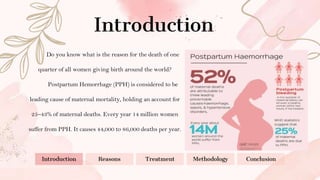
Do you know what is the reason for the death of one
quarter of all women giving birth around the world?
Postpartum Hemorrhage (PPH) is considered to be
leading cause of maternal mortality, holding an account for
25–43% of maternal deaths. Every year 14 million women
suffer from PPH. It causes 44,000 to 86,000 deaths per year.
Introduction Reasons Treatment Methodology Conclusion
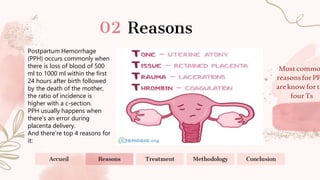
Mostcommo
reasonsforPP
areknowforth
fourTs
Reasons
Accueil Reasons Treatment Methodology Conclusion
Postpartum Hemorrhage
(PPH) occurs commonly when
there is loss of blood of 500
ml to 1000 ml within the first
24 hours after birth followed
by the death of the mother,
the ratio of incidence is
higher with a c-section.
PPH usually happens when
there’s an error during
placenta delivery.
And there’re top 4 reasons for
it:
1. Uterine atony: considered to be the primary cause of PPH, holds account for 70%
to 80% of all hemorrhage. Uterine atony refers to the weakness of the uterus after
delivery, when the muscle can't contract enough to clamp the placental blood vessel
shunt and this leads to steady blood hemorrhage.
2. Uterine trauma: Bleeding due to a damage to your uterus
3. Retained placental tissue: This happens when the placenta does not separate
from the uterine wall
4. Blood clotting condition (thrombin): This is when there is reduced body
ability of forming a clot due to coagulation problem, that can make even a tiny bleed
uncontrollable
Treatment
Physiological
Approaches
Pharmacological
Therapy (Uterotonics)
Blood transfusion: Fastest and
most effective physiological method
to prevent further complications like
coma or death.
Surgical interference: Often used
with retained placenta
First and second line agents:
Oxytocin (10UI, IM/IV)
Methylergonovine (0.2mg, IM)
Misoprostol (600mcg Orally)
Introduction Reasons Treatment Methodology Conclusion
Oxytocin (10UI, IM/IV):
Oxytocin is considered to be the first-line agent.
It’s a natural hormone works rapidly to cause uterine contraction with no
contraindications and minimal side effects.
It’s often used when hemorrhage is due uterine atony
Recommended drug for prevention of PPH in caesarean section.
where oxytocin is not available, second-line agents is used.
Methylergonovine (0.2mg, IM):
It works rapidly for sustained uterine contraction.
Misoprostol (600mcg Orally):
Used for its delayed onset than the above medications.
Oxytocin is more effective than misoprostol for prevention and treatment of uterine
atony and has fewer adverse effects.
Methodology
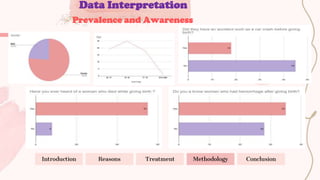
A quantitative questionnaire investigating 4 main sections:
Prevalence
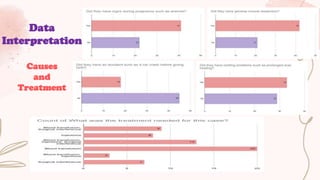
Most common causes
Treatment
Awareness
It was conducted among university students and their families in Egypt
A total number of 63, 10 Males and 53 females, age group: 17 to 22 of private
university students.
Introduction Reasons Treatment Methodology Conclusion
Data Interpretation
Prevalence and Awareness
Data
Interpretation
Causes
and
Treatment
Coclusion
05
Introduction Reasons Treatment Methodology Conclusion
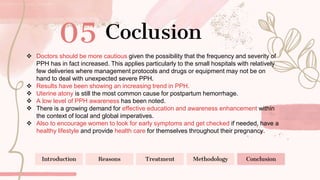
 Doctors should be more cautious given the possibility that the frequency and severity of
PPH has in fact increased. This applies particularly to the small hospitals with relatively
few deliveries where management protocols and drugs or equipment may not be on
hand to deal with unexpected severe PPH.
 Results have been showing an increasing trend in PPH.
 Uterine atony is still the most common cause for postpartum hemorrhage.
 A low level of PPH awareness has been noted.
 There is a growing demand for effective education and awareness enhancement within
the context of local and global imperatives.
 Also to encourage women to look for early symptoms and get checked if needed, have a
healthy lifestyle and provide health care for themselves throughout their pregnancy.
Refrences:
● Evensen, A., Anderson, J. M., & Fontaine, P. (2017). Postpartum Hemorrhage: Prevention and
Treatment. American family physician, 95(7), 442–449.
● World Health Organization. WHO recommendations for the prevention and treatment of
postpartum hemorrhage. Geneva: WHO; 2012. Available from:
https://apps.who.int/iris/bitstream/handle/10665/75411/9789241548502_eng.pdf
● Wormer KC, Jamil RT, Bryant SB. Acute Postpartum Hemorrhage. [Updated 2022 May 8]. In:
StatPearls [Internet]. Treasure Island (FL): StatPearls Publishing; 2022 Jan-. Available from:
https://www.ncbi.nlm.nih.gov/books/NBK499988/
Thank
You

Postpartum hemorrhage

  • 1.
    Postpartum Haemorrhage “A Studyof Case" Norseen Hosameldeen Lotfy 221101448
  • 2.
    List of contents IntroductionReasons Treatment Methodology 01 02 03 04 Conclusion 05
  • 3.
    Introduction Do you knowwhat is the reason for the death of one quarter of all women giving birth around the world? Postpartum Hemorrhage (PPH) is considered to be leading cause of maternal mortality, holding an account for 25–43% of maternal deaths. Every year 14 million women suffer from PPH. It causes 44,000 to 86,000 deaths per year. Introduction Reasons Treatment Methodology Conclusion
  • 4.
    Mostcommo reasonsforPP areknowforth fourTs Reasons Accueil Reasons TreatmentMethodology Conclusion Postpartum Hemorrhage (PPH) occurs commonly when there is loss of blood of 500 ml to 1000 ml within the first 24 hours after birth followed by the death of the mother, the ratio of incidence is higher with a c-section. PPH usually happens when there’s an error during placenta delivery. And there’re top 4 reasons for it:
  • 5.
    1. Uterine atony:considered to be the primary cause of PPH, holds account for 70% to 80% of all hemorrhage. Uterine atony refers to the weakness of the uterus after delivery, when the muscle can't contract enough to clamp the placental blood vessel shunt and this leads to steady blood hemorrhage. 2. Uterine trauma: Bleeding due to a damage to your uterus 3. Retained placental tissue: This happens when the placenta does not separate from the uterine wall 4. Blood clotting condition (thrombin): This is when there is reduced body ability of forming a clot due to coagulation problem, that can make even a tiny bleed uncontrollable
  • 6.
    Treatment Physiological Approaches Pharmacological Therapy (Uterotonics) Blood transfusion:Fastest and most effective physiological method to prevent further complications like coma or death. Surgical interference: Often used with retained placenta First and second line agents: Oxytocin (10UI, IM/IV) Methylergonovine (0.2mg, IM) Misoprostol (600mcg Orally) Introduction Reasons Treatment Methodology Conclusion
  • 7.
    Oxytocin (10UI, IM/IV): Oxytocinis considered to be the first-line agent. It’s a natural hormone works rapidly to cause uterine contraction with no contraindications and minimal side effects. It’s often used when hemorrhage is due uterine atony Recommended drug for prevention of PPH in caesarean section. where oxytocin is not available, second-line agents is used. Methylergonovine (0.2mg, IM): It works rapidly for sustained uterine contraction. Misoprostol (600mcg Orally): Used for its delayed onset than the above medications. Oxytocin is more effective than misoprostol for prevention and treatment of uterine atony and has fewer adverse effects.
  • 8.
    Methodology A quantitative questionnaireinvestigating 4 main sections: Prevalence Most common causes Treatment Awareness It was conducted among university students and their families in Egypt A total number of 63, 10 Males and 53 females, age group: 17 to 22 of private university students.
  • 9.
    Introduction Reasons TreatmentMethodology Conclusion Data Interpretation Prevalence and Awareness
  • 10.
  • 11.
    Coclusion 05 Introduction Reasons TreatmentMethodology Conclusion  Doctors should be more cautious given the possibility that the frequency and severity of PPH has in fact increased. This applies particularly to the small hospitals with relatively few deliveries where management protocols and drugs or equipment may not be on hand to deal with unexpected severe PPH.  Results have been showing an increasing trend in PPH.  Uterine atony is still the most common cause for postpartum hemorrhage.  A low level of PPH awareness has been noted.  There is a growing demand for effective education and awareness enhancement within the context of local and global imperatives.  Also to encourage women to look for early symptoms and get checked if needed, have a healthy lifestyle and provide health care for themselves throughout their pregnancy.
  • 12.
    Refrences: ● Evensen, A.,Anderson, J. M., & Fontaine, P. (2017). Postpartum Hemorrhage: Prevention and Treatment. American family physician, 95(7), 442–449. ● World Health Organization. WHO recommendations for the prevention and treatment of postpartum hemorrhage. Geneva: WHO; 2012. Available from: https://apps.who.int/iris/bitstream/handle/10665/75411/9789241548502_eng.pdf ● Wormer KC, Jamil RT, Bryant SB. Acute Postpartum Hemorrhage. [Updated 2022 May 8]. In: StatPearls [Internet]. Treasure Island (FL): StatPearls Publishing; 2022 Jan-. Available from: https://www.ncbi.nlm.nih.gov/books/NBK499988/
  • 13.