POST-OPERATIVE
CARE
DR. ADNAN BILAL
PGR-SU4
BVH, BAHAWALPUR
LEARNING OBJECTIVES:
• Need of immediate post-op care
• Common post-operative problems
• Anticipation & prevention of common complications
• Identification & Treatment
• Enhancement of recovery
• Systematic discharge
INTRODUCTION:
• To provide quick, painless & safe recovery from surgery as soon as possible.
Good Surgeon??
“A good surgeon is a good physician first”
POST- ANESTHESIA CARE
• Patient is handed over to a dedicated PACU working under observation of trained
staff, along with complete patient information & nature of surgical intervention.
PACU management involves:
• Resuscitation
• Difficult airway management
• Scheduled vitals monitoring
• Drugs
• Discharge criteria out of PACU
PACU DISCHARGE CRITERIA
• Conscious
• Maintaining SPO2
• Normothermic
• Vitally stable & Pain free
• Proper medications prescribed
• No concern related to surgical procedure
POST-OP COMPLICATIONS
• Classification
• Immediate: within 06 hours
• Early: (06-72 hours)
• Late: (>72 hours)
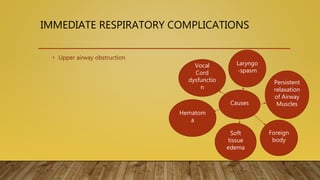
IMMEDIATE RESPIRATORY COMPLICATIONS
• Upper airway obstruction
Causes
Vocal
Cord
dysfunctio
n
Laryngo
-spasm
Persistent
relaxation
of Airway
Muscles
Soft
tissue
edema
Hematom
a
Foreign
body
CONTINUED…
• Impaired adequacy of ventilation (NM blockade, Anesthetic agents, Opioids)
• Supplemental O2
• Hypoxemia (Ac. Pulmonary Edema, bronchospasm, pneumothorax, Aspiration, PE)
• If spontaneously breathing, supplemental oxygen 15L/min using a non re-breathing mask
• If not breathing spontaneously, Endotracheal tube insertion or other invasive intervention
• Surgery specific (Vocal cord Palsy, Neck hematoma, bleeding)
EARLY AND LATE RESP. COMPLICATIONS
• Fever
• Malignant Hyperthermia 104˚due to Halothane or Succinylcholine( IV Dantrolene,
100% Oxygen, correct Acidosis, Cooling blankets)
• Bacteremia 30-45 mins (Blood Culture and Empiric Antibiotics)
• Atelectasis 1st POD (Auscultation, Chest X-ray, Improve ventilation, Bronchoscopy)
• Pneumonia 3rd POD (Sputum culture, Antibiotics)
• UTI 3rd POD (UCE, Antibiotics)
• DVT 5th POD (Doppler USG, Anti-coagulation therapy)
• Wound infection 7th POD
• Deep Abscesses 10-15th POD (USG guided drainage or Surgery)
CONTINUED…
• Cough
• Dyspnea
• Bronchospasm
• Hypercapnia
• Pleural effusion
• Pneumothorax
• Respiratory failure
• Aspiration
• Pulmonary embolism
IMMEDIATE CARDIOVASCULAR COMPLICATIONS
• Hypotension
• Hypovolemia
• Myocardial impairment
• Vasodilation due to Spinal anesthesia
• Sepsis
• Arrythmias
• Tension Pneumothorax
• Cardiac tamponade
• Anaphylaxis
CONTINUED…
• Hypertension
• Pain
• Agitation
• Anxiety
• Bladder Spasm
• Pre-existing Hypertension
• Myocardial Infarction
• Arrythmias
• Stroke
EARLY AND LATE CARDIOVASCULAR
COMPLICATIONS
• Myocardial Infarction
• Congestive Heart Failure
• Arrythmias
• Stroke
RENAL AND URINARY SYSTEM
• Acute Kidney Injury Causes
• Pre-Renal
Hypotension
Hypovolemia
• Renal
Nephrotoxic drugs
NSAIDS
Renal vascular surgery
Myoglobinuria
Sepsis
• Post-Renal
Ureteric injury
Blocked urinary catheter
CONTINUED…
• Urinary retention
• Catheterization should be done if when an operation is expected to last 3 hours or
more, or when large volumes of fluids are administered.
• UTI
• Low Urine Output (less than 0.5 ml/kg/hour)
1. Fluid deficit (Urinary Na < 10-20 mEq/L)
2. Acute renal failure (Urinary Na > 40 mEq/L)
CENTRAL NERVOUS SYSTEM
• Post operative disorientation/coma may result from various causes:
• Hypoxia
• May be secondary to sepsis
• Blood gas analysis and Respiratory support
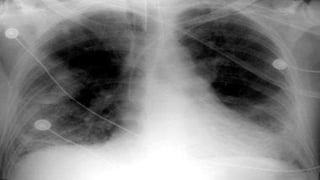
• ARDS
• B/L pulmonary infiltrates, hypoxia with no evidence of CCF
• Positive end expiratory pressure therapy
• Correct sepsis
CENTRAL NERVOUS SYSTEM
• Delirium Tremens
• Alcoholics
• Hallucinations and combative behavior
• Intravenous Benzodiazepines
• Hyponatremia
• May occur after surgery due to combination of large volumes of sodium free fluids (like
DW) and elevated ADH levels in response to trauma/surgery.
• Confusion, convulsions, coma and death
• Include Na in IV fluids
• Osmotic diuretics might help
CENTRAL NERVOUS SYSTEM
• Hypernatremia
• Induced by large unreplaced water loss
• Confusion, lethargy, coma
• Do rapid fluid replacement with half DW or DS soln.
• Ammonium intoxication
• Occurs in cirrhotic undergoing a portocaval shunt procedure
ABDOMINAL SURGERY COMPLICATIONS
• Paralytic ileus
• Nausea, Vomiting, Anorexia, mild bowel distension with no pain, absence of flatus
and bowel movements
• Adequate hydration and maintain electrolyte levels
• Return of intestinal function occurs as Small bowel > Larger bowel > Stomach
• Local infection / Anastomotic leakage
• Persistent abdominal pain, focal tenderness and fever spike (masked if deep seated
abscess)
• USG or CT for collection along with guided drainage
CONTINUED…
• Early mechanical bowel obstruction
• Paralytic ileus not resolving after 5-7 days after surgery
• X-ray: dilated gut loops and air fluid levels
• CT scan Abdomen helps
• Surgical intervention is required
• Ogilvie Syndrome
• Paralytic ileus of colon
• Seen in elderly sedentary patients ( Alzheimer’s, Nursing homes) who become further
immobile due to surgery
• Larger abdominal distension (Tense but no pain), x-ray : massively dilated colon
• Iv Neostigmine and long rectal tube
CONTINUED…
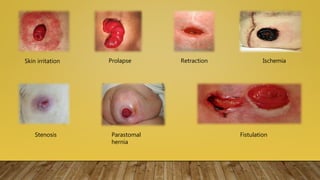
• Stoma complications
• Skin irritation
• Prolapse
• Retraction
• Ischemia
• Stenosis
• Parastomal hernia
• Bleeding
• Fistulation
Skin irritation Prolapse Retraction Ischemia
Stenosis Parastomal
hernia
Fistulation
COMPLICATIONS OF ORTHOPEDIC SURGERY
• Damage to the neurovascular supply of the extremity
• Compartment Syndrome
• Increased pressure in Osseo-fascial compartments that hinder adequate tissue
perfusion
• Pain, pallor, pulselessness, paralysis, paresthesia
• Treatment:
• Circumferential cast split and dressings cut down to skin
• Limb elevation
• Fasciotomy
NECK SURGERY
• Hematoma
• Nerve damage
THORACIC SURGERY
• Fluid overload
• Drain failure
• Bronchopleural fistula
• Continuous bubbling in drain
NEUROSURGERY
• Raised ICP
• Deterioration of state of consciousness
• Neurological signs and symptoms
UROLOGY
• Loss of urinary catheter patency
• Transurethral resection syndrome
• Problems related to continued bladder irrigation
GENERAL POST-OP PROBLEMS
• Hemorrhage
• Primary -- At the time of surgery
• Reactionary -- within 24 hours of surgery
• Secondary -- Several days after surgery
CONTINUED…
• PONV
• Risk Factors:
• Female gender (1)
• Non-smoker (1)
• History of motion sickness or PONV (1)
• Post-op opioid treatment (1)
• Apfel Scoring for probability of PONV
• 0 =10 %
• 1= 21 %
• 2= 29 %
• 3= 61 %
• 4= 78 %
CONTINUED…
• Treatment of PONV
• Relieve Pain & Anxiety
• Maintain BP
• Proper hydration
• Combination of various drugs may help:
• HT3 receptor antagonists (Ondansetron)
• Steroids
• Phenothiazines
• Anti-histamines
CONTINUED…
• Hypothermia & Shivering
• Causes
• Loss of thermo regulatory control due to anesthesia
• Exposure of patient during surgery
• Evaporation of ani-septic
• Treatment:
• Temperature monitoring intraoperatively
• Active warming devices
CONTINUED…
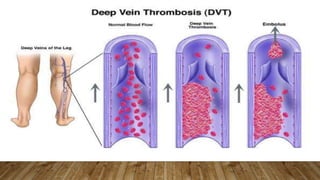
• Deep Venous thrombosis
• Thrombosis of one or more deep veins usually of the lower limb
• Calf pain, swelling, erythema, warm limb and engorged veins
• Investigations
• Duplex Doppler Ultrasound
• Venography
• Prevention
• Non-Pharmacologic: Compression stockings and Calf pump
• Pharmacologic: Parenteral anticoagulation initially followed by longer term warfarin or new
anticoagulants
• Surgical: Caval filter to avoid PE
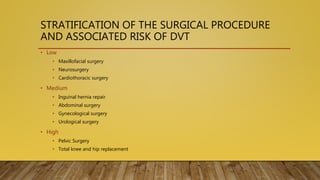
STRATIFICATION OF THE SURGICAL PROCEDURE
AND ASSOCIATED RISK OF DVT
• Low
• Maxillofacial surgery
• Neurosurgery
• Cardiothoracic surgery
• Medium
• Inguinal hernia repair
• Abdominal surgery
• Gynecological surgery
• Urological surgery
• High
• Pelvic Surgery
• Total knee and hip replacement
DRAINS
• Placed to avoid collection of blood, serosanguinous purulent fluid
• Quantity and character of fluid drained may allow early intervention
• Complications:
• Damage to surrounding tissues
• Infection
• Removal:
• As soon as possible
• When the drainage has stopped or became less than 25 ml/day
WOUND
• Wound dehiscence
• Disruption of any or all layers in a wound
• Around 5-8th POD after laparotomy
• Wound looks intact but the dressing is soaked with “Salmon Pink” colored fluid
• May need wound washout and re-suturing
• In some wound may be left open and treated with dressings or VAC pumps
• Evisceration is a catastrophic complication and may need emergency re-closure
• Re-operation for possible ventral hernia may be required but is not an emergency
CONTINUED…
• Fistula of GI tract
• Bowel contents leak out of a wound site or through drain site
• Fistulas not draining freely but leaking after a collection develops cause sepsis &
peritoneal irritation and require complete drainage
• Fistulas draining freely won’t cause peritoneal irritation or fever
• Potential problems due to fistula
• Fluid & electrolyte loss
• Nutritional depletion
• Digestion of abdominal wall
CONTINUED…
• Types of fistulas
• Low GI fistula (in distal colon) – up to 200-300 ml/day
• High GI fistula (in stomach, duodenum, upper jejunum – several liters per day
• Management
• Fluid & electrolyte replacement
• Nutritional support
• Protection of abdominal wall though suction tubes and ostomy bags
• Avoid the risk factors that prevent healing
• Keep the patient alive until the nature heals the fistula
CONTINUED…
• Pressure Sores
• Friction or persistent pressure on soft tissues in patients undergoing surgery for
prolonged periods of time
• Pressure points: Sacrum, Greater trochanter and Heels
• Prevention & Treatment
• Early mobilization and posture changes
• Air mattress for high risk patients
• W/W and W/D
WOUND CARE
• Within hours of surgical wound closure the dead space fills with inflammatory exudate
• Within 48 hours epidermal cell in wound edge bridge the gap
• Only inspect the wound if there is concern about its condition or the dressing needs
changing
• Infected wound or hematoma may require drainage and packing
• Send pus for culture & sensitivity (before giving antibiotics)
• Skin sutures or clips can be removed 6-10 days later or may be left longer in sutures
applied under tension
• Exclude factors that prevent healing
RECOVERY
• Factors that enhance recovery are
• Early physiotherapy and mobilization
• Earl oral intake
• Opioid sparing analgesia
• Support of nursing staff and community care providers
DISCHARGE LETTER
• Final diagnosis
• Treatment given
• Laboratory results
• Complications that might have occurred
• Discharge plan comprising of further care and management of complications,
physiotherapy and referrals for comorbidities
• Support needed by community care providers
• Follow-Up plan
• Prognosis (if appropriate)
Post-operative care presentation

Post-operative care presentation

  • 2.
  • 3.
    LEARNING OBJECTIVES: • Needof immediate post-op care • Common post-operative problems • Anticipation & prevention of common complications • Identification & Treatment • Enhancement of recovery • Systematic discharge
  • 4.
    INTRODUCTION: • To providequick, painless & safe recovery from surgery as soon as possible.
  • 5.
    Good Surgeon?? “A goodsurgeon is a good physician first”
  • 6.
    POST- ANESTHESIA CARE •Patient is handed over to a dedicated PACU working under observation of trained staff, along with complete patient information & nature of surgical intervention. PACU management involves: • Resuscitation • Difficult airway management • Scheduled vitals monitoring • Drugs • Discharge criteria out of PACU
  • 7.
    PACU DISCHARGE CRITERIA •Conscious • Maintaining SPO2 • Normothermic • Vitally stable & Pain free • Proper medications prescribed • No concern related to surgical procedure
  • 8.
    POST-OP COMPLICATIONS • Classification •Immediate: within 06 hours • Early: (06-72 hours) • Late: (>72 hours)
  • 9.
    IMMEDIATE RESPIRATORY COMPLICATIONS •Upper airway obstruction Causes Vocal Cord dysfunctio n Laryngo -spasm Persistent relaxation of Airway Muscles Soft tissue edema Hematom a Foreign body
  • 10.
    CONTINUED… • Impaired adequacyof ventilation (NM blockade, Anesthetic agents, Opioids) • Supplemental O2 • Hypoxemia (Ac. Pulmonary Edema, bronchospasm, pneumothorax, Aspiration, PE) • If spontaneously breathing, supplemental oxygen 15L/min using a non re-breathing mask • If not breathing spontaneously, Endotracheal tube insertion or other invasive intervention • Surgery specific (Vocal cord Palsy, Neck hematoma, bleeding)
  • 11.
    EARLY AND LATERESP. COMPLICATIONS • Fever • Malignant Hyperthermia 104˚due to Halothane or Succinylcholine( IV Dantrolene, 100% Oxygen, correct Acidosis, Cooling blankets) • Bacteremia 30-45 mins (Blood Culture and Empiric Antibiotics) • Atelectasis 1st POD (Auscultation, Chest X-ray, Improve ventilation, Bronchoscopy) • Pneumonia 3rd POD (Sputum culture, Antibiotics) • UTI 3rd POD (UCE, Antibiotics) • DVT 5th POD (Doppler USG, Anti-coagulation therapy) • Wound infection 7th POD • Deep Abscesses 10-15th POD (USG guided drainage or Surgery)
  • 12.
    CONTINUED… • Cough • Dyspnea •Bronchospasm • Hypercapnia • Pleural effusion • Pneumothorax • Respiratory failure • Aspiration • Pulmonary embolism
  • 13.
    IMMEDIATE CARDIOVASCULAR COMPLICATIONS •Hypotension • Hypovolemia • Myocardial impairment • Vasodilation due to Spinal anesthesia • Sepsis • Arrythmias • Tension Pneumothorax • Cardiac tamponade • Anaphylaxis
  • 14.
    CONTINUED… • Hypertension • Pain •Agitation • Anxiety • Bladder Spasm • Pre-existing Hypertension • Myocardial Infarction • Arrythmias • Stroke
  • 15.
    EARLY AND LATECARDIOVASCULAR COMPLICATIONS • Myocardial Infarction • Congestive Heart Failure • Arrythmias • Stroke
  • 16.
    RENAL AND URINARYSYSTEM • Acute Kidney Injury Causes • Pre-Renal Hypotension Hypovolemia • Renal Nephrotoxic drugs NSAIDS Renal vascular surgery Myoglobinuria Sepsis • Post-Renal Ureteric injury Blocked urinary catheter
  • 17.
    CONTINUED… • Urinary retention •Catheterization should be done if when an operation is expected to last 3 hours or more, or when large volumes of fluids are administered. • UTI • Low Urine Output (less than 0.5 ml/kg/hour) 1. Fluid deficit (Urinary Na < 10-20 mEq/L) 2. Acute renal failure (Urinary Na > 40 mEq/L)
  • 18.
    CENTRAL NERVOUS SYSTEM •Post operative disorientation/coma may result from various causes: • Hypoxia • May be secondary to sepsis • Blood gas analysis and Respiratory support • ARDS • B/L pulmonary infiltrates, hypoxia with no evidence of CCF • Positive end expiratory pressure therapy • Correct sepsis
  • 20.
    CENTRAL NERVOUS SYSTEM •Delirium Tremens • Alcoholics • Hallucinations and combative behavior • Intravenous Benzodiazepines • Hyponatremia • May occur after surgery due to combination of large volumes of sodium free fluids (like DW) and elevated ADH levels in response to trauma/surgery. • Confusion, convulsions, coma and death • Include Na in IV fluids • Osmotic diuretics might help
  • 21.
    CENTRAL NERVOUS SYSTEM •Hypernatremia • Induced by large unreplaced water loss • Confusion, lethargy, coma • Do rapid fluid replacement with half DW or DS soln. • Ammonium intoxication • Occurs in cirrhotic undergoing a portocaval shunt procedure
  • 22.
    ABDOMINAL SURGERY COMPLICATIONS •Paralytic ileus • Nausea, Vomiting, Anorexia, mild bowel distension with no pain, absence of flatus and bowel movements • Adequate hydration and maintain electrolyte levels • Return of intestinal function occurs as Small bowel > Larger bowel > Stomach • Local infection / Anastomotic leakage • Persistent abdominal pain, focal tenderness and fever spike (masked if deep seated abscess) • USG or CT for collection along with guided drainage
  • 23.
    CONTINUED… • Early mechanicalbowel obstruction • Paralytic ileus not resolving after 5-7 days after surgery • X-ray: dilated gut loops and air fluid levels • CT scan Abdomen helps • Surgical intervention is required • Ogilvie Syndrome • Paralytic ileus of colon • Seen in elderly sedentary patients ( Alzheimer’s, Nursing homes) who become further immobile due to surgery • Larger abdominal distension (Tense but no pain), x-ray : massively dilated colon • Iv Neostigmine and long rectal tube
  • 24.
    CONTINUED… • Stoma complications •Skin irritation • Prolapse • Retraction • Ischemia • Stenosis • Parastomal hernia • Bleeding • Fistulation
  • 25.
    Skin irritation ProlapseRetraction Ischemia Stenosis Parastomal hernia Fistulation
  • 26.
    COMPLICATIONS OF ORTHOPEDICSURGERY • Damage to the neurovascular supply of the extremity • Compartment Syndrome • Increased pressure in Osseo-fascial compartments that hinder adequate tissue perfusion • Pain, pallor, pulselessness, paralysis, paresthesia • Treatment: • Circumferential cast split and dressings cut down to skin • Limb elevation • Fasciotomy
  • 27.
  • 28.
    THORACIC SURGERY • Fluidoverload • Drain failure • Bronchopleural fistula • Continuous bubbling in drain
  • 29.
    NEUROSURGERY • Raised ICP •Deterioration of state of consciousness • Neurological signs and symptoms
  • 30.
    UROLOGY • Loss ofurinary catheter patency • Transurethral resection syndrome • Problems related to continued bladder irrigation
  • 31.
    GENERAL POST-OP PROBLEMS •Hemorrhage • Primary -- At the time of surgery • Reactionary -- within 24 hours of surgery • Secondary -- Several days after surgery
  • 32.
    CONTINUED… • PONV • RiskFactors: • Female gender (1) • Non-smoker (1) • History of motion sickness or PONV (1) • Post-op opioid treatment (1) • Apfel Scoring for probability of PONV • 0 =10 % • 1= 21 % • 2= 29 % • 3= 61 % • 4= 78 %
  • 33.
    CONTINUED… • Treatment ofPONV • Relieve Pain & Anxiety • Maintain BP • Proper hydration • Combination of various drugs may help: • HT3 receptor antagonists (Ondansetron) • Steroids • Phenothiazines • Anti-histamines
  • 34.
    CONTINUED… • Hypothermia &Shivering • Causes • Loss of thermo regulatory control due to anesthesia • Exposure of patient during surgery • Evaporation of ani-septic • Treatment: • Temperature monitoring intraoperatively • Active warming devices
  • 35.
    CONTINUED… • Deep Venousthrombosis • Thrombosis of one or more deep veins usually of the lower limb • Calf pain, swelling, erythema, warm limb and engorged veins • Investigations • Duplex Doppler Ultrasound • Venography • Prevention • Non-Pharmacologic: Compression stockings and Calf pump • Pharmacologic: Parenteral anticoagulation initially followed by longer term warfarin or new anticoagulants • Surgical: Caval filter to avoid PE
  • 36.
    STRATIFICATION OF THESURGICAL PROCEDURE AND ASSOCIATED RISK OF DVT • Low • Maxillofacial surgery • Neurosurgery • Cardiothoracic surgery • Medium • Inguinal hernia repair • Abdominal surgery • Gynecological surgery • Urological surgery • High • Pelvic Surgery • Total knee and hip replacement
  • 38.
    DRAINS • Placed toavoid collection of blood, serosanguinous purulent fluid • Quantity and character of fluid drained may allow early intervention • Complications: • Damage to surrounding tissues • Infection • Removal: • As soon as possible • When the drainage has stopped or became less than 25 ml/day
  • 39.
    WOUND • Wound dehiscence •Disruption of any or all layers in a wound • Around 5-8th POD after laparotomy • Wound looks intact but the dressing is soaked with “Salmon Pink” colored fluid • May need wound washout and re-suturing • In some wound may be left open and treated with dressings or VAC pumps • Evisceration is a catastrophic complication and may need emergency re-closure • Re-operation for possible ventral hernia may be required but is not an emergency
  • 40.
    CONTINUED… • Fistula ofGI tract • Bowel contents leak out of a wound site or through drain site • Fistulas not draining freely but leaking after a collection develops cause sepsis & peritoneal irritation and require complete drainage • Fistulas draining freely won’t cause peritoneal irritation or fever • Potential problems due to fistula • Fluid & electrolyte loss • Nutritional depletion • Digestion of abdominal wall
  • 41.
    CONTINUED… • Types offistulas • Low GI fistula (in distal colon) – up to 200-300 ml/day • High GI fistula (in stomach, duodenum, upper jejunum – several liters per day • Management • Fluid & electrolyte replacement • Nutritional support • Protection of abdominal wall though suction tubes and ostomy bags • Avoid the risk factors that prevent healing • Keep the patient alive until the nature heals the fistula
  • 42.
    CONTINUED… • Pressure Sores •Friction or persistent pressure on soft tissues in patients undergoing surgery for prolonged periods of time • Pressure points: Sacrum, Greater trochanter and Heels • Prevention & Treatment • Early mobilization and posture changes • Air mattress for high risk patients • W/W and W/D
  • 43.
    WOUND CARE • Withinhours of surgical wound closure the dead space fills with inflammatory exudate • Within 48 hours epidermal cell in wound edge bridge the gap • Only inspect the wound if there is concern about its condition or the dressing needs changing • Infected wound or hematoma may require drainage and packing • Send pus for culture & sensitivity (before giving antibiotics) • Skin sutures or clips can be removed 6-10 days later or may be left longer in sutures applied under tension • Exclude factors that prevent healing
  • 44.
    RECOVERY • Factors thatenhance recovery are • Early physiotherapy and mobilization • Earl oral intake • Opioid sparing analgesia • Support of nursing staff and community care providers
  • 45.
    DISCHARGE LETTER • Finaldiagnosis • Treatment given • Laboratory results • Complications that might have occurred • Discharge plan comprising of further care and management of complications, physiotherapy and referrals for comorbidities • Support needed by community care providers • Follow-Up plan • Prognosis (if appropriate)