Postnatal Examination
Ghanshyam medical
euducation
DEFINITION
Postnatal care includes systematic examination of mother and
the baby and the appropriate advice given to the mother during
postpartum period.
OBJECTIVES
• To observe the general condition of the mother.

• To find out postnatal problem and manage.
• To provide necessary health teaching to mother and family.
• To improve mental and physical health of mother.
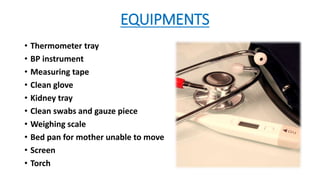
EQUIPMENTS
• Thermometer tray
• BP instrument
• Measuring tape
• Clean glove
• Kidney tray
• Clean swabs and gauze piece
• Weighing scale
• Bed pan for mother unable to move
• Screen
• Torch
PROCEDURE
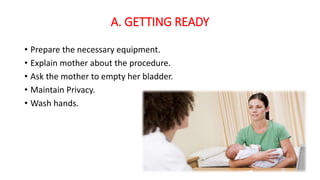
A. GETTING READY
• Prepare the necessary equipment.
• Explain mother about the procedure.
• Ask the mother to empty her bladder.
• Maintain Privacy.
• Wash hands.
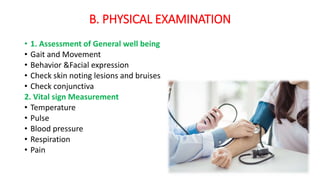
B. PHYSICAL EXAMINATION
• 1. Assessment of General well being
• Gait and Movement
• Behavior &Facial expression
• Check skin noting lesions and bruises
• Check conjunctiva
2. Vital sign Measurement
• Temperature
• Pulse
• Blood pressure
• Respiration
• Pain
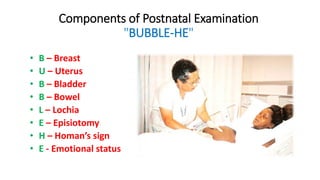
Components of Postnatal Examination
"BUBBLE-HE"
• B – Breast
• U – Uterus
• B – Bladder
• B – Bowel
• L – Lochia
• E – Episiotomy
• H – Homan’s sign
• E - Emotional status
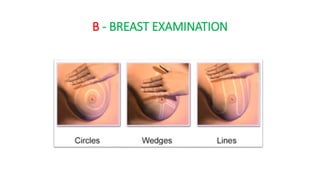
B - BREAST EXAMINATION
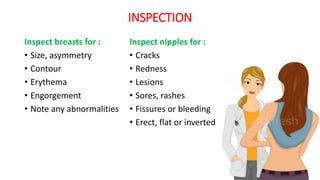
INSPECTION
Inspect breasts for :
• Size, asymmetry
• Contour
• Erythema
• Engorgement
• Note any abnormalities
Inspect nipples for :
• Cracks
• Redness
• Lesions
• Sores, rashes
• Fissures or bleeding
• Erect, flat or inverted
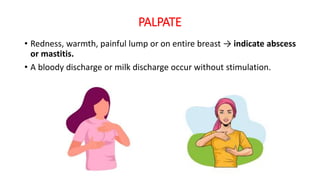
PALPATE
• Redness, warmth, painful lump or on entire breast → indicate abscess
or mastitis.
• A bloody discharge or milk discharge occur without stimulation.
U – UTERUS & ABDOMINAL EXAMINATION
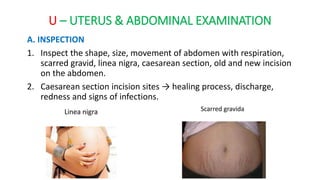
A. INSPECTION
1. Inspect the shape, size, movement of abdomen with respiration,
scarred gravid, linea nigra, caesarean section, old and new incision
on the abdomen.
2. Caesarean section incision sites → healing process, discharge,
redness and signs of infections.
B. PALPATE FUNDUS
1. Palpate fundus for consistency and location.
2. Place mother in a supine position with her knees slightly flexed.
3. Put on clean gloves and lower the perineal pads to observe lochia as the
fundus is palpated.
4. Use flat part of fingers for palpation. Palpation may be painful, for the
mother who had a cesarean birth.
5. Palpate gently at umbilicus until the fundus is located.
6. The location of fundus should be rechecked after emptying bladder.
7. Measure fundus height in centimeters or use fingers breaths. Generally
fundal height decreases about 1cm per day for first 9-10 days post-partum.
8. Document the consistency and location of the fundus.
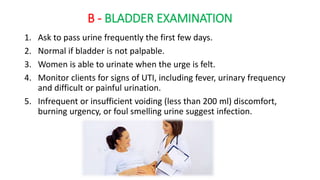
B - BLADDER EXAMINATION
1. Ask to pass urine frequently the first few days.
2. Normal if bladder is not palpable.
3. Women is able to urinate when the urge is felt.
4. Monitor clients for signs of UTI, including fever, urinary frequency
and difficult or painful urination.
5. Infrequent or insufficient voiding (less than 200 ml) discomfort,
burning urgency, or foul smelling urine suggest infection.
B - BOWEL EXAMINATION
1. Inspect the woman's abdomen for distention.
2. Auscultation for bowel sounds in all four quadrants prior.
3. To palpating the uterine fundus, and palpate for tenderness.
4. Ask the patient about daily bowel movement or has passed gas
since giving birth.
5. She must no become constipated.
6. Explain that she should wipe from front to back after voiding or
defecating.
7. Normal assessment findings are active bowel sounds, passing gas,
and a non-distended abdomen.
L - LOCHIA EXAMINATION
1. Check and note colour, odor and amount of lochia.
2. Ask about color of drainage and presence of any clots.
3. To assess amount -
• Ask her how many perineal pads she has used in the past 1 to 2 hours.
• How much drainage was on each pad.
4. Lochia increases with maternal activity and breastfeeding which is
normal.
5. Lochia should have" no foul odor". A truly foul odor may be a sign of
infection.
6. The average amount of discharge for the first 5-6 days is estimated to be
250 ml.
• Persistence of red lochia → indicates secondary postpartum
hemorrhage.
• Brown profuse lochia with bulky uterus → sub-involution of the
uterus.
• Excessive lochia → retained product of conception.
• Scanty lochia → indicate poor drainage. -
• When associated with pyrexia they are due to localized uterine
infection.
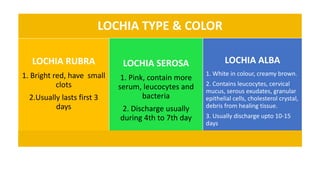
LOCHIA TYPE & COLOR
LOCHIA RUBRA
1. Bright red, have small
clots
2.Usually lasts first 3
days
LOCHIA SEROSA
1. Pink, contain more
serum, leucocytes and
bacteria
2. Discharge usually
during 4th to 7th day
LOCHIA ALBA
1. White in colour, creamy brown.
2. Contains leucocytes, cervical
mucus, serous exudates, granular
epithelial cells, cholesterol crystal,
debris from healing tissue.
3. Usually discharge upto 10-15
days
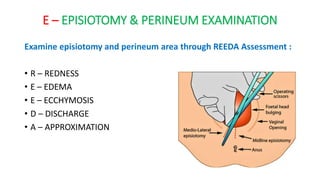
E – EPISIOTOMY & PERINEUM EXAMINATION
Examine episiotomy and perineum area through REEDA Assessment :
• R – REDNESS
• E – EDEMA
• E – ECCHYMOSIS
• D – DISCHARGE
• A – APPROXIMATION
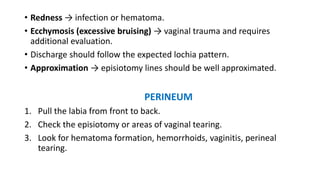
• Redness → infection or hematoma.
• Ecchymosis (excessive bruising) → vaginal trauma and requires
additional evaluation.
• Discharge should follow the expected lochia pattern.
• Approximation → episiotomy lines should be well approximated.
PERINEUM
1. Pull the labia from front to back.
2. Check the episiotomy or areas of vaginal tearing.
3. Look for hematoma formation, hemorrhoids, vaginitis, perineal
tearing.
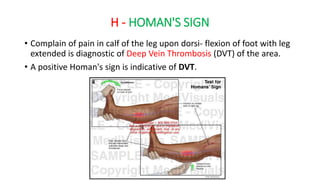
H - HOMAN'S SIGN
• Complain of pain in calf of the leg upon dorsi- flexion of foot with leg
extended is diagnostic of Deep Vein Thrombosis (DVT) of the area.
• A positive Homan's sign is indicative of DVT.
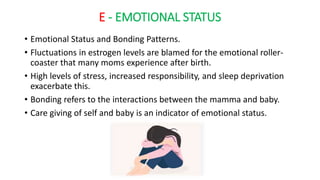
E - EMOTIONAL STATUS
• Emotional Status and Bonding Patterns.
• Fluctuations in estrogen levels are blamed for the emotional roller-
coaster that many moms experience after birth.
• High levels of stress, increased responsibility, and sleep deprivation
exacerbate this.
• Bonding refers to the interactions between the mamma and baby.
• Care giving of self and baby is an indicator of emotional status.
SUMMARY
First 24 hours after birth: All postpartum women should have regular
assessment of vaginal bleeding, uterine contraction, fundal height,
temperature and heart rate (pulse) routinely during the first 24 hours
starting from the first hour after birth. Blood pressure should be
measured shortly after birth.
Thank You

Postnatal Examination | Postnatal Assessment

  • 1.
  • 2.
    DEFINITION Postnatal care includessystematic examination of mother and the baby and the appropriate advice given to the mother during postpartum period.
  • 3.
    OBJECTIVES • To observethe general condition of the mother. • To find out postnatal problem and manage. • To provide necessary health teaching to mother and family. • To improve mental and physical health of mother.
  • 4.
    EQUIPMENTS • Thermometer tray •BP instrument • Measuring tape • Clean glove • Kidney tray • Clean swabs and gauze piece • Weighing scale • Bed pan for mother unable to move • Screen • Torch
  • 5.
  • 6.
    A. GETTING READY •Prepare the necessary equipment. • Explain mother about the procedure. • Ask the mother to empty her bladder. • Maintain Privacy. • Wash hands.
  • 7.
    B. PHYSICAL EXAMINATION •1. Assessment of General well being • Gait and Movement • Behavior &Facial expression • Check skin noting lesions and bruises • Check conjunctiva 2. Vital sign Measurement • Temperature • Pulse • Blood pressure • Respiration • Pain
  • 8.
    Components of PostnatalExamination "BUBBLE-HE" • B – Breast • U – Uterus • B – Bladder • B – Bowel • L – Lochia • E – Episiotomy • H – Homan’s sign • E - Emotional status
  • 9.
    B - BREASTEXAMINATION
  • 10.
    INSPECTION Inspect breasts for: • Size, asymmetry • Contour • Erythema • Engorgement • Note any abnormalities Inspect nipples for : • Cracks • Redness • Lesions • Sores, rashes • Fissures or bleeding • Erect, flat or inverted
  • 11.
    PALPATE • Redness, warmth,painful lump or on entire breast → indicate abscess or mastitis. • A bloody discharge or milk discharge occur without stimulation.
  • 12.
    U – UTERUS& ABDOMINAL EXAMINATION A. INSPECTION 1. Inspect the shape, size, movement of abdomen with respiration, scarred gravid, linea nigra, caesarean section, old and new incision on the abdomen. 2. Caesarean section incision sites → healing process, discharge, redness and signs of infections.
  • 13.
    B. PALPATE FUNDUS 1.Palpate fundus for consistency and location. 2. Place mother in a supine position with her knees slightly flexed. 3. Put on clean gloves and lower the perineal pads to observe lochia as the fundus is palpated. 4. Use flat part of fingers for palpation. Palpation may be painful, for the mother who had a cesarean birth. 5. Palpate gently at umbilicus until the fundus is located. 6. The location of fundus should be rechecked after emptying bladder. 7. Measure fundus height in centimeters or use fingers breaths. Generally fundal height decreases about 1cm per day for first 9-10 days post-partum. 8. Document the consistency and location of the fundus.
  • 14.
    B - BLADDEREXAMINATION 1. Ask to pass urine frequently the first few days. 2. Normal if bladder is not palpable. 3. Women is able to urinate when the urge is felt. 4. Monitor clients for signs of UTI, including fever, urinary frequency and difficult or painful urination. 5. Infrequent or insufficient voiding (less than 200 ml) discomfort, burning urgency, or foul smelling urine suggest infection.
  • 15.
    B - BOWELEXAMINATION 1. Inspect the woman's abdomen for distention. 2. Auscultation for bowel sounds in all four quadrants prior. 3. To palpating the uterine fundus, and palpate for tenderness. 4. Ask the patient about daily bowel movement or has passed gas since giving birth. 5. She must no become constipated. 6. Explain that she should wipe from front to back after voiding or defecating. 7. Normal assessment findings are active bowel sounds, passing gas, and a non-distended abdomen.
  • 16.
    L - LOCHIAEXAMINATION 1. Check and note colour, odor and amount of lochia. 2. Ask about color of drainage and presence of any clots. 3. To assess amount - • Ask her how many perineal pads she has used in the past 1 to 2 hours. • How much drainage was on each pad. 4. Lochia increases with maternal activity and breastfeeding which is normal. 5. Lochia should have" no foul odor". A truly foul odor may be a sign of infection. 6. The average amount of discharge for the first 5-6 days is estimated to be 250 ml.
  • 17.
    • Persistence ofred lochia → indicates secondary postpartum hemorrhage. • Brown profuse lochia with bulky uterus → sub-involution of the uterus. • Excessive lochia → retained product of conception. • Scanty lochia → indicate poor drainage. - • When associated with pyrexia they are due to localized uterine infection.
  • 18.
    LOCHIA TYPE &COLOR LOCHIA RUBRA 1. Bright red, have small clots 2.Usually lasts first 3 days LOCHIA SEROSA 1. Pink, contain more serum, leucocytes and bacteria 2. Discharge usually during 4th to 7th day LOCHIA ALBA 1. White in colour, creamy brown. 2. Contains leucocytes, cervical mucus, serous exudates, granular epithelial cells, cholesterol crystal, debris from healing tissue. 3. Usually discharge upto 10-15 days
  • 19.
    E – EPISIOTOMY& PERINEUM EXAMINATION Examine episiotomy and perineum area through REEDA Assessment : • R – REDNESS • E – EDEMA • E – ECCHYMOSIS • D – DISCHARGE • A – APPROXIMATION
  • 20.
    • Redness →infection or hematoma. • Ecchymosis (excessive bruising) → vaginal trauma and requires additional evaluation. • Discharge should follow the expected lochia pattern. • Approximation → episiotomy lines should be well approximated. PERINEUM 1. Pull the labia from front to back. 2. Check the episiotomy or areas of vaginal tearing. 3. Look for hematoma formation, hemorrhoids, vaginitis, perineal tearing.
  • 21.
    H - HOMAN'SSIGN • Complain of pain in calf of the leg upon dorsi- flexion of foot with leg extended is diagnostic of Deep Vein Thrombosis (DVT) of the area. • A positive Homan's sign is indicative of DVT.
  • 22.
    E - EMOTIONALSTATUS • Emotional Status and Bonding Patterns. • Fluctuations in estrogen levels are blamed for the emotional roller- coaster that many moms experience after birth. • High levels of stress, increased responsibility, and sleep deprivation exacerbate this. • Bonding refers to the interactions between the mamma and baby. • Care giving of self and baby is an indicator of emotional status.
  • 23.
    SUMMARY First 24 hoursafter birth: All postpartum women should have regular assessment of vaginal bleeding, uterine contraction, fundal height, temperature and heart rate (pulse) routinely during the first 24 hours starting from the first hour after birth. Blood pressure should be measured shortly after birth.
  • 24.