Postmodernism in Captain
       America
Part One: Repeating Myself
References/parallels to Indiana Jones and the Raiders
of the Lost Ark (1981; Steven Spielberg)
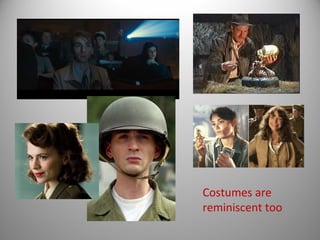
• Both are set in the same era, so costumes and iconography often
  look similar
• Schmidt refers to the Fuhrer digging for treasure in the desert – in
  Raiders, we see the Nazis in the desert seeking to find the Ark of
  the Covenant – like Schmidt, they believe possessing a treasure
  will give them access to great power.
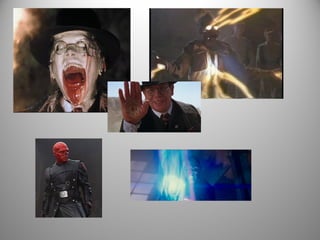
• In Raiders, the Nazis end up having the flesh melted off their
  bones and we see their faces ‘melt’ – likewise, in the pursuit of
  power, Schmidt has had his face disfigured and the flesh burnt
  away, as he tries to use an artefact too powerful for human
  control
• The moment the Tesseract blazes and kills Schmidt is reminiscent
  of this moment (see slides next page)
Costumes are
reminiscent too
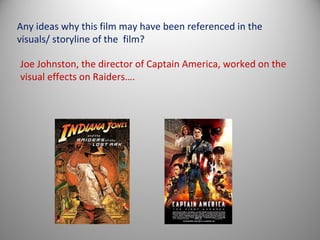
Any ideas why this film may have been referenced in the
visuals/ storyline of the film?

Joe Johnston, the director of Captain America, worked on the
visual effects on Raiders….
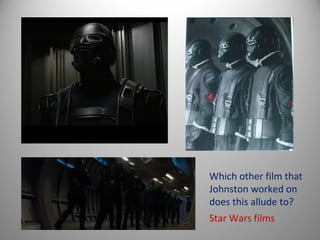
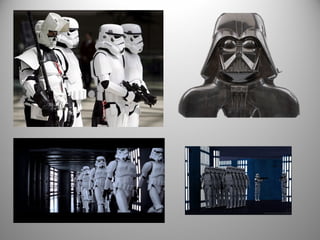
Which other film that
Johnston worked on
does this allude to?
Star Wars films
Part Two: For the Fans
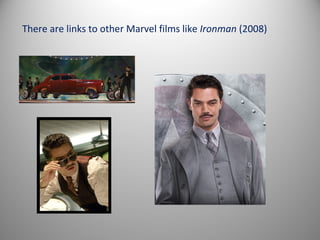
There are links to other Marvel films like Ironman (2008)
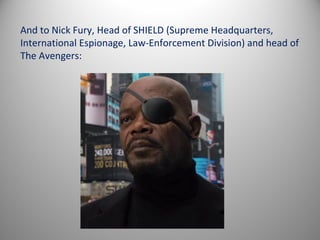
And to Nick Fury, Head of SHIELD (Supreme Headquarters,
International Espionage, Law-Enforcement Division) and head of
The Avengers:
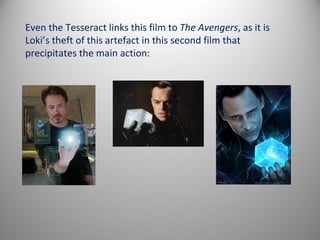
Even the Tesseract links this film to The Avengers, as it is
Loki’s theft of this artefact in this second film that
precipitates the main action:
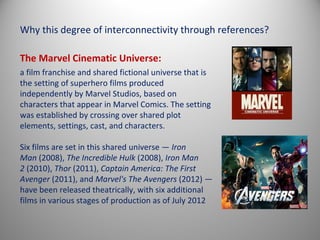
Why this degree of interconnectivity through references?

The Marvel Cinematic Universe:
a film franchise and shared fictional universe that is
the setting of superhero films produced
independently by Marvel Studios, based on
characters that appear in Marvel Comics. The setting
was established by crossing over shared plot
elements, settings, cast, and characters.

Six films are set in this shared universe — Iron
Man (2008), The Incredible Hulk (2008), Iron Man
2 (2010), Thor (2011), Captain America: The First
Avenger (2011), and Marvel's The Avengers (2012) —
have been released theatrically, with six additional
films in various stages of production as of July 2012
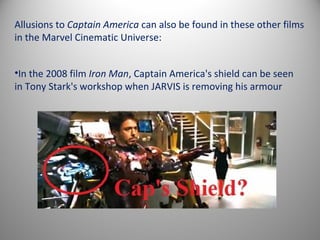
Allusions to Captain America can also be found in these other films
in the Marvel Cinematic Universe:


•In the 2008 film Iron Man, Captain America's shield can be seen
in Tony Stark's workshop when JARVIS is removing his armour
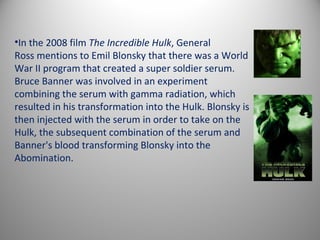
•In the 2008 film The Incredible Hulk, General
Ross mentions to Emil Blonsky that there was a World
War II program that created a super soldier serum.
Bruce Banner was involved in an experiment
combining the serum with gamma radiation, which
resulted in his transformation into the Hulk. Blonsky is
then injected with the serum in order to take on the
Hulk, the subsequent combination of the serum and
Banner's blood transforming Blonsky into the
Abomination.
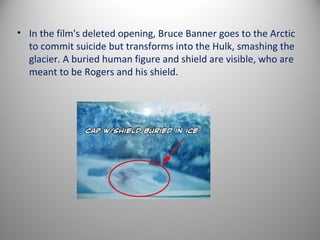
• In the film's deleted opening, Bruce Banner goes to the Arctic
  to commit suicide but transforms into the Hulk, smashing the
  glacier. A buried human figure and shield are visible, who are
  meant to be Rogers and his shield.
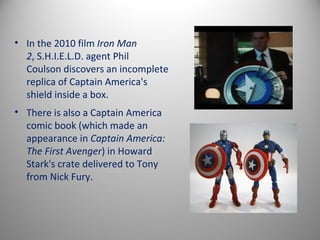
• In the 2010 film Iron Man
  2, S.H.I.E.L.D. agent Phil
  Coulson discovers an incomplete
  replica of Captain America's
  shield inside a box.
• There is also a Captain America
  comic book (which made an
  appearance in Captain America:
  The First Avenger) in Howard
  Stark's crate delivered to Tony
  from Nick Fury.
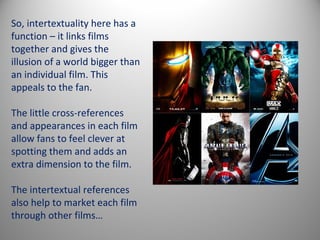
So, intertextuality here has a
function – it links films
together and gives the
illusion of a world bigger than
an individual film. This
appeals to the fan.

The little cross-references
and appearances in each film
allow fans to feel clever at
spotting them and adds an
extra dimension to the film.

The intertextual references
also help to market each film
through other films…
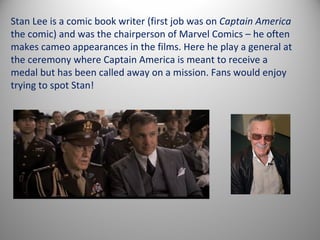
Stan Lee is a comic book writer (first job was on Captain America
the comic) and was the chairperson of Marvel Comics – he often
makes cameo appearances in the films. Here he play a general at
the ceremony where Captain America is meant to receive a
medal but has been called away on a mission. Fans would enjoy
trying to spot Stan!
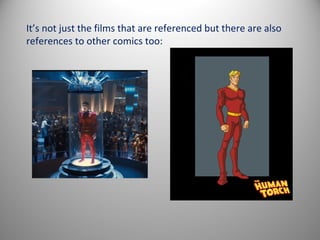
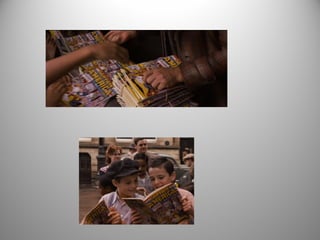
It’s not just the films that are referenced but there are also
references to other comics too:
Part Three: Self-Reference Guide
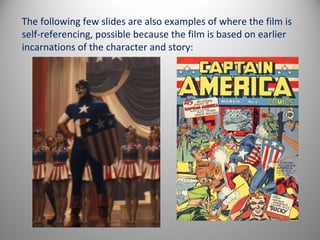
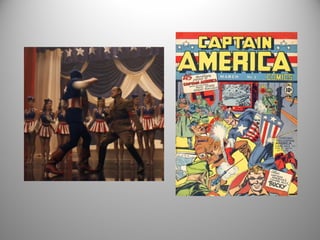
The following few slides are also examples of where the film is
self-referencing, possible because the film is based on earlier
incarnations of the character and story:
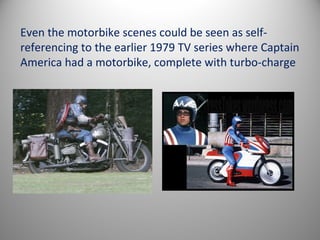
Even the motorbike scenes could be seen as self-
referencing to the earlier 1979 TV series where Captain
America had a motorbike, complete with turbo-charge
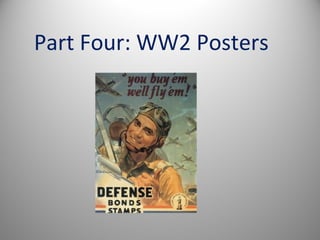
Part Four: WW2 Posters
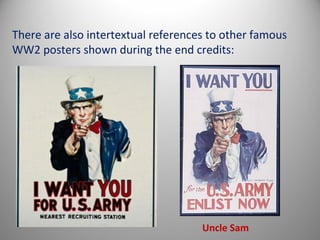
There are also intertextual references to other famous
WW2 posters shown during the end credits:


                                     Uncle Sam
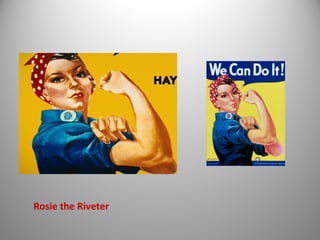
Rosie the Riveter
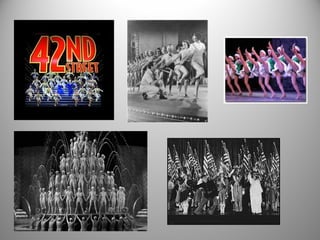
Part Five: The Musical
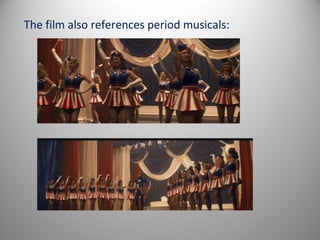
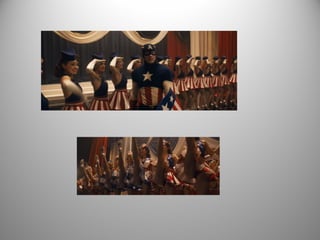
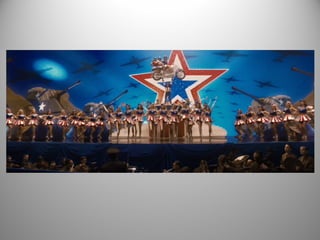
The film also references period musicals:
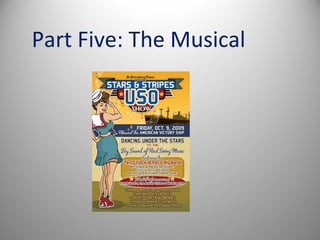
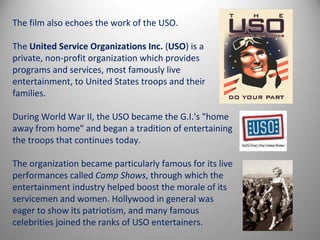
The film also echoes the work of the USO.

The United Service Organizations Inc. (USO) is a
private, non-profit organization which provides
programs and services, most famously live
entertainment, to United States troops and their
families.

During World War II, the USO became the G.I.'s "home
away from home" and began a tradition of entertaining
the troops that continues today.

The organization became particularly famous for its live
performances called Camp Shows, through which the
entertainment industry helped boost the morale of its
servicemen and women. Hollywood in general was
eager to show its patriotism, and many famous
celebrities joined the ranks of USO entertainers.
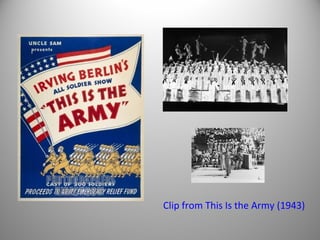
Clip from This Is the Army (1943)
Part Six: Random References
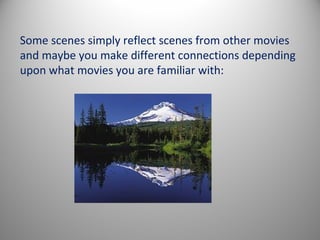
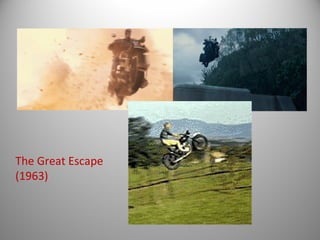
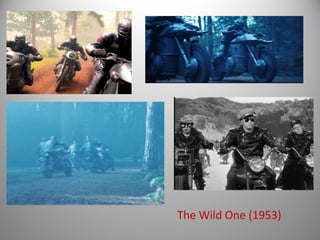
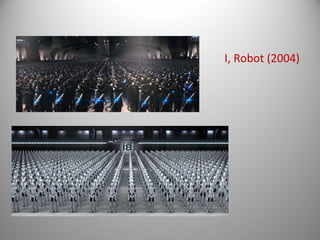
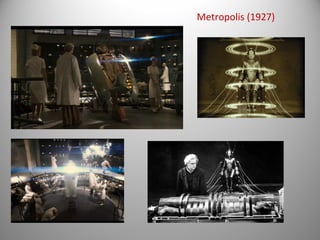
Some scenes simply reflect scenes from other movies
and maybe you make different connections depending
upon what movies you are familiar with:
Metropolis (1927)
The Great Escape
(1963)
The Wild One (1953)
I, Robot (2004)

Postmodernism in captain america

  • 1.
  • 2.
  • 3.
    References/parallels to IndianaJones and the Raiders of the Lost Ark (1981; Steven Spielberg) • Both are set in the same era, so costumes and iconography often look similar • Schmidt refers to the Fuhrer digging for treasure in the desert – in Raiders, we see the Nazis in the desert seeking to find the Ark of the Covenant – like Schmidt, they believe possessing a treasure will give them access to great power. • In Raiders, the Nazis end up having the flesh melted off their bones and we see their faces ‘melt’ – likewise, in the pursuit of power, Schmidt has had his face disfigured and the flesh burnt away, as he tries to use an artefact too powerful for human control • The moment the Tesseract blazes and kills Schmidt is reminiscent of this moment (see slides next page)
  • 5.
  • 6.
    Any ideas whythis film may have been referenced in the visuals/ storyline of the film? Joe Johnston, the director of Captain America, worked on the visual effects on Raiders….
  • 7.
    Which other filmthat Johnston worked on does this allude to? Star Wars films
  • 9.
    Part Two: Forthe Fans
  • 10.
    There are linksto other Marvel films like Ironman (2008)
  • 11.
    And to NickFury, Head of SHIELD (Supreme Headquarters, International Espionage, Law-Enforcement Division) and head of The Avengers:
  • 12.
    Even the Tesseractlinks this film to The Avengers, as it is Loki’s theft of this artefact in this second film that precipitates the main action:
  • 13.
    Why this degreeof interconnectivity through references? The Marvel Cinematic Universe: a film franchise and shared fictional universe that is the setting of superhero films produced independently by Marvel Studios, based on characters that appear in Marvel Comics. The setting was established by crossing over shared plot elements, settings, cast, and characters. Six films are set in this shared universe — Iron Man (2008), The Incredible Hulk (2008), Iron Man 2 (2010), Thor (2011), Captain America: The First Avenger (2011), and Marvel's The Avengers (2012) — have been released theatrically, with six additional films in various stages of production as of July 2012
  • 14.
    Allusions to CaptainAmerica can also be found in these other films in the Marvel Cinematic Universe: •In the 2008 film Iron Man, Captain America's shield can be seen in Tony Stark's workshop when JARVIS is removing his armour
  • 15.
    •In the 2008film The Incredible Hulk, General Ross mentions to Emil Blonsky that there was a World War II program that created a super soldier serum. Bruce Banner was involved in an experiment combining the serum with gamma radiation, which resulted in his transformation into the Hulk. Blonsky is then injected with the serum in order to take on the Hulk, the subsequent combination of the serum and Banner's blood transforming Blonsky into the Abomination.
  • 16.
    • In thefilm's deleted opening, Bruce Banner goes to the Arctic to commit suicide but transforms into the Hulk, smashing the glacier. A buried human figure and shield are visible, who are meant to be Rogers and his shield.
  • 17.
    • In the2010 film Iron Man 2, S.H.I.E.L.D. agent Phil Coulson discovers an incomplete replica of Captain America's shield inside a box. • There is also a Captain America comic book (which made an appearance in Captain America: The First Avenger) in Howard Stark's crate delivered to Tony from Nick Fury.
  • 18.
    So, intertextuality herehas a function – it links films together and gives the illusion of a world bigger than an individual film. This appeals to the fan. The little cross-references and appearances in each film allow fans to feel clever at spotting them and adds an extra dimension to the film. The intertextual references also help to market each film through other films…
  • 19.
    Stan Lee isa comic book writer (first job was on Captain America the comic) and was the chairperson of Marvel Comics – he often makes cameo appearances in the films. Here he play a general at the ceremony where Captain America is meant to receive a medal but has been called away on a mission. Fans would enjoy trying to spot Stan!
  • 20.
    It’s not justthe films that are referenced but there are also references to other comics too:
  • 21.
  • 22.
    The following fewslides are also examples of where the film is self-referencing, possible because the film is based on earlier incarnations of the character and story:
  • 25.
    Even the motorbikescenes could be seen as self- referencing to the earlier 1979 TV series where Captain America had a motorbike, complete with turbo-charge
  • 26.
  • 27.
    There are alsointertextual references to other famous WW2 posters shown during the end credits: Uncle Sam
  • 28.
  • 29.
  • 30.
    The film alsoreferences period musicals:
  • 34.
    The film alsoechoes the work of the USO. The United Service Organizations Inc. (USO) is a private, non-profit organization which provides programs and services, most famously live entertainment, to United States troops and their families. During World War II, the USO became the G.I.'s "home away from home" and began a tradition of entertaining the troops that continues today. The organization became particularly famous for its live performances called Camp Shows, through which the entertainment industry helped boost the morale of its servicemen and women. Hollywood in general was eager to show its patriotism, and many famous celebrities joined the ranks of USO entertainers.
  • 35.
    Clip from ThisIs the Army (1943)
  • 36.
    Part Six: RandomReferences
  • 37.
    Some scenes simplyreflect scenes from other movies and maybe you make different connections depending upon what movies you are familiar with:
  • 38.
  • 39.
  • 40.
  • 41.