This is the responsibility

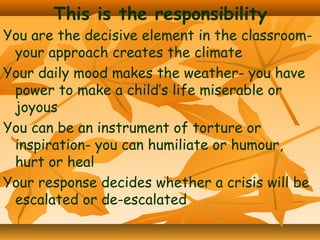
You are the decisive element in the classroomyour approach creates the climate
Your daily mood makes the weather- you have
power to make a child’s life miserable or
joyous
You can be an instrument of torture or
inspiration- you can humiliate or humour,
hurt or heal
Your response decides whether a crisis will be
escalated or de-escalated
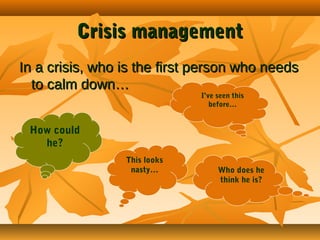
Crisis management
In a crisis, who is the first person who needs
to calm down…
I’ve seen this
before…

How could
he?
This looks
nasty…

Who does he
think he is?
We never have the whole picture
We sometimes portray the problem as
the child
Maybe we are the problem in some way
or their mother was just diagnosed
with cancer or they are being
neglected or…
Acknowledge that you do not –and will
never- know all the reasons why
someone is having difficulty
Consistent doesn’t mean
the same
Fair does not mean that
everyone does or gets the
same, it means they get what
they need
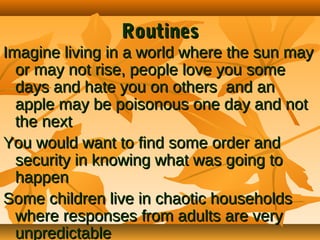
Routines

Imagine living in a world where the sun may
or may not rise, people love you some
days and hate you on others and an
apple may be poisonous one day and not
the next
You would want to find some order and
security in knowing what was going to
happen
Some children live in chaotic households
where responses from adults are very
unpredictable
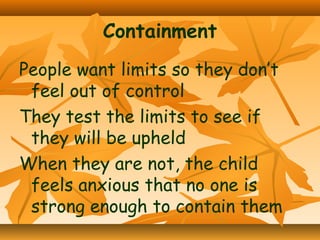
Containment
People want limits so they don’t
feel out of control
They test the limits to see if
they will be upheld
When they are not, the child
feels anxious that no one is
strong enough to contain them
Find the unmet need
Difficult people have an unmet
need
They try to fulfil the need though
often in inappropriate ways
Notice a hidden need beneath
their difficulty
Prolonged uncomforted
distress can adversely affect
key systems in the brain
and body, leading to a
vulnerability to depression,
anxiety disorders, and other
physical and mental illness
in later life.
It is essential to help
students with their big
emotions, to avoid future
problems with stress and
over-reaction.
The student needs to feel
you are an emotionally
strong person who can
teach him how to be calm.
Providing a child with calm
and comfort is likely to
strengthen the immune
system and have a long
term effect on the brain’s
stress-regulating
systems.
Play activates positive
arousal chemicals in the
brain. Interactive play
has been shown to be as
effective as mild doses
of methylphenidate.
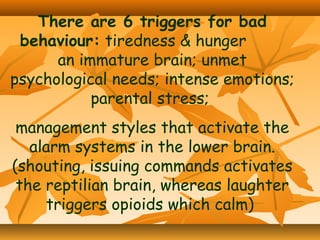
There are 6 triggers for bad
behaviour: tiredness & hunger
an immature brain; unmet
psychological needs; intense emotions;
parental stress;
management styles that activate the
alarm systems in the lower brain.
(shouting, issuing commands activates
the reptilian brain, whereas laughter
triggers opioids which calm)
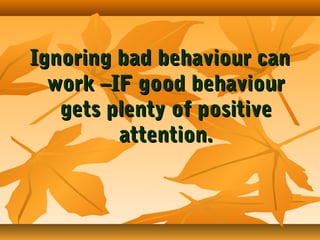
Ignoring bad behaviour can
work –IF good behaviour
gets plenty of positive
attention.
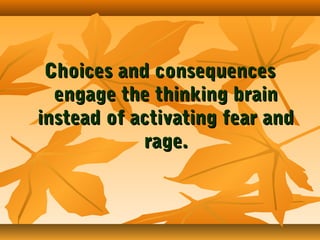
Choices and consequences
engage the thinking brain
instead of activating fear and
rage.
Disciplining in ways that
preserve dignity will bring
rewards in terms of future
mental health and social
and emotional intelligence.
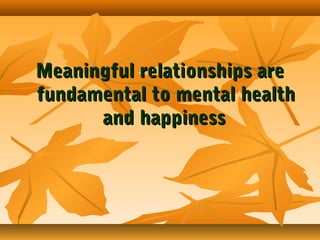
Meaningful relationships are
fundamental to mental health
and happiness
For many children who haven’t
received warm, emotionally
regulating parenting, school
provides a second chance to
develop their emotional and
social brain. If teachers are
chronically stressed, the
children in their care don’t get
this crucial second chance.
If you spend a lot of time (and we
do) helping a child to regulate
strong emotions, you will need
emotional refuelling including
interactive time with calm,
soothing adults. Ideally all staff
would receive a regular massage
and counselling!! Working well as
part of a team can provide the
emotional regulation we need.
Focus on the doughnut,
not the hole
(the relationship, not the
problem)
Be a thermostat, not a
thermometer
(respond and reflect rather
than react)
What’s most important may
not be what you do but
what you do after what you
did!
(we all make mistakes but we
can recover. It is how we
handle mistakes that makes
the difference)
You can’t give away what
you don’t possess
(You can’t extend patience
and acceptance if you
cannot first offer it to
yourself)
When a child is drowning, don’t try
to teach him to swim
(when upset or out of control, that
is not the moment to impart a rule
or teach a lesson)
Our brains contain primitive
emotional alarm systems deep
in the lower regions. Without
emotionally responsive
management, our higher
brains can be easily hijacked
by these systems.

Posters for thought

  • 1.
    This is theresponsibility You are the decisive element in the classroomyour approach creates the climate Your daily mood makes the weather- you have power to make a child’s life miserable or joyous You can be an instrument of torture or inspiration- you can humiliate or humour, hurt or heal Your response decides whether a crisis will be escalated or de-escalated
  • 2.
    Crisis management In acrisis, who is the first person who needs to calm down… I’ve seen this before… How could he? This looks nasty… Who does he think he is?
  • 3.
    We never havethe whole picture We sometimes portray the problem as the child Maybe we are the problem in some way or their mother was just diagnosed with cancer or they are being neglected or… Acknowledge that you do not –and will never- know all the reasons why someone is having difficulty
  • 4.
    Consistent doesn’t mean thesame Fair does not mean that everyone does or gets the same, it means they get what they need
  • 5.
    Routines Imagine living ina world where the sun may or may not rise, people love you some days and hate you on others and an apple may be poisonous one day and not the next You would want to find some order and security in knowing what was going to happen Some children live in chaotic households where responses from adults are very unpredictable
  • 6.
    Containment People want limitsso they don’t feel out of control They test the limits to see if they will be upheld When they are not, the child feels anxious that no one is strong enough to contain them
  • 7.
    Find the unmetneed Difficult people have an unmet need They try to fulfil the need though often in inappropriate ways Notice a hidden need beneath their difficulty
  • 8.
    Prolonged uncomforted distress canadversely affect key systems in the brain and body, leading to a vulnerability to depression, anxiety disorders, and other physical and mental illness in later life.
  • 9.
    It is essentialto help students with their big emotions, to avoid future problems with stress and over-reaction. The student needs to feel you are an emotionally strong person who can teach him how to be calm.
  • 10.
    Providing a childwith calm and comfort is likely to strengthen the immune system and have a long term effect on the brain’s stress-regulating systems.
  • 11.
    Play activates positive arousalchemicals in the brain. Interactive play has been shown to be as effective as mild doses of methylphenidate.
  • 12.
    There are 6triggers for bad behaviour: tiredness & hunger an immature brain; unmet psychological needs; intense emotions; parental stress; management styles that activate the alarm systems in the lower brain. (shouting, issuing commands activates the reptilian brain, whereas laughter triggers opioids which calm)
  • 13.
    Ignoring bad behaviourcan work –IF good behaviour gets plenty of positive attention.
  • 14.
    Choices and consequences engagethe thinking brain instead of activating fear and rage.
  • 15.
    Disciplining in waysthat preserve dignity will bring rewards in terms of future mental health and social and emotional intelligence.
  • 16.
    Meaningful relationships are fundamentalto mental health and happiness
  • 17.
    For many childrenwho haven’t received warm, emotionally regulating parenting, school provides a second chance to develop their emotional and social brain. If teachers are chronically stressed, the children in their care don’t get this crucial second chance.
  • 18.
    If you spenda lot of time (and we do) helping a child to regulate strong emotions, you will need emotional refuelling including interactive time with calm, soothing adults. Ideally all staff would receive a regular massage and counselling!! Working well as part of a team can provide the emotional regulation we need.
  • 19.
    Focus on thedoughnut, not the hole (the relationship, not the problem)
  • 20.
    Be a thermostat,not a thermometer (respond and reflect rather than react)
  • 21.
    What’s most importantmay not be what you do but what you do after what you did! (we all make mistakes but we can recover. It is how we handle mistakes that makes the difference)
  • 22.
    You can’t giveaway what you don’t possess (You can’t extend patience and acceptance if you cannot first offer it to yourself)
  • 23.
    When a childis drowning, don’t try to teach him to swim (when upset or out of control, that is not the moment to impart a rule or teach a lesson)
  • 24.
    Our brains containprimitive emotional alarm systems deep in the lower regions. Without emotionally responsive management, our higher brains can be easily hijacked by these systems.