
Prepared by,
Sujith Velloor S
Lecturer
E.C Tuwa
ENGINEERING COLLEGE TUWA
Along With Models & BMC Sheets
(SOURCE:-www.gtu.ac.in)
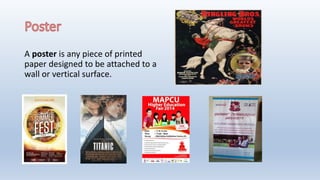
A poster is any piece of printed
paper designed to be attached to a
wall or vertical surface.
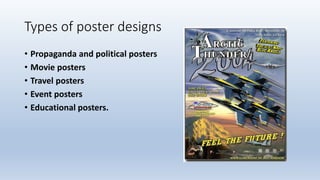
Types of poster designs
• Propaganda and political posters
• Movie posters
• Travel posters
• Event posters
• Educational posters.
Poster printing
Most posters are printed on one side and left blank on the back, the
better for affixing to a wall or other surface.
Pin-up sized posters are usually printed on A3 Standard Silk paper in full
colour. Upon purchase, most commercially available posters are often
rolled up into a cylindrical tube to allow for damage-free
transportation.
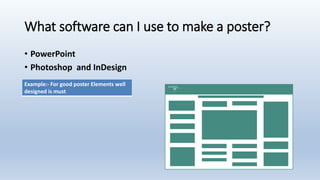
What software can I use to make a poster?
• PowerPoint
• Photoshop and InDesign
Example:- For good poster Elements well
designed is must
Guidelines
• Important information should be readable from about 10 feet away
• Title is short and draws interest
• Word count of about 300 to 800 words
• Text is clear and to the point
• Use of bullets, numbering, and headlines make it easy to read
• Effective use of graphics, colour and fonts
• Consistent and clean layout
• Includes acknowledgments, your name and institutional affiliation
Content
1. Title -concise name of poster, contributors, organization
2. Introduction -statement giving quick overview of poster
3. Problem -statement of the problem
4. Design -brief description of the processes and procedures.
5. Results -outcomes, findings, data
6. Conclusion -summary, discussion of significance of results, a few
easily remembered key conclusions
 Instruction to make posters that should not
exceed 36 inches wide x 48 inch high with 1”
margin on all side.
Font Size
• Title : Arial (86 pt)
• Team member’s name, guide name , mention if any other
contributor : Arial (48 pt)
• Figure citation : Arial (25 or higher)
• Rest of the text : Arial (30 pt)
GTU Project Fair Report Format
• 1. Date
• 2. Place
• 3. College
• 4. Outline of the event
• 5. Expert Panel (Review Project)
• 6. How many teams presented in which branch
• 7. Feedback from industry mentors/experts
• 8. Feedback from final year teams
• 9. Feedback from faculty members
• 10. Photos
• 11. Mention which department did what
• 12. Feedback from 3rd year students
• 13. Any other thing you wish to add
• 14. Key insights/ benefit/learning from the event
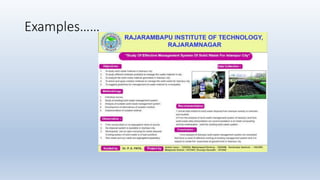
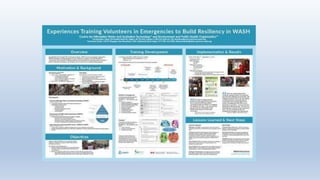
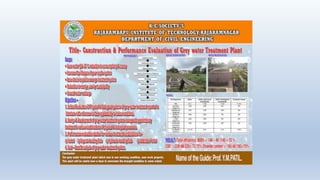
Examples……
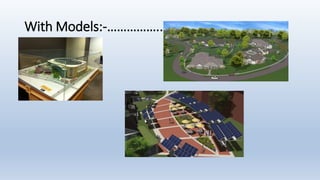
With Models:-……………..
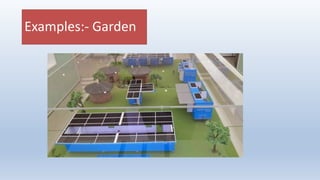
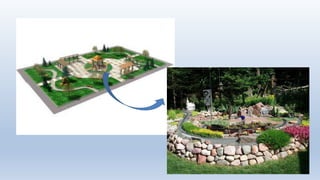
Examples:- Garden
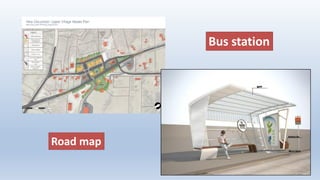
Bus station
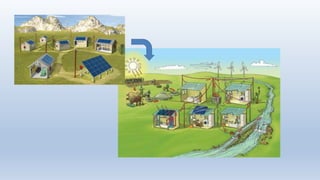
Road map
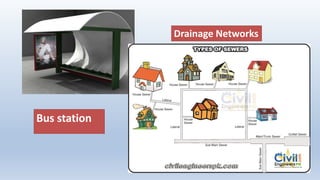
Drainage Networks
Bus station
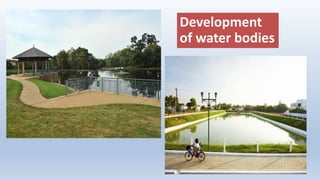
Development
of water bodies
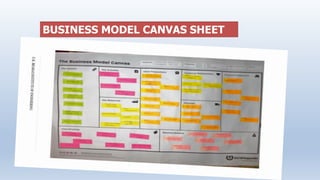
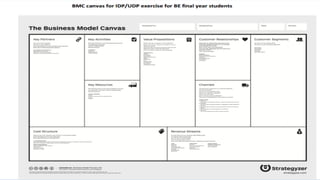
BUSINESS MODEL CANVAS SHEET
1.Customer Segments:
Customer Segment block is to present the list of Person as, organized
by Customer Segment. If you have more than one segment. It is always
recommended to prioritize them.
Who would you pitch first if you could only pitch one?
Who next? And so forth…
 For whom are we creating value?
Who are our most important customers
Examples: o Mass Market o Niche Market o Segmented o Diversified
o Multi-sided Platform
2. Value Propositions:
The Value Propositions business block aims at providing answers to the
following questions:
What value do we deliver to the customer?
Which one of our customer’s problems are we helping to solve?
 What bundles of products and services are we offering to each
Customer Segment?
Which customer needs are we satisfying.
Examples: o characteristics o Newness o Performance
o Customization o “Getting the Job Done”
3. Channels:
This business block comprises of a list of important Channels, linked to
Person or Segments if they differ substantially. Make notes on what
steps are relevant for each-promotion, sales, service, etc. This business
block provides answers to the following questions:
 Through which Channels do our Customer Segments want to be
reached?
How are we reaching them now?
How are our Channels integrated?
Which ones work best?
Which ones are most cost-efficient?
 How are we integrating them with customer routines?
4. Customer Relationship:
The customer relationship business block answers the following
questions:
What type of relationship does each of our Customer Segments
expect us to establish and maintain with them?
 Which ones have we established?
How are they integrated with the rest of our business model?
 How costly are they?
Examples: o Personal assistance o Dedicated Personal Assistance
o Self-Service o Automated Services o Communities
5. Revenue Streams:
Revenue Streams block of Business Model Canvas aims at answering
the following questions:
For what value are our customers really willing to pay?
 For what do they currently pay?
 How are they currently paying?
 How would they prefer to pay?
 How much does each Revenue Stream contribute to overall
revenues?
 Types of Revenue Streams: o Asset sale o Usage fee o Subscription
Fees o Lending/Renting/Leasing o Licensing o Brokerage fees
6. Key Activities:
The Key Activities block aims at answering the following set of
questions in your business model:
What Key Activities do our Value Propositions require?
Our Distribution Channels?
Customer Relationships?
Revenue streams?
Categories o Production o Problem Solving o Platform/Network
7. Key Resources:
This segment of the business model canvas answers the following
questions.
 What Key Resources do our Value Propositions require?
 Our Distribution Channels?
Customer Relationships?
Revenue Streams?
Types of resources o Physical o Intellectual (brand patents,
copyrights, data) o Human o Financial
8. Cost Structure:
Cost Structure business block provides a list of Cost Structure elements
with notes on their relationship to Key Activities. This block in the
business model answers the following questions:
What are the most important costs inherent in our business model?
Which Key Resources are most expensive?
Which Key Activities are most expensive?
Is your business more Cost Driven (leanest cost structure, low price
value proposition, maximum automation, extensive outsourcing)
 Value Driven (focused on value creation, premium value proposition)
Sample characteristics o Fixed Costs (salaries, rents, utilities)
o Variable costs o Economies of scale o Economies of scope
THANKS
FOR
WATCHING

Poster presentation with models

  • 1.
    Prepared by, Sujith VelloorS Lecturer E.C Tuwa ENGINEERING COLLEGE TUWA Along With Models & BMC Sheets (SOURCE:-www.gtu.ac.in)
  • 2.
    A poster isany piece of printed paper designed to be attached to a wall or vertical surface.
  • 3.
    Types of posterdesigns • Propaganda and political posters • Movie posters • Travel posters • Event posters • Educational posters.
  • 4.
    Poster printing Most postersare printed on one side and left blank on the back, the better for affixing to a wall or other surface. Pin-up sized posters are usually printed on A3 Standard Silk paper in full colour. Upon purchase, most commercially available posters are often rolled up into a cylindrical tube to allow for damage-free transportation.
  • 5.
    What software canI use to make a poster? • PowerPoint • Photoshop and InDesign Example:- For good poster Elements well designed is must
  • 6.
    Guidelines • Important informationshould be readable from about 10 feet away • Title is short and draws interest • Word count of about 300 to 800 words • Text is clear and to the point • Use of bullets, numbering, and headlines make it easy to read • Effective use of graphics, colour and fonts • Consistent and clean layout • Includes acknowledgments, your name and institutional affiliation
  • 7.
    Content 1. Title -concisename of poster, contributors, organization 2. Introduction -statement giving quick overview of poster 3. Problem -statement of the problem 4. Design -brief description of the processes and procedures. 5. Results -outcomes, findings, data 6. Conclusion -summary, discussion of significance of results, a few easily remembered key conclusions
  • 8.
     Instruction tomake posters that should not exceed 36 inches wide x 48 inch high with 1” margin on all side. Font Size • Title : Arial (86 pt) • Team member’s name, guide name , mention if any other contributor : Arial (48 pt) • Figure citation : Arial (25 or higher) • Rest of the text : Arial (30 pt)
  • 9.
    GTU Project FairReport Format • 1. Date • 2. Place • 3. College • 4. Outline of the event • 5. Expert Panel (Review Project) • 6. How many teams presented in which branch • 7. Feedback from industry mentors/experts • 8. Feedback from final year teams • 9. Feedback from faculty members • 10. Photos • 11. Mention which department did what • 12. Feedback from 3rd year students • 13. Any other thing you wish to add • 14. Key insights/ benefit/learning from the event
  • 10.
  • 13.
  • 15.
  • 17.
  • 18.
  • 19.
  • 20.
  • 22.
    1.Customer Segments: Customer Segmentblock is to present the list of Person as, organized by Customer Segment. If you have more than one segment. It is always recommended to prioritize them. Who would you pitch first if you could only pitch one? Who next? And so forth…  For whom are we creating value? Who are our most important customers Examples: o Mass Market o Niche Market o Segmented o Diversified o Multi-sided Platform
  • 23.
    2. Value Propositions: TheValue Propositions business block aims at providing answers to the following questions: What value do we deliver to the customer? Which one of our customer’s problems are we helping to solve?  What bundles of products and services are we offering to each Customer Segment? Which customer needs are we satisfying. Examples: o characteristics o Newness o Performance o Customization o “Getting the Job Done”
  • 24.
    3. Channels: This businessblock comprises of a list of important Channels, linked to Person or Segments if they differ substantially. Make notes on what steps are relevant for each-promotion, sales, service, etc. This business block provides answers to the following questions:  Through which Channels do our Customer Segments want to be reached? How are we reaching them now? How are our Channels integrated? Which ones work best? Which ones are most cost-efficient?  How are we integrating them with customer routines?
  • 25.
    4. Customer Relationship: Thecustomer relationship business block answers the following questions: What type of relationship does each of our Customer Segments expect us to establish and maintain with them?  Which ones have we established? How are they integrated with the rest of our business model?  How costly are they? Examples: o Personal assistance o Dedicated Personal Assistance o Self-Service o Automated Services o Communities
  • 26.
    5. Revenue Streams: RevenueStreams block of Business Model Canvas aims at answering the following questions: For what value are our customers really willing to pay?  For what do they currently pay?  How are they currently paying?  How would they prefer to pay?  How much does each Revenue Stream contribute to overall revenues?  Types of Revenue Streams: o Asset sale o Usage fee o Subscription Fees o Lending/Renting/Leasing o Licensing o Brokerage fees
  • 27.
    6. Key Activities: TheKey Activities block aims at answering the following set of questions in your business model: What Key Activities do our Value Propositions require? Our Distribution Channels? Customer Relationships? Revenue streams? Categories o Production o Problem Solving o Platform/Network
  • 28.
    7. Key Resources: Thissegment of the business model canvas answers the following questions.  What Key Resources do our Value Propositions require?  Our Distribution Channels? Customer Relationships? Revenue Streams? Types of resources o Physical o Intellectual (brand patents, copyrights, data) o Human o Financial
  • 29.
    8. Cost Structure: CostStructure business block provides a list of Cost Structure elements with notes on their relationship to Key Activities. This block in the business model answers the following questions: What are the most important costs inherent in our business model? Which Key Resources are most expensive? Which Key Activities are most expensive? Is your business more Cost Driven (leanest cost structure, low price value proposition, maximum automation, extensive outsourcing)  Value Driven (focused on value creation, premium value proposition) Sample characteristics o Fixed Costs (salaries, rents, utilities) o Variable costs o Economies of scale o Economies of scope
  • 30.