Post Modernism and Television 
Presented to: Mr Inamurahman 
Presented by: M Zamir Asadi 
MS 1 Fall Semester 2014 
International Islamic University Islamabad
Postmodernism is a late-20th-century 
movement in the arts, architecture, and 
criticism that was a departure from modernism 
Postmodernism includes skeptical 
interpretations of culture, literature, art, 
philosophy, history, economics, architecture, 
fiction, and literary criticism. 
It is often associated with deconstruction and 
post-structuralism because its usage as a term 
gained significant popularity at the same time 
as twentieth-century post-structural thought.
The term postmodern was first used around the 
1870s 
John Watkins Chapman suggested "a Postmodern 
style of painting" as a way to move beyond French 
Impressionism 
J. M. Thompson, in his 1914 article in The Hibbert 
Journal, used it to describe changes in attitudes 
and beliefs in the critique of religion 
In 1921 and 1925, postmodernism had been used 
to describe new forms of art and music
Rejection of Grand Meta Narratives 
These are large-scale theories and philosophies of 
the world, such as the progress of history, the 
know ability of everything by science , and the 
possibility of absolute freedom 
Therefore all grand narratives should be viewed
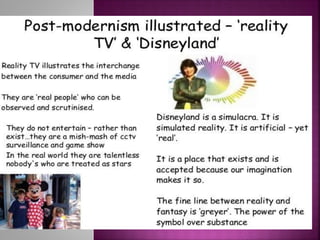
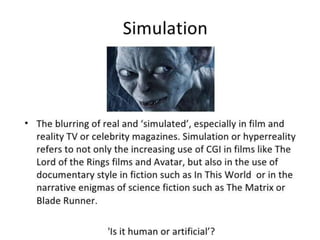
There is no longer a distinction between reality 
and its representing image or simulacrum 
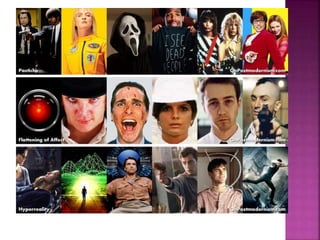
Hyper reality- There is only surface meaning : 
there is no longer any original thing for the sign to 
represent: the sign is the meaning
Post modernism is a development of modernism 
Post modernism works are often characterized by 
lack of depth, which has been replaced by surfeit 
of surface 
Jameson catalogs key features of postmodern 
culture, as self referentiality , irony, pastiche and 
parody
Post modern media rejects the idea that any media 
product or text is of any greater value than other. 
Anything can be art , anything can deserve to reach 
the audience and culture “eat itself” as there is no 
longer anything new to produce and distribute 
The distinction between media and reality has 
collapsed, and we now live in a reality defined by 
images and representations
TV is one of the wonders of the age of technology 
Concorde, Alpha Romeo, Mobile, windows, 
computers and TV 
Under the dominion of those who promote post 
modern culture and especially under the influence 
of Gays
Entertainment industry spreads post modernism 
philosophy into every home 
Violence, murder, obscenity, adultery, blasphemy, 
mockery of Christ and form of sexual perversion is 
depicted without restraint 
Absolutes have been stripped away 
TV producers promote sexual scenes explicitly
Modesty is abandoned 
With TV there is no sense of shame 
Sadly restraint comes only after disaster 
Competitive Industry 
Moral and spiritual values are decayed by TV 
Apart from news, most of what we see is not 
anchored in real world as this world is not like Hollywood
From Oprah to Jerrry Springer show the range of 
topics for discussion were broadcasted featuring from 
alien abduction to teenage pregnancy, racism to 
vampirism 
Airing out dirty laundry on national TV has enormously 
become popular 
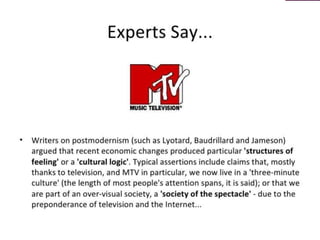
Post modernism states that great imperative in TV is 
incessant entertainment
We think that images of TV and rest of mass 
media is reality 
Soap Operas simulate real life while real life 
people create themselves by identifying with 
celebrity 
Individuals consumes life style commodities 
that are commensurate with the identification
The Simpsons 
Futurama 
Family Guy 
Charmed 
Buffy the Vampire Slayer 
Xena: Warrior Princess 
Dark Angel 
Drawn Together 
Reno 911 
The Real World 
Cops 
Survivor 
Married with Children 
The Tom Green Show 
South Park 
Family Guy 
MTV Jackass 
Seinfeld 
The Office 
Extras
Health TV 
Sports TV 
Religious Channels 
Food TV 
Entertainment TV 
News TV 
Women oriented channels 
Kids TV 
Cartoon channels 
Youth channels
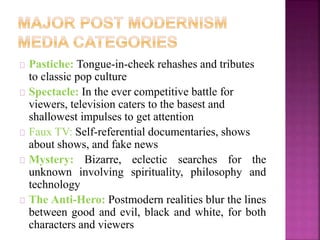
Pastiche: Tongue-in-cheek rehashes and tributes 
to classic pop culture 
Spectacle: In the ever competitive battle for 
viewers, television caters to the basest and 
shallowest impulses to get attention 
Faux TV: Self-referential documentaries, shows 
about shows, and fake news 
Mystery: Bizarre, eclectic searches for the 
unknown involving spirituality, philosophy and 
technology 
The Anti-Hero: Postmodern realities blur the lines 
between good and evil, black and white, for both 
characters and viewers
Pakistani TV is also moving towards Post 
Modernism 
TV dramas are showing popular culture of west 
The social and cultural values are ending in 
Pakistani society 
No difference in gender prevails in Pakistani TV
Pakistani TV managers can use the post modern 
concept in a healthy way 
TV must not detract from the core societal values 
TV must be the source of infotainment instead of 
only entertainment and hype
Post modernism and TV

Post modernism and TV

  • 1.
    Post Modernism andTelevision Presented to: Mr Inamurahman Presented by: M Zamir Asadi MS 1 Fall Semester 2014 International Islamic University Islamabad
  • 2.
    Postmodernism is alate-20th-century movement in the arts, architecture, and criticism that was a departure from modernism Postmodernism includes skeptical interpretations of culture, literature, art, philosophy, history, economics, architecture, fiction, and literary criticism. It is often associated with deconstruction and post-structuralism because its usage as a term gained significant popularity at the same time as twentieth-century post-structural thought.
  • 3.
    The term postmodernwas first used around the 1870s John Watkins Chapman suggested "a Postmodern style of painting" as a way to move beyond French Impressionism J. M. Thompson, in his 1914 article in The Hibbert Journal, used it to describe changes in attitudes and beliefs in the critique of religion In 1921 and 1925, postmodernism had been used to describe new forms of art and music
  • 4.
    Rejection of GrandMeta Narratives These are large-scale theories and philosophies of the world, such as the progress of history, the know ability of everything by science , and the possibility of absolute freedom Therefore all grand narratives should be viewed
  • 5.
    There is nolonger a distinction between reality and its representing image or simulacrum Hyper reality- There is only surface meaning : there is no longer any original thing for the sign to represent: the sign is the meaning
  • 6.
    Post modernism isa development of modernism Post modernism works are often characterized by lack of depth, which has been replaced by surfeit of surface Jameson catalogs key features of postmodern culture, as self referentiality , irony, pastiche and parody
  • 7.
    Post modern mediarejects the idea that any media product or text is of any greater value than other. Anything can be art , anything can deserve to reach the audience and culture “eat itself” as there is no longer anything new to produce and distribute The distinction between media and reality has collapsed, and we now live in a reality defined by images and representations
  • 8.
    TV is oneof the wonders of the age of technology Concorde, Alpha Romeo, Mobile, windows, computers and TV Under the dominion of those who promote post modern culture and especially under the influence of Gays
  • 9.
    Entertainment industry spreadspost modernism philosophy into every home Violence, murder, obscenity, adultery, blasphemy, mockery of Christ and form of sexual perversion is depicted without restraint Absolutes have been stripped away TV producers promote sexual scenes explicitly
  • 10.
    Modesty is abandoned With TV there is no sense of shame Sadly restraint comes only after disaster Competitive Industry Moral and spiritual values are decayed by TV Apart from news, most of what we see is not anchored in real world as this world is not like Hollywood
  • 11.
    From Oprah toJerrry Springer show the range of topics for discussion were broadcasted featuring from alien abduction to teenage pregnancy, racism to vampirism Airing out dirty laundry on national TV has enormously become popular Post modernism states that great imperative in TV is incessant entertainment
  • 14.
    We think thatimages of TV and rest of mass media is reality Soap Operas simulate real life while real life people create themselves by identifying with celebrity Individuals consumes life style commodities that are commensurate with the identification
  • 15.
    The Simpsons Futurama Family Guy Charmed Buffy the Vampire Slayer Xena: Warrior Princess Dark Angel Drawn Together Reno 911 The Real World Cops Survivor Married with Children The Tom Green Show South Park Family Guy MTV Jackass Seinfeld The Office Extras
  • 16.
    Health TV SportsTV Religious Channels Food TV Entertainment TV News TV Women oriented channels Kids TV Cartoon channels Youth channels
  • 18.
    Pastiche: Tongue-in-cheek rehashesand tributes to classic pop culture Spectacle: In the ever competitive battle for viewers, television caters to the basest and shallowest impulses to get attention Faux TV: Self-referential documentaries, shows about shows, and fake news Mystery: Bizarre, eclectic searches for the unknown involving spirituality, philosophy and technology The Anti-Hero: Postmodern realities blur the lines between good and evil, black and white, for both characters and viewers
  • 21.
    Pakistani TV isalso moving towards Post Modernism TV dramas are showing popular culture of west The social and cultural values are ending in Pakistani society No difference in gender prevails in Pakistani TV
  • 22.
    Pakistani TV managerscan use the post modern concept in a healthy way TV must not detract from the core societal values TV must be the source of infotainment instead of only entertainment and hype