Positive Discipline
In the Progressive Face to Face
Learning
Discipline and Punishment
- Is there a difference?
Discipline
Discere – to learn
Discipere – to comprehend
Discipere – to teach
Punishment
Punire – to inflict a penalty
on or cause pain for some
offense.
Discipline
• Discipline aims to teach, mentor, guide help learn..
• Role of the “teacher” or “mentor” is to explain well
and demonstrate/model good behavior
• Discipline is part of child rearing and is not limited
to situations when there is a mistake or offence.
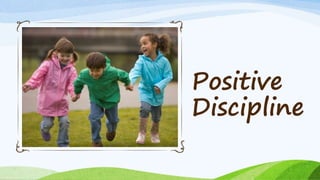
Positive
Discipline
Discipline = Teaching
Positive Discipline is part of an education process, a
way of thinking and an approach to teaching that:
• Helps children develop appropriate thinking and
behavior in the short and long-term.
• Helps students develop self discipline and
confidence.
• Guides children to be in harmony with self and
others
Positive Discipline is not…
• Permissive parenting
• An absence of rules, limits or expectations
• Short term reactions or alternative punishments
to slapping or hitting
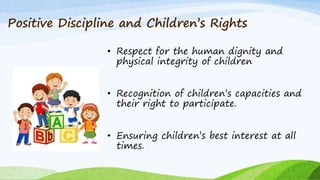
Positive Discipline and Children’s Rights
• Respect for the human dignity and
physical integrity of children
• Recognition of children’s capacities and
their right to participate.
• Ensuring children’s best interest at all
times.
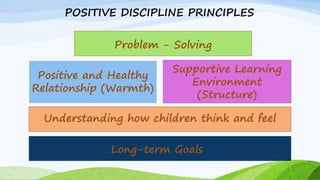
POSITIVE DISCIPLINE PRINCIPLES
Problem - Solving
Positive and Healthy
Relationship (Warmth)
Supportive Learning
Environment
(Structure)
Understanding how children think and feel
Long-term Goals
Long-term Goals
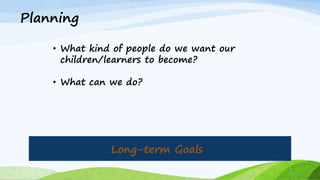
Planning
• What kind of people do we want our
children/learners to become?
• What can we do?
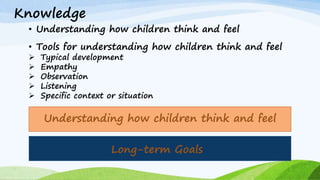
Understanding how children think and feel
Long-term Goals
Knowledge
• Understanding how children think and feel
• Tools for understanding how children think and feel
 Typical development
 Empathy
 Observation
 Listening
 Specific context or situation
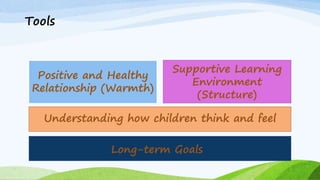
Tools
Positive and Healthy
Relationship (Warmth)
Supportive Learning
Environment
(Structure)
Understanding how children think and feel
Long-term Goals
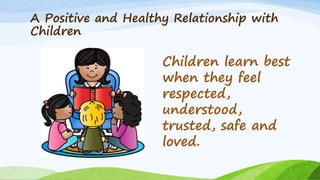
A Positive and Healthy Relationship with
Children
Children learn best
when they feel
respected,
understood,
trusted, safe and
loved.
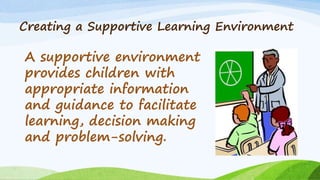
Creating a Supportive Learning Environment
A supportive environment
provides children with
appropriate information
and guidance to facilitate
learning, decision making
and problem-solving.
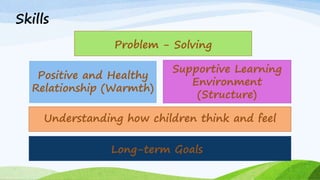
Skills
Problem - Solving
Positive and Healthy
Relationship (Warmth)
Supportive Learning
Environment
(Structure)
Understanding how children think and feel
Long-term Goals
• Remember your long-term goal
- Think before you act.
• Find long-term solutions to everyday challenges that will develop a
child’s self-discipline
• Involves building mutually respectful relationships with children,
clearly communicating expectations, rules and limits and increasing
children’s competence and confidence to handle challenging
situations.
• Teaching life-long skills among children and at the same time
respecting their rights as human beings.
Problem – solving
positive discipline.pptx child protection policy

positive discipline.pptx child protection policy

  • 1.
    Positive Discipline In theProgressive Face to Face Learning
  • 2.
    Discipline and Punishment -Is there a difference? Discipline Discere – to learn Discipere – to comprehend Discipere – to teach Punishment Punire – to inflict a penalty on or cause pain for some offense.
  • 3.
    Discipline • Discipline aimsto teach, mentor, guide help learn.. • Role of the “teacher” or “mentor” is to explain well and demonstrate/model good behavior • Discipline is part of child rearing and is not limited to situations when there is a mistake or offence.
  • 4.
  • 5.
    Discipline = Teaching PositiveDiscipline is part of an education process, a way of thinking and an approach to teaching that: • Helps children develop appropriate thinking and behavior in the short and long-term. • Helps students develop self discipline and confidence. • Guides children to be in harmony with self and others
  • 6.
    Positive Discipline isnot… • Permissive parenting • An absence of rules, limits or expectations • Short term reactions or alternative punishments to slapping or hitting
  • 7.
    Positive Discipline andChildren’s Rights • Respect for the human dignity and physical integrity of children • Recognition of children’s capacities and their right to participate. • Ensuring children’s best interest at all times.
  • 8.
    POSITIVE DISCIPLINE PRINCIPLES Problem- Solving Positive and Healthy Relationship (Warmth) Supportive Learning Environment (Structure) Understanding how children think and feel Long-term Goals
  • 9.
    Long-term Goals Planning • Whatkind of people do we want our children/learners to become? • What can we do?
  • 10.
    Understanding how childrenthink and feel Long-term Goals Knowledge • Understanding how children think and feel • Tools for understanding how children think and feel  Typical development  Empathy  Observation  Listening  Specific context or situation
  • 11.
    Tools Positive and Healthy Relationship(Warmth) Supportive Learning Environment (Structure) Understanding how children think and feel Long-term Goals
  • 12.
    A Positive andHealthy Relationship with Children Children learn best when they feel respected, understood, trusted, safe and loved.
  • 13.
    Creating a SupportiveLearning Environment A supportive environment provides children with appropriate information and guidance to facilitate learning, decision making and problem-solving.
  • 14.
    Skills Problem - Solving Positiveand Healthy Relationship (Warmth) Supportive Learning Environment (Structure) Understanding how children think and feel Long-term Goals
  • 15.
    • Remember yourlong-term goal - Think before you act. • Find long-term solutions to everyday challenges that will develop a child’s self-discipline • Involves building mutually respectful relationships with children, clearly communicating expectations, rules and limits and increasing children’s competence and confidence to handle challenging situations. • Teaching life-long skills among children and at the same time respecting their rights as human beings. Problem – solving