Teacher to
Parent: Positive
Discipline Strategies
that Work
A lecture for
the parents and teachers of
North Fairview National High School
Nelia D. Ong
TIII, San Jose Litex Senior High School
Rodriguez, Rizal
Source: https://www.youtube.com/watch?v=ApPA9iMB2gU&t=254s
11 Mistakes that Parents Regret Doing
● They scold their children too often
● They missed out on the most important moments
● They didn’t play enough creative games
● They didn’t take enough photos and videos
● They didn’t take their child’s opinion into account
● They didn’t enjoy communicating with their child
● They didn’t educate them about money
● They didn’t make their child happy enough
● They didn’t hug their children often enough
● They weren’t consistent
● They often followed someone else’s advice
While watching the video…
What struck you the most?
Did you find an item that you feel you
are guilty of committing as a parent?
As parents, we are not perfect.
Source: https://www.nst.com.my/opinion/letters/2018/02/331783/are-parents-blame-their-kids-crimes
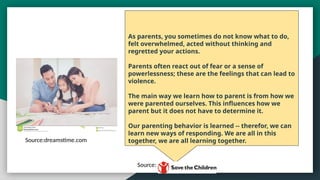
As parents, you sometimes do not know what to do,
felt overwhelmed, acted without thinking and
regretted your actions.
Parents often react out of fear or a sense of
powerlessness; these are the feelings that can lead to
violence.
The main way we learn how to parent is from how we
were parented ourselves. This influences how we
parent but it does not have to determine it.
Our parenting behavior is learned -- therefor, we can
learn new ways of responding. We are all in this
together, we are all learning together.
Source:dreamstime.com
Source: Save the Children
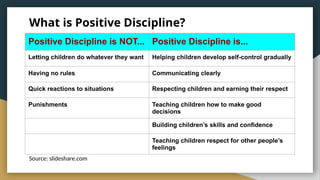
What is Positive Discipline?
Positive Discipline is NOT... Positive Discipline is...
Letting children do whatever they want Helping children develop self-control gradually
Having no rules Communicating clearly
Quick reactions to situations Respecting children and earning their respect
Punishments Teaching children how to make good
decisions
Building children’s skills and confidence
Teaching children respect for other people’s
feelings
Source: slideshare.com
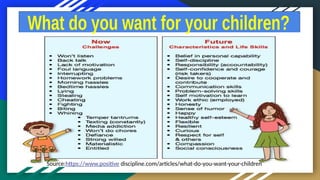
Source:https://www.positive discipline.com/articles/what-do-you-want-your-children
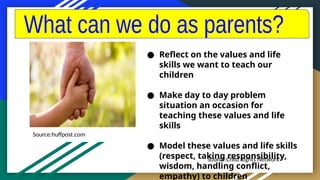
● Reflect on the values and life
skills we want to teach our
children
● Make day to day problem
situation an occasion for
teaching these values and life
skills
● Model these values and life skills
(respect, taking responsibility,
wisdom, handling conflict,
empathy) to children
Source:huffpost.com
Source:Child Rights Network
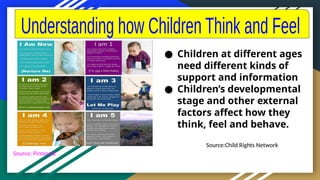
● Children at different ages
need different kinds of
support and information
● Children’s developmental
stage and other external
factors affect how they
think, feel and behave.
Source:Child Rights Network
Source: Pinterest
Source:Child Rights Network
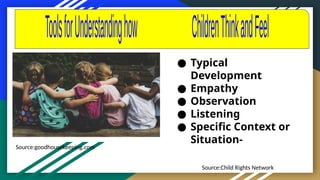
● Typical
Development
● Empathy
● Observation
● Listening
● Specific Context or
Situation-
Source:goodhousekeeping.com
Source:Child Rights Network
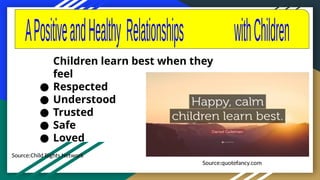
Children learn best when they
feel
● Respected
● Understood
● Trusted
● Safe
● Loved
Source:quotefancy.com
Source:Child Rights Network
● Showing children that they are still respected and
accepted even when they do something wrong or
when they commit mistakes
● Listening to them
● Looking at their situation from their point of view
● Encouraging them when they have to do
something difficult
● Telling them that you believe in them
● Recognizing their efforts and successes
● Showing them that you trust them
Source:Child Rights Network
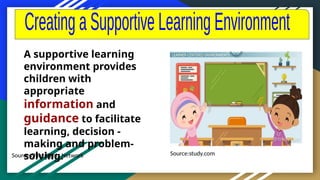
A supportive learning
environment provides
children with
appropriate
information and
guidance to facilitate
learning, decision -
making and problem-
solving. Source:study.com
Source:Child Rights Network
● Explaining the reasons for rules
● Helping them to fix their mistakes in a way that
helps them learn
● Teaching them about the effects of their actions
on other people
● Being fair and consistent
● Controlling anger; manage frustration and
anger in a healthy way
Source:Child Rights Network
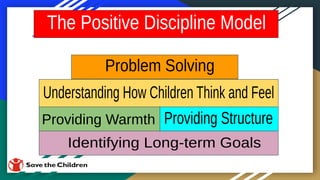
● Remember your long - term goals
Think before you act. Transform the challenging
situation into a constructive learning event for
both the teacher or parent and the learner. Most
actions that adults oftentimes label as
“misbehaviors” are but natural parts of
children’s development and should not be seen
as threat to adult’s authority. It is therefore,
helpful to think ahead, anticipate problems that
may arise and plan a response.
Source:Child Rights Network
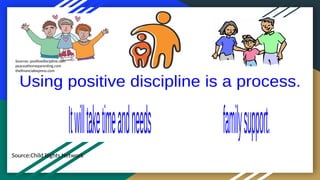
● Is about finding a long-term solution to everyday
parenting challenges that will develop a child’s self-
discipline.
● Involves building mutually respectful relationships
with children; clearly communicating expectations,
rules and limits; and increasing children’s
competence and confidence to handling challenging
situations.
● It is about teaching life long skills among children
and at the same time respecting their rights as
human beings.
Source:Child Rights Network
Sources: positivediscipline.com
peaceathomeparenting.com
thefinancialexpress.com
Sources:
DepEd Philippines webinar on Positive Discipline
Youtube video: 11 parenting mistakes
Slide share: Positive Discipline in Everyday Teaching - MYLENE B. GARCIA-TOLOP
Slide share: Child Rights Network - Discipline, Not Punishment
Slide share: Positive Discipline in Everyday Teaching- A Primer for Filipino Teachers
Thank you.

Teacher-to-ParentPositiveDiscipline.pptx

  • 1.
    Teacher to Parent: Positive DisciplineStrategies that Work A lecture for the parents and teachers of North Fairview National High School Nelia D. Ong TIII, San Jose Litex Senior High School Rodriguez, Rizal
  • 2.
  • 3.
    11 Mistakes thatParents Regret Doing ● They scold their children too often ● They missed out on the most important moments ● They didn’t play enough creative games ● They didn’t take enough photos and videos ● They didn’t take their child’s opinion into account ● They didn’t enjoy communicating with their child ● They didn’t educate them about money ● They didn’t make their child happy enough ● They didn’t hug their children often enough ● They weren’t consistent ● They often followed someone else’s advice
  • 4.
    While watching thevideo… What struck you the most? Did you find an item that you feel you are guilty of committing as a parent?
  • 5.
    As parents, weare not perfect. Source: https://www.nst.com.my/opinion/letters/2018/02/331783/are-parents-blame-their-kids-crimes
  • 6.
    As parents, yousometimes do not know what to do, felt overwhelmed, acted without thinking and regretted your actions. Parents often react out of fear or a sense of powerlessness; these are the feelings that can lead to violence. The main way we learn how to parent is from how we were parented ourselves. This influences how we parent but it does not have to determine it. Our parenting behavior is learned -- therefor, we can learn new ways of responding. We are all in this together, we are all learning together. Source:dreamstime.com Source: Save the Children
  • 7.
    What is PositiveDiscipline? Positive Discipline is NOT... Positive Discipline is... Letting children do whatever they want Helping children develop self-control gradually Having no rules Communicating clearly Quick reactions to situations Respecting children and earning their respect Punishments Teaching children how to make good decisions Building children’s skills and confidence Teaching children respect for other people’s feelings Source: slideshare.com
  • 9.
  • 10.
    ● Reflect onthe values and life skills we want to teach our children ● Make day to day problem situation an occasion for teaching these values and life skills ● Model these values and life skills (respect, taking responsibility, wisdom, handling conflict, empathy) to children Source:huffpost.com Source:Child Rights Network
  • 11.
    ● Children atdifferent ages need different kinds of support and information ● Children’s developmental stage and other external factors affect how they think, feel and behave. Source:Child Rights Network Source: Pinterest
  • 12.
    Source:Child Rights Network ●Typical Development ● Empathy ● Observation ● Listening ● Specific Context or Situation- Source:goodhousekeeping.com
  • 13.
    Source:Child Rights Network Childrenlearn best when they feel ● Respected ● Understood ● Trusted ● Safe ● Loved Source:quotefancy.com
  • 14.
    Source:Child Rights Network ●Showing children that they are still respected and accepted even when they do something wrong or when they commit mistakes ● Listening to them ● Looking at their situation from their point of view ● Encouraging them when they have to do something difficult ● Telling them that you believe in them ● Recognizing their efforts and successes ● Showing them that you trust them
  • 15.
    Source:Child Rights Network Asupportive learning environment provides children with appropriate information and guidance to facilitate learning, decision - making and problem- solving. Source:study.com
  • 16.
    Source:Child Rights Network ●Explaining the reasons for rules ● Helping them to fix their mistakes in a way that helps them learn ● Teaching them about the effects of their actions on other people ● Being fair and consistent ● Controlling anger; manage frustration and anger in a healthy way
  • 17.
    Source:Child Rights Network ●Remember your long - term goals Think before you act. Transform the challenging situation into a constructive learning event for both the teacher or parent and the learner. Most actions that adults oftentimes label as “misbehaviors” are but natural parts of children’s development and should not be seen as threat to adult’s authority. It is therefore, helpful to think ahead, anticipate problems that may arise and plan a response.
  • 18.
    Source:Child Rights Network ●Is about finding a long-term solution to everyday parenting challenges that will develop a child’s self- discipline. ● Involves building mutually respectful relationships with children; clearly communicating expectations, rules and limits; and increasing children’s competence and confidence to handling challenging situations. ● It is about teaching life long skills among children and at the same time respecting their rights as human beings.
  • 19.
    Source:Child Rights Network Sources:positivediscipline.com peaceathomeparenting.com thefinancialexpress.com
  • 22.
    Sources: DepEd Philippines webinaron Positive Discipline Youtube video: 11 parenting mistakes Slide share: Positive Discipline in Everyday Teaching - MYLENE B. GARCIA-TOLOP Slide share: Child Rights Network - Discipline, Not Punishment Slide share: Positive Discipline in Everyday Teaching- A Primer for Filipino Teachers
  • 23.