POSITIVE
DISCIPLIN
E
in the
CLASSRoom
OBJECTIVES:
Understand Positive Discipline
Differentiate Punishment from Discipline
Identify strategies in handling
misbehaviors
OBJECTIVES:
Apply a positive
discipline approach in
classroom
management
WHAT IS POSITIVE
DISCIPLINE?
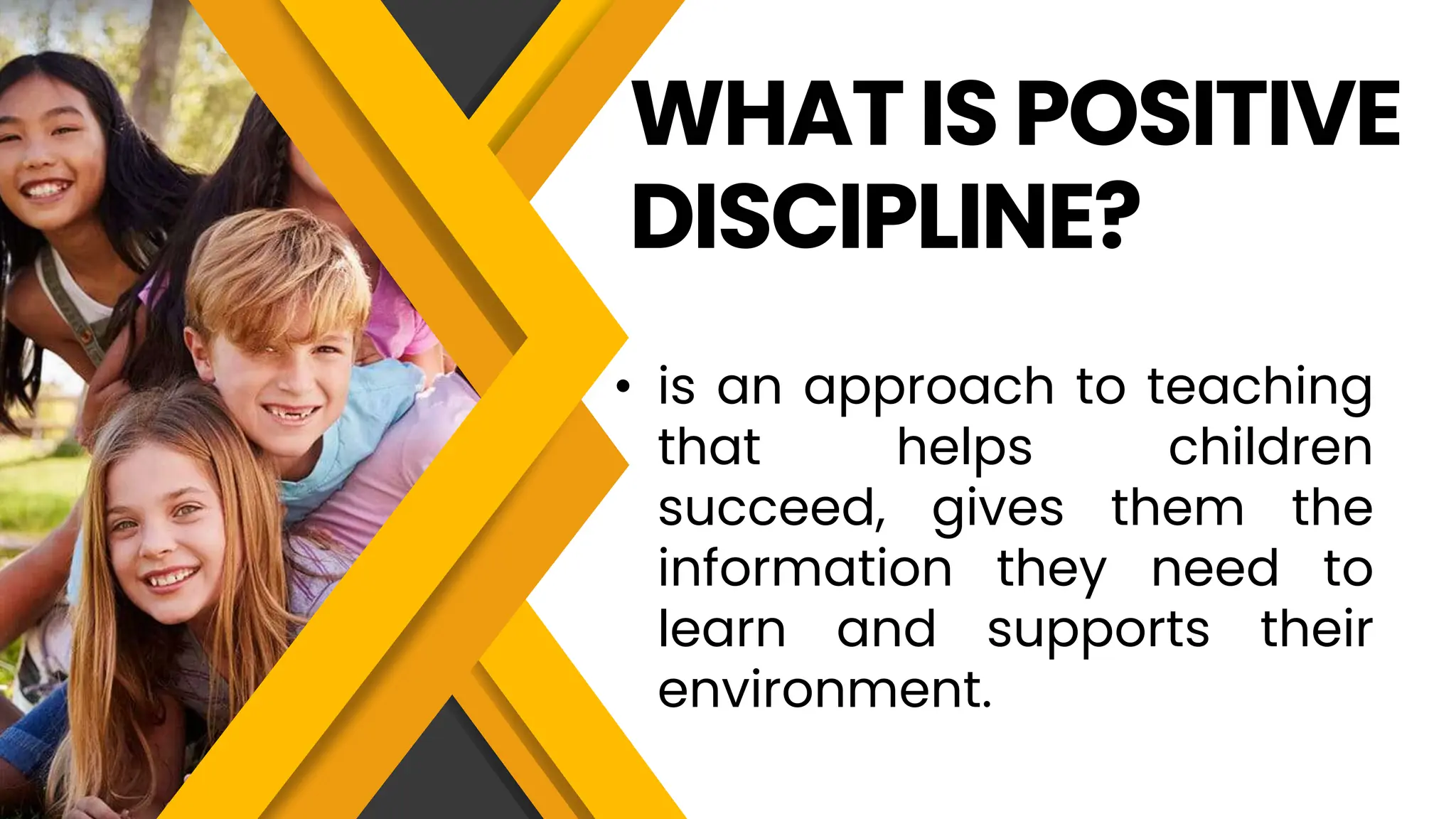
• is an approach to teaching
that helps children
succeed, gives them the
information they need to
learn and supports their
environment.
WHAT IS POSITIVE
DISCIPLINE?
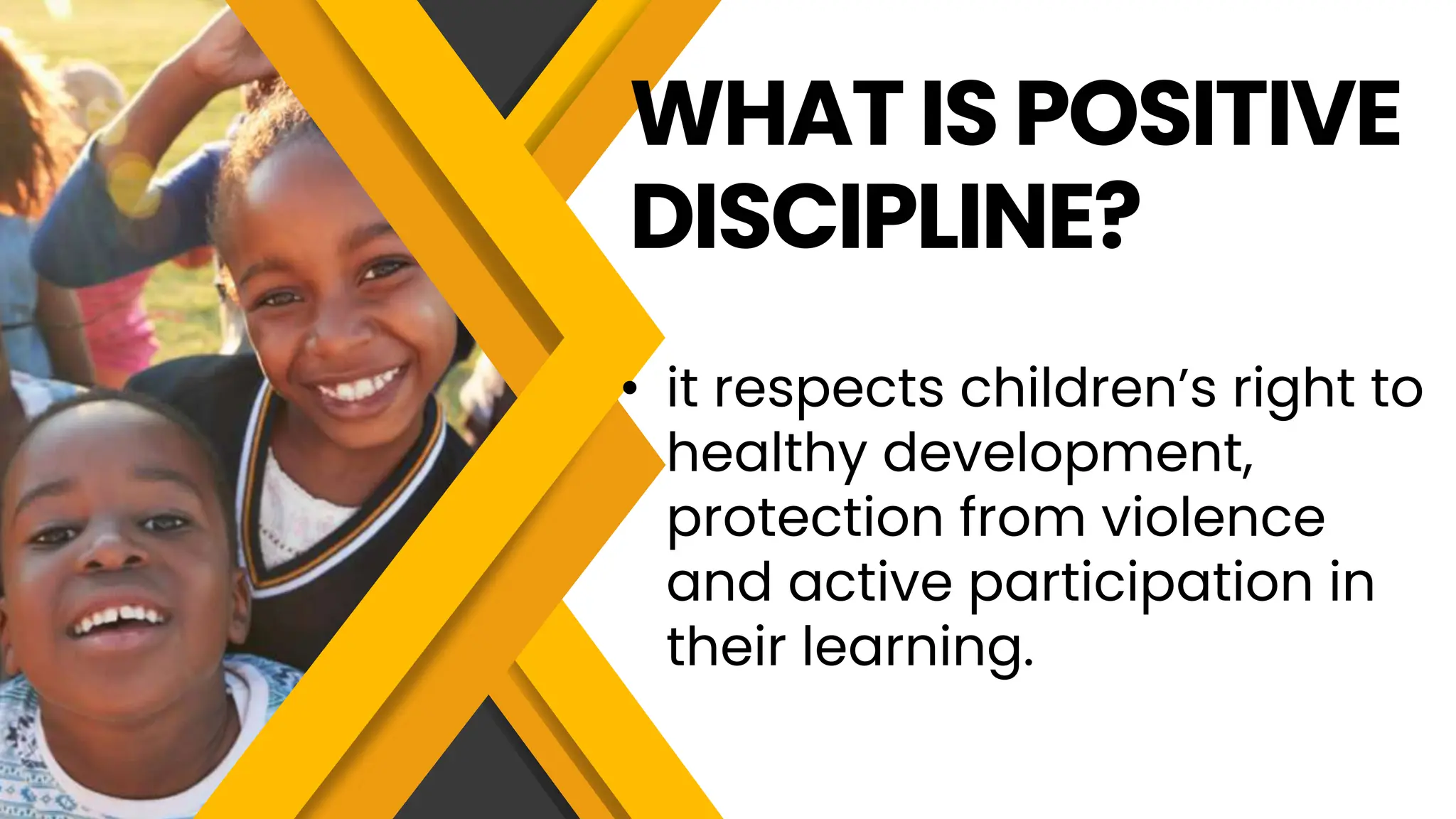
• it respects children’s right to
healthy development,
protection from violence
and active participation in
their learning.
WHAT IS POSITIVE
DISCIPLINE?
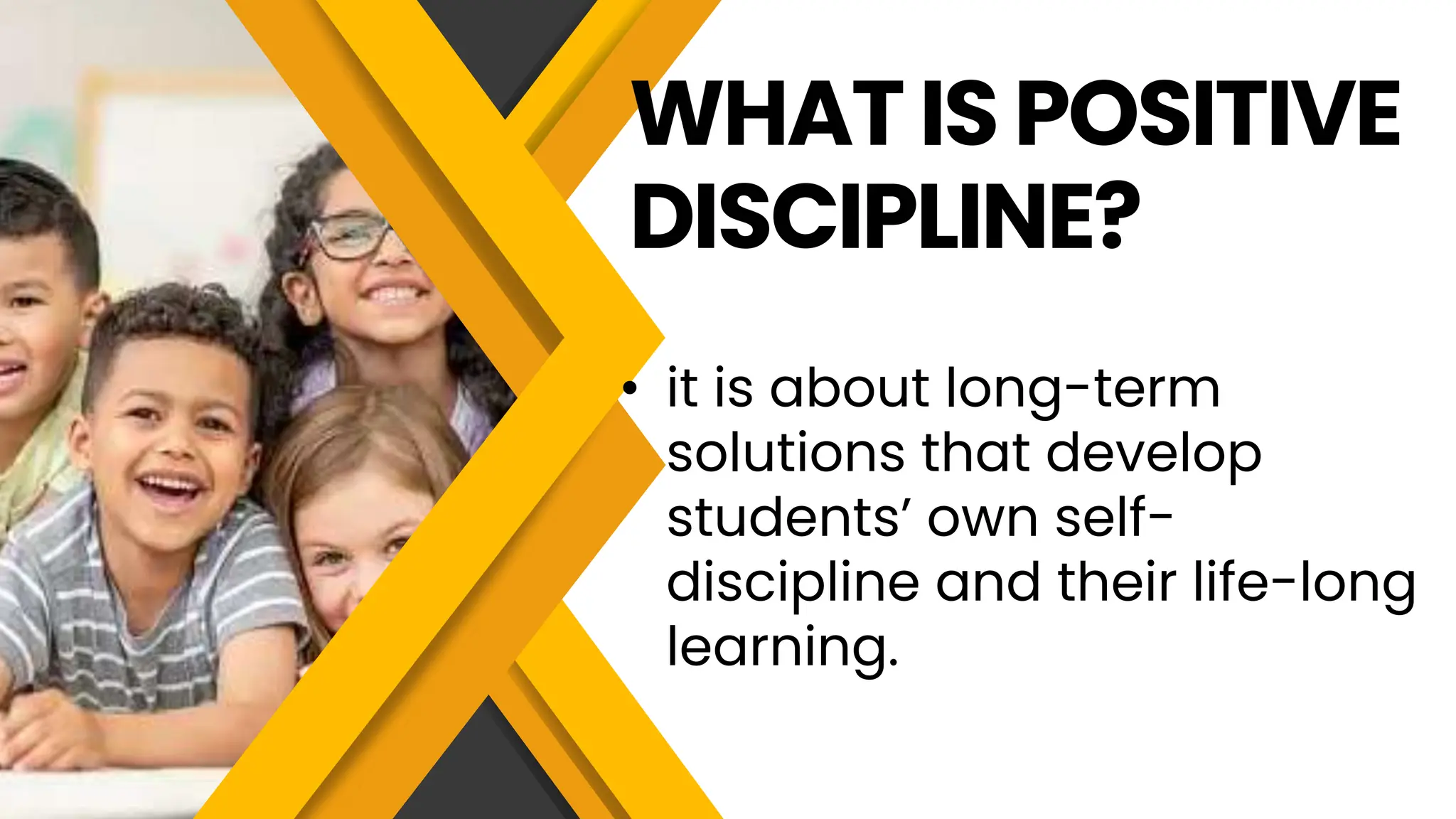
• it is about long-term
solutions that develop
students’ own self-
discipline and their life-long
learning.
WHY POSITIVE
DISCIPLINE?
• it creates an atmosphere of
cooperation which is
fundamental in building a
positive learning
environment that strives for
academic success.
WHY POSITIVE
DISCIPLINE?
• it also foster a deep sense
of social responsibility in
learning a community and
models the desire to make
significant contributions to
society.
CHILDREN PAST & PRESENT
Children now love luxury,
they have bad manners,
contempt for authority, they
show disrespect for their elders,
and they love chatter in the
place of excercise.
Children are now tyrants, not
the servants of their
households. They no longer rise
when elders enter the room.
They contradict their parents,
chatter before company,
gobble up dainties at the table,
cross their legs and tyrannize
over their teachers.
PRESENT SCENARIO
“Nauna siya Ma’am.
Gumanti lang ako.”
JOHN:
REY:
“Hinahawakan niya ang
tenga ko. Dalawang beses
na. Sinuntok ko siya.”
What
would you
do?
HOWWEREYOU
DISCIPLINEDIN THE
PAST?
Disciplinary Method
Why was this Method
Used?
Was it Effective?
What is
Punishme
nt?
Punishment
is an action (penalty)
that is imposed on a
person for breaking a
rule or showing
improper conduct.
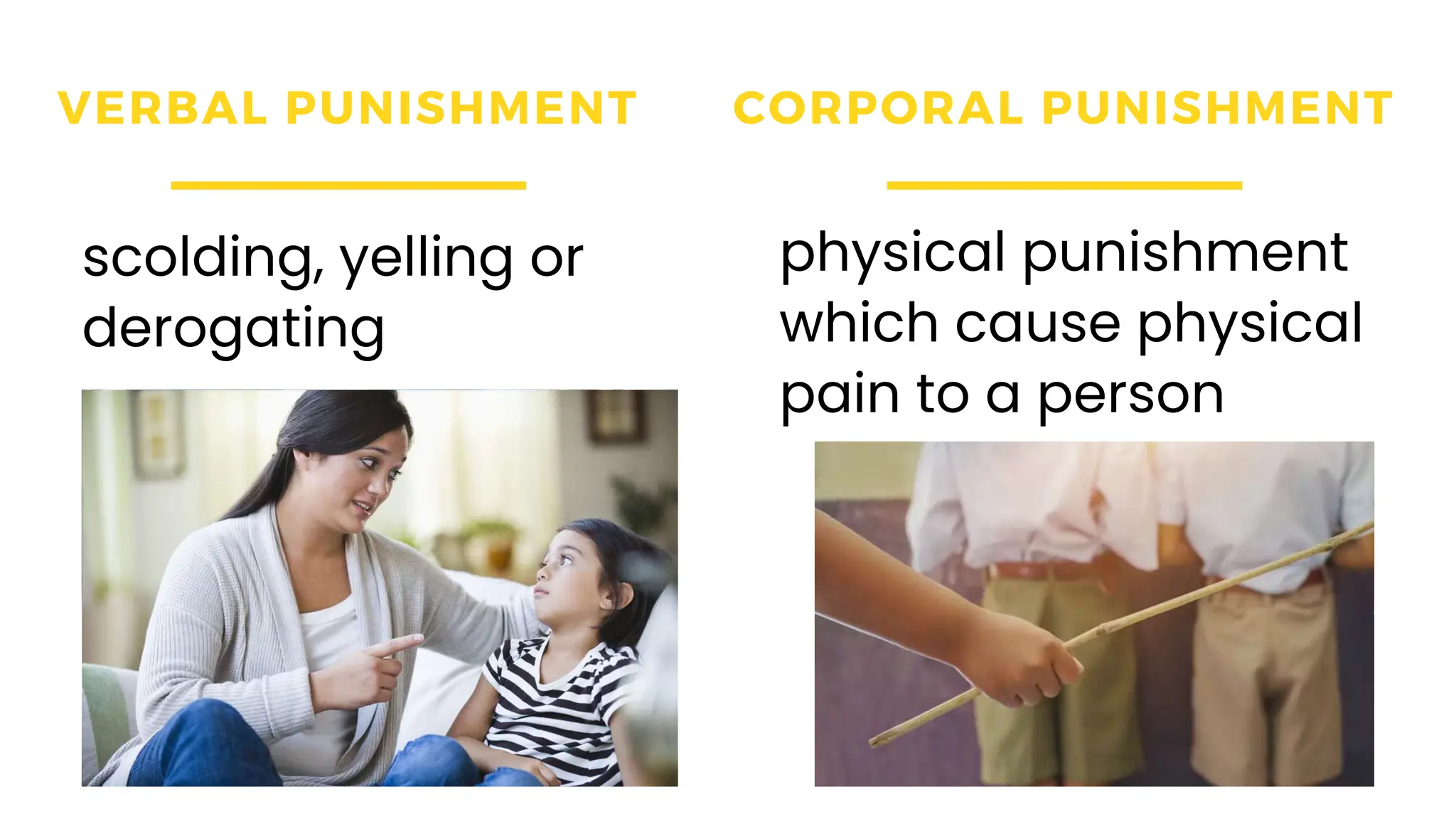
VERBAL PUNISHMENT CORPORAL PUNISHMENT
physical punishment
which cause physical
pain to a person
scolding, yelling or
derogating
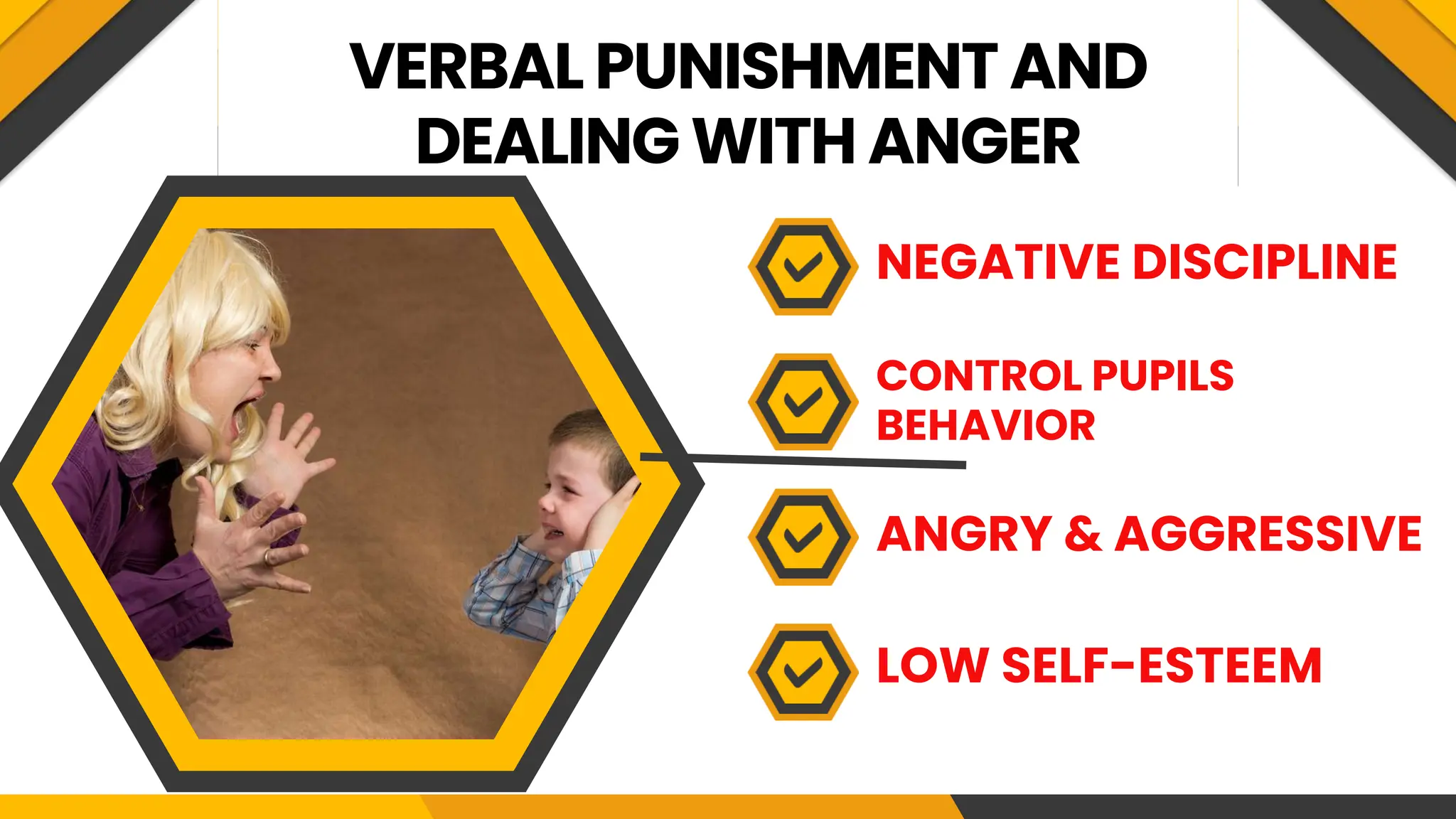
VERBAL PUNISHMENT AND
DEALING WITH ANGER
NEGATIVE DISCIPLINE
CONTROL PUPILS
BEHAVIOR
ANGRY & AGGRESSIVE
LOW SELF-ESTEEM
NEGATIVE STRATEGIES
• COMMANDS
Sit down and be quiet!
Write 100 times: I will
not waste my time on
meaningless tasks.
NEGATIVE STRATEGIES
• FORBIDDING
STATEMENTS
Don’t do that!
NEGATIVE STRATEGIES
• EXPLOSIVE,
ANGRY
STATEMENTS
You’re in more
trouble than you
know.
NEGATIVE STRATEGIES
• CRITICIZING
STATEMENTS
Is that the best
you can do?
NEGATIVE STRATEGIES
• THREATENING
STATEMENTS
If you don’t stop
talking, I’ll send you
to the principal’s
office.
NEGATIVE STRATEGIES
• BELITTLING
STATEMENTS
When will you ever
learn to write well.
Have you
said these
words?
Don’t talk in class!
Don’t shout!
Don’t run around
the room!
Don’t touch that and
those and this!
Don’t litter and
loiter around!
When a teacher, parent or guardian intends
cause to a physical pain
or discomfort to a child,
usually in order to stop
a child’s misbehavior, to
penalize him or her for
doing it, and prevent the
behavior from being
repeated.
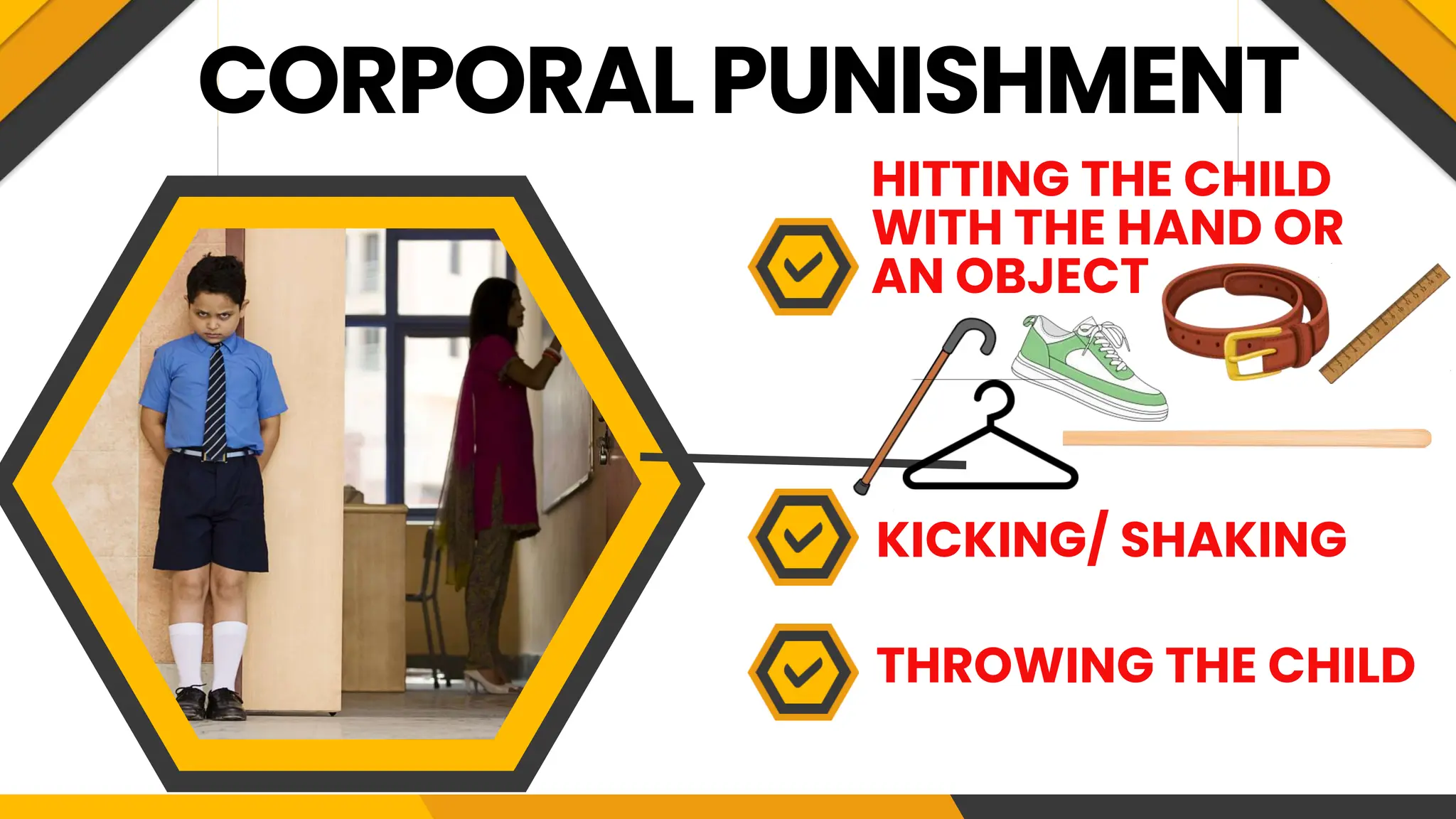
CORPORAL PUNISHMENT
HITTING THE CHILD
WITH THE HAND OR
AN OBJECT
KICKING/ SHAKING
THROWING THE CHILD
CORPORAL PUNISHMENT
PINCHING OF EARS
PULLING OF HAIR
FORCING A CHILD TO
STAY IN
UNCOMFORTABLE
POSITIONS
SITUATION:
Mia goes to school every
day and, for the most
part, she enjoys it; all
except her spelling
lessons. The days she
dreads the most are
spelling test days. For
every word she or her
friends spell incorrectly,
her teacher makes them climb the hill
behind the school and carry down five
bricks.
The bricks are
being used to
build a wall
around the
school.
Mia doesn’t understand how carrying
bricks will help her learn to spell, but
she has no choice but to do the
labor. Sometimes when she finishes,
her clothes are very dirty, and then
she was scolded at home, as well.
How prevalent
is Corporal
Punishment?
Why?
TRADITIONS & CULTURAL BELIEFS
exist that perpetuate the use of
corporal punishment in many
societies.
Spare the rod and
spoil the child
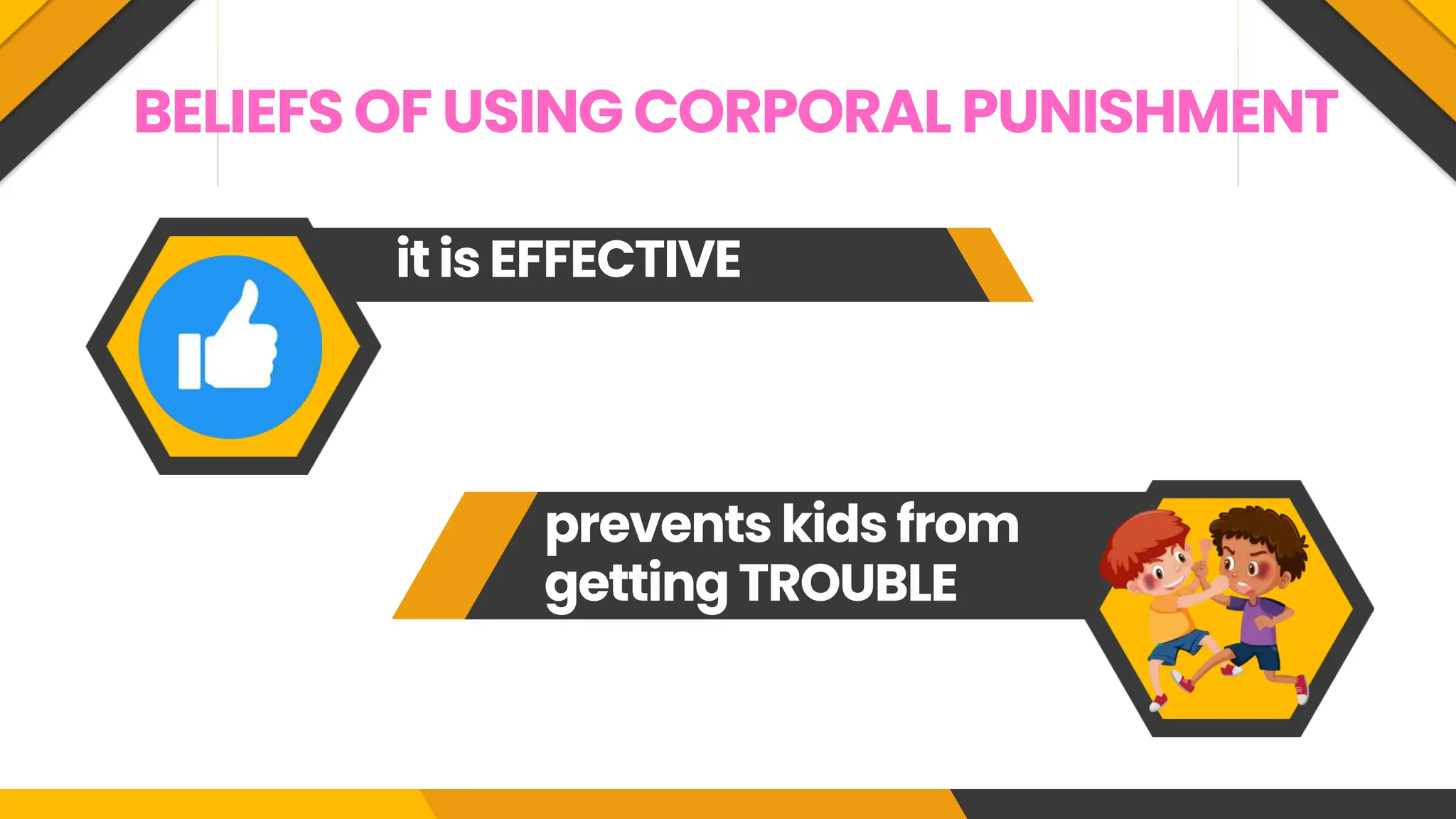
BELIEFS OF USING CORPORAL PUNISHMENT
it is EFFECTIVE
prevents kids from
getting TROUBLE
BELIEFS OF USING CORPORAL PUNISHMENT
teaches RIGHT orWRONG
instills RESPECT
BELIEFS OF USING CORPORAL PUNISHMENT
different from PHYSICAL
ABUSE
Where did we ever get the
Comparison
that in order
to make a child do better,
CHILDREN do better
Comparison
Positive Discipline is an ever-adapting practice.
Classroom management transitions from the need
to manage and control a classroom to an
opportunity to develop genuine respect and
tenacity in one’s students and learning community.
TOOLS OF POSITIVEDISCIPLINE
Mistakes are opportunities to learn
Focus on a Solution
sometimes, misbehavior is a student’s
response to fear of failure.
stop and calm down, than reacting with
emotion. This is a vital life skill that
everyone, both student and teacher can
embrace.
TOOLS OF POSITIVEDISCIPLINE
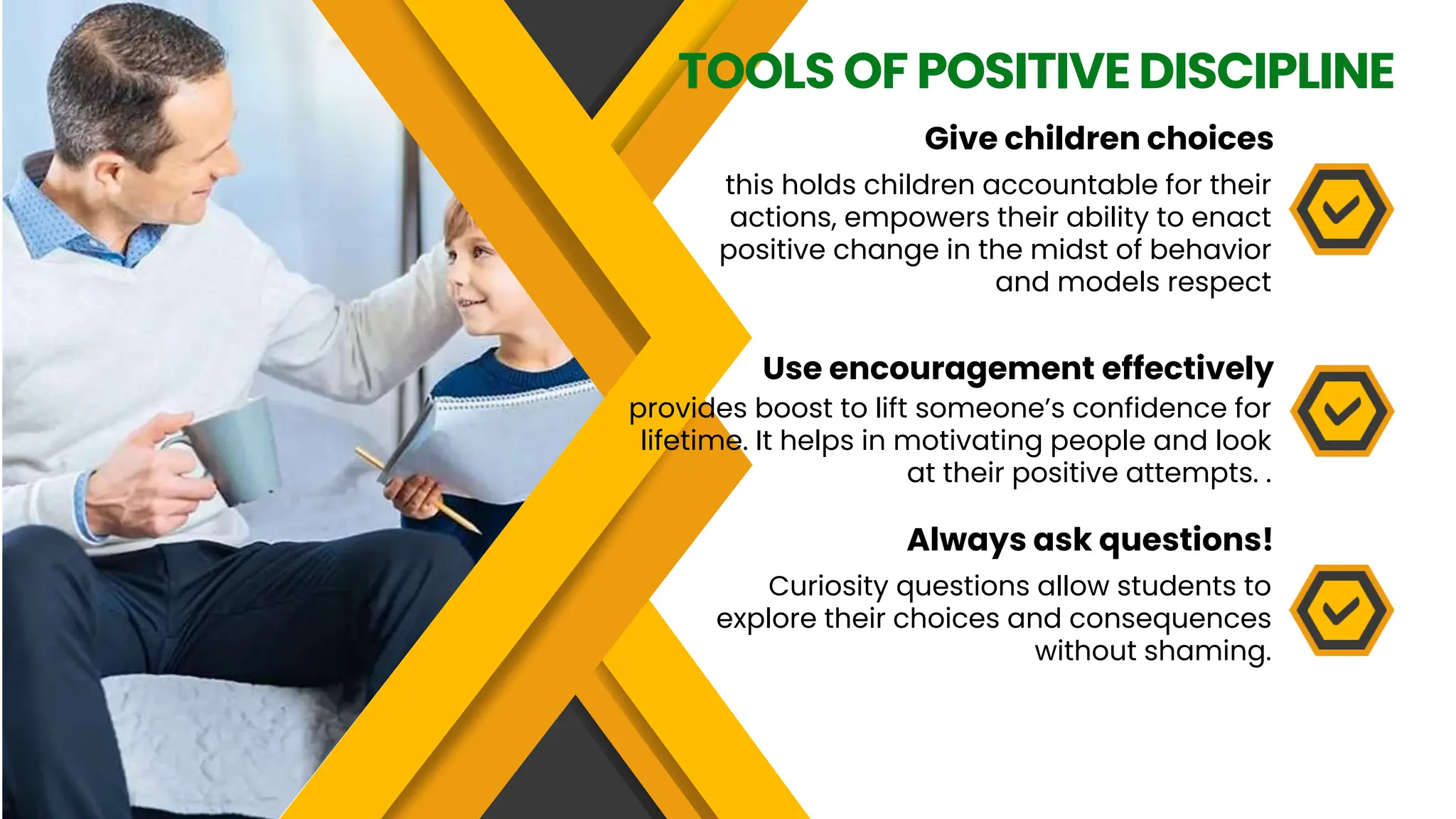
Use encouragement effectively
Always ask questions!
provides boost to lift someone’s confidence for
lifetime. It helps in motivating people and look
at their positive attempts. .
Curiosity questions allow students to
explore their choices and consequences
without shaming.
Give children choices
this holds children accountable for their
actions, empowers their ability to enact
positive change in the midst of behavior
and models respect
Thank You

POSITIVE DISCIPLINE IN THE CLASSROOM (1).pptx