PORTION AND PLATE FOOD
CROOK- a curve or bent
SPILL- to course or allow to run,
flow
DRIPS- liquid that falls in drops
DETRACT- to take away
PORTION- a part allotted to a
Let us
Study
COMPLEMENT- something that fills
up or complete
FLAVORING- a substance as an extract
spice
FLAVOR- distinctive taste
PORTION PLATE- an interactive tool
for teaching consumers appropriate
food portioning
CORRECT PORTION OF FOODS
BASED ON STANDARD
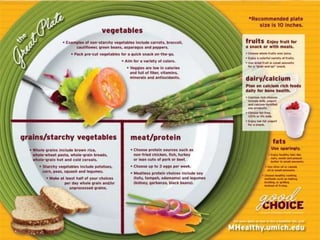
½ of your plate should be fruit
and vegetables
¼ of your plate should be whole
grains
¼ of your plate lean meat
HEALTHY EATING TIPS TO
CONSIDER IN PORTIONING PLATE
1.Eat 6-9 daily servings of fruits and
vegetables
2. Use whole grains instead(white)
bread, rice, cereals and pasta
3. Cut back on sweetened drinks and
soda: A 12 oz. can of soda contains 10
tsp. of sugar of high fructose corn syrup
4. Limit fats to less than 20% of daily
intake. Avoid saturated or transfat
and replace with plant based oil like
olive, canola and peanut.
5. Use low fat dairy products
6. Walk and exercise everyday
7. If you get a supersized meal, share
it with a friend or take half home.
8. Avoid buffets
9.Ask for heart healthy menu items or for
baked. Broiled and steamed foods.
10. Skip bread, rolls and tortilla chips
11. Ask for Salad dressing on the side. Use
it sparingly if high in fat.
12. Put your fork down between bites. It
takes 20 minutes for your stomach to
signal your brain that it’s full.
IMPORTANCE OF PORTIONING
PLATE
1.Aids in consumers decision making. It is
a strategy that someone can start using
right away with their next meal.
2.Visual cues help retain the mind and
help increase awareness of proper
portion sizes.
3.The divisions of the plate help us to
understand the proper proportion and
components of a healthy diet.
4. The colors ,forms, and plate designs offer
opportunities to incorporate teaching
principles of the new food guide pyramid.
5. Luncheon- sized plate helps people serve
themselves smaller portions and control
unintentional over eating.
6. Helps children develop better and healthy
eating habits.
INGREDIENTS TO HARMONIOUS
PRESENTATION
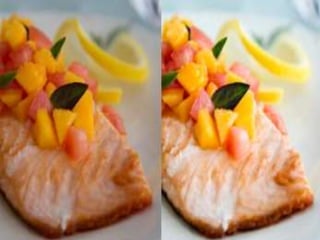
1.Use flavors in the food and colors on the
plate.
2.Use variety of ingredients for more
interesting appearance.
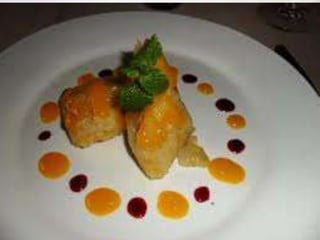
WAYS OF PRESENTING FOODS NEATLY AND
ATTRACTIVELY
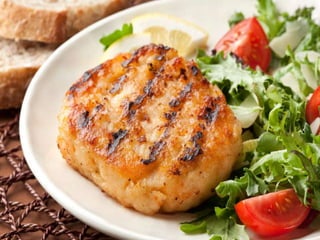
1.Be sure that the dishes are neat and clean before
serving.
2.Plate rims should be cleared of any extra sauce
and spice.
3.Food should be put within the places rim.
4.Mix up shapes on the plates.
5.Chose many different sized plates
6.China and serving dishes need to complement the
food.
SUGGESTIONS TO OBTAIN BALANCE AND
CONTRAST IN ARRANGING FOOD
1. TEXTURE
 Foods can be grainy, shiny smooth, velvety, coarse,
rough or smooth.
 Combine hard and soft texture, smooth and rough
2. SHAPE
 Combine foods with different shapes
3. READY TO ARRANGE
When plating up, don’t
leave too much space
between items, but
don’t over crowd, don’t
leave everything
huddled in the center;
don’t go over the rim
either.
4. FOCUS
 Select the point of focus. It doesn’t have to be in the center of the
plate.
5. FLOW
How should the eye travel? Think about scanning a beautiful
sunset. That’s how customers should look at a plate.
.6.DECORATING PLATES
Here are some options for decorating rims and plates.
Herbs, nuts and spices can be finely chopped and
ground
Apply a very light coating of oil on the rim and
sprinkle with herbs, nuts and spices.
Tip off excess before adding food
b. Use the same sauce served on the rest of the plate.
c. For dessert plates, you can create a paper template
and sprinkle with cocoa or powdered sugar.

Portion and plate food

  • 1.
    PORTION AND PLATEFOOD CROOK- a curve or bent SPILL- to course or allow to run, flow DRIPS- liquid that falls in drops DETRACT- to take away PORTION- a part allotted to a Let us Study
  • 2.
    COMPLEMENT- something thatfills up or complete FLAVORING- a substance as an extract spice FLAVOR- distinctive taste PORTION PLATE- an interactive tool for teaching consumers appropriate food portioning
  • 3.
    CORRECT PORTION OFFOODS BASED ON STANDARD ½ of your plate should be fruit and vegetables ¼ of your plate should be whole grains ¼ of your plate lean meat
  • 4.
    HEALTHY EATING TIPSTO CONSIDER IN PORTIONING PLATE 1.Eat 6-9 daily servings of fruits and vegetables 2. Use whole grains instead(white) bread, rice, cereals and pasta 3. Cut back on sweetened drinks and soda: A 12 oz. can of soda contains 10 tsp. of sugar of high fructose corn syrup
  • 5.
    4. Limit fatsto less than 20% of daily intake. Avoid saturated or transfat and replace with plant based oil like olive, canola and peanut. 5. Use low fat dairy products 6. Walk and exercise everyday 7. If you get a supersized meal, share it with a friend or take half home.
  • 6.
    8. Avoid buffets 9.Askfor heart healthy menu items or for baked. Broiled and steamed foods. 10. Skip bread, rolls and tortilla chips 11. Ask for Salad dressing on the side. Use it sparingly if high in fat. 12. Put your fork down between bites. It takes 20 minutes for your stomach to signal your brain that it’s full.
  • 7.
    IMPORTANCE OF PORTIONING PLATE 1.Aidsin consumers decision making. It is a strategy that someone can start using right away with their next meal. 2.Visual cues help retain the mind and help increase awareness of proper portion sizes. 3.The divisions of the plate help us to understand the proper proportion and components of a healthy diet.
  • 8.
    4. The colors,forms, and plate designs offer opportunities to incorporate teaching principles of the new food guide pyramid. 5. Luncheon- sized plate helps people serve themselves smaller portions and control unintentional over eating. 6. Helps children develop better and healthy eating habits.
  • 9.
    INGREDIENTS TO HARMONIOUS PRESENTATION 1.Useflavors in the food and colors on the plate. 2.Use variety of ingredients for more interesting appearance.
  • 10.
    WAYS OF PRESENTINGFOODS NEATLY AND ATTRACTIVELY 1.Be sure that the dishes are neat and clean before serving. 2.Plate rims should be cleared of any extra sauce and spice. 3.Food should be put within the places rim. 4.Mix up shapes on the plates. 5.Chose many different sized plates 6.China and serving dishes need to complement the food.
  • 11.
    SUGGESTIONS TO OBTAINBALANCE AND CONTRAST IN ARRANGING FOOD 1. TEXTURE  Foods can be grainy, shiny smooth, velvety, coarse, rough or smooth.  Combine hard and soft texture, smooth and rough 2. SHAPE  Combine foods with different shapes
  • 12.
    3. READY TOARRANGE When plating up, don’t leave too much space between items, but don’t over crowd, don’t leave everything huddled in the center; don’t go over the rim either.
  • 13.
    4. FOCUS  Selectthe point of focus. It doesn’t have to be in the center of the plate. 5. FLOW How should the eye travel? Think about scanning a beautiful sunset. That’s how customers should look at a plate.
  • 14.
    .6.DECORATING PLATES Here aresome options for decorating rims and plates. Herbs, nuts and spices can be finely chopped and ground Apply a very light coating of oil on the rim and sprinkle with herbs, nuts and spices. Tip off excess before adding food b. Use the same sauce served on the rest of the plate. c. For dessert plates, you can create a paper template and sprinkle with cocoa or powdered sugar.