Anatomy of Portal
Venous system
Portal vein is formed by confluence of the
superior mesenteric and splenic veins.
Superior mesenteric vein drains blood from small
intestines, head of pancreas, ascending
colon, and part of transverse colon.
Splenic vein drains blood from transverse and
descending colon, and superior 2/3rd of rectum
bia inferior mesentercic vein.
• Portal venous and hepatic arterial
blood, after mixing in sinusoids,
drains via central veins into hepatic
vein.
• Hepatic vein drains via Inferior vena
cava into right heart.
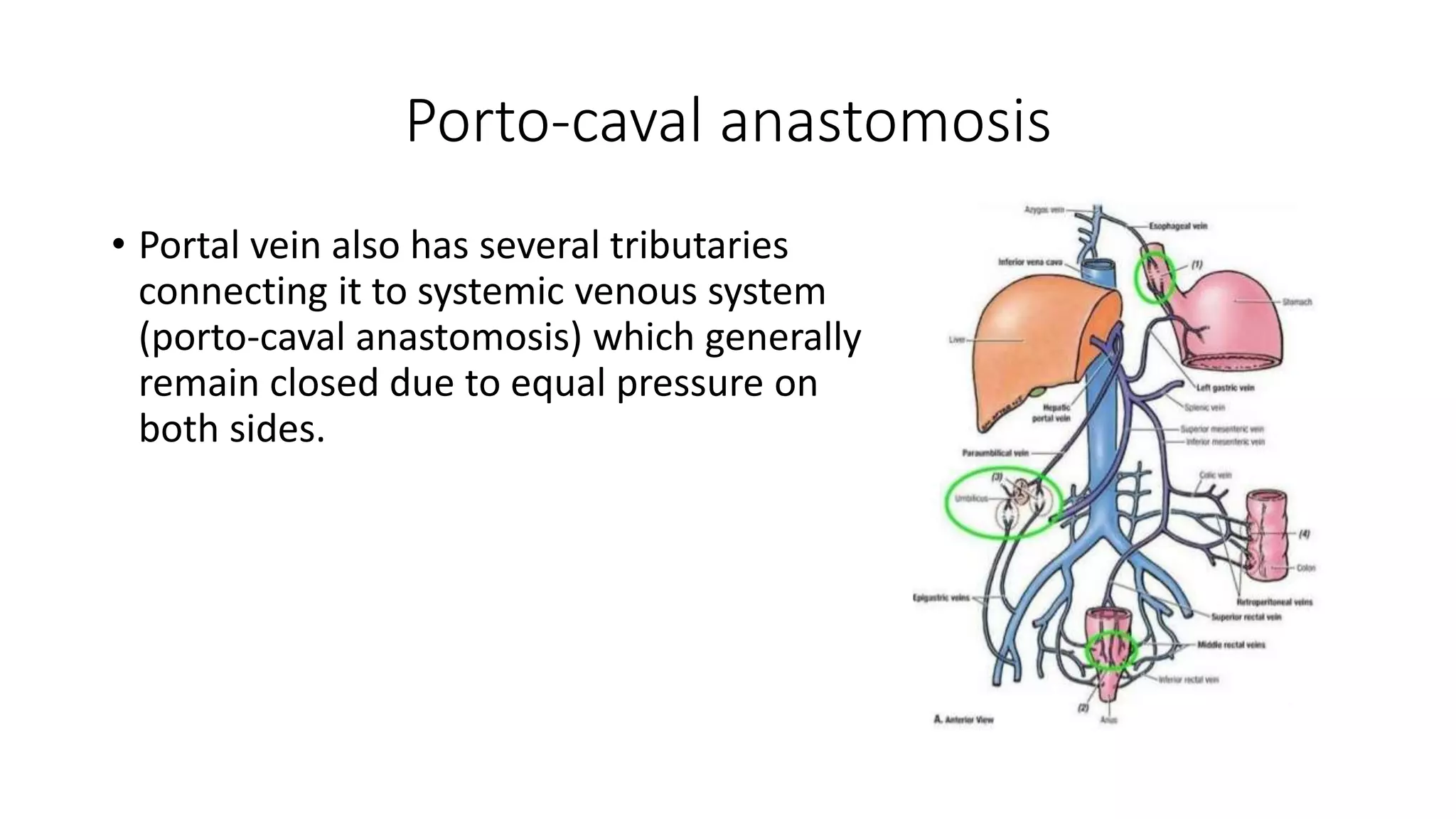
Porto-caval anastomosis
• Portal vein also has several tributaries
connecting it to systemic venous system
(porto-caval anastomosis) which generally
remain closed due to equal pressure on
both sides.
Esophageal anastomsis
Portal vein
Gastric vein Esophageal vein
Azygous/hemiazygous
vein
Superior vena cava
Rectal anastomosis
Portal vein
Inferior mesenteric
vein
Superior rectal vein
Middle/inferior
rectal vein
Internal iliac veinInferior vena cava
Umbilical anastomosis
Portal vein
Umbilical vein
Para-umbilical
vein
Inferior
epigastric vein
External iliac
vein
Inferior vena
cava
Superior epigastric
vein Internal thoracic
vein
Subclavian veinSuperior vena cava
Portal hypertension
 Portal pressure is equivalent to wedged-to-free hepatic vein pressure gradient.
 Portal hypertension is defined as the elevation of hepatic venous pressure
gradient (HPVG) to >5 mmHg. And this increased pressure is contributed to by
two simultaneously occurring processes that are, increased resistance to blood
flow within liver (cirrhosis and regenerative nodules) and increased blood flow to
portal venous system.
Causes of Portal
Hypertension
• Pre-hepatic
• Intra-hepatic
• Post-hepatic
Pre-hepatic causes
• Portal vein occlusion :- thrombosis or external compression
• Splenic vein occlusion :- thrombosis or external compression
• Increased bloof flow :- splanchnic vasodilation
Intra-hepatic causes
• Pre-sinusoidal : schistosomiasis
: early primary biliary cirrhosis
: sarcoidosis
• Sinusoidal : cirrhosis
: non-cirrhotic acute alcoholic hepatitis
• Post-sinusoidal : veno-occlusive disease
: alcoholic central hyaline necrosis
Post-hepatic causes
• Hepatic vein : thrombosis
tumour invasion
• Inferior vena cava : tumour invasion
: thromobosis
• Heart : right sided heart failure
: contrictive pericarditis
Pathophysiology
Obstruction
to forward
venous flow
Transfer of
increased
backpressure
Portal vein
congestion
Splenic vein
congestion
Liver
dysfunction
Hepatorenal
syndrome
Reduced
detoxificatio
n
Centrilobular
necrosis
Portocaval
shunting
Outcomes in liver
Central vein congestion will cause :- centrilobular necrosis and
peripheral fatty changes (nutmeg liver).
Decreased blood flow to liver will cause reduced detoxification
presenting as :-
– This will cause congestive splenomegaly : asymptomatic or dull aching
abdominal pain.
– Sequestration of blood cells presenting : cytopenias.
SPLENIC VEIN CONGESTION
Sinistral (left sided/ segmental)
portal hypertension
Pathology
Results from occlusion of the splenic vein,
usually from pancreatic pathology (e.g.
pseudocyst, carcinoma).
Clinical presentation
Most commonly - asymptomatic.
In symptomatic patients, the most common
presentation (although rare) is
gastrointestinal bleeding
Splenomegaly is common
(~70%). Cirrhosis and ascites are not common
presenting features.
SMV CONGESTION
– Dilatation of superior mesenteric vein and splanchnic circulation will cause
transudative shift of fluid from blood into surrounding tisses thus causing
ascites.
Ascites (pathophysiology)
Ascites
Clinical features :
Small amounts : asymptomatic;
Larger accumulation : abdominal distension, fullness of the flanks
and shifting dullness on percussion.
Severe ascites : fluid thrill, eversion of the umbilicus,
herniae, Abdominal striae, Divarication of the recti and scrotal oedema
may be the presenting features.
Dilatation causes
gastroesophageal varices
and haemorrhage.
Dilatation causes
haemorrhoids
and melena.
Reopening
of umbilical
vein
present as
caput
medusa.
Portal Hypertension

Portal Hypertension

  • 1.
  • 2.
    Portal vein isformed by confluence of the superior mesenteric and splenic veins. Superior mesenteric vein drains blood from small intestines, head of pancreas, ascending colon, and part of transverse colon. Splenic vein drains blood from transverse and descending colon, and superior 2/3rd of rectum bia inferior mesentercic vein.
  • 3.
    • Portal venousand hepatic arterial blood, after mixing in sinusoids, drains via central veins into hepatic vein. • Hepatic vein drains via Inferior vena cava into right heart.
  • 4.
    Porto-caval anastomosis • Portalvein also has several tributaries connecting it to systemic venous system (porto-caval anastomosis) which generally remain closed due to equal pressure on both sides.
  • 5.
    Esophageal anastomsis Portal vein Gastricvein Esophageal vein Azygous/hemiazygous vein Superior vena cava
  • 6.
    Rectal anastomosis Portal vein Inferiormesenteric vein Superior rectal vein Middle/inferior rectal vein Internal iliac veinInferior vena cava
  • 7.
    Umbilical anastomosis Portal vein Umbilicalvein Para-umbilical vein Inferior epigastric vein External iliac vein Inferior vena cava Superior epigastric vein Internal thoracic vein Subclavian veinSuperior vena cava
  • 8.
    Portal hypertension  Portalpressure is equivalent to wedged-to-free hepatic vein pressure gradient.  Portal hypertension is defined as the elevation of hepatic venous pressure gradient (HPVG) to >5 mmHg. And this increased pressure is contributed to by two simultaneously occurring processes that are, increased resistance to blood flow within liver (cirrhosis and regenerative nodules) and increased blood flow to portal venous system.
  • 9.
    Causes of Portal Hypertension •Pre-hepatic • Intra-hepatic • Post-hepatic
  • 10.
    Pre-hepatic causes • Portalvein occlusion :- thrombosis or external compression • Splenic vein occlusion :- thrombosis or external compression • Increased bloof flow :- splanchnic vasodilation
  • 11.
    Intra-hepatic causes • Pre-sinusoidal: schistosomiasis : early primary biliary cirrhosis : sarcoidosis • Sinusoidal : cirrhosis : non-cirrhotic acute alcoholic hepatitis • Post-sinusoidal : veno-occlusive disease : alcoholic central hyaline necrosis
  • 12.
    Post-hepatic causes • Hepaticvein : thrombosis tumour invasion • Inferior vena cava : tumour invasion : thromobosis • Heart : right sided heart failure : contrictive pericarditis
  • 14.
    Pathophysiology Obstruction to forward venous flow Transferof increased backpressure Portal vein congestion Splenic vein congestion Liver dysfunction Hepatorenal syndrome Reduced detoxificatio n Centrilobular necrosis Portocaval shunting
  • 16.
    Outcomes in liver Centralvein congestion will cause :- centrilobular necrosis and peripheral fatty changes (nutmeg liver). Decreased blood flow to liver will cause reduced detoxification presenting as :-
  • 17.
    – This willcause congestive splenomegaly : asymptomatic or dull aching abdominal pain. – Sequestration of blood cells presenting : cytopenias. SPLENIC VEIN CONGESTION
  • 18.
    Sinistral (left sided/segmental) portal hypertension Pathology Results from occlusion of the splenic vein, usually from pancreatic pathology (e.g. pseudocyst, carcinoma). Clinical presentation Most commonly - asymptomatic. In symptomatic patients, the most common presentation (although rare) is gastrointestinal bleeding Splenomegaly is common (~70%). Cirrhosis and ascites are not common presenting features.
  • 19.
    SMV CONGESTION – Dilatationof superior mesenteric vein and splanchnic circulation will cause transudative shift of fluid from blood into surrounding tisses thus causing ascites.
  • 20.
  • 21.
    Ascites Clinical features : Smallamounts : asymptomatic; Larger accumulation : abdominal distension, fullness of the flanks and shifting dullness on percussion. Severe ascites : fluid thrill, eversion of the umbilicus, herniae, Abdominal striae, Divarication of the recti and scrotal oedema may be the presenting features.
  • 22.
    Dilatation causes gastroesophageal varices andhaemorrhage. Dilatation causes haemorrhoids and melena. Reopening of umbilical vein present as caput medusa.