Ponzi Schemes
"To Rob Peter To Pay Paul"
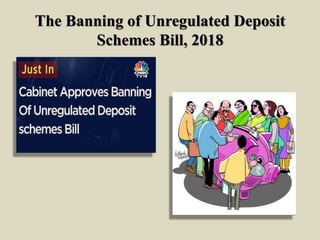
Banning of Unregulated Deposit
Schemes Bill, 2018
Ponzi Schemes
"To rob Peter to pay Paul"
Ponzi Schemes
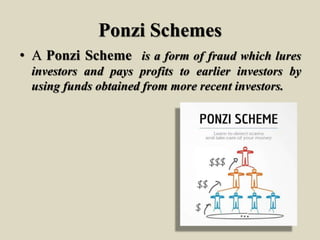
• A Ponzi Scheme is a form of fraud which lures
investors and pays profits to earlier investors by
using funds obtained from more recent investors.
Ponzi Schemes
Ponzi Schemes
• A Ponzi scheme is a fraudulent investing
scam promising high rates of return with little
risk to investors.
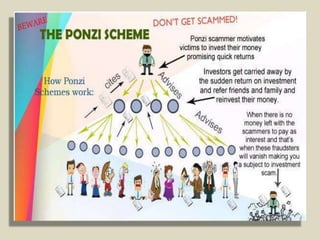
• The Ponzi scheme generates returns for
older investors by acquiring new investors
Ponzi Schemes
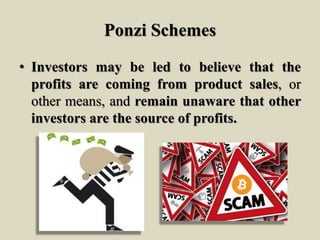
• Investors may be led to believe that the
profits are coming from product sales, or
other means, and remain unaware that other
investors are the source of profits.
Ponzi Schemes
• A Ponzi scheme is able to maintain the
illusion of a sustainable business as long as
there continues to be new investors willing
to contribute new funds and most of the
investors do not demand full repayment and
are willing to believe in the non-existent
assets that they are purported to own.
Origins of the Ponzi Scheme
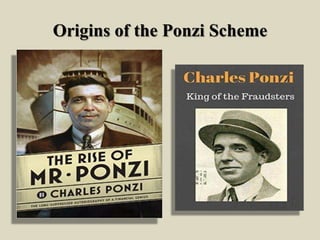
• The first notorious Ponzi scheme was orchestrated by
a man named Charles Ponzi in 1919.
• The postal service, at that time, had developed
international reply coupons that allowed a sender to
pre-purchase postage and include it in their
correspondence.
• The receiver would take the coupon to a local post
office and exchange it for the priority airmail postage
stamps needed to send a reply.
Origins of the Ponzi Scheme
• With the constant fluctuation of postage prices, it was
common for stamps to be more expensive in one
country than another.
• Ponzi hired agents to purchase cheap international
reply coupons in other countries and send them to him.
• He would then exchange those coupons for stamps that
were more expensive than the coupon was originally
purchased for.
• The stamps were then sold as a profit.
The postal service, at that time, had developed international
reply coupons that allowed a sender to pre-purchase postage
and include it in their correspondence.
The receiver would take the coupon to a local post office and
exchange it for the priority airmail postage stamps needed to
send a reply.
Origins of the Ponzi Scheme
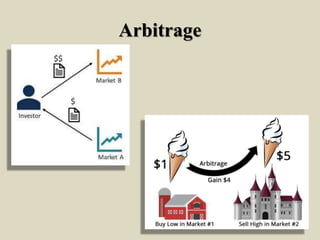
• This type of exchange is known as an
arbitrage, which is not an illegal practice.
• Ponzi became greedy and expanded his
efforts. Under the heading of his company,
Securities Exchange Company, he promised
returns of 50% in 45 days or 100% in 90
days.
Arbitrage
Origins of the Ponzi Scheme
• Due to his success in the postage stamp
scheme, investors were immediately
attracted. Instead of actually investing the
money, Ponzi just redistributed it and told the
investors they made a profit.
• The scheme lasted until 1920,
when an investigation into the Securities
Exchange Company was conducted.
Origins of the Ponzi Scheme
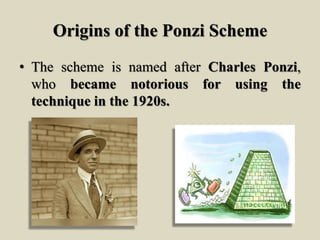
• The scheme is named after Charles Ponzi,
who became notorious for using the
technique in the 1920s.
Characteristics
• Typically, Ponzi schemes require an initial
investment and promise well-above-
average returns.
• They use vague verbal guises such as "hedge
futures trading", "high-yield investment
programs", or "offshore investment" to
describe their income strategy.
Characteristics
Characteristics
• It is common for the operator to take
advantage of a lack of investor knowledge
or competence, or sometimes claim to use a
proprietary, secret investment strategy in order
to avoid giving information about the scheme.
Characteristics
Characteristics
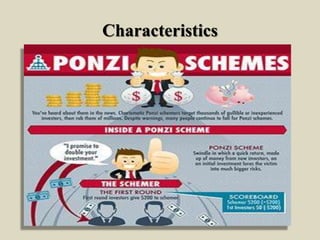
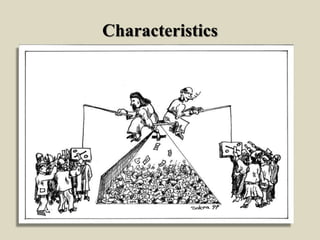
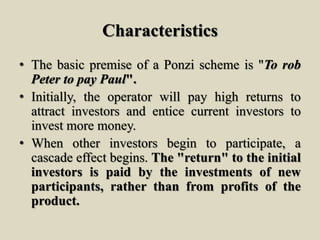
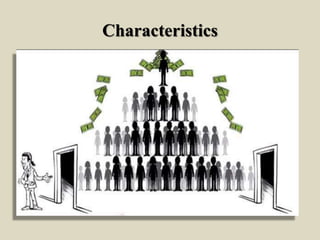
• The basic premise of a Ponzi scheme is "To rob
Peter to pay Paul".
• Initially, the operator will pay high returns to
attract investors and entice current investors to
invest more money.
• When other investors begin to participate, a
cascade effect begins. The "return" to the initial
investors is paid by the investments of new
participants, rather than from profits of the
product.
“To rob Peter to pay Paul".
Characteristics
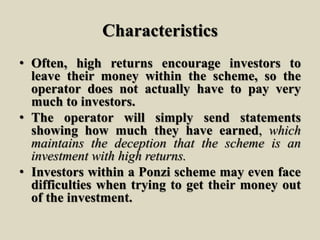
• Often, high returns encourage investors to
leave their money within the scheme, so the
operator does not actually have to pay very
much to investors.
• The operator will simply send statements
showing how much they have earned, which
maintains the deception that the scheme is an
investment with high returns.
• Investors within a Ponzi scheme may even face
difficulties when trying to get their money out
of the investment.
Characteristics
• Operators also try to minimize withdrawals by
offering new plans to investors where money
cannot be withdrawn for a certain period of time
in exchange for higher returns. The operator sees
new cash flows as investors cannot transfer
money.
• If a few investors do wish to withdraw their
money in accordance with the terms allowed,
their requests are usually promptly processed,
which gives the illusion to all other investors that
the fund is solvent, or financially sound.
Characteristics
Characteristics
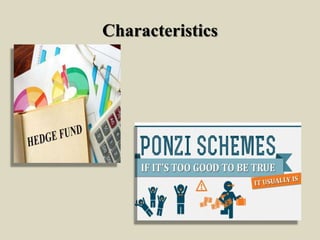
• Ponzi schemes sometimes commence
operations as legitimate investment vehicles,
such as hedge funds.
• Hedge funds can easily degenerate into a Ponzi-
type scheme if they unexpectedly lose money or
fail to legitimately earn the returns expected.
• If the operators fabricate false returns or
produce fraudulent audit reports instead of
admitting their failure to meet expectations,
the operation is then considered a Ponzi
scheme.
Characteristics
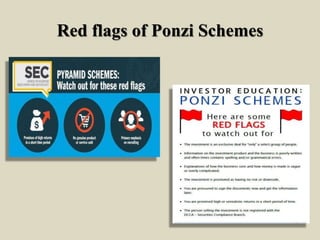
Red flags of Ponzi Schemes
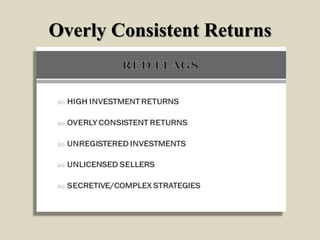
• According to the United States Securities and
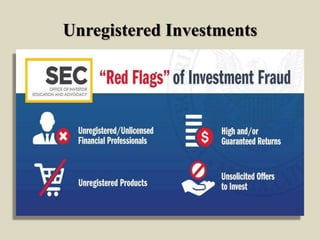
Exchange Commission (SEC), many Ponzi
schemes share similar characteristics that
should be "red flags" for investors.
• The warnings signs include:
Red flags of Ponzi Schemes
High Investment Returns With Little Or No
Risk.
• Every investment carries some degree of risk,
and investments yielding higher returns
typically involve more risk.
• Be highly suspicious of any "guaranteed"
investment opportunity.
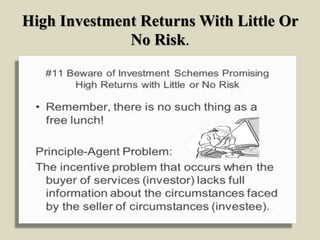
High Investment Returns With Little Or
No Risk.
Overly Consistent Returns
• Investment values tend to go up and down over
time, especially those offering potentially high
returns.
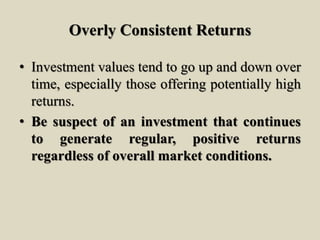
• Be suspect of an investment that continues
to generate regular, positive returns
regardless of overall market conditions.
Overly Consistent Returns
Unregistered Investments
• Ponzi schemes typically involve investments
that have not been registered with the SEC
or with state regulators.
• Registration is important because it provides
investors with access to key information about
the company's management, products,
services, and finances.
Unregistered Investments
Unlicensed sellers
• Federal and state securities laws require
investment professionals and their firms to
be licensed or registered.
• Most Ponzi schemes involve unlicensed
individuals or unregistered firms.
Unlicensed sellers
Secretive And / Or Complex Strategies
• Avoiding investments you do not
understand, or for which you cannot get
complete information, is a good rule of
thumb.
Issues with paperwork
• Do not accept excuses regarding why you
cannot review information about an
investment in writing.
• Also, account statement errors and
inconsistencies may be signs that funds are not
being invested as promised.
Issues with paperwork
Difficulty Receiving Payments
• Be suspicious if you do not receive a
payment or have difficulty cashing out your
investment.
• Keep in mind that Ponzi scheme promoters
routinely encourage participants to "roll over"
investments and sometimes promise returns
offering even higher returns on the amount
rolled over.
Red Flags To Spot A Ponzi Scheme
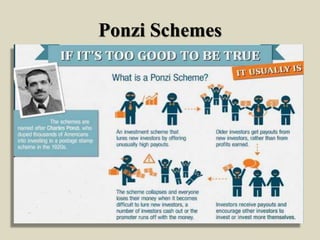
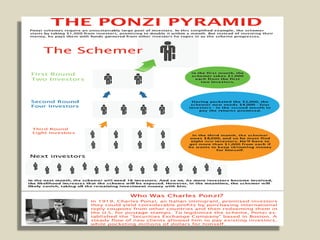
• A Ponzi scheme is a fraudulent investment
scheme where a company pays returns to its
old investors’ using capital injected by new
investors.
• To keep up with the scam, more and more new
investors are needed to continue paying off
older investors till the pyramid becomes
unsustainable and eventually collapses.
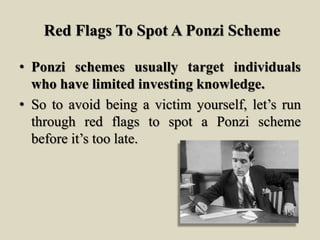
Red Flags To Spot A Ponzi Scheme
• Ponzi schemes usually target individuals
who have limited investing knowledge.
• So to avoid being a victim yourself, let’s run
through red flags to spot a Ponzi scheme
before it’s too late.
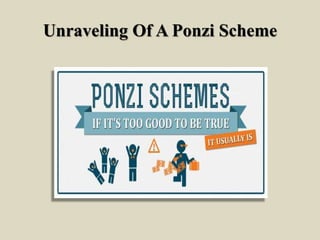
Unraveling Of A Ponzi Scheme
• If a Ponzi scheme is not stopped by authorities, it
usually falls apart quickly for one of the following
reasons.
• The operator vanishes, taking all the remaining
investment money.
• Since the scheme requires a continual stream of
investments to fund higher returns, if the number of
new investors slows down, the scheme collapses as the
operator starts having problems paying the promised
returns (the higher the returns, the greater the risk of the
Ponzi scheme collapsing).
Unraveling Of A Ponzi Scheme
• Such liquidity crises often trigger panics, as
more people start asking for their money,
similar to a bank run.
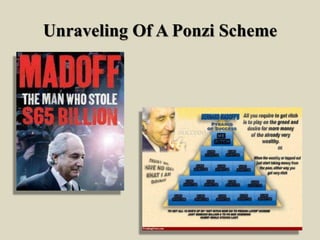
• External market forces, such as a sharp decline
in the economy (for example, the Madoff
investment scandal during the market
downturn of 2008), cause many investors to
withdraw part or all of their funds.
Unraveling Of A Ponzi Scheme
Government Move To Curb Ponzi
Schemes
• Government Introduces Bill To Check
Unregulated Deposits, Prescribes 10-yr Jail
• In the realm of the real world, high return and
guaranteed return don't go hand in hand.
• As an answer to Ponzi schemes, the
government has recently tabled the Banning
of Unregulated Deposit Schemes Bill, 2018.
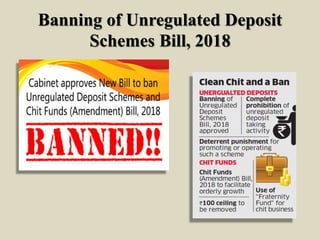
Banning of Unregulated Deposit
Schemes Bill, 2018
Government Move To Curb Ponzi
Schemes
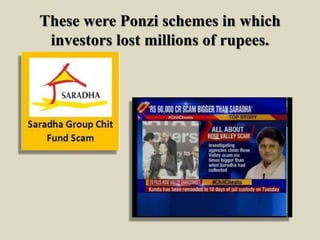
• Do you remember the Saradha chit fund and
the Rose Valley chit fund scams?
• These were Ponzi schemes in which investors
lost millions of rupees.
• Thankfully, in order to put a curb on such
fraud schemes, the government has recently
tabled the Banning of Unregulated Deposit
Schemes Bill, 2018 and the Chit Funds
(Amendment) Bill, 2018 in Parliament.
These were Ponzi schemes in which
investors lost millions of rupees.
Government Move To Curb Ponzi
Schemes
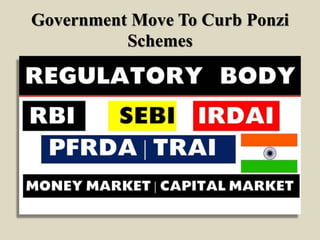
• These bills aim to regulate the solicitation
and acceptance of deposits by various
business entities which otherwise are not
regulated by regulators such as RBI, SEBI
etc.
Government Move To Curb Ponzi
Schemes
Government Move To Curb Ponzi
Schemes
• However, until that is done, investors, be aware!
These schemes can be spotted with certain
abnormality associated with them.
• Firstly, these schemes promise an abnormally
high rate of return. Secondly, they promise a
guaranteed return.
• Mind you investors, a very few schemes give a
guaranteed return.
• Also, in the realm of the real world, high return
and guaranteed return don’t go hand in hand.
The Banning of Unregulated Deposit
Schemes Bill, 2018
• The Banning of Unregulated Deposit
Schemes Bill, 2018 was introduced in Lok
Sabha by the Minister of State for Finance, Mr.
Shiv Pratap Shukla on July 18, 2018.
• The Bill provides for a mechanism to ban
unregulated deposit schemes and protect the
interests of depositors.
The Banning of Unregulated Deposit
Schemes Bill, 2018
The Banning of Unregulated Deposit
Schemes Bill, 2018
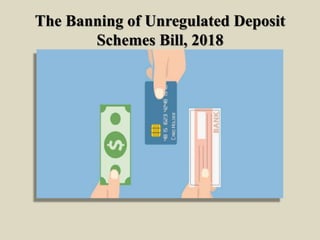
• Deposit: The Bill defines a deposit as an
amount of money received through an
advance, a loan, or in any other form, with a
promise to be returned with or without
interest.
• Such deposit may be returned either in cash
or as a service, and the time of return may
or may not be specified.
The Banning of Unregulated Deposit
Schemes Bill, 2018
The Banning of Unregulated Deposit
Schemes Bill, 2018
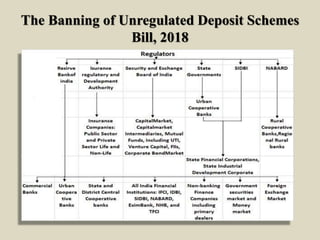
• Currently, nine regulators oversee and regulate various
deposit-taking schemes. These include:
• (i) the Reserve Bank of India (RBI),
• (ii) the Securities and Exchange Board of India (SEBI),
• (iii) the Ministry of Corporate Affairs, and
• (iv) state and union territory governments.
• For example, RBI regulates deposits accepted by non-
banking financial companies, SEBI regulates mutual funds,
state and union territory governments regulate chit funds,
among others.
• All deposit-taking schemes are required to be registered
with the relevant regulator.
The Banning of Unregulated Deposit Schemes
Bill, 2018
The Banning of Unregulated Deposit Schemes
Bill, 2018
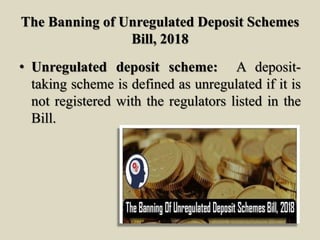
• Unregulated deposit scheme: A deposit-
taking scheme is defined as unregulated if it is
not registered with the regulators listed in the
Bill.
The Banning of Unregulated Deposit
Schemes Bill, 2018
• Deposit taker: The Bill defines deposit takers
as an individual, a group of individuals, or a
company who asks for (solicits), or receives
deposits.
• Banks and entities incorporated under any
other law are not included as deposit takers.
The Banning of Unregulated Deposit Schemes
Bill, 2018
• Competent Authority: The Bill provides for
the appointment of one or more government
officers, not below the rank of Secretary to the
state or central government, as the Competent
Authority.
The Banning of Unregulated Deposit Schemes
Bill, 2018
• Police officers receiving information about offences
committed under the Bill will report it to the Competent
Authority. Further, police officers (not below the rank of an
officer-in-charge of a police station) may enter, search and
seize any property believed to be connected with an offence
under the Bill, with or without a warrant.
• The Competent Authority may:
• (i) provisionally attach the property of the deposit taker, as
well as all deposits received,
• (ii) summon and examine any person it considers necessary
for the purpose of obtaining evidence, and
• (iii) order the production of records and evidence. The
Competent Authority will have powers similar to those
vested in a civil court.
The Banning of Unregulated Deposit
Schemes Bill, 2018
• Designated Courts: The Bill provides for the
constitution of one or more Designated Courts
in specified areas.
• This Court will be headed by a judge not
below the rank of a district and sessions
judge, or additional district and sessions
judge.
Designated Courts
The Banning of Unregulated Deposit
Schemes Bill, 2018
• After provisional attachment of the deposit taker’s
assets, the Competent Authority will approach the
Designated Court to:
• (i) make the provisional attachment absolute, and
• (ii) ask for permission to sell the assets.
• The Competent Authority will have to approach
the Court within 30 days (extendable to 60 days).
• It will also open a bank account to realise and
disburse money to depositors under the
instructions of the Designated Court.
The Banning of Unregulated Deposit
Schemes Bill, 2018
• The Designated Court will have the power to:
• (i) make the provisional attachment absolute,
• (ii) vary or cancel the provisional attachment,
• (iii) finalise the list of depositors and their respective
dues, and
• (iv) direct the Competent Authority to sell the property
and equitably distribute the money realised among the
depositors.
• The Court will seek to complete the process within
180 days of being approached by the Competent
Authority.
The Banning of Unregulated Deposit
Schemes Bill, 2018
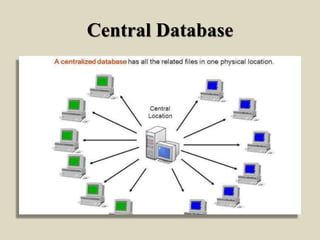
• Central database: The Bill provides for the
central government to designate an authority to
create an online central database for
information on deposit takers.
• All deposit takers will be required to inform
the database authority about their business.
• The Competent Authority will be required
to share all information on unregulated
deposits with the authority.
Central Database
The Banning of Unregulated Deposit Schemes
Bill, 2018
• Offences and penalties:
• The Bill defines three types of offences, and
penalties related to them. These offences are:
• (i) Running (advertising, promoting, operating
or accepting money for) unregulated deposit
schemes,
• (ii) Fraudulently defaulting on regulated deposit
schemes, and
• (iii) Wrongfully inducing depositors to invest in
unregulated deposit schemes by willingly
falsifying facts.
Offences and penalties
The Banning of Unregulated Deposit
Schemes Bill, 2018
• For example, accepting unregulated deposits will be
punishable with imprisonment between two and
seven years, along with a fine ranging from three to
10 lakh rupees.
• Defaulting in repayment of unregulated deposits will be
punishable with imprisonment between three and 10
years, and a fine ranging from five lakh rupees to
twice the amount collected from depositors.
• Repeated offenders under the Bill will be punishable
with imprisonment between five to 10 years, along
with a fine ranging from 10 lakh to five crore rupees.
Terminology
• Bucket Shop (Stock Market)
• As defined by the U.S. Supreme Court, a bucket
shop is "an establishment, nominally for the
transaction of a stock exchange business, or
business of similar character, but really for the
registration of bets, or wagers, usually for small
amounts, on the rise or fall of the prices of stocks,
grain, oil, etc., there being no transfer or delivery
of the stock or commodities nominally dealt in."
Bucket Shop (Stock Market)
Chain Letter
• Chain Letter
• A chain letter is a message that attempts to
convince the recipient to make a number of
copies of the letter and then pass them on to a
certain number of recipients (either a
predefined number or as many as possible).
The "chain" is actually an exponentially
growing pyramid (a tree graph) that cannot be
sustained indefinitely.
Chain Letter
Get-rich-quick Scheme
• Get-rich-quick Scheme
• Most schemes create an impression that
participants can obtain this high rate of return
with little risk, and with little skill, effort, or
time.
• It is clearly possible to get rich quickly if
one is prepared to accept very high levels of
risk – this is the premise of the gambling
industry.
Get-rich-quick Scheme
Matrix Scheme
• A Matrix Scheme (also known as a matrix
sale or site, and as a hellevator, escavator or
ladder scheme) is a business model involving
the exchange of money for a certain product
with a side bonus of being added to a waiting
list for a product of greater value than the
amount given
Pump And Dump
• Pump and dump
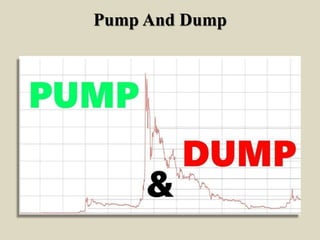
• "Pump and dump" (P&D) is a form of securities
fraud that involves artificially inflating the price
of an owned stock through false and misleading
positive statements, in order to sell the cheaply
purchased stock at a higher price.
• Once the operators of the scheme "dump" sell
their overvalued shares, the price falls and
investors lose their money. This is most
common with small cap crypto-currencies and
very small corporations.
Pump And Dump
White-collar Crime
• White-collar Crime
• White-collar crime (or corporate crime, more
correctly) refers to financially motivated,
nonviolent crime committed by business and
government professionals.
White-collar Crime
White-collar Crime
• Typical white-collar crimes could include
fraud, bribery, Ponzi schemes, insider
trading, labor racketeering, embezzlement,
cybercrime, copyright infringement, money
laundering, identity theft, and forgery.
Lawyers can be specialized in white-collar
crime.
How should I Report Ponzi Scheme ?
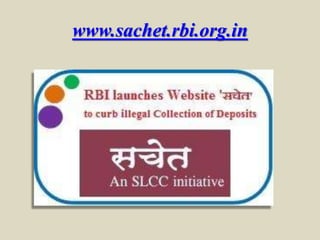
• RBI has launched a website to warn and fight
against ponzi schemes
• Reserve Bank of India (RBI) launched Sachet
(www.sachet.rbi.org.in ), a website from where
anyone can get information about companies that
are allowed to accept deposits.
• You will also be able to lodge complaints and
share information about illegal acceptance of
deposits by unscrupulous entities.
www.sachet.rbi.org.in
How should I Report Ponzi Scheme ?
• On the website, you can lodge complaints and
share information about illegal acceptance of
deposits.
• You can also post alerts about entities soliciting
deposits at high interest rates or dubious loans
offered at low interest rates. This information
would be shared with the regulator concerned
or a law enforcement authority, which will then
initiate necessary action as per their
procedures.
www.sachet.rbi.org.in
How should I Report Ponzi Scheme ?
• You can also track the status of complaints.
• The website will be used to coordinate among
regulators and state government agencies. At present,
on the website, you can get information about the types
of entities that can receive deposits.
• You can check whether a particular company that is
accepting deposits is registered with any regulator
and whether it is permitted to accept deposits. The
website also provides details of regulations
prescribed by all financial regulators.
www.sachet.rbi.org.in
How should I Report Ponzi Scheme ?
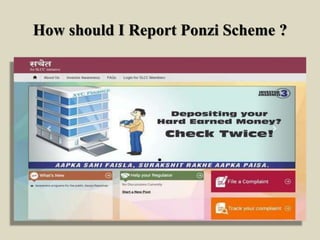
• To file a complaint, if you know the regulator,
you can click on the respective link. You then
have to file a form and submit it. To track the
complaint, search with your mobile phone
number, complaint number or email ID.
• You can also alert the regulators by providing
information on the website. For instance, if you
know of a company that is offering unusual
rates of interest, and is breaking rules, you can
give the information.
How should I Report Ponzi Scheme ?
References
• Charles Ponzi
https://en.wikipedia.org/wiki/Charles_Ponzi
• How Ponzi Schemes Work
https://money.howstuffworks.com/ponzi-scheme.htm
• Ponzi scheme
https://en.wikipedia.org/wiki/Ponzi_scheme
• Ponzi Scheme
https://www.investopedia.com/terms/p/ponzischeme.asp
• Sachet
https://sachet.rbi.org.in/
• The Banning of Unregulated Deposit Schemes Bill, 2018
http://www.prsindia.org/billtrack/the-banning-of-unregulated-deposit-
schemes-bill-2018-5278/
Thanks…
Ponzi Schemes

Ponzi Schemes

  • 1.
    Ponzi Schemes "To RobPeter To Pay Paul" Banning of Unregulated Deposit Schemes Bill, 2018
  • 2.
    Ponzi Schemes "To robPeter to pay Paul"
  • 3.
    Ponzi Schemes • APonzi Scheme is a form of fraud which lures investors and pays profits to earlier investors by using funds obtained from more recent investors.
  • 4.
  • 5.
    Ponzi Schemes • APonzi scheme is a fraudulent investing scam promising high rates of return with little risk to investors. • The Ponzi scheme generates returns for older investors by acquiring new investors
  • 6.
    Ponzi Schemes • Investorsmay be led to believe that the profits are coming from product sales, or other means, and remain unaware that other investors are the source of profits.
  • 8.
    Ponzi Schemes • APonzi scheme is able to maintain the illusion of a sustainable business as long as there continues to be new investors willing to contribute new funds and most of the investors do not demand full repayment and are willing to believe in the non-existent assets that they are purported to own.
  • 10.
    Origins of thePonzi Scheme • The first notorious Ponzi scheme was orchestrated by a man named Charles Ponzi in 1919. • The postal service, at that time, had developed international reply coupons that allowed a sender to pre-purchase postage and include it in their correspondence. • The receiver would take the coupon to a local post office and exchange it for the priority airmail postage stamps needed to send a reply.
  • 11.
    Origins of thePonzi Scheme
  • 12.
    Origins of thePonzi Scheme • With the constant fluctuation of postage prices, it was common for stamps to be more expensive in one country than another. • Ponzi hired agents to purchase cheap international reply coupons in other countries and send them to him. • He would then exchange those coupons for stamps that were more expensive than the coupon was originally purchased for. • The stamps were then sold as a profit.
  • 13.
    The postal service,at that time, had developed international reply coupons that allowed a sender to pre-purchase postage and include it in their correspondence. The receiver would take the coupon to a local post office and exchange it for the priority airmail postage stamps needed to send a reply.
  • 14.
    Origins of thePonzi Scheme • This type of exchange is known as an arbitrage, which is not an illegal practice. • Ponzi became greedy and expanded his efforts. Under the heading of his company, Securities Exchange Company, he promised returns of 50% in 45 days or 100% in 90 days.
  • 15.
  • 16.
    Origins of thePonzi Scheme • Due to his success in the postage stamp scheme, investors were immediately attracted. Instead of actually investing the money, Ponzi just redistributed it and told the investors they made a profit. • The scheme lasted until 1920, when an investigation into the Securities Exchange Company was conducted.
  • 17.
    Origins of thePonzi Scheme
  • 18.
    Origins of thePonzi Scheme • The scheme is named after Charles Ponzi, who became notorious for using the technique in the 1920s.
  • 19.
    Characteristics • Typically, Ponzischemes require an initial investment and promise well-above- average returns. • They use vague verbal guises such as "hedge futures trading", "high-yield investment programs", or "offshore investment" to describe their income strategy.
  • 20.
  • 21.
    Characteristics • It iscommon for the operator to take advantage of a lack of investor knowledge or competence, or sometimes claim to use a proprietary, secret investment strategy in order to avoid giving information about the scheme.
  • 22.
  • 23.
    Characteristics • The basicpremise of a Ponzi scheme is "To rob Peter to pay Paul". • Initially, the operator will pay high returns to attract investors and entice current investors to invest more money. • When other investors begin to participate, a cascade effect begins. The "return" to the initial investors is paid by the investments of new participants, rather than from profits of the product.
  • 24.
    “To rob Peterto pay Paul".
  • 25.
    Characteristics • Often, highreturns encourage investors to leave their money within the scheme, so the operator does not actually have to pay very much to investors. • The operator will simply send statements showing how much they have earned, which maintains the deception that the scheme is an investment with high returns. • Investors within a Ponzi scheme may even face difficulties when trying to get their money out of the investment.
  • 27.
    Characteristics • Operators alsotry to minimize withdrawals by offering new plans to investors where money cannot be withdrawn for a certain period of time in exchange for higher returns. The operator sees new cash flows as investors cannot transfer money. • If a few investors do wish to withdraw their money in accordance with the terms allowed, their requests are usually promptly processed, which gives the illusion to all other investors that the fund is solvent, or financially sound.
  • 28.
  • 29.
    Characteristics • Ponzi schemessometimes commence operations as legitimate investment vehicles, such as hedge funds. • Hedge funds can easily degenerate into a Ponzi- type scheme if they unexpectedly lose money or fail to legitimately earn the returns expected. • If the operators fabricate false returns or produce fraudulent audit reports instead of admitting their failure to meet expectations, the operation is then considered a Ponzi scheme.
  • 30.
  • 31.
    Red flags ofPonzi Schemes • According to the United States Securities and Exchange Commission (SEC), many Ponzi schemes share similar characteristics that should be "red flags" for investors. • The warnings signs include:
  • 32.
    Red flags ofPonzi Schemes
  • 33.
    High Investment ReturnsWith Little Or No Risk. • Every investment carries some degree of risk, and investments yielding higher returns typically involve more risk. • Be highly suspicious of any "guaranteed" investment opportunity.
  • 34.
    High Investment ReturnsWith Little Or No Risk.
  • 35.
    Overly Consistent Returns •Investment values tend to go up and down over time, especially those offering potentially high returns. • Be suspect of an investment that continues to generate regular, positive returns regardless of overall market conditions.
  • 36.
  • 37.
    Unregistered Investments • Ponzischemes typically involve investments that have not been registered with the SEC or with state regulators. • Registration is important because it provides investors with access to key information about the company's management, products, services, and finances.
  • 38.
  • 39.
    Unlicensed sellers • Federaland state securities laws require investment professionals and their firms to be licensed or registered. • Most Ponzi schemes involve unlicensed individuals or unregistered firms.
  • 40.
  • 41.
    Secretive And /Or Complex Strategies • Avoiding investments you do not understand, or for which you cannot get complete information, is a good rule of thumb.
  • 42.
    Issues with paperwork •Do not accept excuses regarding why you cannot review information about an investment in writing. • Also, account statement errors and inconsistencies may be signs that funds are not being invested as promised.
  • 43.
  • 44.
    Difficulty Receiving Payments •Be suspicious if you do not receive a payment or have difficulty cashing out your investment. • Keep in mind that Ponzi scheme promoters routinely encourage participants to "roll over" investments and sometimes promise returns offering even higher returns on the amount rolled over.
  • 46.
    Red Flags ToSpot A Ponzi Scheme • A Ponzi scheme is a fraudulent investment scheme where a company pays returns to its old investors’ using capital injected by new investors. • To keep up with the scam, more and more new investors are needed to continue paying off older investors till the pyramid becomes unsustainable and eventually collapses.
  • 47.
    Red Flags ToSpot A Ponzi Scheme
  • 48.
    Red Flags ToSpot A Ponzi Scheme • Ponzi schemes usually target individuals who have limited investing knowledge. • So to avoid being a victim yourself, let’s run through red flags to spot a Ponzi scheme before it’s too late.
  • 49.
    Unraveling Of APonzi Scheme • If a Ponzi scheme is not stopped by authorities, it usually falls apart quickly for one of the following reasons. • The operator vanishes, taking all the remaining investment money. • Since the scheme requires a continual stream of investments to fund higher returns, if the number of new investors slows down, the scheme collapses as the operator starts having problems paying the promised returns (the higher the returns, the greater the risk of the Ponzi scheme collapsing).
  • 50.
    Unraveling Of APonzi Scheme
  • 51.
    Unraveling Of APonzi Scheme • Such liquidity crises often trigger panics, as more people start asking for their money, similar to a bank run. • External market forces, such as a sharp decline in the economy (for example, the Madoff investment scandal during the market downturn of 2008), cause many investors to withdraw part or all of their funds.
  • 52.
    Unraveling Of APonzi Scheme
  • 53.
    Government Move ToCurb Ponzi Schemes • Government Introduces Bill To Check Unregulated Deposits, Prescribes 10-yr Jail • In the realm of the real world, high return and guaranteed return don't go hand in hand. • As an answer to Ponzi schemes, the government has recently tabled the Banning of Unregulated Deposit Schemes Bill, 2018.
  • 54.
    Banning of UnregulatedDeposit Schemes Bill, 2018
  • 55.
    Government Move ToCurb Ponzi Schemes • Do you remember the Saradha chit fund and the Rose Valley chit fund scams? • These were Ponzi schemes in which investors lost millions of rupees. • Thankfully, in order to put a curb on such fraud schemes, the government has recently tabled the Banning of Unregulated Deposit Schemes Bill, 2018 and the Chit Funds (Amendment) Bill, 2018 in Parliament.
  • 56.
    These were Ponzischemes in which investors lost millions of rupees.
  • 57.
    Government Move ToCurb Ponzi Schemes • These bills aim to regulate the solicitation and acceptance of deposits by various business entities which otherwise are not regulated by regulators such as RBI, SEBI etc.
  • 58.
    Government Move ToCurb Ponzi Schemes
  • 59.
    Government Move ToCurb Ponzi Schemes • However, until that is done, investors, be aware! These schemes can be spotted with certain abnormality associated with them. • Firstly, these schemes promise an abnormally high rate of return. Secondly, they promise a guaranteed return. • Mind you investors, a very few schemes give a guaranteed return. • Also, in the realm of the real world, high return and guaranteed return don’t go hand in hand.
  • 60.
    The Banning ofUnregulated Deposit Schemes Bill, 2018 • The Banning of Unregulated Deposit Schemes Bill, 2018 was introduced in Lok Sabha by the Minister of State for Finance, Mr. Shiv Pratap Shukla on July 18, 2018. • The Bill provides for a mechanism to ban unregulated deposit schemes and protect the interests of depositors.
  • 61.
    The Banning ofUnregulated Deposit Schemes Bill, 2018
  • 62.
    The Banning ofUnregulated Deposit Schemes Bill, 2018 • Deposit: The Bill defines a deposit as an amount of money received through an advance, a loan, or in any other form, with a promise to be returned with or without interest. • Such deposit may be returned either in cash or as a service, and the time of return may or may not be specified.
  • 63.
    The Banning ofUnregulated Deposit Schemes Bill, 2018
  • 64.
    The Banning ofUnregulated Deposit Schemes Bill, 2018 • Currently, nine regulators oversee and regulate various deposit-taking schemes. These include: • (i) the Reserve Bank of India (RBI), • (ii) the Securities and Exchange Board of India (SEBI), • (iii) the Ministry of Corporate Affairs, and • (iv) state and union territory governments. • For example, RBI regulates deposits accepted by non- banking financial companies, SEBI regulates mutual funds, state and union territory governments regulate chit funds, among others. • All deposit-taking schemes are required to be registered with the relevant regulator.
  • 65.
    The Banning ofUnregulated Deposit Schemes Bill, 2018
  • 66.
    The Banning ofUnregulated Deposit Schemes Bill, 2018 • Unregulated deposit scheme: A deposit- taking scheme is defined as unregulated if it is not registered with the regulators listed in the Bill.
  • 67.
    The Banning ofUnregulated Deposit Schemes Bill, 2018 • Deposit taker: The Bill defines deposit takers as an individual, a group of individuals, or a company who asks for (solicits), or receives deposits. • Banks and entities incorporated under any other law are not included as deposit takers.
  • 68.
    The Banning ofUnregulated Deposit Schemes Bill, 2018 • Competent Authority: The Bill provides for the appointment of one or more government officers, not below the rank of Secretary to the state or central government, as the Competent Authority.
  • 69.
    The Banning ofUnregulated Deposit Schemes Bill, 2018 • Police officers receiving information about offences committed under the Bill will report it to the Competent Authority. Further, police officers (not below the rank of an officer-in-charge of a police station) may enter, search and seize any property believed to be connected with an offence under the Bill, with or without a warrant. • The Competent Authority may: • (i) provisionally attach the property of the deposit taker, as well as all deposits received, • (ii) summon and examine any person it considers necessary for the purpose of obtaining evidence, and • (iii) order the production of records and evidence. The Competent Authority will have powers similar to those vested in a civil court.
  • 70.
    The Banning ofUnregulated Deposit Schemes Bill, 2018 • Designated Courts: The Bill provides for the constitution of one or more Designated Courts in specified areas. • This Court will be headed by a judge not below the rank of a district and sessions judge, or additional district and sessions judge.
  • 71.
  • 72.
    The Banning ofUnregulated Deposit Schemes Bill, 2018 • After provisional attachment of the deposit taker’s assets, the Competent Authority will approach the Designated Court to: • (i) make the provisional attachment absolute, and • (ii) ask for permission to sell the assets. • The Competent Authority will have to approach the Court within 30 days (extendable to 60 days). • It will also open a bank account to realise and disburse money to depositors under the instructions of the Designated Court.
  • 73.
    The Banning ofUnregulated Deposit Schemes Bill, 2018 • The Designated Court will have the power to: • (i) make the provisional attachment absolute, • (ii) vary or cancel the provisional attachment, • (iii) finalise the list of depositors and their respective dues, and • (iv) direct the Competent Authority to sell the property and equitably distribute the money realised among the depositors. • The Court will seek to complete the process within 180 days of being approached by the Competent Authority.
  • 74.
    The Banning ofUnregulated Deposit Schemes Bill, 2018 • Central database: The Bill provides for the central government to designate an authority to create an online central database for information on deposit takers. • All deposit takers will be required to inform the database authority about their business. • The Competent Authority will be required to share all information on unregulated deposits with the authority.
  • 75.
  • 76.
    The Banning ofUnregulated Deposit Schemes Bill, 2018 • Offences and penalties: • The Bill defines three types of offences, and penalties related to them. These offences are: • (i) Running (advertising, promoting, operating or accepting money for) unregulated deposit schemes, • (ii) Fraudulently defaulting on regulated deposit schemes, and • (iii) Wrongfully inducing depositors to invest in unregulated deposit schemes by willingly falsifying facts.
  • 77.
  • 78.
    The Banning ofUnregulated Deposit Schemes Bill, 2018 • For example, accepting unregulated deposits will be punishable with imprisonment between two and seven years, along with a fine ranging from three to 10 lakh rupees. • Defaulting in repayment of unregulated deposits will be punishable with imprisonment between three and 10 years, and a fine ranging from five lakh rupees to twice the amount collected from depositors. • Repeated offenders under the Bill will be punishable with imprisonment between five to 10 years, along with a fine ranging from 10 lakh to five crore rupees.
  • 79.
    Terminology • Bucket Shop(Stock Market) • As defined by the U.S. Supreme Court, a bucket shop is "an establishment, nominally for the transaction of a stock exchange business, or business of similar character, but really for the registration of bets, or wagers, usually for small amounts, on the rise or fall of the prices of stocks, grain, oil, etc., there being no transfer or delivery of the stock or commodities nominally dealt in."
  • 80.
  • 81.
    Chain Letter • ChainLetter • A chain letter is a message that attempts to convince the recipient to make a number of copies of the letter and then pass them on to a certain number of recipients (either a predefined number or as many as possible). The "chain" is actually an exponentially growing pyramid (a tree graph) that cannot be sustained indefinitely.
  • 82.
  • 83.
    Get-rich-quick Scheme • Get-rich-quickScheme • Most schemes create an impression that participants can obtain this high rate of return with little risk, and with little skill, effort, or time. • It is clearly possible to get rich quickly if one is prepared to accept very high levels of risk – this is the premise of the gambling industry.
  • 84.
  • 85.
    Matrix Scheme • AMatrix Scheme (also known as a matrix sale or site, and as a hellevator, escavator or ladder scheme) is a business model involving the exchange of money for a certain product with a side bonus of being added to a waiting list for a product of greater value than the amount given
  • 86.
    Pump And Dump •Pump and dump • "Pump and dump" (P&D) is a form of securities fraud that involves artificially inflating the price of an owned stock through false and misleading positive statements, in order to sell the cheaply purchased stock at a higher price. • Once the operators of the scheme "dump" sell their overvalued shares, the price falls and investors lose their money. This is most common with small cap crypto-currencies and very small corporations.
  • 87.
  • 88.
    White-collar Crime • White-collarCrime • White-collar crime (or corporate crime, more correctly) refers to financially motivated, nonviolent crime committed by business and government professionals.
  • 89.
  • 90.
    White-collar Crime • Typicalwhite-collar crimes could include fraud, bribery, Ponzi schemes, insider trading, labor racketeering, embezzlement, cybercrime, copyright infringement, money laundering, identity theft, and forgery. Lawyers can be specialized in white-collar crime.
  • 91.
    How should IReport Ponzi Scheme ? • RBI has launched a website to warn and fight against ponzi schemes • Reserve Bank of India (RBI) launched Sachet (www.sachet.rbi.org.in ), a website from where anyone can get information about companies that are allowed to accept deposits. • You will also be able to lodge complaints and share information about illegal acceptance of deposits by unscrupulous entities.
  • 92.
  • 93.
    How should IReport Ponzi Scheme ? • On the website, you can lodge complaints and share information about illegal acceptance of deposits. • You can also post alerts about entities soliciting deposits at high interest rates or dubious loans offered at low interest rates. This information would be shared with the regulator concerned or a law enforcement authority, which will then initiate necessary action as per their procedures.
  • 94.
  • 95.
    How should IReport Ponzi Scheme ? • You can also track the status of complaints. • The website will be used to coordinate among regulators and state government agencies. At present, on the website, you can get information about the types of entities that can receive deposits. • You can check whether a particular company that is accepting deposits is registered with any regulator and whether it is permitted to accept deposits. The website also provides details of regulations prescribed by all financial regulators.
  • 96.
  • 97.
    How should IReport Ponzi Scheme ? • To file a complaint, if you know the regulator, you can click on the respective link. You then have to file a form and submit it. To track the complaint, search with your mobile phone number, complaint number or email ID. • You can also alert the regulators by providing information on the website. For instance, if you know of a company that is offering unusual rates of interest, and is breaking rules, you can give the information.
  • 98.
    How should IReport Ponzi Scheme ?
  • 99.
    References • Charles Ponzi https://en.wikipedia.org/wiki/Charles_Ponzi •How Ponzi Schemes Work https://money.howstuffworks.com/ponzi-scheme.htm • Ponzi scheme https://en.wikipedia.org/wiki/Ponzi_scheme • Ponzi Scheme https://www.investopedia.com/terms/p/ponzischeme.asp • Sachet https://sachet.rbi.org.in/ • The Banning of Unregulated Deposit Schemes Bill, 2018 http://www.prsindia.org/billtrack/the-banning-of-unregulated-deposit- schemes-bill-2018-5278/
  • 100.