BIDHAN CHANDRA
KRISHI
VISWAVIDYALAYA
Presentation on Pollution in
aquatic ecosystem- Problems,
planning and management
ESDM 359 : Environmental
Studies & Disaster
Management
• Group members-
• Rahul Karmakar(Hort-18)
• Rakhshinda Akhtar(Hort-19)
• Saptarshi Nandi(Hort-21)
• Shilpa Singha(Hort-23)
• Silpa Mandal(Hort-24)
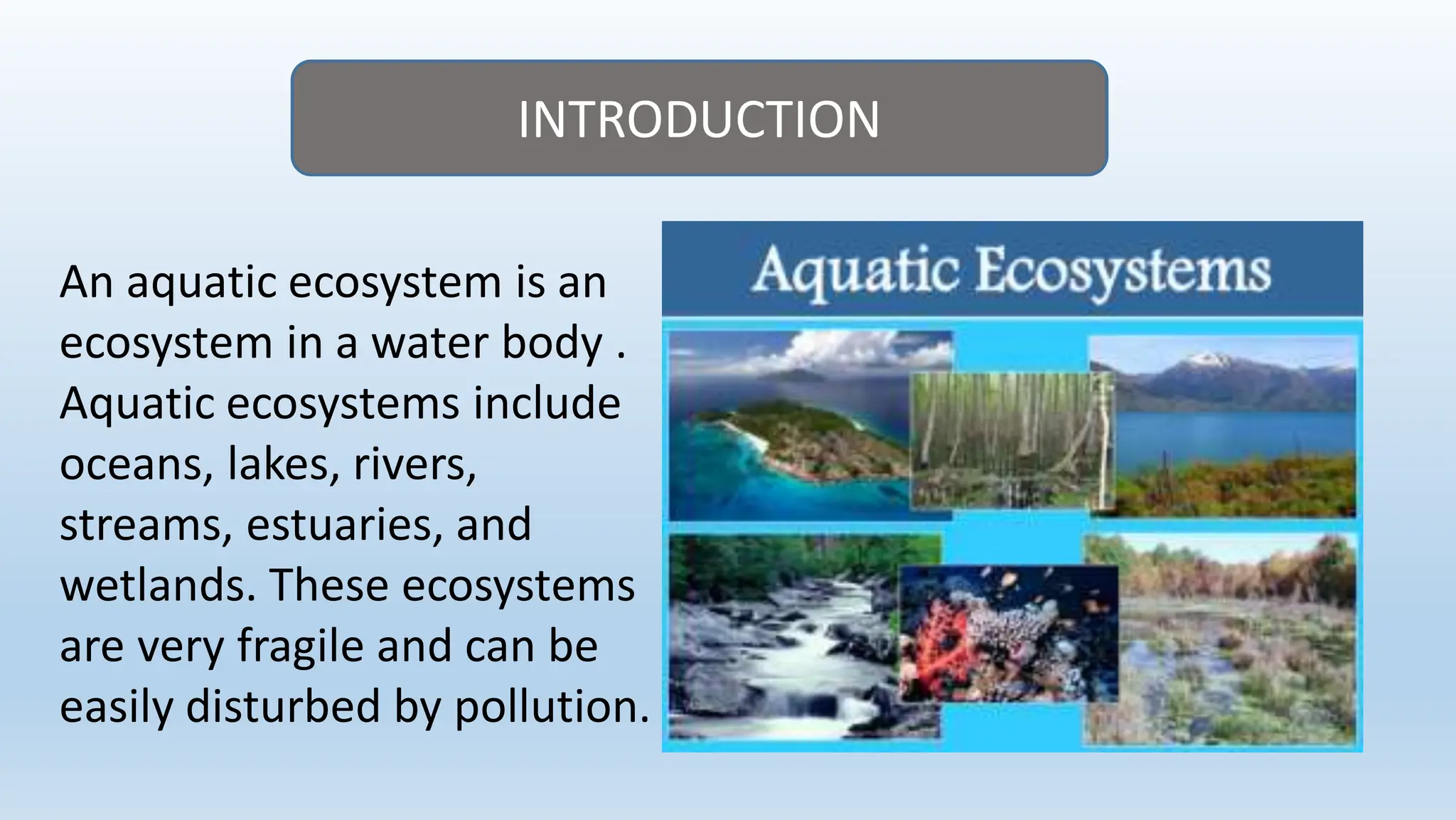
An aquatic ecosystem is an
ecosystem in a water body .
Aquatic ecosystems include
oceans, lakes, rivers,
streams, estuaries, and
wetlands. These ecosystems
are very fragile and can be
easily disturbed by pollution.
INTRODUCTION
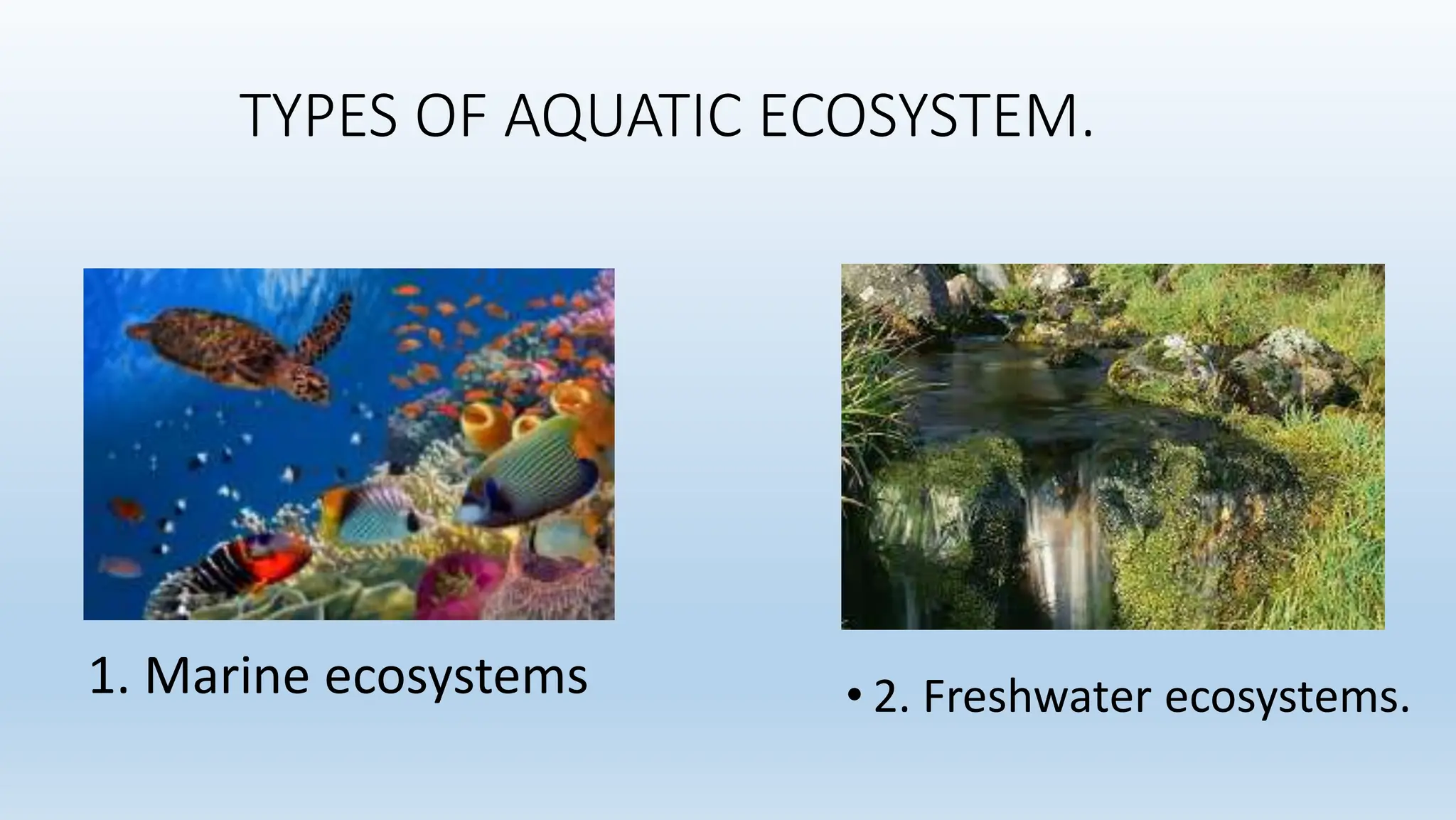
TYPES OF AQUATIC ECOSYSTEM.
• 2. Freshwater ecosystems.
1. Marine ecosystems
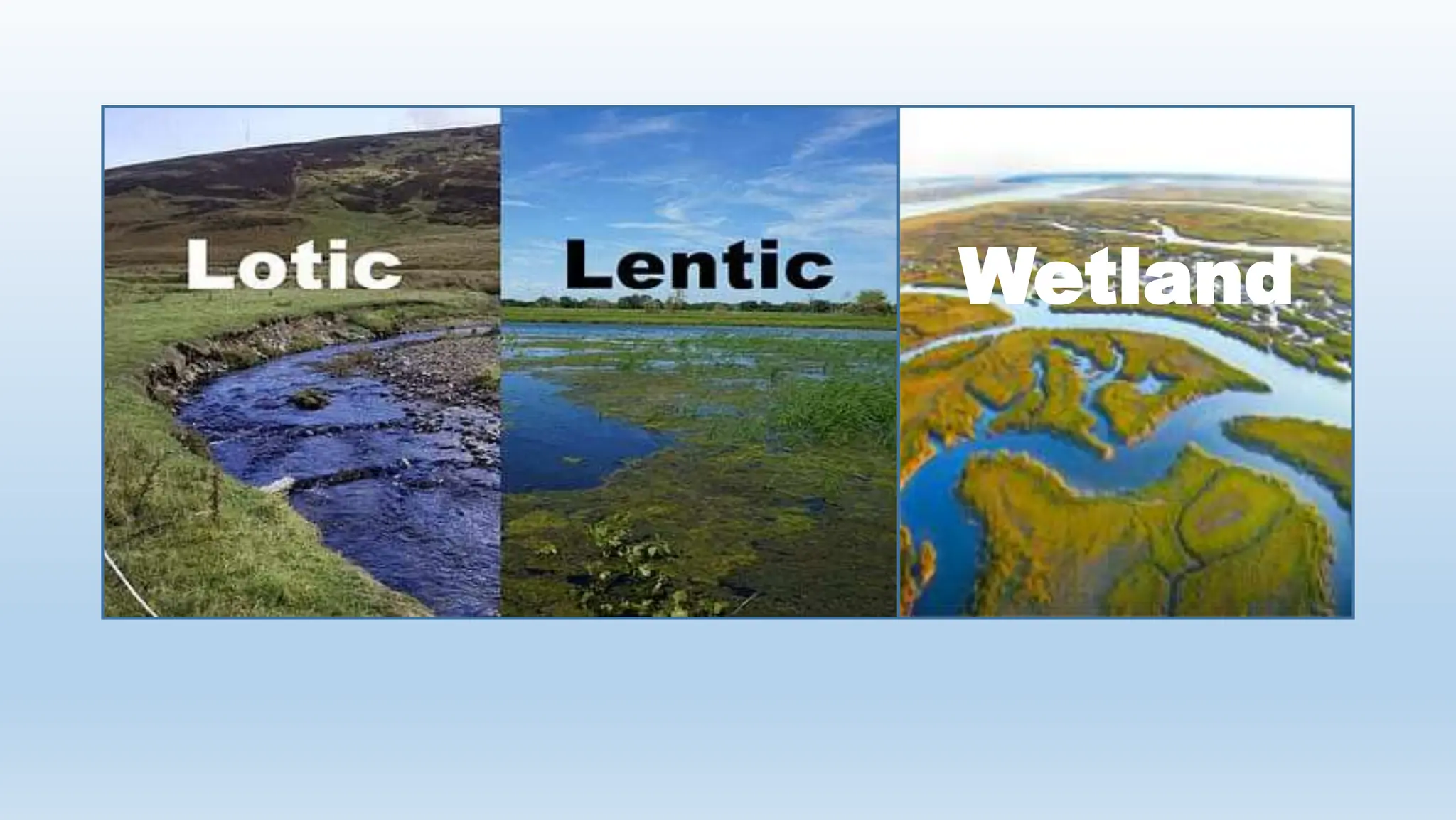
There are three basic types of freshwater
ecosystems:
Lentic: slow moving water, including pools, ponds,
and lakes.
Lotic: faster moving water, for example streams
and rivers .
Wetlands: areas where the soil is saturated or
inundated for at least part of the time.
Wetland
Pollution in aquatic
ecosystems poses a
significant threat to
marine life and human
health.
POLLUTION IN AQUATIC ECOSYSTEM
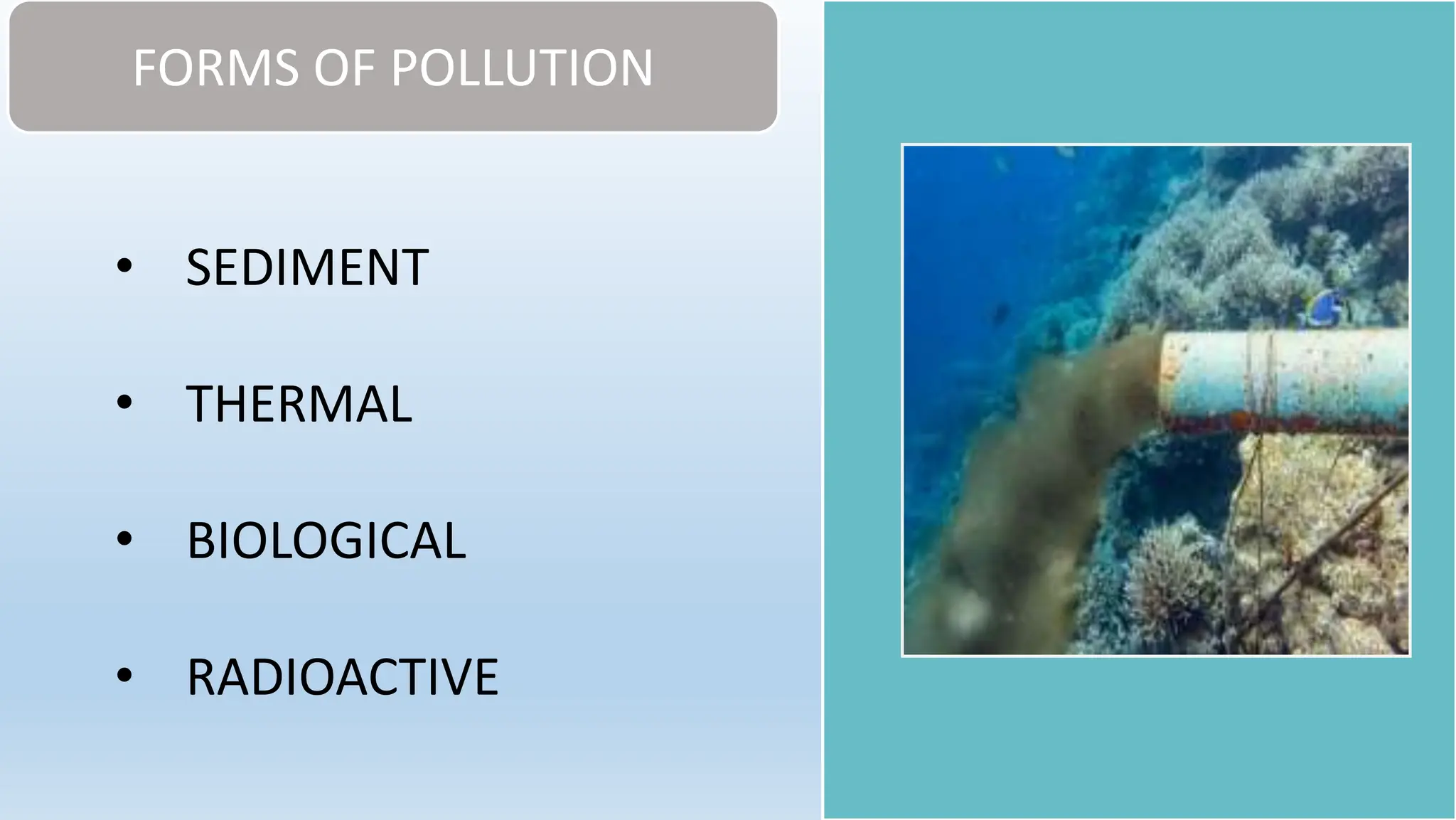
FORMS OF POLLUTION
• CHEMICAL
• PLASTIC
• OIL
• NUTRIENT
• SEDIMENT
• THERMAL
• BIOLOGICAL
• RADIOACTIVE
FORMS OF POLLUTION
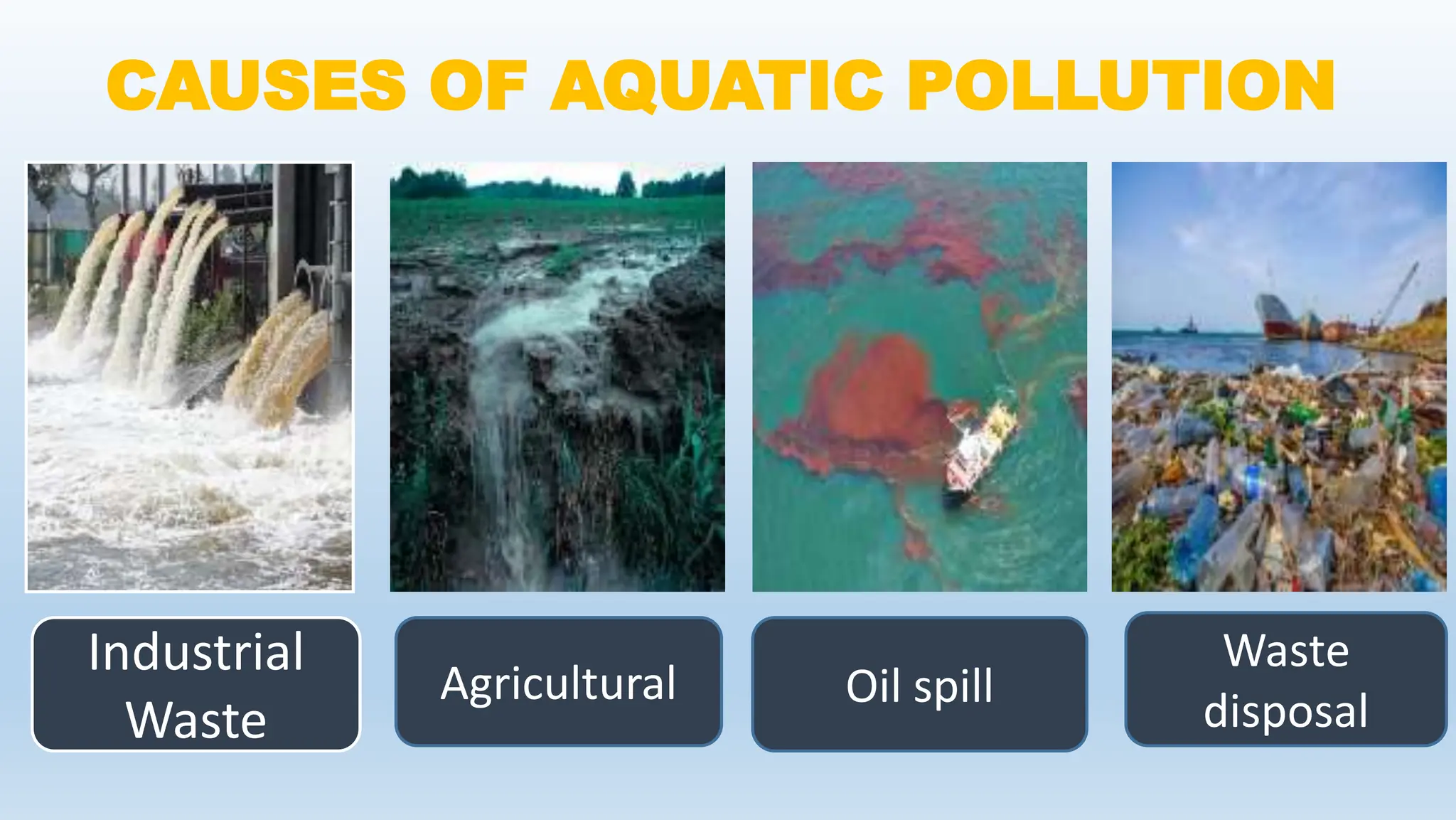
CAUSES OF AQUATIC POLLUTION
Industrial
Waste
Agricultural Oil spill
Waste
disposal
CAUSES OF AQUATIC POLLUTION
Sewage
disposal
Deforestation
and mining
Invasive
spices
Air borne
Impact on Aquatic
Ecosystem
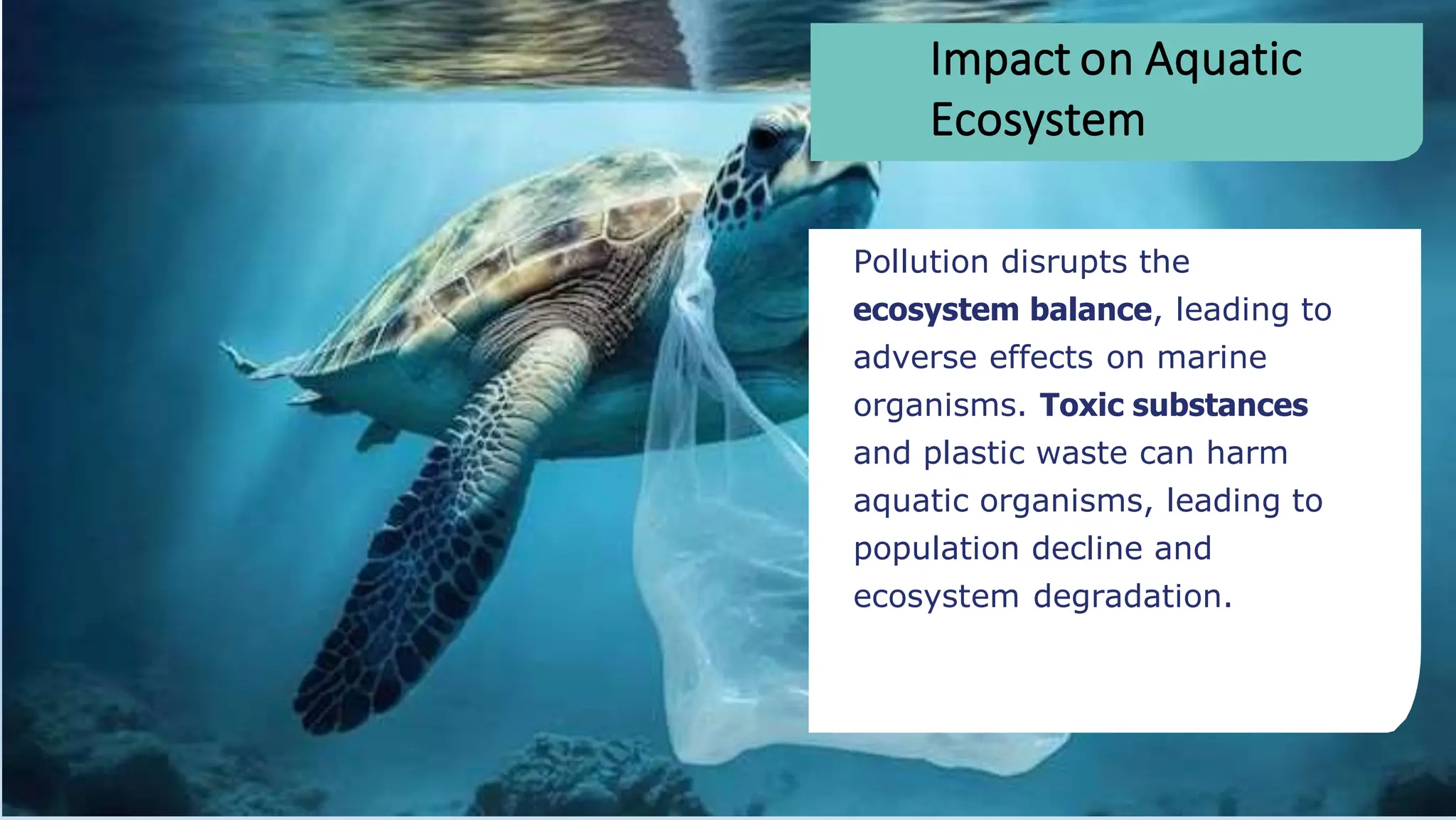
Pollution disrupts the
ecosystem balance, leading to
adverse effects on marine
organisms. Toxic substances
and plastic waste can harm
aquatic organisms, leading to
population decline and
ecosystem degradation.
IMPACT OF POLLUTION
• BIODIVERSITY LOSS
• HABITAT DESTRUCTION
• ALTERED FOOD CHAIN
• OXYGEN DEPLETION
• HEALTH RISK FOR
HUMAN
IMPACT OF POLLUTION
• Economic consequences
• Loss of ecosystem services
• Bioaccumulation of toxins
• Desruption of reproductive
processes
• Global implication
ECONOMIC
IMPLICATIONS
Pollution in aquatic
ecosystems can have
significant economic
implications, including
reduced fisheries, tourism,
and increased healthcare
costs. Implementing
pollution control measures
is essential for sustainable
economic development.
MANAGEMENT OF AQUATIC POLLUTION
Integrated green
infrastructure, such as
vegetated buffer zones and
constructed wetlands, into
urban planning to reduce
stormwater runoff and
improve water quality.
Green
Infastructure
TECHNOLOGICAL
SOLUTIONS
Innovative technological
solutions such as water
treatment plants,
bioremediation, and
advanced monitoring
systems play a crucial
role in combating
pollution and restoring
the health of aquatic
ecosystems.
COMMUNITY
ENGAGEMENT
Engaging local communities in
pollution management and
conservation efforts is vital.
Education and awareness
programs can empower
individuals to take actions that
contribute to the protection of
aquatic environments.
International
Collaboration
Global cooperation and
partnerships are essential for
addressing pollution in aquatic
ecosystems.
International treaties and
collaborative research initiatives
can facilitate the exchange of
knowledge and resources for
effective management.
CASE STUDY
The Great Barrier Reef is
highly vulnerable. In the past
three decades, it has lost half
its coral cover, pollution has
caused deadly starfish
outbreaks, and global
warming has produced
horrific coral bleaching.
Coastal development also
looms as a major threat
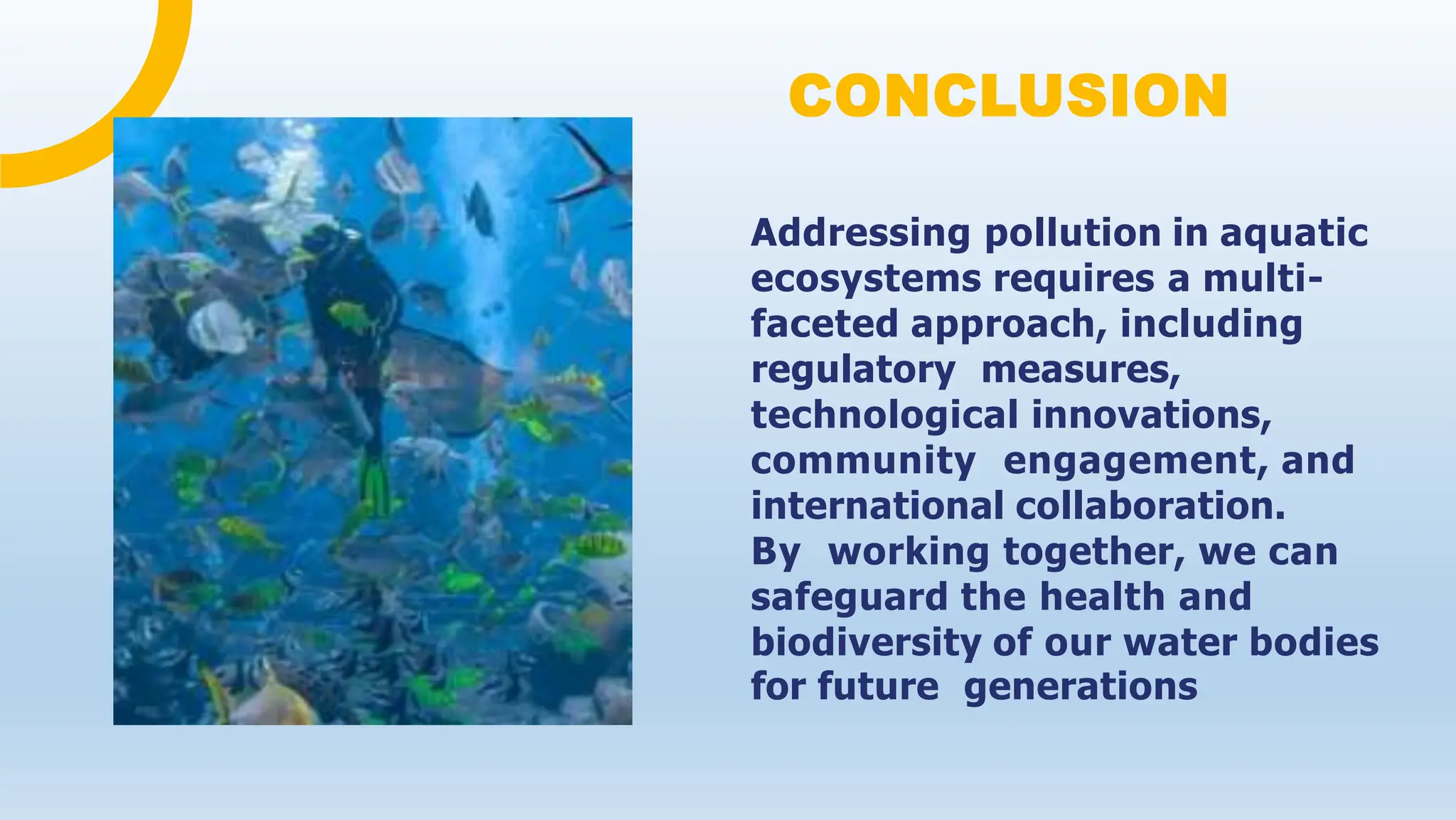
CONCLUSION
Addressing pollution in aquatic
ecosystems requires a multi-
faceted approach, including
regulatory measures,
technological innovations,
community engagement, and
international collaboration.
By working together, we can
safeguard the health and
biodiversity of our water bodies
for future generations
REFERENCE
1. https://www.downtoearth.org.in/
2. https://fvwc.ca/our-work/watershed-planning/.
3. Clark, RB, (2001). Marine Pollution, OUP, (5th Ed)
4. Gray, JS & M Elliott (2009) Ecology of Marine sediments: science
to management, OUP (2nd Ed.).
Pollution in aquatic aquatic ecosystem -problems,planning and management.

Pollution in aquatic aquatic ecosystem -problems,planning and management.

  • 1.
    BIDHAN CHANDRA KRISHI VISWAVIDYALAYA Presentation onPollution in aquatic ecosystem- Problems, planning and management ESDM 359 : Environmental Studies & Disaster Management
  • 2.
    • Group members- •Rahul Karmakar(Hort-18) • Rakhshinda Akhtar(Hort-19) • Saptarshi Nandi(Hort-21) • Shilpa Singha(Hort-23) • Silpa Mandal(Hort-24)
  • 3.
    An aquatic ecosystemis an ecosystem in a water body . Aquatic ecosystems include oceans, lakes, rivers, streams, estuaries, and wetlands. These ecosystems are very fragile and can be easily disturbed by pollution. INTRODUCTION
  • 4.
    TYPES OF AQUATICECOSYSTEM. • 2. Freshwater ecosystems. 1. Marine ecosystems
  • 5.
    There are threebasic types of freshwater ecosystems: Lentic: slow moving water, including pools, ponds, and lakes. Lotic: faster moving water, for example streams and rivers . Wetlands: areas where the soil is saturated or inundated for at least part of the time.
  • 6.
  • 7.
    Pollution in aquatic ecosystemsposes a significant threat to marine life and human health. POLLUTION IN AQUATIC ECOSYSTEM
  • 8.
    FORMS OF POLLUTION •CHEMICAL • PLASTIC • OIL • NUTRIENT
  • 9.
    • SEDIMENT • THERMAL •BIOLOGICAL • RADIOACTIVE FORMS OF POLLUTION
  • 11.
    CAUSES OF AQUATICPOLLUTION Industrial Waste Agricultural Oil spill Waste disposal
  • 12.
    CAUSES OF AQUATICPOLLUTION Sewage disposal Deforestation and mining Invasive spices Air borne
  • 13.
    Impact on Aquatic Ecosystem Pollutiondisrupts the ecosystem balance, leading to adverse effects on marine organisms. Toxic substances and plastic waste can harm aquatic organisms, leading to population decline and ecosystem degradation.
  • 14.
    IMPACT OF POLLUTION •BIODIVERSITY LOSS • HABITAT DESTRUCTION • ALTERED FOOD CHAIN • OXYGEN DEPLETION • HEALTH RISK FOR HUMAN
  • 15.
    IMPACT OF POLLUTION •Economic consequences • Loss of ecosystem services • Bioaccumulation of toxins • Desruption of reproductive processes • Global implication
  • 16.
    ECONOMIC IMPLICATIONS Pollution in aquatic ecosystemscan have significant economic implications, including reduced fisheries, tourism, and increased healthcare costs. Implementing pollution control measures is essential for sustainable economic development.
  • 17.
    MANAGEMENT OF AQUATICPOLLUTION Integrated green infrastructure, such as vegetated buffer zones and constructed wetlands, into urban planning to reduce stormwater runoff and improve water quality. Green Infastructure
  • 18.
    TECHNOLOGICAL SOLUTIONS Innovative technological solutions suchas water treatment plants, bioremediation, and advanced monitoring systems play a crucial role in combating pollution and restoring the health of aquatic ecosystems.
  • 19.
    COMMUNITY ENGAGEMENT Engaging local communitiesin pollution management and conservation efforts is vital. Education and awareness programs can empower individuals to take actions that contribute to the protection of aquatic environments.
  • 21.
    International Collaboration Global cooperation and partnershipsare essential for addressing pollution in aquatic ecosystems. International treaties and collaborative research initiatives can facilitate the exchange of knowledge and resources for effective management.
  • 22.
    CASE STUDY The GreatBarrier Reef is highly vulnerable. In the past three decades, it has lost half its coral cover, pollution has caused deadly starfish outbreaks, and global warming has produced horrific coral bleaching. Coastal development also looms as a major threat
  • 23.
    CONCLUSION Addressing pollution inaquatic ecosystems requires a multi- faceted approach, including regulatory measures, technological innovations, community engagement, and international collaboration. By working together, we can safeguard the health and biodiversity of our water bodies for future generations
  • 24.
    REFERENCE 1. https://www.downtoearth.org.in/ 2. https://fvwc.ca/our-work/watershed-planning/. 3.Clark, RB, (2001). Marine Pollution, OUP, (5th Ed) 4. Gray, JS & M Elliott (2009) Ecology of Marine sediments: science to management, OUP (2nd Ed.).