(The contamination)
…the presence of a
minor and unwanted
constituent
(contaminant) in a
material, in a
physical body, in the
natural
environment, at a
workplace, etc.
(The contamination)
…one that contains no harmful agents in it, which may affect
other means keeping its cycle.
• Air contamination on a small scale has always been with us.
According to a 1983 (nineteen eighty three) article in Science
magazine: soot found on the roof of prehistoric caves
provides ample evidence of high levels of pollution that was
associated with inadequate ventilation of open fires.
• Pollution became a popular issue after World War II, due to
radioactive fallout from atomic warfare and testing. Then a
non-nuclear event, The Great Smog of 1952 in London, killed
at least 4000 (four thousand) people. This prompted some of
the first major modern environmental legislation, The Clean
Air Act of 1956.
=
The Pollution is a big
problem in the World.
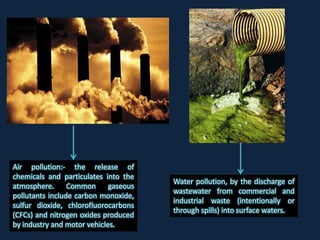
Air pollution:- the release of
chemicals and particulates into the
atmosphere. Common gaseous
pollutants include carbon monoxide,
sulfur dioxide, chlorofluorocarbons
(CFCs) and nitrogen oxides produced
by industry and motor vehicles.
Water pollution, by the discharge of
wastewater from commercial and
industrial waste (intentionally or
through spills) into surface waters.
Soil contamination occurs when
chemicals are released by spill or
underground leakage. Among the
most significant soil contaminants
are hydrocarbons, heavy metals,
MTBE, herbicides, pesticides and
chlorinated hydrocarbons.
Warbage pollution: Large amounts of
waste and garbage are an ever-
increasing problem and is caused by
the large crowds of people in
industrialized cities or are in the
process of urbanization.
Space pollution:- This junk orbiting
Earth is made up of remnants of old
rockets and satellites, debris and
small particles artificial explosions.
Radioactive Pollution:- Activities
result in atomic physics from the
twentieth century, can be the result
of serious damage to nuclear plants
or nuclear weapons research, also
for the manufacture and use
radioactive materials.
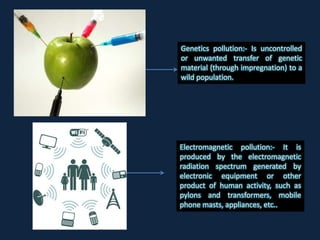
Electromagnetic pollution:- It is
produced by the electromagnetic
radiation spectrum generated by
electronic equipment or other
product of human activity, such as
pylons and transformers, mobile
phone masts, appliances, etc..
Genetics pollution:- Is uncontrolled
or unwanted transfer of genetic
material (through impregnation) to a
wild population.
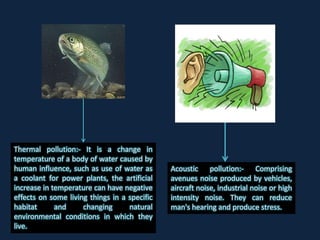
Thermal pollution:- It is a change in
temperature of a body of water caused by
human influence, such as use of water as
a coolant for power plants, the artificial
increase in temperature can have negative
effects on some living things in a specific
habitat and changing natural
environmental conditions in which they
live.
Acoustic pollution:- Comprising
avenues noise produced by vehicles,
aircraft noise, industrial noise or high
intensity noise. They can reduce
man's hearing and produce stress.
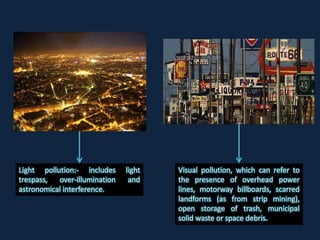
Light pollution:- includes light
trespass, over-illumination and
astronomical interference.
Visual pollution, which can refer to
the presence of overhead power
lines, motorway billboards, scarred
landforms (as from strip mining),
open storage of trash, municipal
solid waste or space debris.
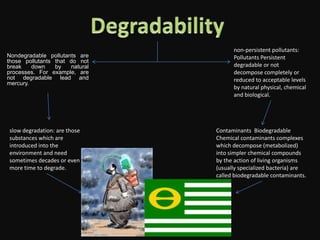
Nondegradable pollutants are
those pollutants that do not
break down by natural
processes. For example, are
not degradable lead and
mercury.
slow degradation: are those
substances which are
introduced into the
environment and need
sometimes decades or even
more time to degrade.
Contaminants Biodegradable
Chemical contaminants complexes
which decompose (metabolized)
into simpler chemical compounds
by the action of living organisms
(usually specialized bacteria) are
called biodegradable contaminants.
non-persistent pollutants:
Pollutants Persistent
degradable or not
decompose completely or
reduced to acceptable levels
by natural physical, chemical
and biological.
Is a protocol to the United Nations
Framework Convention on Climate
Change (UNFCCC or FCCC) that set
binding obligations on the
industrialised countries to reduce
their emissions of greenhouse gases.
The UNFCCC is an international
environmental treaty with the goal of
achieving the "stabilisation of
greenhouse gas concentrations in the
atmosphere at a level that would
prevent dangerous anthropogenic
interference with the climate
system."
Pollution
Pollution
Pollution
Pollution

Pollution

  • 1.
  • 2.
    …the presence ofa minor and unwanted constituent (contaminant) in a material, in a physical body, in the natural environment, at a workplace, etc. (The contamination)
  • 3.
    …one that containsno harmful agents in it, which may affect other means keeping its cycle.
  • 4.
    • Air contaminationon a small scale has always been with us. According to a 1983 (nineteen eighty three) article in Science magazine: soot found on the roof of prehistoric caves provides ample evidence of high levels of pollution that was associated with inadequate ventilation of open fires.
  • 5.
    • Pollution becamea popular issue after World War II, due to radioactive fallout from atomic warfare and testing. Then a non-nuclear event, The Great Smog of 1952 in London, killed at least 4000 (four thousand) people. This prompted some of the first major modern environmental legislation, The Clean Air Act of 1956.
  • 6.
    = The Pollution isa big problem in the World.
  • 7.
    Air pollution:- therelease of chemicals and particulates into the atmosphere. Common gaseous pollutants include carbon monoxide, sulfur dioxide, chlorofluorocarbons (CFCs) and nitrogen oxides produced by industry and motor vehicles. Water pollution, by the discharge of wastewater from commercial and industrial waste (intentionally or through spills) into surface waters.
  • 9.
    Soil contamination occurswhen chemicals are released by spill or underground leakage. Among the most significant soil contaminants are hydrocarbons, heavy metals, MTBE, herbicides, pesticides and chlorinated hydrocarbons. Warbage pollution: Large amounts of waste and garbage are an ever- increasing problem and is caused by the large crowds of people in industrialized cities or are in the process of urbanization.
  • 10.
    Space pollution:- Thisjunk orbiting Earth is made up of remnants of old rockets and satellites, debris and small particles artificial explosions. Radioactive Pollution:- Activities result in atomic physics from the twentieth century, can be the result of serious damage to nuclear plants or nuclear weapons research, also for the manufacture and use radioactive materials.
  • 11.
    Electromagnetic pollution:- Itis produced by the electromagnetic radiation spectrum generated by electronic equipment or other product of human activity, such as pylons and transformers, mobile phone masts, appliances, etc.. Genetics pollution:- Is uncontrolled or unwanted transfer of genetic material (through impregnation) to a wild population.
  • 12.
    Thermal pollution:- Itis a change in temperature of a body of water caused by human influence, such as use of water as a coolant for power plants, the artificial increase in temperature can have negative effects on some living things in a specific habitat and changing natural environmental conditions in which they live. Acoustic pollution:- Comprising avenues noise produced by vehicles, aircraft noise, industrial noise or high intensity noise. They can reduce man's hearing and produce stress.
  • 13.
    Light pollution:- includeslight trespass, over-illumination and astronomical interference. Visual pollution, which can refer to the presence of overhead power lines, motorway billboards, scarred landforms (as from strip mining), open storage of trash, municipal solid waste or space debris.
  • 14.
    Nondegradable pollutants are thosepollutants that do not break down by natural processes. For example, are not degradable lead and mercury. slow degradation: are those substances which are introduced into the environment and need sometimes decades or even more time to degrade. Contaminants Biodegradable Chemical contaminants complexes which decompose (metabolized) into simpler chemical compounds by the action of living organisms (usually specialized bacteria) are called biodegradable contaminants. non-persistent pollutants: Pollutants Persistent degradable or not decompose completely or reduced to acceptable levels by natural physical, chemical and biological.
  • 15.
    Is a protocolto the United Nations Framework Convention on Climate Change (UNFCCC or FCCC) that set binding obligations on the industrialised countries to reduce their emissions of greenhouse gases. The UNFCCC is an international environmental treaty with the goal of achieving the "stabilisation of greenhouse gas concentrations in the atmosphere at a level that would prevent dangerous anthropogenic interference with the climate system."