Looking Out & Ahead
SECTION SLIDES
Introduction: Latin
American Media
2-10
Social Media Marketing 11-20
Multimedia Journalism 21-25
Recycled Content 26-29
Visual Enhancement 30-39
Research Process and QuestionsResearch Process and Questions
GoalsGoals
•IncreaseIncrease online loyalty & subscriptionsonline loyalty & subscriptions
•EngageEngage younger audiencesyounger audiences
Phase 1Phase 1 – Investigation– Investigation
•How are Latin American newspapersHow are Latin American newspapers
faring in the face of thefaring in the face of the digital boomdigital boom andand
globalglobal economic busteconomic bust??
Phase 2Phase 2 – Innovation– Innovation
•What ideas and strategies canWhat ideas and strategies can PolitikenPolitiken
glean from Hispanic and Francophoneglean from Hispanic and Francophone
newspapers?newspapers?
Latin American Media
Markets
• A Brief Overview
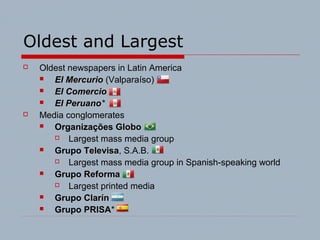
Oldest and Largest
 Oldest newspapers in Latin America
 El MercurioMercurio (Valparaíso)
 El ComercioComercio
 El PeruanoPeruano*
 Media conglomerates
 Organizações GloboGlobo
 Largest mass media group
 Grupo TelevisaTelevisa, S.A.B.
 Largest mass media group in Spanish-speaking world
 Grupo ReformaReforma
 Largest printed media
 Grupo ClarínClarín
 Grupo PRISAPRISA*
Latin America Newspaper
Landscape: The Outlook
GROWTHGROWTH
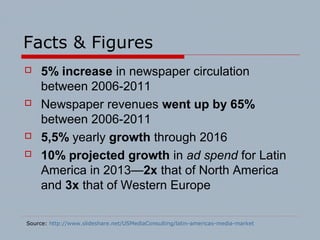
Facts & Figures
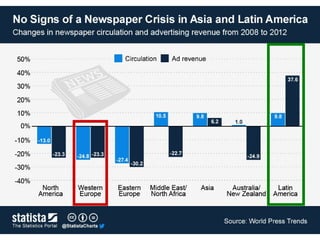
 5% increase in newspaper circulation
between 2006-2011
 Newspaper revenues went up by 65%
between 2006-2011
 5,5% yearly growth through 2016
 10% projected growth in ad spend for Latin
America in 2013—2x that of North America
and 3x that of Western Europe
Source: http://www.slideshare.net/USMediaConsulting/latin-americas-media-market
Why so much growth?
 National economies relatively spared from
global economic crisis
 Middle class (Class C) boom
 Internet has not reached its tipping point;
TV and Radio still dominate
 Increasing digital literacy and responsive
internet advertising behavior
Mobile and Tablet Usage
 Mobile penetration is at 105% and will reach 130%
by 2015
 Mobile market will grow by 7% in 2013 to reach 742
million subscriptions
 Mobile commerce will grow by 35% in Latin America
through 2015
 Smartphones will account for 46% of mobile phone
sales in 2013
 Tablet use growing, specifically in Brazil, Chile,
Argentina, Mexico, and Peru
Social Media
 95% of LatAm internet users on social media
 28% total time spent online in social media
 73% of LatAm regularly read comments about brands
on social media
 62% say these comments influence their purchase
decisions and 58,9% of LatAms go on social media to
find out product information
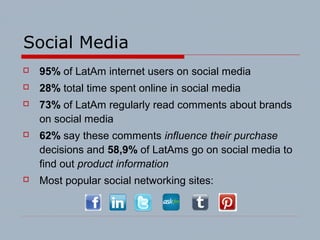
 Most popular social networking sites:
Principal Characteristics of the Latin
American Consumer in 2020
 Discerning and demanding
 Emotionally-based decisions
 Value, convenience, and time-saving/efficiency
(not just cost)
 Healthier living and sustainability
 Social media and social networks
 Companies will have to narrow their consumer
targets and be attentive to emerging consumer
trends in order to offer more tailored products.
Social Media
• Redefining relationships
• Beyond Facebook and Twitter
Redefining Relationships
 Company to Reader
 Clearer focus
 Humanizing the brand
 Journalist/Columnist to Reader
 Why cultivate this?
 Personal brand value
 Readers will look to a particular voice and the
paper that prints it
Company to Reader
 Facebook and Twitter used primarily as a
glorified RSS feed
 Just 2%2% of tweets analyzed were information-
gathering in nature
 Seeking views or first-hand accounts from readers
 Renewed focus: Humanizing the brand
 See what publishing houses are doing
 Approach: work off-book (without a script)
“Build communities first and then money will follow” - Forbes
Journalist to Reader: Why?
 ”Social can’t belong to one person. It needs to be part of
everyone’s job” – Jennifer Preston (New York Times)
 ”News has become more personal…People are
interested in the opinions, the beliefs, the revelations of
a certain journalist they know and trust, much more than
an anonymous person who writes for a large publication”
– Alain van der Horst (De Nieuwe Pers on journalist
paywall)
 General trend for journalists to have a greater presence
as individuals – see NYTimes
Facebook Case Study: Diario Clarín
 Currently at 2,887,190 likes & 180,088
talking about this
 Standout features
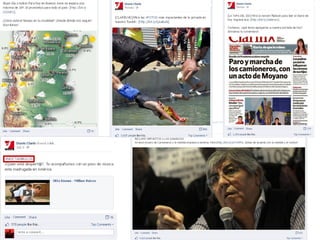
 Photo posts (vs. link posts)
 Daily visual weather report and front page
 #Noctambulos and other hashtags
 Polls
 Cross-platform marketing
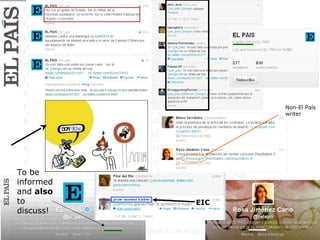
Twitter Case Study: El País
(ES)
 Currently at 2.802.400 followers
 Standout features
 Verified account
 Not automated cross-platform publicizing (e.g. www.dlvr.it)
 Not just headlines, but also key quotes from articles
 #Hashtags still regularly used
 RT or tag journalists/editors and related handles (e.g.
elpais_america)
 Journalists’ (inc. EIC) Twitter profiles state their affiliation with
El País
 Public directory available
 Almost daily image tweets (Front page; Photos)
Non-El País
writer
EIC
To be
informed
and also
to
discuss!
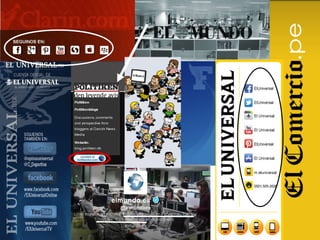
Beyond Facebook and Twitter
 Tumblr
 Clarín.com HD
 Clarin.com Tus Fotos – crowdsourcing photographs
 Pinterest
 El País – daily and historical covers
 El Comercio – diverse usage
 Google +
 ELMUNDO.es – usage similar to Pinterest
 YouTube
 El Universal TV – video journalism platform
Multimedia Journalism
• Video and Photojournalism
More emphasis on video - Why?
 30-second video ad is profitable
 Drives traffic
 35% of mobile audiences are watching
video on their devices
 48% of households with children do too
 Users 18-44 are 3x more likely to watch
video on mobile
 Public hunger for “raw” footage
Who’s doing it?
 The New York Times
 New online video player and new prioritization of video in future
(no paywall)
 The Wall Street Journal
 WorldStream
 Footage captured on smartphones by Dow Jones and WSJ
reporters and editors
 Huffington Post
 HuffPost Live
 Using stories as… jumping-off points for [video]
conversations, commentary, and comedy. These segments
are as long -- or as short -- as they need to be.
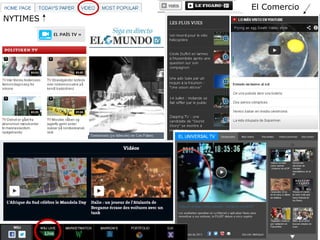
 Regularly updated YouTube account (e.g. El Universal TV)
 Priority placement in various news sites such as Le Figaro ,El País,
and El Comercio
NYTIMES
Le Monde
El Comercio
Photojournalism – Why invest?
 No language barrier – increased exposure
 Can be hard news and social (e.g. Politiken.dk and
Tumblr)
 Mobile- and tablet-friendly (esp. hi-resolution)
 Politiken has award-winning photo team
 Models
 Original content: The Guardian and T Magazine (The New
York Times)
 Not original content – Clarin.comHD and
L’actualité en photos (Le Figaro)
Recycled Content
 eBooks
eBooks
 Archive articles repackaged and centered around a
topic, theme, or event and sell it.
 Newspapers should capitalise on their archives
 Why?
 Cheap and relatively quick to produce
 Great for time-sensitive topics
 Gift or subscription bonus
 Can be text- or photo-based
 Greater brand exposure
Who’s doing it?
 The New York Times
 E-Singles
 Original short e-books featuring narratives in areas in
which The Times has reporting expertise including
culture, sports, business, science and health. These e-
books contain material that has not previously been
published in The Times and are meant to be read in one
sitting.
 The Guardian
 Guardian Shorts
 The Boston Globe (link to eBooks blocked by paywall)
Potential Topics
 Collection highlights
 A famous Politiken columnist
 Politiken photographer
 Royal Family
 Historical retrospectives (esp. war)
 Iraq
 World War II
 Famous trials
 Political cartoons
Information Architecture
• Whitespace
• Ergonomics
• Ad Space
Why?
 A visitor gauges a website’s professional level
based on how it looks at a glance
 Any digital subscription price must be justified
by a website that is:
 Appealing
 Easily navigable
 Content-loaded
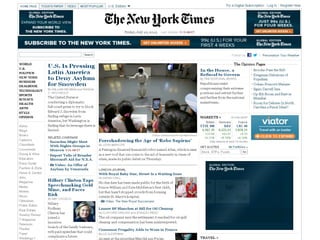
Whitespace
 Readers want nicely presented information, not
bursting with stuff
 Consistent identity: Would I allow that in print?
 Minimalism, reductionism, and cinematic
treatment
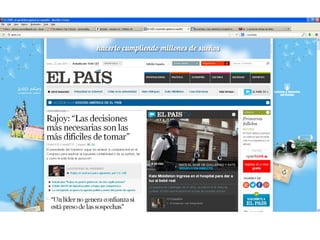
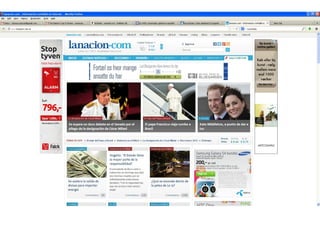
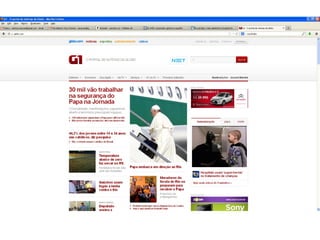
 LatAm models: La Nación, El País, and G1Globo –
winners of Online News Association awards for best
digital journalism
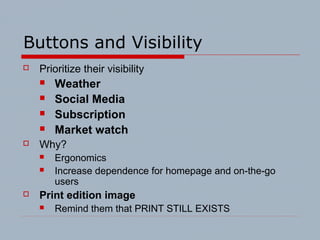
Buttons and Visibility
 Prioritize their visibility
 Weather
 Social Media
 Subscription
 Market watch
 Why?
 Ergonomics
 Increase dependence for homepage and on-the-go
users
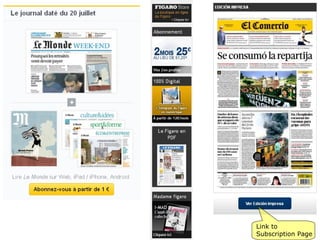
 Print edition image
 Remind them that PRINT STILL EXISTS
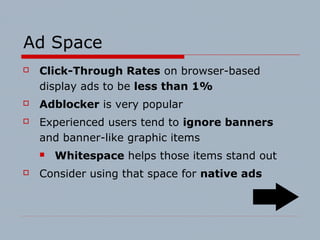
Ad Space
 Click-Through Rates on browser-based
display ads to be less than 1%
 Adblocker is very popular
 Experienced users tend to ignore banners
and banner-like graphic items
 Whitespace helps those items stand out
 Consider using that space for native ads
Link to
Subscription Page
Competitive Benchmark Analysis: Politiken

Competitive Benchmark Analysis: Politiken

  • 1.
    Looking Out &Ahead SECTION SLIDES Introduction: Latin American Media 2-10 Social Media Marketing 11-20 Multimedia Journalism 21-25 Recycled Content 26-29 Visual Enhancement 30-39 Research Process and QuestionsResearch Process and Questions GoalsGoals •IncreaseIncrease online loyalty & subscriptionsonline loyalty & subscriptions •EngageEngage younger audiencesyounger audiences Phase 1Phase 1 – Investigation– Investigation •How are Latin American newspapersHow are Latin American newspapers faring in the face of thefaring in the face of the digital boomdigital boom andand globalglobal economic busteconomic bust?? Phase 2Phase 2 – Innovation– Innovation •What ideas and strategies canWhat ideas and strategies can PolitikenPolitiken glean from Hispanic and Francophoneglean from Hispanic and Francophone newspapers?newspapers?
  • 2.
  • 3.
    Oldest and Largest Oldest newspapers in Latin America  El MercurioMercurio (Valparaíso)  El ComercioComercio  El PeruanoPeruano*  Media conglomerates  Organizações GloboGlobo  Largest mass media group  Grupo TelevisaTelevisa, S.A.B.  Largest mass media group in Spanish-speaking world  Grupo ReformaReforma  Largest printed media  Grupo ClarínClarín  Grupo PRISAPRISA*
  • 4.
    Latin America Newspaper Landscape:The Outlook GROWTHGROWTH
  • 5.
    Facts & Figures 5% increase in newspaper circulation between 2006-2011  Newspaper revenues went up by 65% between 2006-2011  5,5% yearly growth through 2016  10% projected growth in ad spend for Latin America in 2013—2x that of North America and 3x that of Western Europe Source: http://www.slideshare.net/USMediaConsulting/latin-americas-media-market
  • 7.
    Why so muchgrowth?  National economies relatively spared from global economic crisis  Middle class (Class C) boom  Internet has not reached its tipping point; TV and Radio still dominate  Increasing digital literacy and responsive internet advertising behavior
  • 8.
    Mobile and TabletUsage  Mobile penetration is at 105% and will reach 130% by 2015  Mobile market will grow by 7% in 2013 to reach 742 million subscriptions  Mobile commerce will grow by 35% in Latin America through 2015  Smartphones will account for 46% of mobile phone sales in 2013  Tablet use growing, specifically in Brazil, Chile, Argentina, Mexico, and Peru
  • 9.
    Social Media  95%of LatAm internet users on social media  28% total time spent online in social media  73% of LatAm regularly read comments about brands on social media  62% say these comments influence their purchase decisions and 58,9% of LatAms go on social media to find out product information  Most popular social networking sites:
  • 10.
    Principal Characteristics ofthe Latin American Consumer in 2020  Discerning and demanding  Emotionally-based decisions  Value, convenience, and time-saving/efficiency (not just cost)  Healthier living and sustainability  Social media and social networks  Companies will have to narrow their consumer targets and be attentive to emerging consumer trends in order to offer more tailored products.
  • 11.
    Social Media • Redefiningrelationships • Beyond Facebook and Twitter
  • 12.
    Redefining Relationships  Companyto Reader  Clearer focus  Humanizing the brand  Journalist/Columnist to Reader  Why cultivate this?  Personal brand value  Readers will look to a particular voice and the paper that prints it
  • 13.
    Company to Reader Facebook and Twitter used primarily as a glorified RSS feed  Just 2%2% of tweets analyzed were information- gathering in nature  Seeking views or first-hand accounts from readers  Renewed focus: Humanizing the brand  See what publishing houses are doing  Approach: work off-book (without a script) “Build communities first and then money will follow” - Forbes
  • 14.
    Journalist to Reader:Why?  ”Social can’t belong to one person. It needs to be part of everyone’s job” – Jennifer Preston (New York Times)  ”News has become more personal…People are interested in the opinions, the beliefs, the revelations of a certain journalist they know and trust, much more than an anonymous person who writes for a large publication” – Alain van der Horst (De Nieuwe Pers on journalist paywall)  General trend for journalists to have a greater presence as individuals – see NYTimes
  • 15.
    Facebook Case Study:Diario Clarín  Currently at 2,887,190 likes & 180,088 talking about this  Standout features  Photo posts (vs. link posts)  Daily visual weather report and front page  #Noctambulos and other hashtags  Polls  Cross-platform marketing
  • 17.
    Twitter Case Study:El País (ES)  Currently at 2.802.400 followers  Standout features  Verified account  Not automated cross-platform publicizing (e.g. www.dlvr.it)  Not just headlines, but also key quotes from articles  #Hashtags still regularly used  RT or tag journalists/editors and related handles (e.g. elpais_america)  Journalists’ (inc. EIC) Twitter profiles state their affiliation with El País  Public directory available  Almost daily image tweets (Front page; Photos)
  • 18.
  • 20.
    Beyond Facebook andTwitter  Tumblr  Clarín.com HD  Clarin.com Tus Fotos – crowdsourcing photographs  Pinterest  El País – daily and historical covers  El Comercio – diverse usage  Google +  ELMUNDO.es – usage similar to Pinterest  YouTube  El Universal TV – video journalism platform
  • 21.
  • 22.
    More emphasis onvideo - Why?  30-second video ad is profitable  Drives traffic  35% of mobile audiences are watching video on their devices  48% of households with children do too  Users 18-44 are 3x more likely to watch video on mobile  Public hunger for “raw” footage
  • 23.
    Who’s doing it? The New York Times  New online video player and new prioritization of video in future (no paywall)  The Wall Street Journal  WorldStream  Footage captured on smartphones by Dow Jones and WSJ reporters and editors  Huffington Post  HuffPost Live  Using stories as… jumping-off points for [video] conversations, commentary, and comedy. These segments are as long -- or as short -- as they need to be.  Regularly updated YouTube account (e.g. El Universal TV)  Priority placement in various news sites such as Le Figaro ,El País, and El Comercio
  • 24.
  • 25.
    Photojournalism – Whyinvest?  No language barrier – increased exposure  Can be hard news and social (e.g. Politiken.dk and Tumblr)  Mobile- and tablet-friendly (esp. hi-resolution)  Politiken has award-winning photo team  Models  Original content: The Guardian and T Magazine (The New York Times)  Not original content – Clarin.comHD and L’actualité en photos (Le Figaro)
  • 26.
  • 27.
    eBooks  Archive articlesrepackaged and centered around a topic, theme, or event and sell it.  Newspapers should capitalise on their archives  Why?  Cheap and relatively quick to produce  Great for time-sensitive topics  Gift or subscription bonus  Can be text- or photo-based  Greater brand exposure
  • 28.
    Who’s doing it? The New York Times  E-Singles  Original short e-books featuring narratives in areas in which The Times has reporting expertise including culture, sports, business, science and health. These e- books contain material that has not previously been published in The Times and are meant to be read in one sitting.  The Guardian  Guardian Shorts  The Boston Globe (link to eBooks blocked by paywall)
  • 29.
    Potential Topics  Collectionhighlights  A famous Politiken columnist  Politiken photographer  Royal Family  Historical retrospectives (esp. war)  Iraq  World War II  Famous trials  Political cartoons
  • 30.
  • 31.
    Why?  A visitorgauges a website’s professional level based on how it looks at a glance  Any digital subscription price must be justified by a website that is:  Appealing  Easily navigable  Content-loaded
  • 32.
    Whitespace  Readers wantnicely presented information, not bursting with stuff  Consistent identity: Would I allow that in print?  Minimalism, reductionism, and cinematic treatment  LatAm models: La Nación, El País, and G1Globo – winners of Online News Association awards for best digital journalism
  • 33.
    Buttons and Visibility Prioritize their visibility  Weather  Social Media  Subscription  Market watch  Why?  Ergonomics  Increase dependence for homepage and on-the-go users  Print edition image  Remind them that PRINT STILL EXISTS
  • 34.
    Ad Space  Click-ThroughRates on browser-based display ads to be less than 1%  Adblocker is very popular  Experienced users tend to ignore banners and banner-like graphic items  Whitespace helps those items stand out  Consider using that space for native ads
  • 35.

Editor's Notes

  • #4 Chilean Independence – 1818 El Mercurio – 1827 Peruvian Independence – 1821 El Peruano – 1825 (founded by Simón Bolivar)  El Comercio – 1839 Grupo PRISA has some holdings the Americas, specifically Colombia, Chile, Argentina, Mexico, and the United States