Polio Eradication as a Platform for Integration  Filimona Bisrat (MD, MPH), CORE Group Polio Project June 15, 2011 Global Health Council  38 th  Annual International Conference Omni Shoreham Hotel, Washington, DC
CORE Group Ethiopia CORE began polio work in Ethiopia in Nov. 2001 3 programs (malaria., EPI, polio eradication)  Partnering with 9 International & 11 local NGOs  Covering 132 Woredas in 8 Regions & one City Administration Reaching a total population of  11,458,933 CORE Ethiopia Secretariat housed in CCRDA
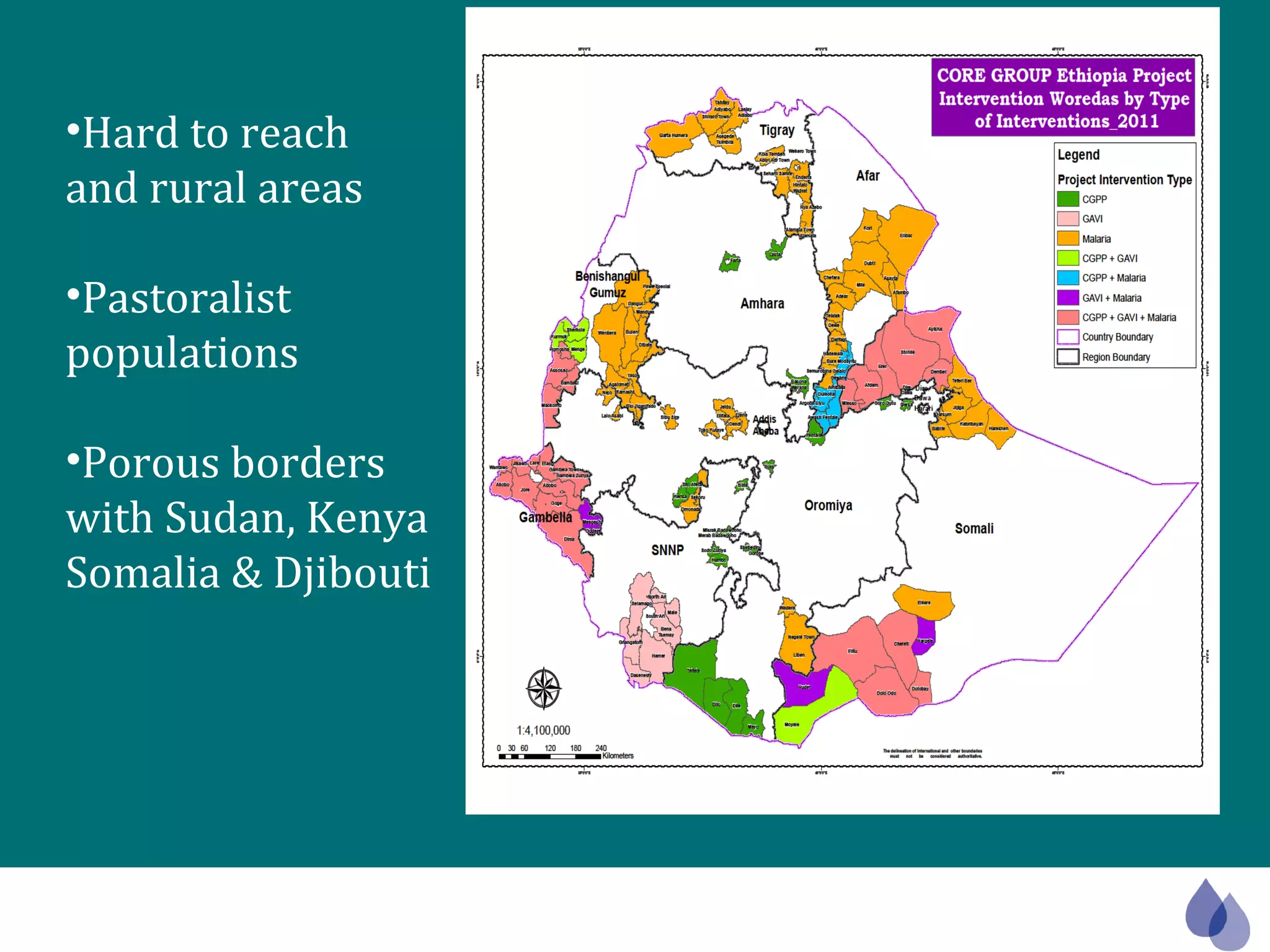
Hard to reach  and rural areas Pastoralist populations  Porous borders with Sudan, Kenya Somalia & Djibouti
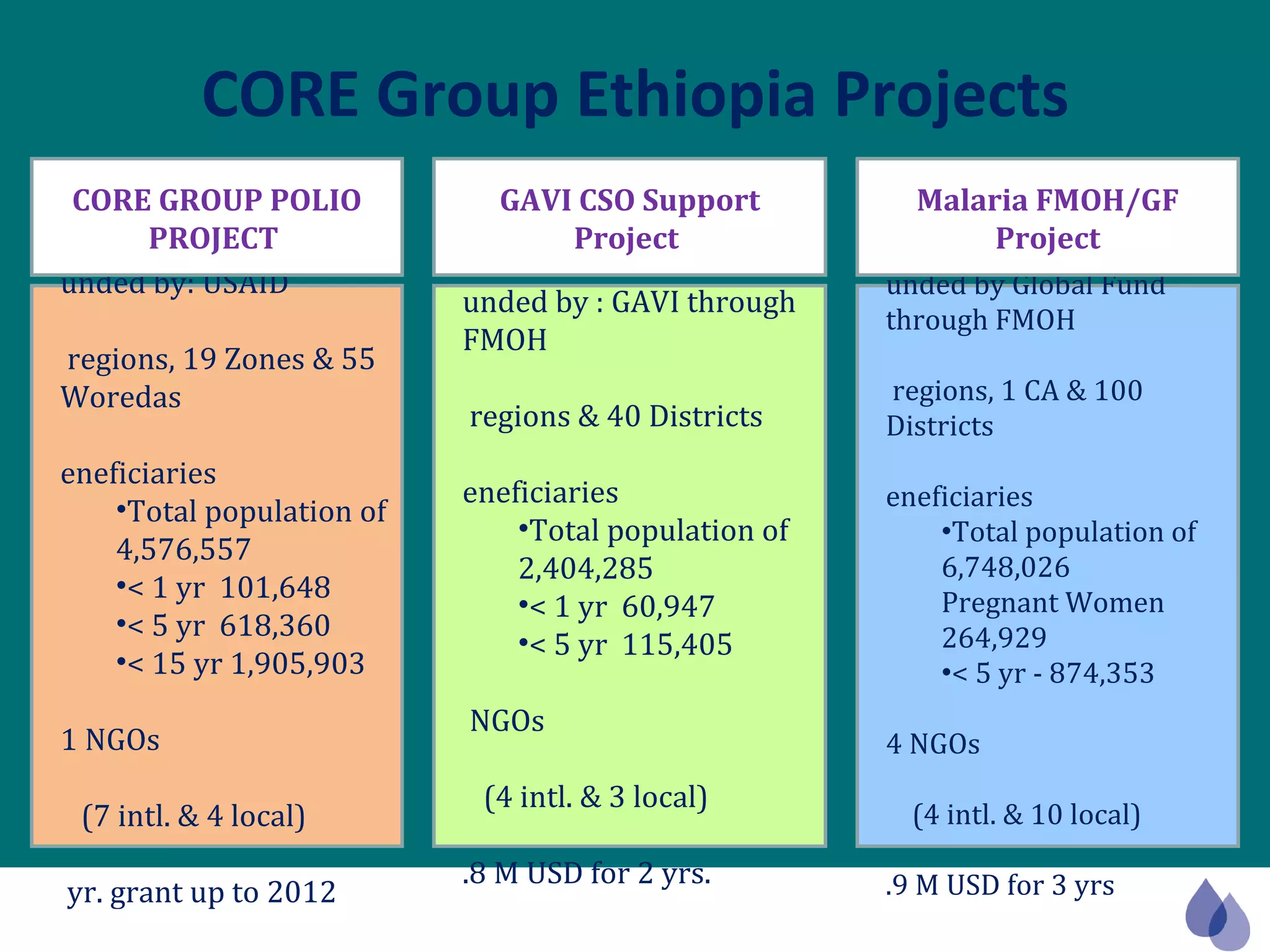
CORE Group Ethiopia Projects Funded by: USAID 7 regions, 19 Zones & 55 Woredas Beneficiaries Total population of 4,576,557  < 1 yr  101,648  < 5 yr  618,360  < 15 yr 1,905,903  11 NGOs  (7 intl. & 4 local) 5 yr. grant up to 2012  Funded by : GAVI through FMOH  4 regions & 40 Districts  Beneficiaries Total population of 2,404,285  < 1 yr  60,947  < 5 yr  115,405  7 NGOs  (4 intl. & 3 local) 1.8 M USD for 2 yrs. Funded by Global Fund through FMOH 6 regions, 1 CA & 100 Districts  Beneficiaries Total population of 6,748,026 Pregnant Women  264,929  < 5 yr - 874,353  14 NGOs  (4 intl. & 10 local) 3.9 M USD for 3 yrs CORE GROUP POLIO PROJECT  GAVI CSO Support Project  Malaria FMOH/GF Project
“ Secretariat Model” as a platform  Integration among PVOs/NGOs between CSO and other national and global stakeholders Opportunity to address other issues through same community level structures Routine immunization Integrated disease surveillance Malaria
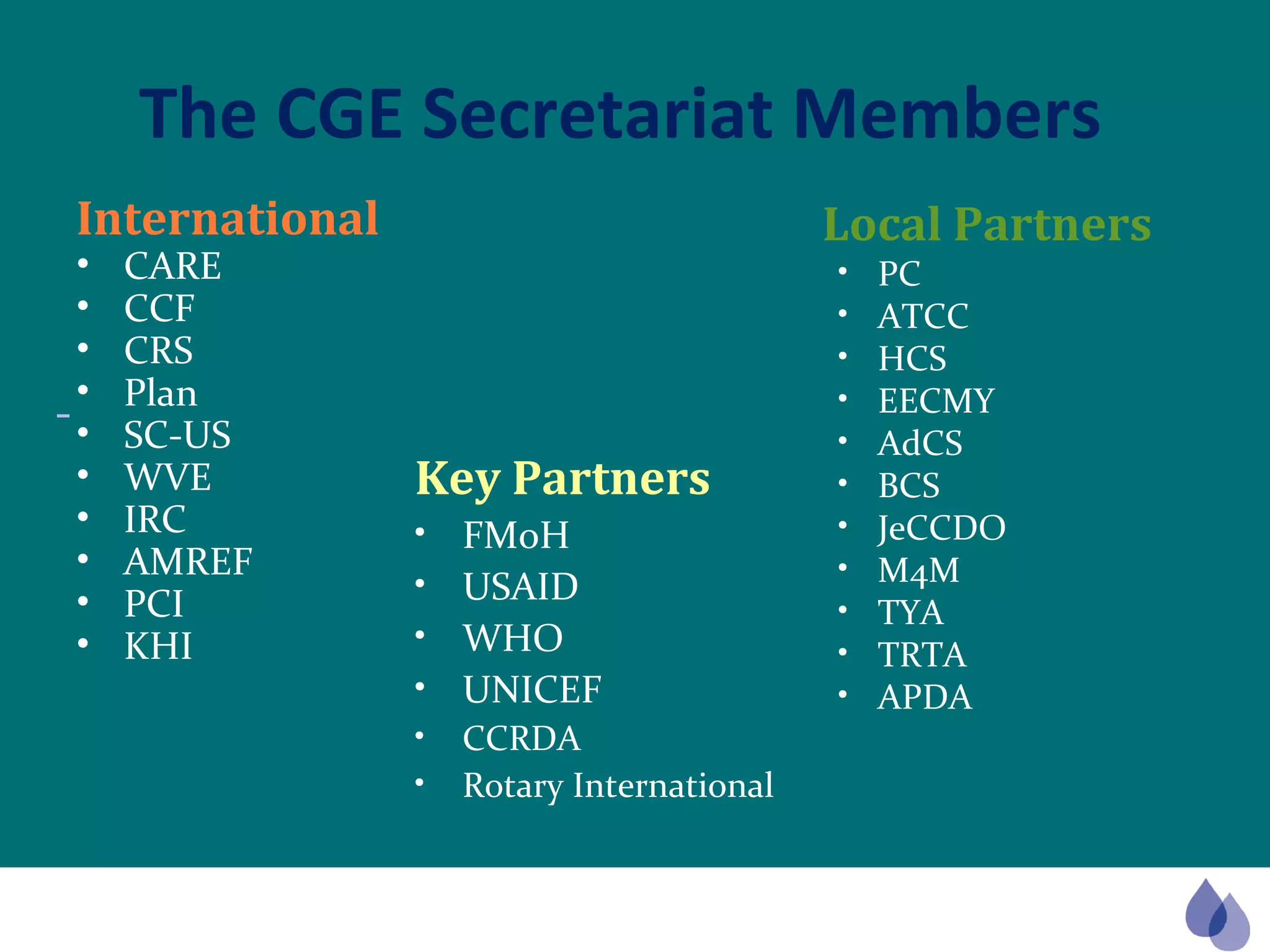
  The CGE Secretariat Members International CARE CCF CRS Plan  SC-US WVE IRC AMREF PCI KHI Key Partners FMoH USAID WHO UNICEF CCRDA Rotary International Local Partners PC ATCC HCS  EECMY AdCS BCS JeCCDO M4M TYA TRTA APDA
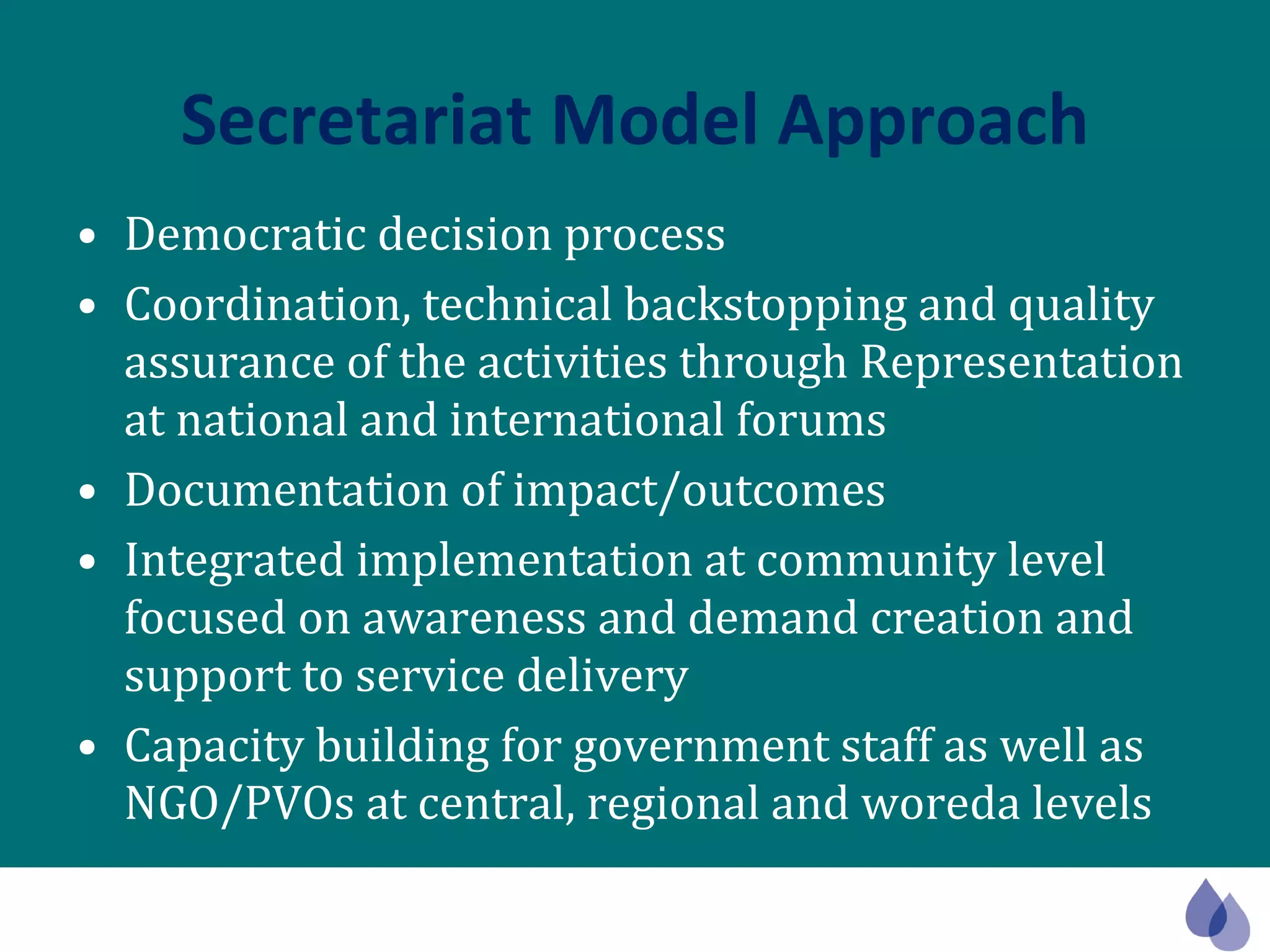
Secretariat Model Approach Democratic decision process Coordination, technical backstopping and quality assurance of the activities through Representation at national and international forums Documentation of impact/outcomes Integrated implementation at community level focused on awareness and demand creation and support to service delivery Capacity building for government staff as well as NGO/PVOs at central, regional and woreda levels
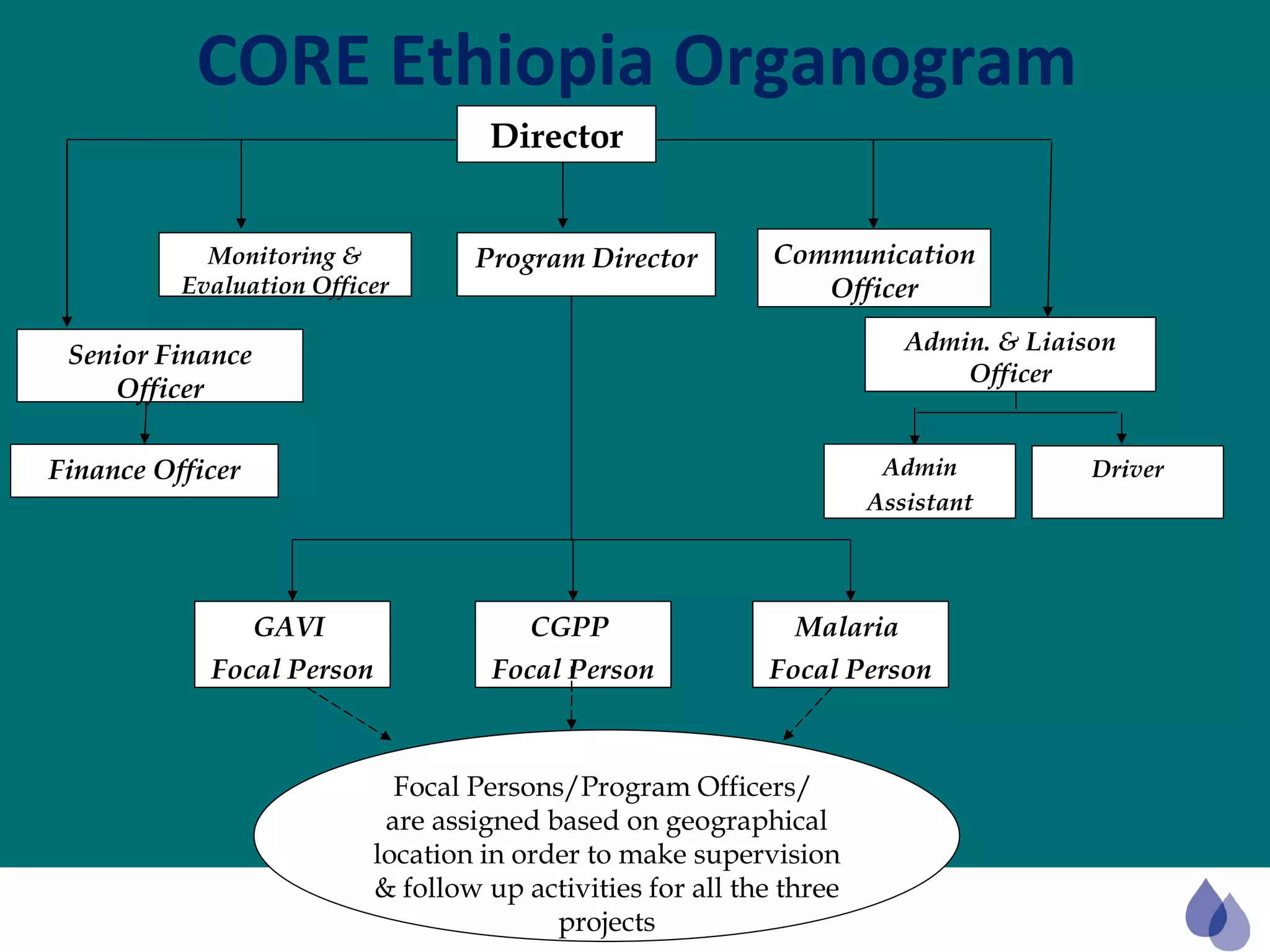
CORE Ethiopia Organogram  Director Communication Officer Monitoring & Evaluation Officer Program Director CGPP  Focal Person GAVI  Focal Person Malaria  Focal Person Senior Finance Officer Finance Officer Admin. & Liaison Officer Admin Assistant Driver Focal Persons/Program Officers/  are assigned based on geographical location in order to make supervision & follow up activities for all the three projects
Achievements
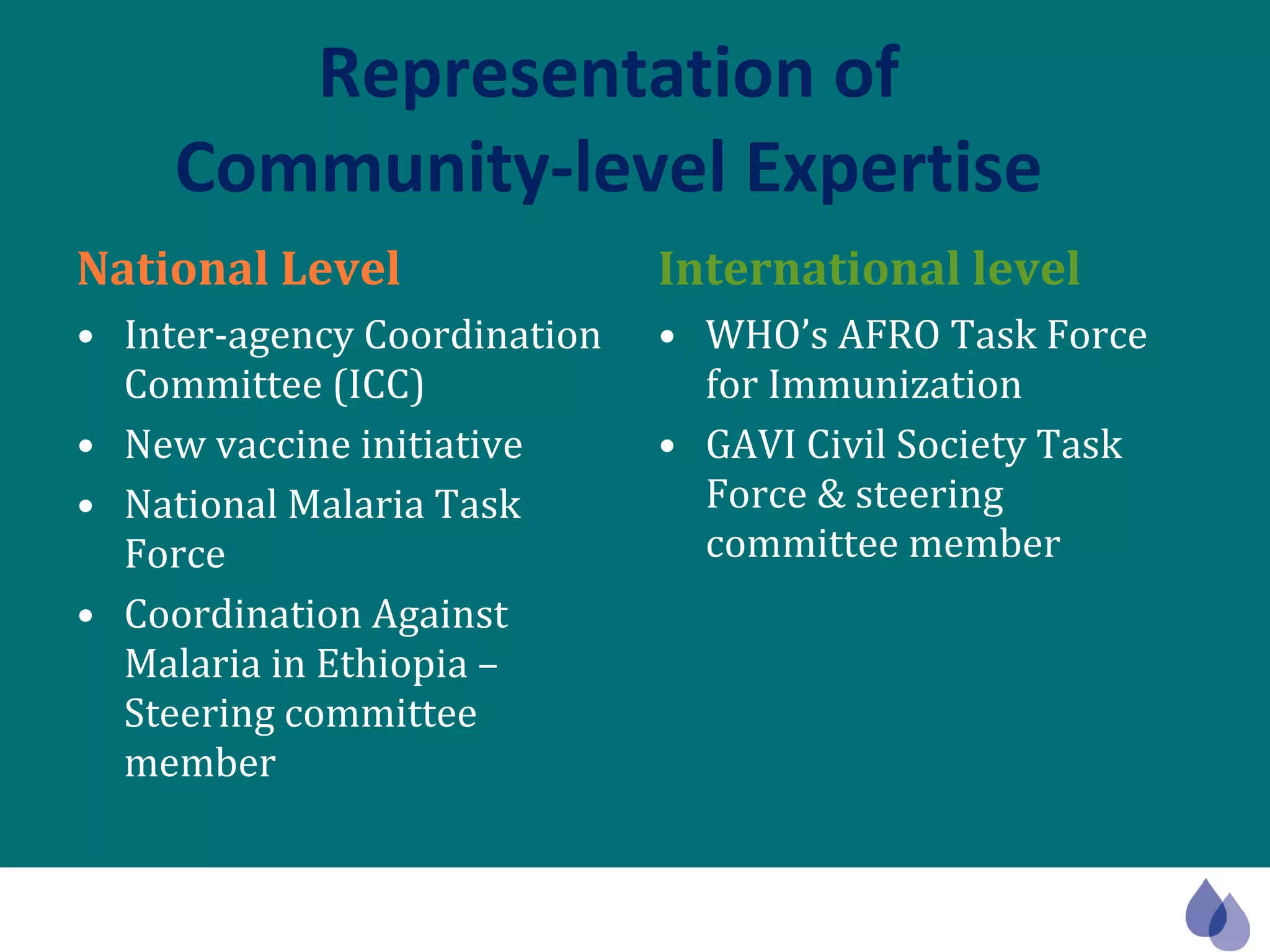
Representation of Community-level Expertise National Level Inter-agency Coordination Committee (ICC) New vaccine initiative National Malaria Task Force Coordination Against Malaria in Ethiopia – Steering committee member International level WHO’s AFRO Task Force for Immunization GAVI Civil Society Task Force & steering committee member
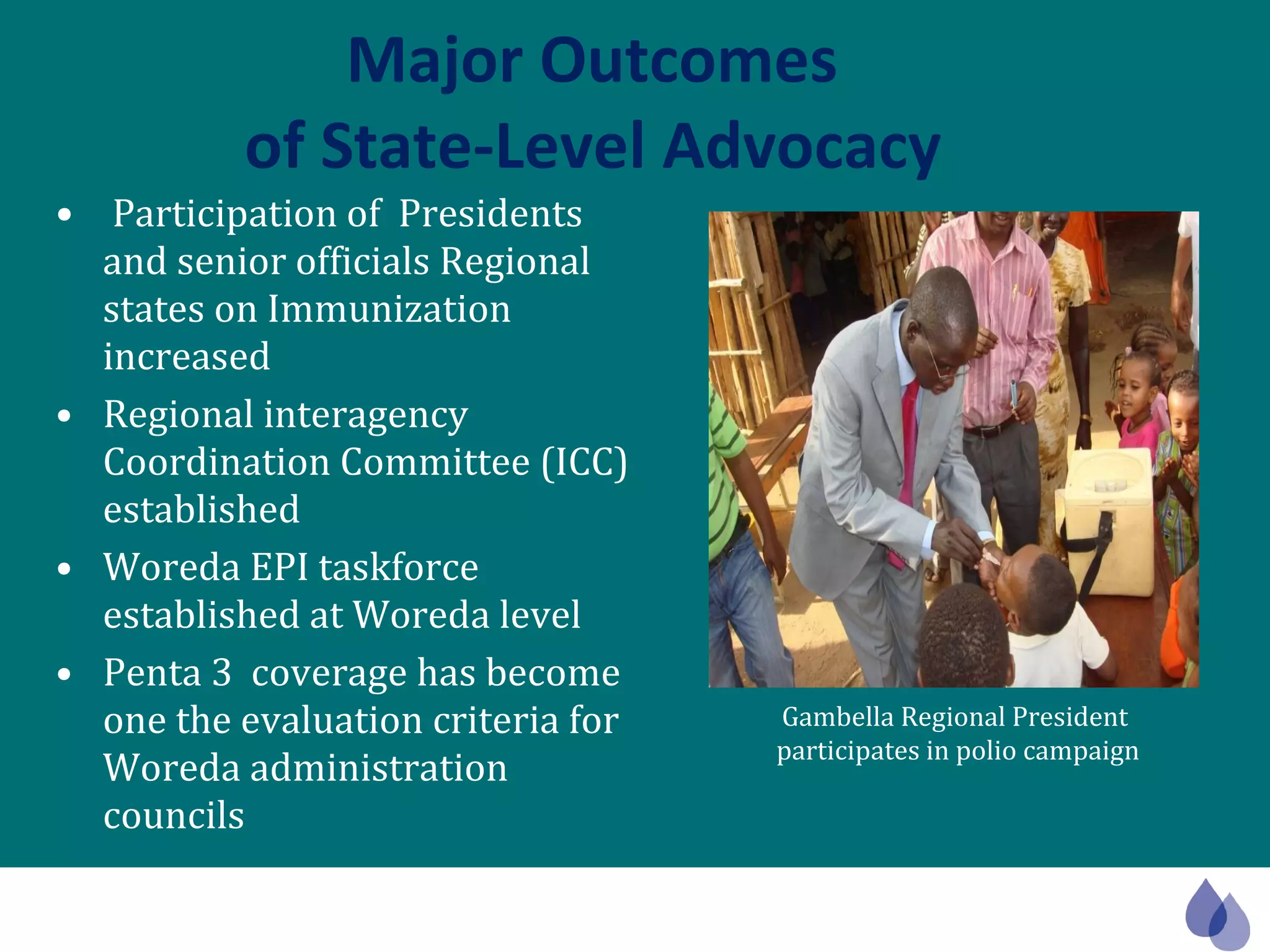
Major Outcomes  of State-Level Advocacy Participation of  Presidents and senior officials Regional states on Immunization increased Regional interagency Coordination Committee (ICC) established  Woreda EPI taskforce established at Woreda level Penta 3  coverage has become one the evaluation criteria for Woreda administration councils Gambella Regional President  participates in polio campaign
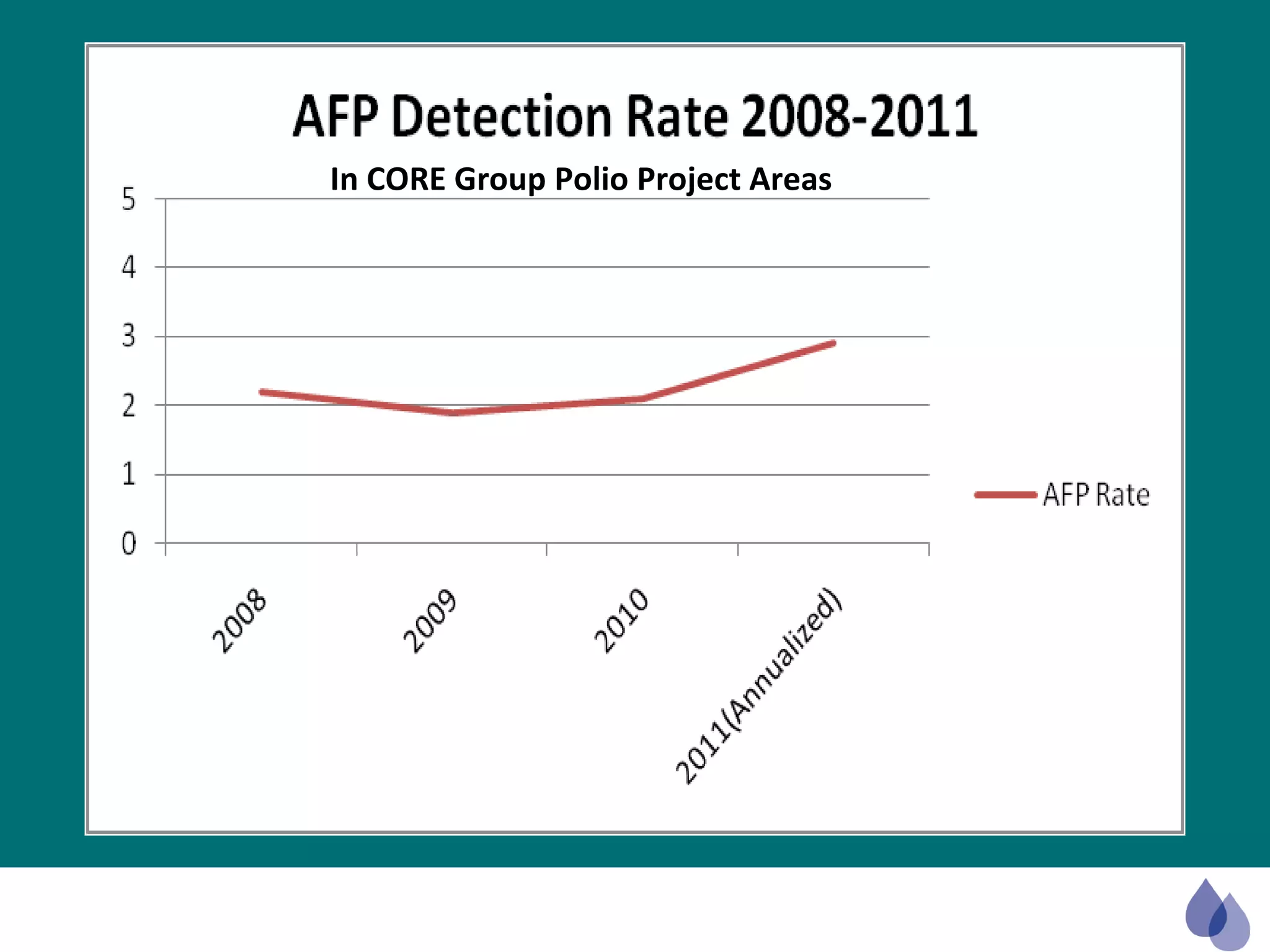
In CORE Group Polio Project Areas
Routine Immunization  Baseline & Midterm in CGPP Areas CARD RETENTION *   Represents statistically significant difference (at alpha = 5%) between baseline and midterm figures.
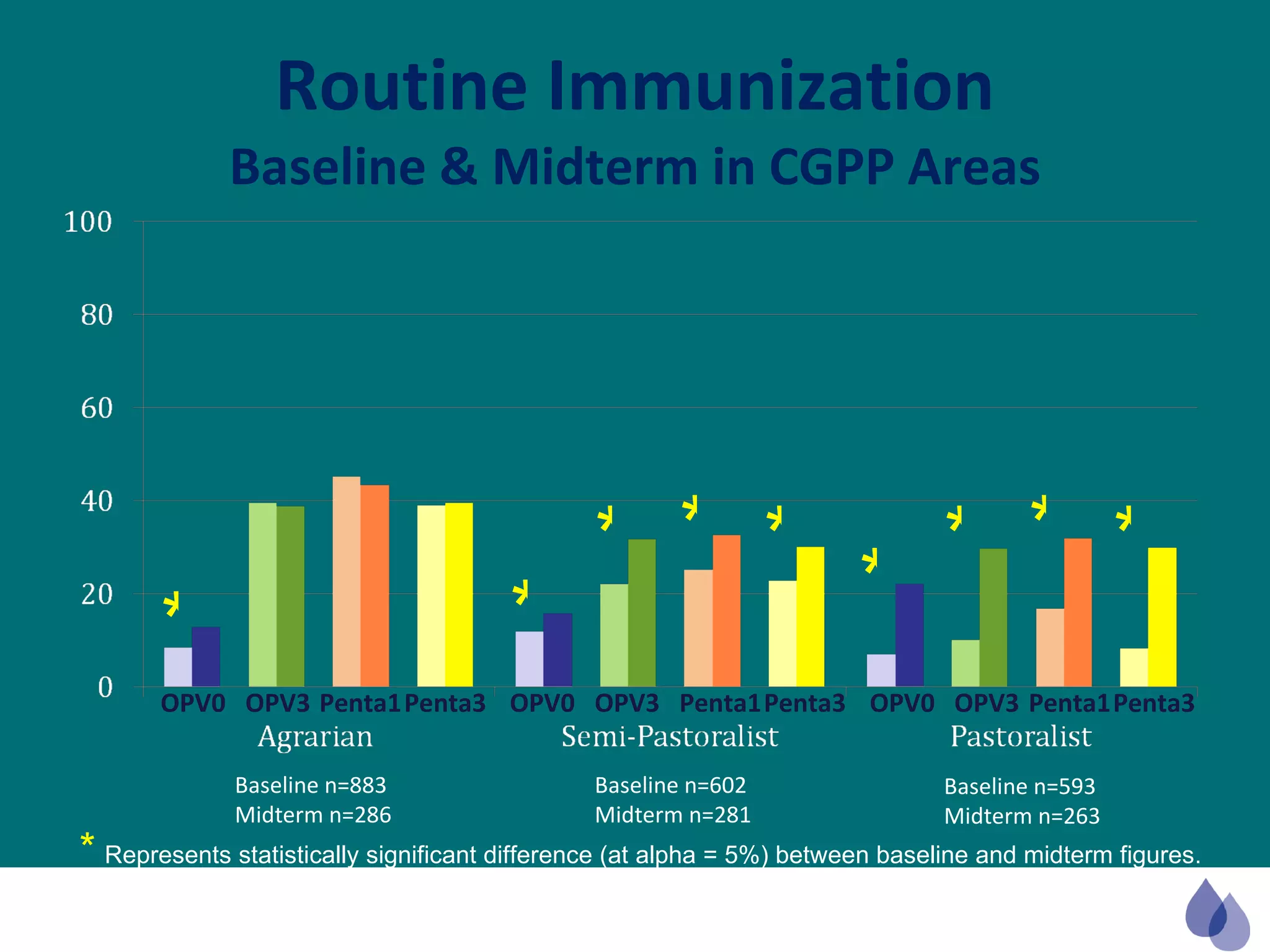
Routine Immunization Baseline & Midterm in CGPP Areas *   Represents statistically significant difference (at alpha = 5%) between baseline and midterm figures. OPV0 OPV0 OPV0 OPV3 OPV3 OPV3 Penta1 Penta1 Penta1 Penta3 Penta3 Penta3 * * * * * * * * * Baseline n=883 Midterm n=286 Baseline n=602 Midterm n=281 Baseline n=593 Midterm n=263
Lessons Learnt Manage larger coverage geographically and in beneficiaries including previously silent areas Able to create joint action against polio as well as other killer diseases that are rampant in the country . Enhancing the capacity of partners’ staff and front line health workers as well as volunteer community health workers Obtained recognition of its joint effort and awarded additional funds from GAVI Alliance CSO support  and Global fund Malaria Project to extend its coverage and capacity. Accorded seat on ICC as well as other policy bodies and representation to international bodies by FMOH
Challenges Establishing trust  Among IPVOs Gaining confidence of external stakeholders in CSO capacity Administrative policies vary widely across partner organization Variation in technical capacity of partners
The Way Forward Expansion in relation to geography and type of interventions  to other unreached areas Best mix of technical areas? Role beyond 2012/eradication of polio Incorporation of secretariat as bona fide in-country NGO to continue collaborative efforts to improve women’s and children’s health
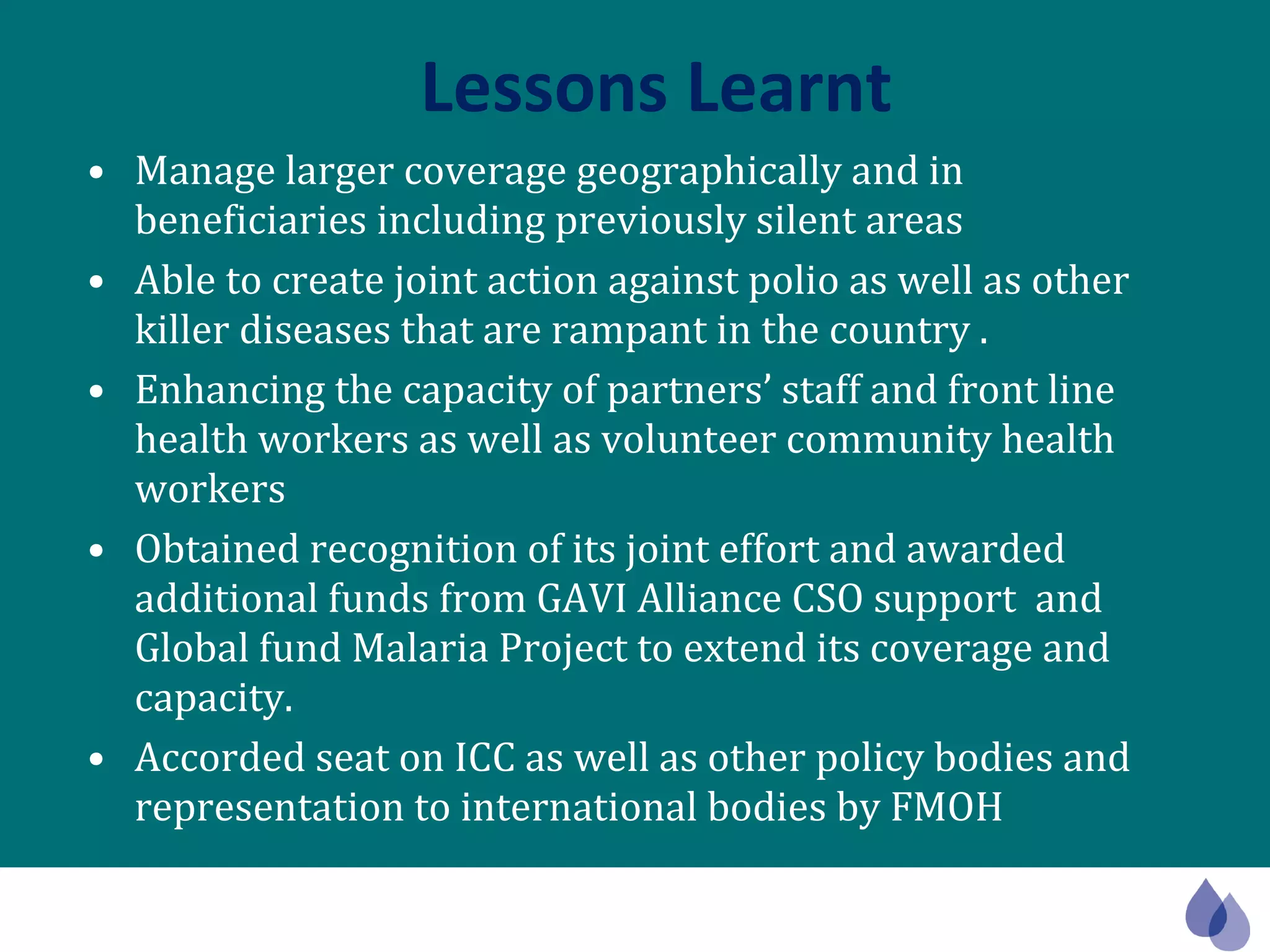
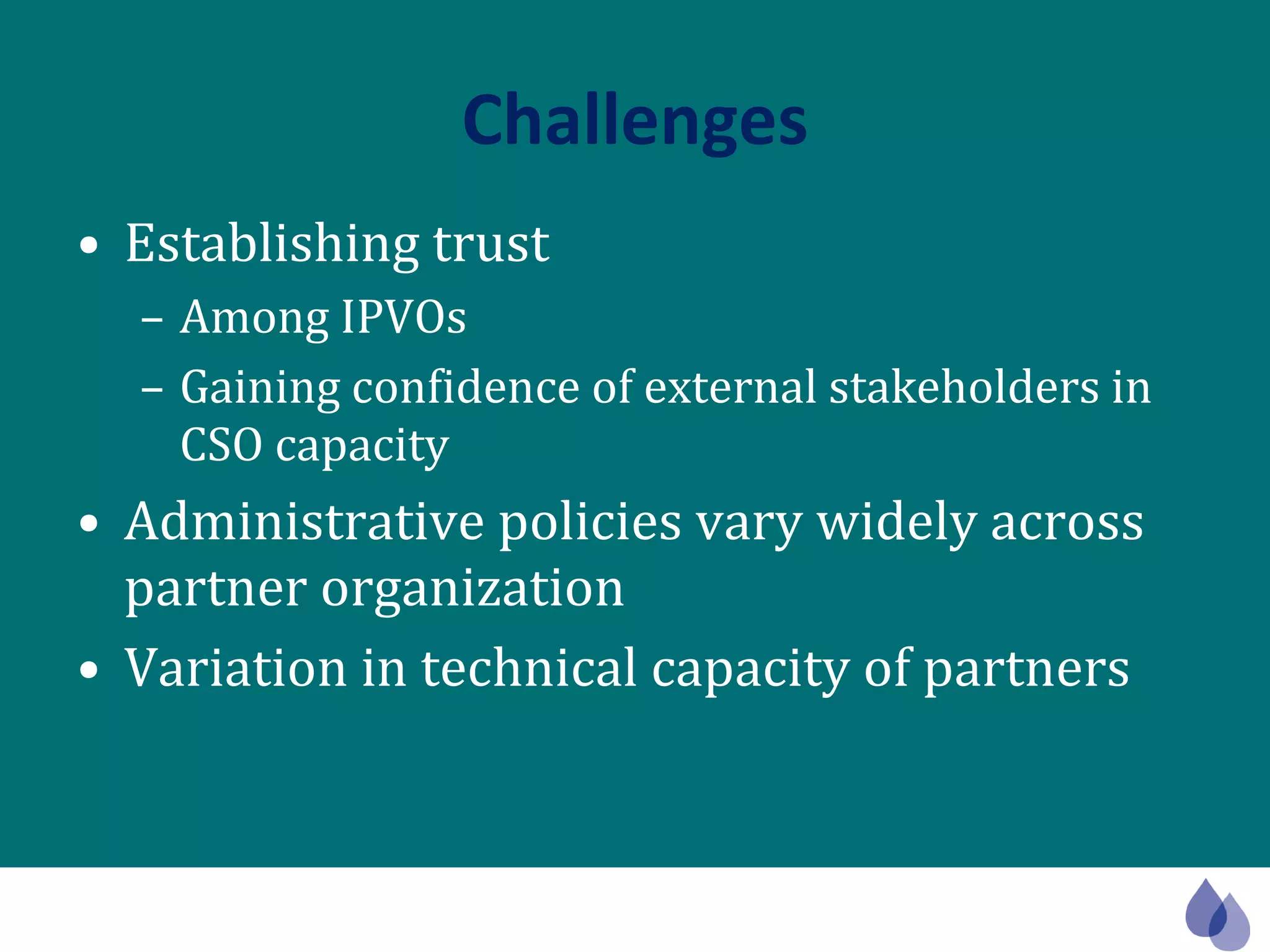
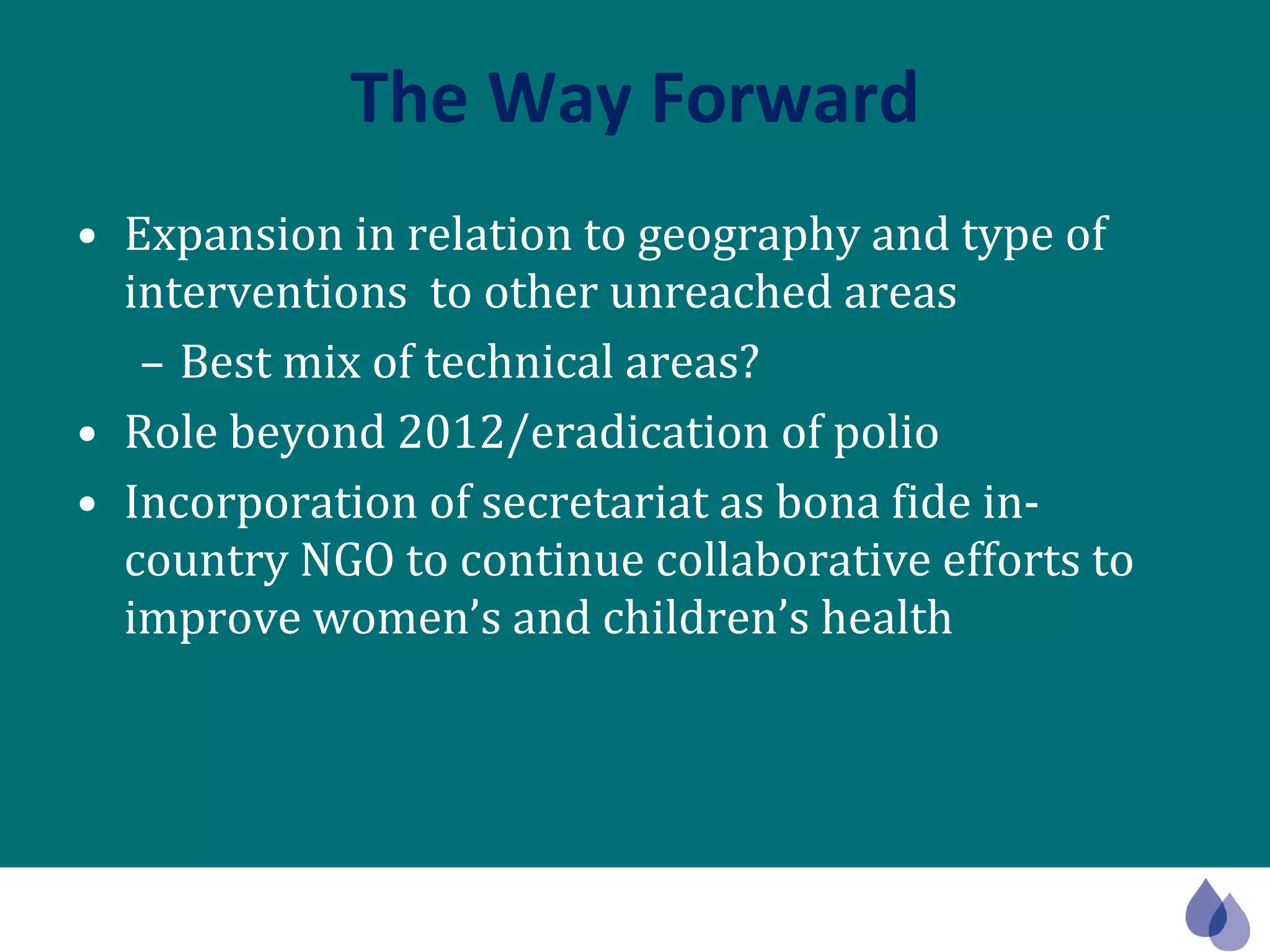
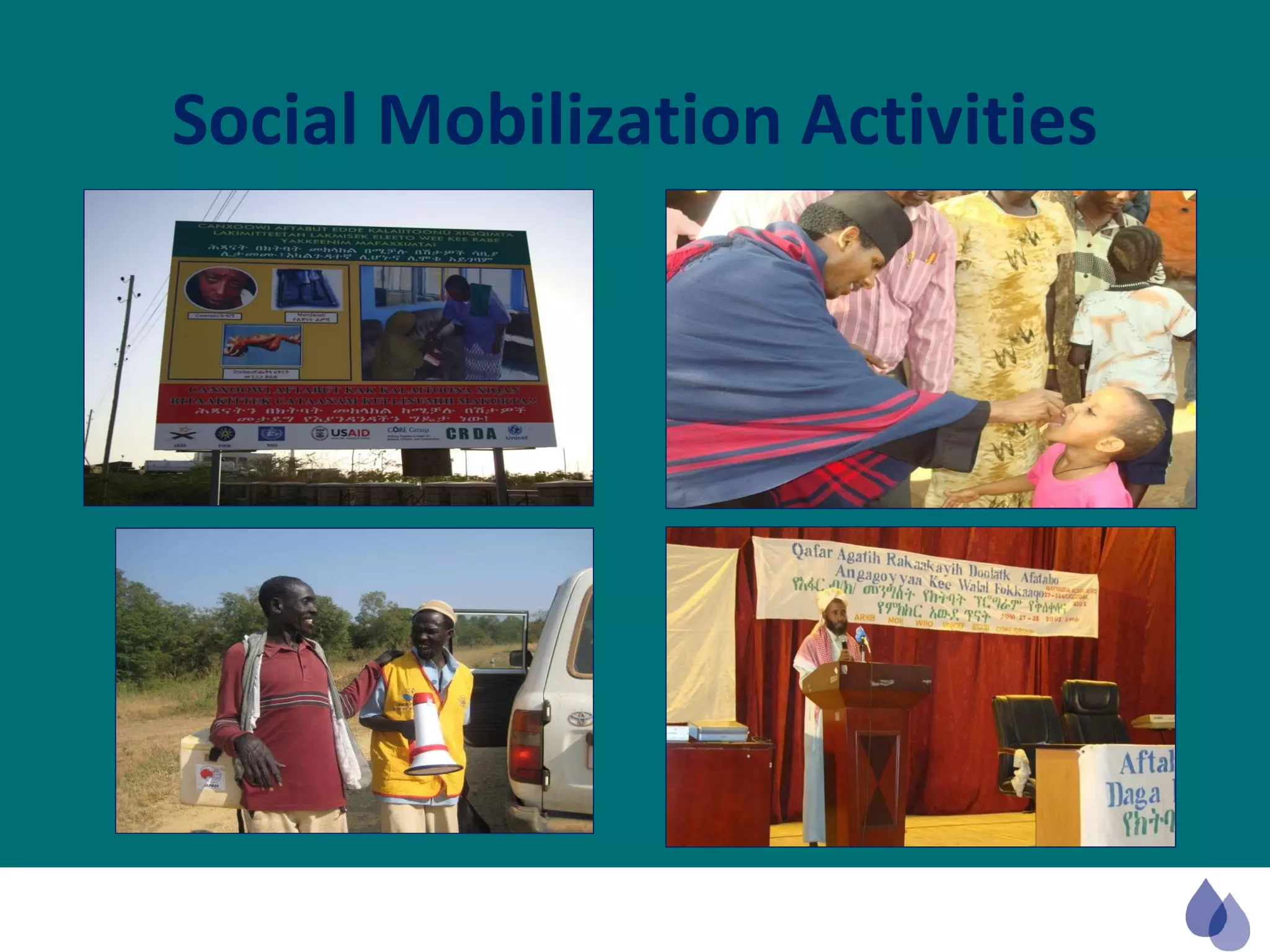
Social Mobilization Activities
Thank You!

Polio Eradication as a Platform for Integration_6.15.11_Bisrat

  • 1.
    PolioEradication as a Platform for Integration Filimona Bisrat (MD, MPH), CORE Group Polio Project June 15, 2011 Global Health Council 38 th Annual International Conference Omni Shoreham Hotel, Washington, DC
  • 2.
    CORE Group EthiopiaCORE began polio work in Ethiopia in Nov. 2001 3 programs (malaria., EPI, polio eradication) Partnering with 9 International & 11 local NGOs Covering 132 Woredas in 8 Regions & one City Administration Reaching a total population of 11,458,933 CORE Ethiopia Secretariat housed in CCRDA
  • 3.
    Hard to reach and rural areas Pastoralist populations Porous borders with Sudan, Kenya Somalia & Djibouti
  • 4.
    CORE Group EthiopiaProjects Funded by: USAID 7 regions, 19 Zones & 55 Woredas Beneficiaries Total population of 4,576,557 < 1 yr 101,648 < 5 yr 618,360 < 15 yr 1,905,903 11 NGOs (7 intl. & 4 local) 5 yr. grant up to 2012 Funded by : GAVI through FMOH 4 regions & 40 Districts Beneficiaries Total population of 2,404,285 < 1 yr 60,947 < 5 yr 115,405 7 NGOs (4 intl. & 3 local) 1.8 M USD for 2 yrs. Funded by Global Fund through FMOH 6 regions, 1 CA & 100 Districts Beneficiaries Total population of 6,748,026 Pregnant Women 264,929 < 5 yr - 874,353 14 NGOs (4 intl. & 10 local) 3.9 M USD for 3 yrs CORE GROUP POLIO PROJECT GAVI CSO Support Project Malaria FMOH/GF Project
  • 5.
    “ Secretariat Model”as a platform Integration among PVOs/NGOs between CSO and other national and global stakeholders Opportunity to address other issues through same community level structures Routine immunization Integrated disease surveillance Malaria
  • 6.
    TheCGE Secretariat Members International CARE CCF CRS Plan SC-US WVE IRC AMREF PCI KHI Key Partners FMoH USAID WHO UNICEF CCRDA Rotary International Local Partners PC ATCC HCS EECMY AdCS BCS JeCCDO M4M TYA TRTA APDA
  • 7.
    Secretariat Model ApproachDemocratic decision process Coordination, technical backstopping and quality assurance of the activities through Representation at national and international forums Documentation of impact/outcomes Integrated implementation at community level focused on awareness and demand creation and support to service delivery Capacity building for government staff as well as NGO/PVOs at central, regional and woreda levels
  • 8.
    CORE Ethiopia Organogram Director Communication Officer Monitoring & Evaluation Officer Program Director CGPP Focal Person GAVI Focal Person Malaria Focal Person Senior Finance Officer Finance Officer Admin. & Liaison Officer Admin Assistant Driver Focal Persons/Program Officers/ are assigned based on geographical location in order to make supervision & follow up activities for all the three projects
  • 9.
  • 10.
    Representation of Community-levelExpertise National Level Inter-agency Coordination Committee (ICC) New vaccine initiative National Malaria Task Force Coordination Against Malaria in Ethiopia – Steering committee member International level WHO’s AFRO Task Force for Immunization GAVI Civil Society Task Force & steering committee member
  • 11.
    Major Outcomes of State-Level Advocacy Participation of Presidents and senior officials Regional states on Immunization increased Regional interagency Coordination Committee (ICC) established Woreda EPI taskforce established at Woreda level Penta 3 coverage has become one the evaluation criteria for Woreda administration councils Gambella Regional President participates in polio campaign
  • 12.
    In CORE GroupPolio Project Areas
  • 13.
    Routine Immunization Baseline & Midterm in CGPP Areas CARD RETENTION * Represents statistically significant difference (at alpha = 5%) between baseline and midterm figures.
  • 14.
    Routine Immunization Baseline& Midterm in CGPP Areas * Represents statistically significant difference (at alpha = 5%) between baseline and midterm figures. OPV0 OPV0 OPV0 OPV3 OPV3 OPV3 Penta1 Penta1 Penta1 Penta3 Penta3 Penta3 * * * * * * * * * Baseline n=883 Midterm n=286 Baseline n=602 Midterm n=281 Baseline n=593 Midterm n=263
  • 15.
    Lessons Learnt Managelarger coverage geographically and in beneficiaries including previously silent areas Able to create joint action against polio as well as other killer diseases that are rampant in the country . Enhancing the capacity of partners’ staff and front line health workers as well as volunteer community health workers Obtained recognition of its joint effort and awarded additional funds from GAVI Alliance CSO support and Global fund Malaria Project to extend its coverage and capacity. Accorded seat on ICC as well as other policy bodies and representation to international bodies by FMOH
  • 16.
    Challenges Establishing trust Among IPVOs Gaining confidence of external stakeholders in CSO capacity Administrative policies vary widely across partner organization Variation in technical capacity of partners
  • 17.
    The Way ForwardExpansion in relation to geography and type of interventions to other unreached areas Best mix of technical areas? Role beyond 2012/eradication of polio Incorporation of secretariat as bona fide in-country NGO to continue collaborative efforts to improve women’s and children’s health
  • 18.
  • 19.

Editor's Notes

  • #14 Let me start by mentioning that in Ethiopia we were able to sample enough caretakers so that we could look at estimates for 3 different general regions in Ethiopia. Our Ethiopia Secretariat team thought it most beneficial to break up the project area by predominant lifestyle because this influences how our volunteers work with their communities and health posts. So, if there were large and interesting differences between the three areas, I’ve broken them out. If not, then I used a weighted aggregate estimate. You can see here card retention rates for the three areas.
  • #15 You can see here again the three regions (agrarian, semi-pastoralist, and pastoralist). To keep it simple, we’re showing you four vaccinations for each (OPV0 in blue, OPV3 in green, Penta1 in orange, and Penta3 in yellow). Other OPVs and Pentas follow the same pattern and that is, project areas saw a statistically significant increase in OPV0 rates in all three areas, which is great news in Ethiopia where, as you can see, OPV0 rates are much, much less than other doses because of cultural and logistical factors. Beyond, OPV0, agrarian areas saw small decreases or small increases in vaccination rates, but nothing significant. Whereas the two other areas, saw statistically significant increases in vaccination rates for all doses of OPV and Penta. Catching up to agrarian areas, which remained steady. All OPV0 significant; OPV3 S and P significant; Penta1 S and P significant; Penta3 S and P significant. BCG and measles – data quality a question for baseline. Same pattern OPV1 – Penta3 – S and P significant while A is not.