Enhancing Pediatric Emergency Medicine
with
Point of Care Testing
Dr (Prof) Suresh Gupta
Senior Consultant and Co-Director
Pediatric Emergency & Critical Care Services
Institute of Child Health, Sir Ganga Ram Hospital, Delhi
From Doubt to Decision in Pediatric ER
Tirage
Vital Signs
History
Examination
Observe
Or
Not
Treat
Or
Not
Follow-Up
Or
Not
Investigate
Or
Not
Admit
Or
Discharge
Referral
Or
Not
History POCT
Egyptian physicians used ants to
determine glycosuria in patients
suspected of having diabetes mellitus
Point of Care Testing
(CAP)
Diagnostic Tests designed to be used at or
near the site where the patient is located,
that do not require permanent dedicatd
space, and that are performed outside the
physical facilities of the clinical
laboratories
OPD
ER/ICU
Field
Schoo
l
Medical Testing
At/Near the site
of Patient Care
the
POC Devices
• Quick acquisition of test results to guide right direction of treatment
of patient
• Early detection and planning of treatment
• Low turn around time
POCT: The value of decentralized diagnostics
• Changes to population and disease demographics
coupled withthe need formorecost-effective,faster, and
convenient diagnostics arerapidlytransforming care
delivery.
• Increasingly,diagnostic solutions need to
be closer to the patient, leading to the
decentralization of healthcare.
POCT has demonstrated its abilityto improvedisease management incardiac and infectious diseases, includingsepsis.16-19
Following COVID-19, the necessity of POCT to effectively monitor and manage infected patients, disease demographics,
and curb disease spreadbecame critical.20
Prevent stroke inatrial
fibrillation16
Atrial fibrillationaffects
over37 millionpeople
worldwide21
Prevent andimprove
heart failure17
Heartfailureaffects 64
millionpeopleworldwide22
Detect andmanage
acutemyocardial
infarction18
Prevalenceofacute
myocardialinfarctionis 3
millionpeopleworldwide23
Quicklydiagnose
sepsis19
Sepsis accounts
for11 milliondeaths
worldwideeachyear24
Effectivelymonitor
infectious deseases20
Over630millionconfirmed
COVID-
19 cases worldwide,
including over6.6 million
deaths25
How COVID-19 accelerated everything
POC Testing: ASSURED Criteria
Delivered to Needy
7
Minimum Equip.
6
Rapid & Robust
5
User-Friendly
4
Specific
3
Sensitive
2
Affordable
1
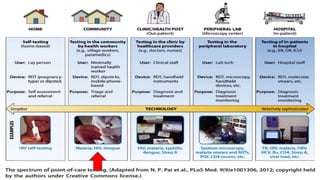
Role of POCT
Transition
Points
Advantages of POCT
01
Improves quality of
patient care
03
Increased patient and
physician satisfaction
02
Enhances efficiency of
patient care
04
Improves patient
education
05
Decrease risk
liability
POCT can benefit both healthcare systems
and patients, and lead to:
Enhanced operations
efficiencies
Patient engagement and
satisfaction
Improved patient care
POC Testing: Its Importance in Resource-
Limited Countries
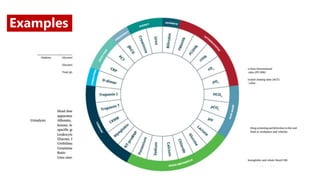
POCT: Landscape
Microbiology
Equipment
Imaging
Blood Gas
Analyser
Haematology
Biochemistry
Examples
"Point of Care Diagnostics in Resource-Limited Settings: A
Review of the Present and Future of PoC in Its Most
Needed Environment" Biosensors 10, no. 10: 133.
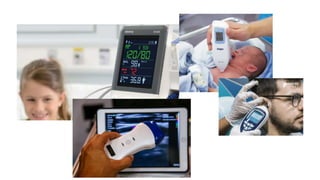
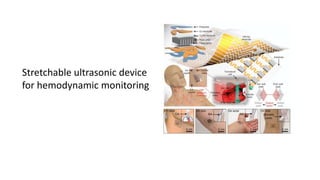
Stretchable ultrasonic device
for hemodynamic monitoring
POC in Pediatric ER
Bedside POC Ultrasound
• Lung and heart images
• Fluid accumulation and drainage of pleural
fluid
• Abdominal USG
• Scrotal USG
• Cranial USG
• Optic Nerve Sheath Diameter
• Guidance for central line placement
Reduces radiation exposure
01
02
03
04
Continuing Quality Evaluation
Clinical Governance
Ensuring Competency in using
POC
Competency
Training on how to use the
POC
Training
Residents/Nursing Education
Education
Ped ER - POC
Ped ER is the most fluid
environment in terms of
healthcare workers and
staff
Barriers
• Thank you
6 weeks girl
• Brought to Ped ER, with fever for one day (rectal temp 101 F). Baby is
feeding okay. No other symptoms. Elder Sib 4 year had a fever with
cough and runny nose, 2 days back
How would you like to manage this infant
• Send home on antipyretics + antibiotics
• Admit to ward and start antibiotics after taking investigations
• POC Testing and then deciding the course of action
6 weeks girl
• Brought to Ped ER, with fever for one day (rectal temp 101 F). Baby is
feeding okay. No other symptoms. Elder Sib 4 year had a fever with
cough and runny nose, 2 days back
How would you like to manage this infant
• Send home on antipyretics + antibiotics
• Admit to ward and start antibiotics after taking investigations
• POC Testing and then deciding the course of action
POC
CBC: HB 11, TLC 18000, DLC P 80, L
18, M 2
URINE: Leu Esterase +++, Nitrite +++,
ME: WBC 20-23 HPF
PCT: 30
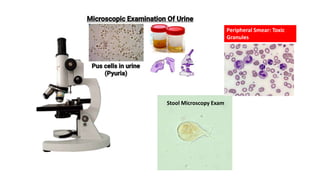
Stool Microscopy Exam
Peripheral Smear: Toxic
Granules
Case scenario: 12 Yr Boy
• K/c/o type 1 DM on sc insulin, now presented with fever for 3 days
with polyuria, lethargy, tachypnea and petechial hemorrhages to ER.
• What all POCT will help you to assess the patient, categorize sickness
and decide admission to HDU?
1. Pulse oximeter
2. ABG – acidosis, HB, hematocrit, glucose, sodium etc
3. BLOOD KETONE
4. Continuous glucose monitoring
5. DENGUE SPOT TEST
6. POCUS - lung
Case scenario: 12 Yr Boy
POC Testing vs POC Philosophy
Best POC in Universe
Early screening
• Early detection of symptoms
• Contactless thermometers and pulse oximeters or forehead oximeters
• Wearable heart rhythm monitors, either in the form of chest straps
and belts or smart watches
Exposure to diagnosis
• From the time of exposure to symptom onset and subsequent
diagnosis disease
• Isolate/treat the patient early.
• Plan for further specific tests can be decided
• Eg- rapid antigen test for malaria, dengue card test
Diagnosis to stratification
• After an individual has been diagnosed with an infection, it’s crucial
to decide the condition of the patient.
• POCTs such as cutaneous oximetry, pulse oximetry, contactless
temperature sensing and measurement of a variety of markers in the
blood can be employed to decide the admission.
Stratification to escalating care
• Increasing oxygen demands and changes in certain parameters in the
blood allow physicians to make decisions about whether a patient
might need escalation of care
Monitoring to recovery
• Pulse oximetry
• ABG
• POCUS- lungs, cardiac
• Serology- IgM and IgG would assist in documenting immunity.
Qualitative strip-based devices
• These tests often provide qualitative results
• COVID-19 Ag Respi-Strip is a rapid SARS-CoV-2 antigen assay for the
diagnosis of COVID19 in 15 min
Unit-use analyzers
• Provide a quantitative readout of parameters after the reaction takes
place on test strips.
• OneTouch and AccuCheck glucometers
• i-STAT = lactate, hematology, chemistries and electrolytes, cardiac
markers, endocrinology, blood gases and coagulation
Benchtop POCT analyzers
• Siemens RAPIDPoint 500 Blood Gas System
1. Rapid - 60 s
2. Blood gases, electrolytes, glucose, lactate and full CO-oximetry from
samples including whole blood (arterial and venous), pleural fluid
and dialysate.
3. Touch screen, the connectivity to electronic health records through
barcodes, and remote monitoring and control
Continuous measurement with POCT systems
• Continuous glucose monitoring
• contact-free continuous heart rate and respiratory rate monitoring
Molecular biology-based POCT devices
• Helps to detect infectious agents
• Eg – Dengue, Typhidot

POCT-1.pptx

  • 1.
    Enhancing Pediatric EmergencyMedicine with Point of Care Testing Dr (Prof) Suresh Gupta Senior Consultant and Co-Director Pediatric Emergency & Critical Care Services Institute of Child Health, Sir Ganga Ram Hospital, Delhi
  • 2.
    From Doubt toDecision in Pediatric ER Tirage Vital Signs History Examination Observe Or Not Treat Or Not Follow-Up Or Not Investigate Or Not Admit Or Discharge Referral Or Not
  • 4.
    History POCT Egyptian physiciansused ants to determine glycosuria in patients suspected of having diabetes mellitus
  • 5.
    Point of CareTesting (CAP) Diagnostic Tests designed to be used at or near the site where the patient is located, that do not require permanent dedicatd space, and that are performed outside the physical facilities of the clinical laboratories OPD ER/ICU Field Schoo l Medical Testing At/Near the site of Patient Care the
  • 6.
    POC Devices • Quickacquisition of test results to guide right direction of treatment of patient • Early detection and planning of treatment • Low turn around time
  • 7.
    POCT: The valueof decentralized diagnostics • Changes to population and disease demographics coupled withthe need formorecost-effective,faster, and convenient diagnostics arerapidlytransforming care delivery. • Increasingly,diagnostic solutions need to be closer to the patient, leading to the decentralization of healthcare.
  • 8.
    POCT has demonstratedits abilityto improvedisease management incardiac and infectious diseases, includingsepsis.16-19 Following COVID-19, the necessity of POCT to effectively monitor and manage infected patients, disease demographics, and curb disease spreadbecame critical.20 Prevent stroke inatrial fibrillation16 Atrial fibrillationaffects over37 millionpeople worldwide21 Prevent andimprove heart failure17 Heartfailureaffects 64 millionpeopleworldwide22 Detect andmanage acutemyocardial infarction18 Prevalenceofacute myocardialinfarctionis 3 millionpeopleworldwide23 Quicklydiagnose sepsis19 Sepsis accounts for11 milliondeaths worldwideeachyear24 Effectivelymonitor infectious deseases20 Over630millionconfirmed COVID- 19 cases worldwide, including over6.6 million deaths25 How COVID-19 accelerated everything
  • 9.
    POC Testing: ASSUREDCriteria Delivered to Needy 7 Minimum Equip. 6 Rapid & Robust 5 User-Friendly 4 Specific 3 Sensitive 2 Affordable 1
  • 10.
  • 11.
    Advantages of POCT 01 Improvesquality of patient care 03 Increased patient and physician satisfaction 02 Enhances efficiency of patient care 04 Improves patient education 05 Decrease risk liability
  • 12.
    POCT can benefitboth healthcare systems and patients, and lead to: Enhanced operations efficiencies Patient engagement and satisfaction Improved patient care
  • 13.
    POC Testing: ItsImportance in Resource- Limited Countries
  • 20.
  • 21.
  • 26.
    "Point of CareDiagnostics in Resource-Limited Settings: A Review of the Present and Future of PoC in Its Most Needed Environment" Biosensors 10, no. 10: 133.
  • 27.
    Stretchable ultrasonic device forhemodynamic monitoring
  • 29.
  • 31.
    Bedside POC Ultrasound •Lung and heart images • Fluid accumulation and drainage of pleural fluid • Abdominal USG • Scrotal USG • Cranial USG • Optic Nerve Sheath Diameter • Guidance for central line placement Reduces radiation exposure
  • 32.
    01 02 03 04 Continuing Quality Evaluation ClinicalGovernance Ensuring Competency in using POC Competency Training on how to use the POC Training Residents/Nursing Education Education Ped ER - POC Ped ER is the most fluid environment in terms of healthcare workers and staff
  • 33.
  • 34.
  • 35.
    6 weeks girl •Brought to Ped ER, with fever for one day (rectal temp 101 F). Baby is feeding okay. No other symptoms. Elder Sib 4 year had a fever with cough and runny nose, 2 days back How would you like to manage this infant • Send home on antipyretics + antibiotics • Admit to ward and start antibiotics after taking investigations • POC Testing and then deciding the course of action
  • 36.
    6 weeks girl •Brought to Ped ER, with fever for one day (rectal temp 101 F). Baby is feeding okay. No other symptoms. Elder Sib 4 year had a fever with cough and runny nose, 2 days back How would you like to manage this infant • Send home on antipyretics + antibiotics • Admit to ward and start antibiotics after taking investigations • POC Testing and then deciding the course of action POC CBC: HB 11, TLC 18000, DLC P 80, L 18, M 2 URINE: Leu Esterase +++, Nitrite +++, ME: WBC 20-23 HPF PCT: 30
  • 37.
    Stool Microscopy Exam PeripheralSmear: Toxic Granules
  • 38.
    Case scenario: 12Yr Boy • K/c/o type 1 DM on sc insulin, now presented with fever for 3 days with polyuria, lethargy, tachypnea and petechial hemorrhages to ER. • What all POCT will help you to assess the patient, categorize sickness and decide admission to HDU?
  • 39.
    1. Pulse oximeter 2.ABG – acidosis, HB, hematocrit, glucose, sodium etc 3. BLOOD KETONE 4. Continuous glucose monitoring 5. DENGUE SPOT TEST 6. POCUS - lung Case scenario: 12 Yr Boy
  • 40.
    POC Testing vsPOC Philosophy
  • 41.
    POC Testing vsPOC Philosophy Best POC in Universe
  • 44.
    Early screening • Earlydetection of symptoms • Contactless thermometers and pulse oximeters or forehead oximeters • Wearable heart rhythm monitors, either in the form of chest straps and belts or smart watches
  • 45.
    Exposure to diagnosis •From the time of exposure to symptom onset and subsequent diagnosis disease • Isolate/treat the patient early. • Plan for further specific tests can be decided • Eg- rapid antigen test for malaria, dengue card test
  • 46.
    Diagnosis to stratification •After an individual has been diagnosed with an infection, it’s crucial to decide the condition of the patient. • POCTs such as cutaneous oximetry, pulse oximetry, contactless temperature sensing and measurement of a variety of markers in the blood can be employed to decide the admission.
  • 47.
    Stratification to escalatingcare • Increasing oxygen demands and changes in certain parameters in the blood allow physicians to make decisions about whether a patient might need escalation of care
  • 48.
    Monitoring to recovery •Pulse oximetry • ABG • POCUS- lungs, cardiac • Serology- IgM and IgG would assist in documenting immunity.
  • 49.
    Qualitative strip-based devices •These tests often provide qualitative results • COVID-19 Ag Respi-Strip is a rapid SARS-CoV-2 antigen assay for the diagnosis of COVID19 in 15 min
  • 50.
    Unit-use analyzers • Providea quantitative readout of parameters after the reaction takes place on test strips. • OneTouch and AccuCheck glucometers • i-STAT = lactate, hematology, chemistries and electrolytes, cardiac markers, endocrinology, blood gases and coagulation
  • 51.
    Benchtop POCT analyzers •Siemens RAPIDPoint 500 Blood Gas System 1. Rapid - 60 s 2. Blood gases, electrolytes, glucose, lactate and full CO-oximetry from samples including whole blood (arterial and venous), pleural fluid and dialysate. 3. Touch screen, the connectivity to electronic health records through barcodes, and remote monitoring and control
  • 52.
    Continuous measurement withPOCT systems • Continuous glucose monitoring • contact-free continuous heart rate and respiratory rate monitoring
  • 53.
    Molecular biology-based POCTdevices • Helps to detect infectious agents • Eg – Dengue, Typhidot

Editor's Notes

  • #10 Affordable Sensitive (few false negatives) Specific (few false positive) User-friendly rapid and robust (rigid storage conditions) Equipment free (no complex system) Delivered to needy