Morphological variation in Balanites aegyptiaca fruits and 
seeds within and among parkland agroforests in eastern Niger
                                        Tougiani Abasse1, John C. Weber2, Boubacar Katkore1, Moussa Boureima1, 
                                                     Mahamane Larwanou1,3, Antoine Kalinganire2
                                                                                                    1Institut National de Recherche Agronomique du Niger, 
                                                                               2World Agroforestry                                                   Centre (Mali), 3African Forest Forum (Kenya)
  Introduction
  Balanites aegyptiaca (L.)  Delile.  is  one  of  the  priority  indigenous  fruit  trees  for  rural  communities  in  Niger.  As  part  of  a  participatory  tree  domestication  program  in  Niger,  phenotypic  variation  in  fruit  and  seed 
  morphology  was  assessed  in  four  natural  populations  in  eastern  Niger.  The  major  objectives  were  to  determine  (a)  if  there  was  significant  phenotypic  variation  within  and  among  populations;  (b)  if  within‐tree 
  variation differed among populations; (c) if the variation was related to latitude and longitude and, by hypothesis, rainfall gradients in the region; and (d) if correlations among fruit and seed variables were similar 
  within populations.

  Materials and Methods
  Fruits were collected from in 25 trees in four extensive parkland agroforests, hereafter referred to as populations, in the Maradi region of eastern Niger in 2007 (Table 1). Mean annual rainfall decreases slightly from 
  south to north and from west to east (~450 to 400 mm) in the sample region. In each population, fruits were were collected from 25 trees. Thirty fruits per tree were randomly selected and air‐dried to a constant 
  weight prior to measurement. Measured variables included weight of the fruit, seed coat and kernel; length and width of the fruit and seed. Derived variables included the tree’s coefficient of variation (CVs) for each 
  measured variable, and standardized factor scores for the first two principal components (PCA) of tree means (PC‐Means) and CVs (PC‐CVs). Trees with larger factor scores had the following characteristics: PC1‐
  Means = longer, wider fruits and seeds, and heavier fruits; PC2‐Means = longer, narrower fruits and seeds, and heavier seeds; PC1‐CVs = greater within‐tree variation in fruit and seed size and fruit weight; PC2‐CVs = 
  greater within‐tree variation in kernel weight, fruit and seed length, but lower within‐tree variation in seed width. ANOVA was used to determine if there were significant differences in the measured variables due to 
  populations and trees nested in populations, and in the derived variables due to populations. Least‐squares means of populations were compared using Tukey’s “hsd” test. Multiple linear regression analysis was used 
  to  investigate  variation  among  trees  in  relation  to  latitude,  longitude  and  elevation.  The  dependent  variables  were  the  tree  means,  CVs,  PC‐Means  and  PC‐CVs.  Pearson  r correlation  coefficients  were  used  to 
  investigate linear relationships among the measured variables. Correlations were based on all fruits, and separately among fruits in each population in order to assess whether correlations varied among populations.

  Results
  ANOVA (Table 2): All measured variables differed significantly among trees (P < 0.001). Fruit and kernel weights were greater in the northernmost and easternmost populations (P4 and P2, respectively). CVs of fruit 
  and seed width and PCI‐CVs decreased from the southernmost to the northernmost population (P1 to P4). 
  Regressions with latitude and longitude (Table 3): Mean kernel weight and PC2‐Means increased from the southwest to the northeast, indicating that trees in the northeast tended to have longer, narrower fruits and 
  seeds, and heavier seeds. CVs of fruit and seed width and PC1‐CVs of trees decreased from south to north, indicating that trees in the north tended to have relatively lower within‐tree variability in fruit weight and 
  fruit and seed dimensions. Although statistically significant, the regression models generally explained less than 10% of the variation among trees.
  Correlations (Table 3): In the analysis across populations, the strongest correlations were between the length of fruits and seeds, and between the width of fruits and seeds; whereas seed coat and kernel weights had 
  very low or insignificant correlations with fruit weight, and with fruit and seed dimensions. Some correlations differed among populations. For example, the correlations between the weight of fruits and kernels, and 
  between kernel weight and the width of fruits and seeds were positive in population 4 but negative in population 2; the correlation between weight of fruits and seed coats was positive in populations 1 and 4 but 
  negative in population 3; and the correlations between seed coat weight and the length of fruits and seeds were positive in populations 1 and 2 but negative in population 4. 

         Table 1. Mean latitude, longitude and elevation of B. aegyptiaca populations in the Maradi region        Table 4. Pearson r correlation coefficients among fruit/seed variables across and within populations of B. 
                                                                                                                  aegyptiaca from the Maradi region of Niger. 
                                                                                                                                                                                                                                            3
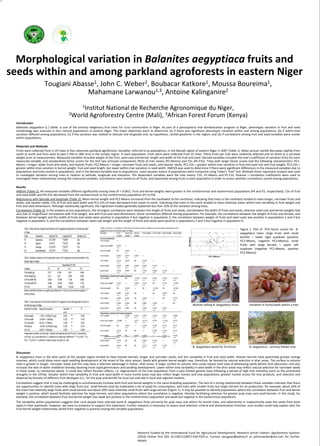
                                                                                                                                                                                                                                                                                              Figure  1.  Plot  of    PCA  factor  scores  for    B. 
         o f Niger.                                                                                               Variable                  Fruit       Seed coat  Kernel  Fruit length Fruit width Seed length Seed width                  2
                                                                                                                                                                                                                                                                                              aegyptiaca trees:  large  fruits  with  small 
         Code             Population          Latitude (°N)        Longitude (°E)         Elevation (m)                                     weight  weight             weight 
                                                                                                                                                                                                                                                                                              kernels  =  lower  right  quadrate  (positive 
                                                                                                                                                                                                                                      PC2‐Means


                                                                                                                                                                                                                                            1
                                                                                                                  Across populations 
         P1               Sajamanja           13°12’58”            7°28’48”               423                     Fruit weight              ‐‐‐                                                                                             0                                                 PC1‐Means,  negative  PC2‐Means);  small 
         P2               Elgueza             13°16’6”             7°32’22”               403                      
                                                                                                                  Seed coat weight          0.076       ‐‐‐                                                                                                                                   fruits  with  large  kernels  =  upper  left 
         P3               Dansaga             13°24’49”            7°26’57”               413 
                                                                                                                                                                                                                                          -1


                                                                                                                                            ***                                                                                                                                               quadrate  (negative  PC1‐Means,  positive 
         P4               Kanambakache  13°27’53”                  7°25’22”               400                     Kernel weight             NS          0.332          ‐‐‐                                                                -2


                                                                                                                                                        *** 
                                                                                                                                                                                                                                          -3
                                                                                                                                                                                                                                                                                              PC2‐Means).
                                                                                                                  Fruit length              0.462       0.077          0.038       ‐‐‐                                                            -3       -2    -1       0
                                                                                                                                                                                                                                                                      PC1‐Means   1   2   3


         Table 2. Multiple comparison test of population means of B. aegyptiaca fruit/seed variables in the                                 ***         ***            * 
         Maradi region of Niger.                                                                                  Fruit width               0.613       0.044          NS          0.219        ‐‐‐                          
                                                                                                                                            ***         *                          *** 
                                                                      Populations (P1‐P4)                         Seed length               0.449       0.081          0.048       0.836        0.172          ‐‐‐           
         Variable                             P1              P2               P3                 P4                                        ***         ***            **          ***          *** 
                                                                                                                  Seed width                0.628       0.044          NS          0.159        0.682          0.140        ‐‐‐ 
         Fruit weight (g)                     5.97            6.78a            5.60               6.80a                                     ***         *                          ***          ***            *** 
         Kernel weight (g)                    0.53            0.63             0.59a              0.60a           Populations 1 below and 2 above diagonal 
                                                                                                                  Fruit weight              ‐‐‐         NS             –0.160  0.338            0.656          0.319        0.763 
         CV‐fruit width (%)                   9.00a           7.97ab           7.13b              6.85b                                                                ***         ***          ***            ***          *** 
         CV‐seed width (%)                    8.84a           7.81ab           7.44ab             7.12b           Seed coat weight          0.145       ‐‐‐            0.360       0.131        NS             0.114        –0.104 
                                                                                                                                            ***                        ***         ***                         **           ** 
         PC1‐CVs                              0.48a           0.08ab           ‐0.21ab            ‐0.35b          Kernel weight             NS          0.228          ‐‐‐         NS           –0.138         NS           –0.183 
         Means with different letters are significantly different (P < 0.001 for fruit and kernel weights, P <                                          ***                                     ***                         *** 
                                                                                                                  Fruit length              0.484       0.267          NS          ‐‐‐          NS             0.904        NS 
         0.05 for others).                                                                                                                  ***         ***                                                    *** 
                                                                                                                  Fruit width               0.584       0.104          NS          0.446        ‐‐‐            NS           0.774 
                                                                                                                                            ***         **                         ***                                      *** 
         Table 3. Linear regression of fruit/seed variables of B. aegyptiaca trees with geographic location in    Seed length               0.484       0.282          NS          0.805        0.428          ‐‐‐          NS 
         the Maradi region of Niger.                                                                                                        ***         ***                        ***          ***                                                    Woman selling B. aegyptiaca fruits             Variation in fruits/seeds within a tree
         Dependent variable  Regression equation                       Standard  P                 R2             Seed width                0.463       0.081          NS          0.269        0.561          0.275        ‐‐‐ 
                                                                                                                                            ***         *                          ***          ***            *** 
                                                                       error                                      Populations 3 below and 4 above diagonal 
         Kernel weight            –7.183 + 0.078(Lat*Long)             0.024  **                   0.094          Fruit weight              ‐‐‐         0.100          0.203       0.450        0.538          0.502        0.680 
                                                                                                                                                        ***            ***         ***          ***            ***          *** 
         CV‐fruit width           113.640 – 7.938(Lat)                 2.322  ***                  0.107          Seed coat weight          –0.086  ‐‐‐                0.277       –0.131       0.074          –0.163       0.112 
         CV‐seed width            85.164 – 5.799(Lat)                  2.204  **                   0.067                                    *                          ***         ***          *              ***          ** 
         PC2‐Means                –54.269 + 0.544(Lat*Long)            0.193  **                   0.075          Kernel weight             NS          0.497          ‐‐‐         0.122        0.125          0.123        0.171 
                                                                                                                                                        ***                        ***          ***            ***          *** 
         PC1‐CVs                  40.297 – 3.021(Lat)                  0.935  *                    0.096          Fruit length              0.513       NS             NS          ‐‐‐          0.184          0.745        0.111 
         Independent variables: Lat and Long = latitude and longitude (decimal °N and °E, respectively),                                    ***                                                 ***            ***          ** 
                                                                                                                  Fruit width 
                                                                                                                        Probability of Pearson r: *** P < 0.001, ** P <0.074  < 0.05, NS P > 0.05; N = 3000 across and 750 
                                                                                                                                            0.689       NS               0.01, * P 0.186        ‐‐‐            0.151        0.644 
         Lat*Long = Lat x Long interaction. P = significance of regression coefficients: *** P < 0.001, ** P <          within populations ***                         *           ***                         ***          *** 
         0.01, * P < 0.05. R2 = coefficient of determination of model. N = 100.                                   Seed length               0.470       NS             NS          0.895        0.162          ‐‐‐          0.130 
                                                                                                                                            ***                                    ***          ***                         *** 
                                                                                                                  Seed width                0.654       NS             NS          0.213        0.757          0.182        ‐‐‐ 
                                                                                                                                            ***                                    ***          ***            ***                                     B. aegyptiaca wood for furniture               B. aegyptiaca – priority fodder tree
  Discussion
  B. aegyptiaca trees in the drier parts of the sample region tended to have heavier kernels, longer and narrower seeds, and less variability in fruit and seed width. Heavier kernels have potentially greater energy 
  reserves, which could allow more rapid seedling development at the onset of the rainy season. Seeds with greater kernel weight may, therefore, be favored by natural selection in drier areas. The surface to volume 
  ratio is greater in longer, narrower seeds and this may have a selective advantage in hotter, drier areas. A larger surface to volume ratio could reduce heat load of developing seeds before fruit abscission, and also 
  increase the rate of water imbibition thereby favoring more rapid germination and seedling development. Lower within‐tree variability in seed width in the drier areas may reflect natural selection for narrower seeds 
  in these areas, as mentioned above. It could also reflect founder effects, i.e. regeneration of the tree population from a very limited genetic base following a period of high tree mortality (such as the protracted 
  droughts in the 1970s). Greater within‐tree variability in fruit and seed width in more humid areas may also reflect larger human and tree populations, greater market access for tree products, and selection and 
  dispersal by humans of different fruit ideotypes (i.e., for the pulp and kernel) for local use and sale in local and regional markets. 
  Correlations suggest that it may be challenging to simultaneously increase both fruit and kernel weights in the same breeding population. The lack of a strong relationship between these variables indicates that there 
  are opportunities to identify trees with large fruits but  small kernels (and by implication a lot of pulp) for consumption, and trees with smaller fruits but larger kernels for oil production: for example, about 20% of 
  the trees had relatively large fruits with small kernels and about 20% have relatively small fruits with large kernels (Figure 1). It may be possible to identify populations where the correlation between fruit and kernel 
  weight is positive, which would facilitate selection for large kernels, and other populations where the correlation is negative, thereby facilitating selection for greater pulp mass and small kernels. In this study, for 
  example, the correlation between fruit and kernel weight was weak but positive in the northernmost population and weak but negative in the easternmost population.
  The variability within populations suggests that rural people have selected some B. aegyptiaca fruits primarily for pulp mass and others for kernel mass, and advertently or inadvertently sown the seeds from both 
  types in their parklands. However, we have no evidence to support this statement. Further research is necessary to assess local selection criteria and domestication histories: such studies could help explain why the 
  fruit‐kernel weight relationship varied from negative to positive among the sampled populations.


                                                                                                                                                                      Research funded by the International Fund for Agricultural Development. Research article citation: Agroforestry Systems  
                                                                                                                                                                      (2010)  Online  first  DOI  10.1007/s10457‐010‐9323‐x.  Contact  atougiani@yahoo.fr or  johncrweber@aol.com for  further 
                                                                                                                                                                      details.

Morphological variation in Balanites aegyptiaca fruits and seeds within and among parkland agroforests in eastern Niger

  • 1.
    Morphological variation in Balanites aegyptiaca fruits and  seeds within and among parkland agroforestsin eastern Niger Tougiani Abasse1, John C. Weber2, Boubacar Katkore1, Moussa Boureima1,  Mahamane Larwanou1,3, Antoine Kalinganire2 1Institut National de Recherche Agronomique du Niger,  2World Agroforestry Centre (Mali), 3African Forest Forum (Kenya) Introduction Balanites aegyptiaca (L.)  Delile.  is  one  of  the  priority  indigenous  fruit  trees  for  rural  communities  in  Niger.  As  part  of  a  participatory  tree  domestication  program  in  Niger,  phenotypic  variation  in  fruit  and  seed  morphology  was  assessed  in  four  natural  populations  in  eastern  Niger.  The  major  objectives  were  to  determine  (a)  if  there  was  significant  phenotypic  variation  within  and  among  populations;  (b)  if  within‐tree  variation differed among populations; (c) if the variation was related to latitude and longitude and, by hypothesis, rainfall gradients in the region; and (d) if correlations among fruit and seed variables were similar  within populations. Materials and Methods Fruits were collected from in 25 trees in four extensive parkland agroforests, hereafter referred to as populations, in the Maradi region of eastern Niger in 2007 (Table 1). Mean annual rainfall decreases slightly from  south to north and from west to east (~450 to 400 mm) in the sample region. In each population, fruits were were collected from 25 trees. Thirty fruits per tree were randomly selected and air‐dried to a constant  weight prior to measurement. Measured variables included weight of the fruit, seed coat and kernel; length and width of the fruit and seed. Derived variables included the tree’s coefficient of variation (CVs) for each  measured variable, and standardized factor scores for the first two principal components (PCA) of tree means (PC‐Means) and CVs (PC‐CVs). Trees with larger factor scores had the following characteristics: PC1‐ Means = longer, wider fruits and seeds, and heavier fruits; PC2‐Means = longer, narrower fruits and seeds, and heavier seeds; PC1‐CVs = greater within‐tree variation in fruit and seed size and fruit weight; PC2‐CVs =  greater within‐tree variation in kernel weight, fruit and seed length, but lower within‐tree variation in seed width. ANOVA was used to determine if there were significant differences in the measured variables due to  populations and trees nested in populations, and in the derived variables due to populations. Least‐squares means of populations were compared using Tukey’s “hsd” test. Multiple linear regression analysis was used  to  investigate  variation  among  trees  in  relation  to  latitude,  longitude  and  elevation.  The  dependent  variables  were  the  tree  means,  CVs,  PC‐Means  and  PC‐CVs.  Pearson  r correlation  coefficients  were  used  to  investigate linear relationships among the measured variables. Correlations were based on all fruits, and separately among fruits in each population in order to assess whether correlations varied among populations. Results ANOVA (Table 2): All measured variables differed significantly among trees (P < 0.001). Fruit and kernel weights were greater in the northernmost and easternmost populations (P4 and P2, respectively). CVs of fruit  and seed width and PCI‐CVs decreased from the southernmost to the northernmost population (P1 to P4).  Regressions with latitude and longitude (Table 3): Mean kernel weight and PC2‐Means increased from the southwest to the northeast, indicating that trees in the northeast tended to have longer, narrower fruits and  seeds, and heavier seeds. CVs of fruit and seed width and PC1‐CVs of trees decreased from south to north, indicating that trees in the north tended to have relatively lower within‐tree variability in fruit weight and  fruit and seed dimensions. Although statistically significant, the regression models generally explained less than 10% of the variation among trees. Correlations (Table 3): In the analysis across populations, the strongest correlations were between the length of fruits and seeds, and between the width of fruits and seeds; whereas seed coat and kernel weights had  very low or insignificant correlations with fruit weight, and with fruit and seed dimensions. Some correlations differed among populations. For example, the correlations between the weight of fruits and kernels, and  between kernel weight and the width of fruits and seeds were positive in population 4 but negative in population 2; the correlation between weight of fruits and seed coats was positive in populations 1 and 4 but  negative in population 3; and the correlations between seed coat weight and the length of fruits and seeds were positive in populations 1 and 2 but negative in population 4.  Table 1. Mean latitude, longitude and elevation of B. aegyptiaca populations in the Maradi region  Table 4. Pearson r correlation coefficients among fruit/seed variables across and within populations of B.  aegyptiaca from the Maradi region of Niger.  3 Figure  1.  Plot  of    PCA  factor  scores  for    B.  o f Niger.  Variable  Fruit  Seed coat  Kernel  Fruit length Fruit width Seed length Seed width 2 aegyptiaca trees:  large  fruits  with  small  Code    Population  Latitude (°N)  Longitude (°E)  Elevation (m)  weight  weight  weight  kernels  =  lower  right  quadrate  (positive  PC2‐Means 1 Across populations  P1  Sajamanja  13°12’58”  7°28’48”  423  Fruit weight  ‐‐‐              0 PC1‐Means,  negative  PC2‐Means);  small  P2  Elgueza  13°16’6”  7°32’22”  403    Seed coat weight  0.076  ‐‐‐            fruits  with  large  kernels  =  upper  left  P3  Dansaga  13°24’49”  7°26’57”  413  -1   ***  quadrate  (negative  PC1‐Means,  positive  P4  Kanambakache  13°27’53”  7°25’22”  400  Kernel weight  NS  0.332  ‐‐‐          -2   ***  -3 PC2‐Means). Fruit length  0.462  0.077  0.038  ‐‐‐        -3 -2 -1 0 PC1‐Means 1 2 3 Table 2. Multiple comparison test of population means of B. aegyptiaca fruit/seed variables in the  ***  ***  *  Maradi region of Niger.  Fruit width  0.613  0.044  NS  0.219  ‐‐‐      ***  *  ***    Populations (P1‐P4)  Seed length  0.449  0.081  0.048  0.836  0.172  ‐‐‐    Variable  P1  P2  P3  P4  ***  ***  **  ***  ***  Seed width  0.628  0.044  NS  0.159  0.682  0.140  ‐‐‐  Fruit weight (g)  5.97  6.78a  5.60  6.80a  ***  *  ***  ***  ***  Kernel weight (g)  0.53  0.63  0.59a  0.60a  Populations 1 below and 2 above diagonal  Fruit weight  ‐‐‐  NS  –0.160  0.338  0.656  0.319  0.763  CV‐fruit width (%)  9.00a  7.97ab  7.13b  6.85b    ***  ***  ***  ***  ***  CV‐seed width (%)  8.84a  7.81ab  7.44ab  7.12b  Seed coat weight  0.145  ‐‐‐  0.360  0.131  NS  0.114  –0.104    ***  ***  ***  **  **  PC1‐CVs  0.48a   0.08ab   ‐0.21ab  ‐0.35b  Kernel weight  NS  0.228  ‐‐‐  NS  –0.138  NS  –0.183  Means with different letters are significantly different (P < 0.001 for fruit and kernel weights, P <    ***  ***  ***  Fruit length  0.484  0.267  NS  ‐‐‐  NS  0.904  NS  0.05 for others).  ***  ***  ***  Fruit width  0.584  0.104  NS  0.446  ‐‐‐  NS  0.774  ***  **  ***  ***  Table 3. Linear regression of fruit/seed variables of B. aegyptiaca trees with geographic location in  Seed length  0.484  0.282  NS  0.805  0.428  ‐‐‐  NS  the Maradi region of Niger.  ***  ***  ***  ***  Woman selling B. aegyptiaca fruits Variation in fruits/seeds within a tree Dependent variable  Regression equation   Standard  P  R2   Seed width  0.463  0.081  NS  0.269  0.561  0.275  ‐‐‐  ***  *  ***  ***  ***  error  Populations 3 below and 4 above diagonal  Kernel weight  –7.183 + 0.078(Lat*Long)   0.024  **  0.094  Fruit weight  ‐‐‐  0.100  0.203  0.450  0.538  0.502  0.680    ***  ***  ***  ***  ***  ***  CV‐fruit width  113.640 – 7.938(Lat)  2.322  ***  0.107  Seed coat weight  –0.086  ‐‐‐  0.277  –0.131  0.074  –0.163  0.112  CV‐seed width  85.164 – 5.799(Lat)  2.204  **  0.067    *  ***  ***  *  ***  **  PC2‐Means  –54.269 + 0.544(Lat*Long)  0.193  **  0.075  Kernel weight  NS  0.497  ‐‐‐  0.122  0.125  0.123  0.171  ***  ***  ***  ***  ***  PC1‐CVs  40.297 – 3.021(Lat)  0.935  *  0.096  Fruit length  0.513  NS  NS  ‐‐‐  0.184  0.745  0.111  Independent variables: Lat and Long = latitude and longitude (decimal °N and °E, respectively),  ***  ***  ***  **  Fruit width  Probability of Pearson r: *** P < 0.001, ** P <0.074  < 0.05, NS P > 0.05; N = 3000 across and 750  0.689  NS  0.01, * P 0.186  ‐‐‐  0.151  0.644  Lat*Long = Lat x Long interaction. P = significance of regression coefficients: *** P < 0.001, ** P <  within populations ***  *  ***  ***  ***  0.01, * P < 0.05. R2 = coefficient of determination of model. N = 100.  Seed length  0.470  NS  NS  0.895  0.162  ‐‐‐  0.130  ***  ***  ***  ***  Seed width  0.654  NS  NS  0.213  0.757  0.182  ‐‐‐  ***  *** *** *** B. aegyptiaca wood for furniture B. aegyptiaca – priority fodder tree Discussion B. aegyptiaca trees in the drier parts of the sample region tended to have heavier kernels, longer and narrower seeds, and less variability in fruit and seed width. Heavier kernels have potentially greater energy  reserves, which could allow more rapid seedling development at the onset of the rainy season. Seeds with greater kernel weight may, therefore, be favored by natural selection in drier areas. The surface to volume  ratio is greater in longer, narrower seeds and this may have a selective advantage in hotter, drier areas. A larger surface to volume ratio could reduce heat load of developing seeds before fruit abscission, and also  increase the rate of water imbibition thereby favoring more rapid germination and seedling development. Lower within‐tree variability in seed width in the drier areas may reflect natural selection for narrower seeds  in these areas, as mentioned above. It could also reflect founder effects, i.e. regeneration of the tree population from a very limited genetic base following a period of high tree mortality (such as the protracted  droughts in the 1970s). Greater within‐tree variability in fruit and seed width in more humid areas may also reflect larger human and tree populations, greater market access for tree products, and selection and  dispersal by humans of different fruit ideotypes (i.e., for the pulp and kernel) for local use and sale in local and regional markets.  Correlations suggest that it may be challenging to simultaneously increase both fruit and kernel weights in the same breeding population. The lack of a strong relationship between these variables indicates that there  are opportunities to identify trees with large fruits but  small kernels (and by implication a lot of pulp) for consumption, and trees with smaller fruits but larger kernels for oil production: for example, about 20% of  the trees had relatively large fruits with small kernels and about 20% have relatively small fruits with large kernels (Figure 1). It may be possible to identify populations where the correlation between fruit and kernel  weight is positive, which would facilitate selection for large kernels, and other populations where the correlation is negative, thereby facilitating selection for greater pulp mass and small kernels. In this study, for  example, the correlation between fruit and kernel weight was weak but positive in the northernmost population and weak but negative in the easternmost population. The variability within populations suggests that rural people have selected some B. aegyptiaca fruits primarily for pulp mass and others for kernel mass, and advertently or inadvertently sown the seeds from both  types in their parklands. However, we have no evidence to support this statement. Further research is necessary to assess local selection criteria and domestication histories: such studies could help explain why the  fruit‐kernel weight relationship varied from negative to positive among the sampled populations. Research funded by the International Fund for Agricultural Development. Research article citation: Agroforestry Systems   (2010)  Online  first  DOI  10.1007/s10457‐010‐9323‐x.  Contact  atougiani@yahoo.fr or  johncrweber@aol.com for  further  details.