DESIGN+BUILD FOOD FACTORIES. ONE STOP ENGINEERING SOLUTION
TECH-KNOWLEDGE
Vol.05-Issue.32-August 2024
www.pmg.engineering
PMG
FOOD & BEVERAGE
INDUSTRY
ENGINEERING
& DESIGN
SCIENCE &
TECHNOLOGY
A
The Official PMG Engineering Newsletter
DESIGN+BUILD FOOD FACTORIES. ONE STOP ENGINEERING SOLUTION
PMG
B
U
I
L
D
W
O
R
L
D
C
L
A
S
S
F
O
O
D
F
A
C
T
O
R
I
E
S
1. WHITE PAPER
2. INDUSTRY BUZZ
4. DID YOU KNOW?
3. WEEKS HIGHLIGHT
Fascinating Food Facts To Expand
Knowledge
Latest Food Industry News Updates
A Look Into The Main Events Of The Week
A. Electrical panel
B. Frozen Dessert
CONTENTS
8
9-12
2-5
6-7
Vol.05-Issue.32-August 2024
DESIGN+BUILD FOOD FACTORIES. ONE STOP ENGINEERING SOLUTION
PMG
2. INDUSTRY BUZZ
Latest Food Industry News Updates
3. WEEKS HIGHLIGHT
A Look Into The Main Events Of The Week
4. DID YOU KNOW?
Fascinating Food Facts To Expand
Knowledge
1. WHITE PAPER
A.Tunnel Pasteurization of Carbonated Drink
B.Tuckman: Forming, Storming, Norming,
Performing Model
Tunnel Pasteurization of Carbonated Drink
DESIGN+BUILD FOOD FACTORIES. ONE STOP ENGINEERING SOLUTION
Introduction
READ MORE....
PMG
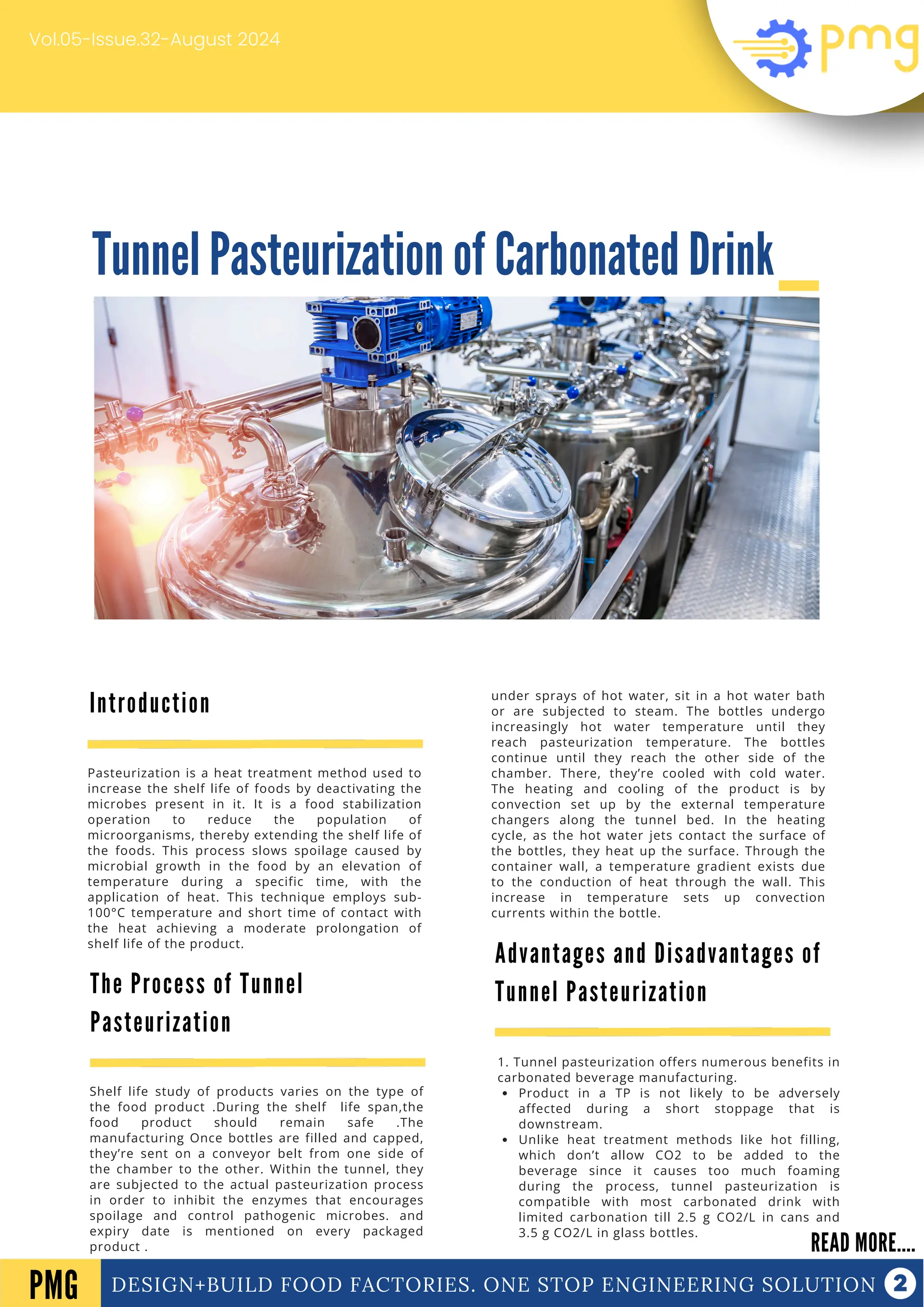
Pasteurization is a heat treatment method used to
increase the shelf life of foods by deactivating the
microbes present in it. It is a food stabilization
operation to reduce the population of
microorganisms, thereby extending the shelf life of
the foods. This process slows spoilage caused by
microbial growth in the food by an elevation of
temperature during a specific time, with the
application of heat. This technique employs sub-
100°C temperature and short time of contact with
the heat achieving a moderate prolongation of
shelf life of the product.
Vol.05-Issue.32-August 2024
The Process of Tunnel
Pasteurization
Shelf life study of products varies on the type of
the food product .During the shelf life span,the
food product should remain safe .The
manufacturing Once bottles are filled and capped,
they’re sent on a conveyor belt from one side of
the chamber to the other. Within the tunnel, they
are subjected to the actual pasteurization process
in order to inhibit the enzymes that encourages
spoilage and control pathogenic microbes. and
expiry date is mentioned on every packaged
product .
Advantages and Disadvantages of
Tunnel Pasteurization
1. Tunnel pasteurization offers numerous benefits in
carbonated beverage manufacturing.
Product in a TP is not likely to be adversely
affected during a short stoppage that is
downstream.
Unlike heat treatment methods like hot filling,
which don’t allow CO2 to be added to the
beverage since it causes too much foaming
during the process, tunnel pasteurization is
compatible with most carbonated drink with
limited carbonation till 2.5 g CO2/L in cans and
3.5 g CO2/L in glass bottles.
under sprays of hot water, sit in a hot water bath
or are subjected to steam. The bottles undergo
increasingly hot water temperature until they
reach pasteurization temperature. The bottles
continue until they reach the other side of the
chamber. There, they’re cooled with cold water.
The heating and cooling of the product is by
convection set up by the external temperature
changers along the tunnel bed. In the heating
cycle, as the hot water jets contact the surface of
the bottles, they heat up the surface. Through the
container wall, a temperature gradient exists due
to the conduction of heat through the wall. This
increase in temperature sets up convection
currents within the bottle.
DESIGN+BUILD FOOD FACTORIES. ONE STOP ENGINEERING SOLUTION
Vol.05-Issue.32-August 2024
DESIGN+BUILD FOOD FACTORIES. ONE STOP ENGINEERING SOLUTION
PMG
2. However, despite the advantages, it also has a
few cons:
Limitations on the amount of CO2 that can be
added to the product. TP is only used for low
carbonated products (less than 1 – 1.25 CO2 gas
volume) as the pressure built up during
pasteurization would otherwise exceed the
internal pressure resistance of the container.
Can occasionally require additional equipment
leading to additional expenses.
Within a TP, the temperature of the various
water sprays that are the source of heat and
cooling can be monitored in the usual way, but
the temperature of individual closed packages
cannot be measured, thus it is usually difficult to
monitor and validate the efficacy of the process
for individual entities.
1. Walking Beam: This configuration employs
alternating strips, picking and stepping product
forward.
2. Belt: This configuration uses belts constructed
from SS to convey the product forward through the
tunnel.
3. Carrier: These are formed carrier channels that
are mounted to roller chains on each side. The
channels support the product and transfers it
through the tunnel.
Tunnel Pasteurizers available
commercially
Some of the good options available for tunnel
pasteurizers are tabulated below. There are
however many more good players one can choose
from, which is not mentioned in this list.
Types of Tunnel Pasteurizer
Effect of temperature on
carbonation
Carbonation refers to carbon dioxide dissolved in a
liquid, and the rate at which CO2 dissolves or is
soluble depends on temperature. When the
temperature is raised, the rate of dissolution in
liquid is decreased, and vice versa when the
temperature is lowered. This basic principle explains
how temperature affects carbonation. Tunnel
pasteurization because of its gradual nature of
heating does not affect the carbonation of low
carbonated products. However, great care should be
taken to ensure that the bottles are adequately
cooled. Products that are not adequately cooled
before the discharge area of the TP may retain heat
in the middle for sufficient time to develop a loss in
the amount of carbonation and may develop a
noticeable cooked flavor.
Tuckman: Forming, Storming, Norming,
Performing Model
Vol.05-Issue.32-August 2024
DESIGN+BUILD FOOD FACTORIES. ONE STOP ENGINEERING SOLUTION
Introduction
READ MORE....
PMG
Forming, Storming, Norming, performing model
was first developed by Bruce Tuckman in 1965. It
is one of the most common team development
theories and had formed many ideas since its
conception.
Tuckman’s theory focuses on the way how a team
tackles a task from an initial stage to throughout
to the completion of the project. Tuckman’s theory
mainly focuses on Team Building Challenges. One
of the most useful concepts of team building
activities is that the team has an opportunity to
observe their behaviour within a measurable time
frame. Tuckman said that these phases are all
necessary and inevitable in order for a team to
grow, face up to challenges, tackle problems, find
solutions, plan work, and deliver results.
PROTEIN FUNCTIONALIZATION
Stages in Tuckman Theory
The forming stage is to create a team with goal directions
and roles to work upon so that members can start
building their trust. The energy level is very high in this
stage and a good leader can help the members to work
accordingly and focus on the goals.
2. Storming:
In the second stage as the team begins to move towards
its goals member found that they are unable to get their
goal due to this they are very frustrated and disappointed
by the team’s performance due to these conflicts arises.
There is a slight change in the behaviour as compared to
stage one. During the Storming stage, team members
may argue or become critical of the team's original
mission or goals. Members show their concerns as they
are not able to meet their goals.
Now the team needs to refocus on their goals has to keep
all the conflicts, disappointments aside and start all over
again. The team may need to develop both task-related
skills and group process and conflict management skills.
3. Norming:
In the third stage, the members start to resolve their
issues as soon as they resolve and start again with the
same excitement, they will see the team performing again
and trying to reach their goal. Behaviours during the
Norming stage may include members making a conscious
effort to resolve problems and achieve group harmony.
Communication is more fluent and meaningful teams may
begin to develop their own language (nicknames) or inside
jokes. Now they will enjoy working with each other.
1. Forming:
During the Forming stage, team members are usually very
excited to be part of the team and eager about the work
ahead. Members often have high positive expectations
and attitudes for the team experience. At the same time,
they may also feel some anxiety, wondering how they will
fit into the team and if their performance will measure up
or not. Forming stage has a lot of questions from team
members as they are excited to work with the new team.
DESIGN+BUILD FOOD FACTORIES. ONE STOP ENGINEERING SOLUTION
PMG
Vol.05-Issue.32-August 2024
Now members shift their energy to the team's goals
and show an increase in productivity, in both
individual and collective work. The team may find
that this is an appropriate time for an evaluation of
team processes and productivity.
4. Performing:
In the fourth stage, members now start feeling
satisfaction in their work as well as with teams’
performance. Now they are well aware of their
strength and weaknesses, and they distribute work
accordingly. As now they help each other Members
feel confident in their individual abilities and those
of their teammates. Roles on the team may have
become more fluid, with members taking on various
roles and responsibilities as needed. Differences
among members are appreciated and used to
enhance the team's performance.
Team members should continue to deepen their
knowledge and skills, including working to
continuously improve team development.
Accomplishments in team processes or progress are
measured and celebrated.
Is the "Performing" stage the end of the process?
Working with a high-performing team is a truly
pleasurable and growth experience. This is not the
end of the process the team should still work and
focus on new upcoming goals Changes, such as
members coming or going or large-scale changes in
the external environment, can lead a team to cycle
back to an earlier stage. But if the changes are
recognized and addressed directly, teams may
successfully remain in the Performing stage
indefinitely.
5. Adjourning:
Some teams do come to an end, when their work is
completed or when the organization’s needs change.
While not part of Tuckman’s original model, it is
important for any team to pay attention to the end
or termination process. Members may feel sad or
have a sense of loss about the changes coming to
their team relationships. And at the same time, the
team will feel a sense of deep satisfaction at the
accomplishments of the team.
Conclusion
During the last, some team members may become
less focussed on the team's tasks and their
productivity may drop. Alternatively, some team
members may be focused on the task and their task
productivity may increase.
Coca-Cola and Oreo have joined forces to introduce two
exclusive, limited-edition products: Oreo Coca-Cola Sandwich
Cookies and Coca-Cola Oreo Zero Sugar Limited Edition soda.
This collaboration, named “Besties,” aims to blend the best
qualities of each brand to create exceptional offerings. In a
recent press release, the brands expressed that this unique
partnership is designed to ignite joy among friends through the
introduction of two extraordinary products and a range of
exclusive digital and physical experiences. The Coca-Cola Oreo
Zero Sugar Limited Edition soda infuses Coca-Cola with delightful
hints inspired by Oreo cookies, while the Oreo Coca-Cola
Sandwich Cookie features two distinct base cookies, one infused
with Coca-Cola syrup and the other embossed with Coca-Cola
designs. Moreover, these cookies are infused with popping
candies to deliver a fizzy sensation with every bite. This exciting
collaboration is generating buzz and anticipation among fans
worldwide.
DESIGN+BUILD FOOD FACTORIES. ONE STOP ENGINEERING SOLUTION
FOOD INDUSTRY
INDUSTRY BUZZ
Oreo and Coca-Cola are collaborating
on carbonated cookies and
chocolate-flavoured soda.
FSSAI has initiated a project to
tackle the issue of microplastic
contamination in food.
The Food Safety and Standards Authority of India (FSSAI) initiated a
significant project on August 18, 2024, in New Delhi to address the
growing issue of microplastic contamination in food. The project,
titled "Micro-and Nano-Plastics as Emerging Food Contaminants:
Establishing Validated Methodologies and Understanding the
Prevalence in Different Food Matrices," began in March of the same
year. Its main objectives are to develop and validate analytical
methods for identifying micro and nano-plastics in various food
products, as well as to evaluate their prevalence and exposure levels
in India. The project aims to establish standard protocols for
micro/nano-plastic analysis and carry out intra- and inter-laboratory
comparisons. Collaborating with esteemed research institutions
such as the CSIR-Indian Institute of Toxicology Research (Lucknow),
ICAR-Central Institute of Fisheries Technology (Kochi), and the Birla
Institute of Technology and Science (Pilani), this study also seeks to
produce vital data on microplastic exposure levels among
consumers.
PMG
DESIGN+BUILD FOOD FACTORIES. ONE STOP ENGINEERING SOLUTION
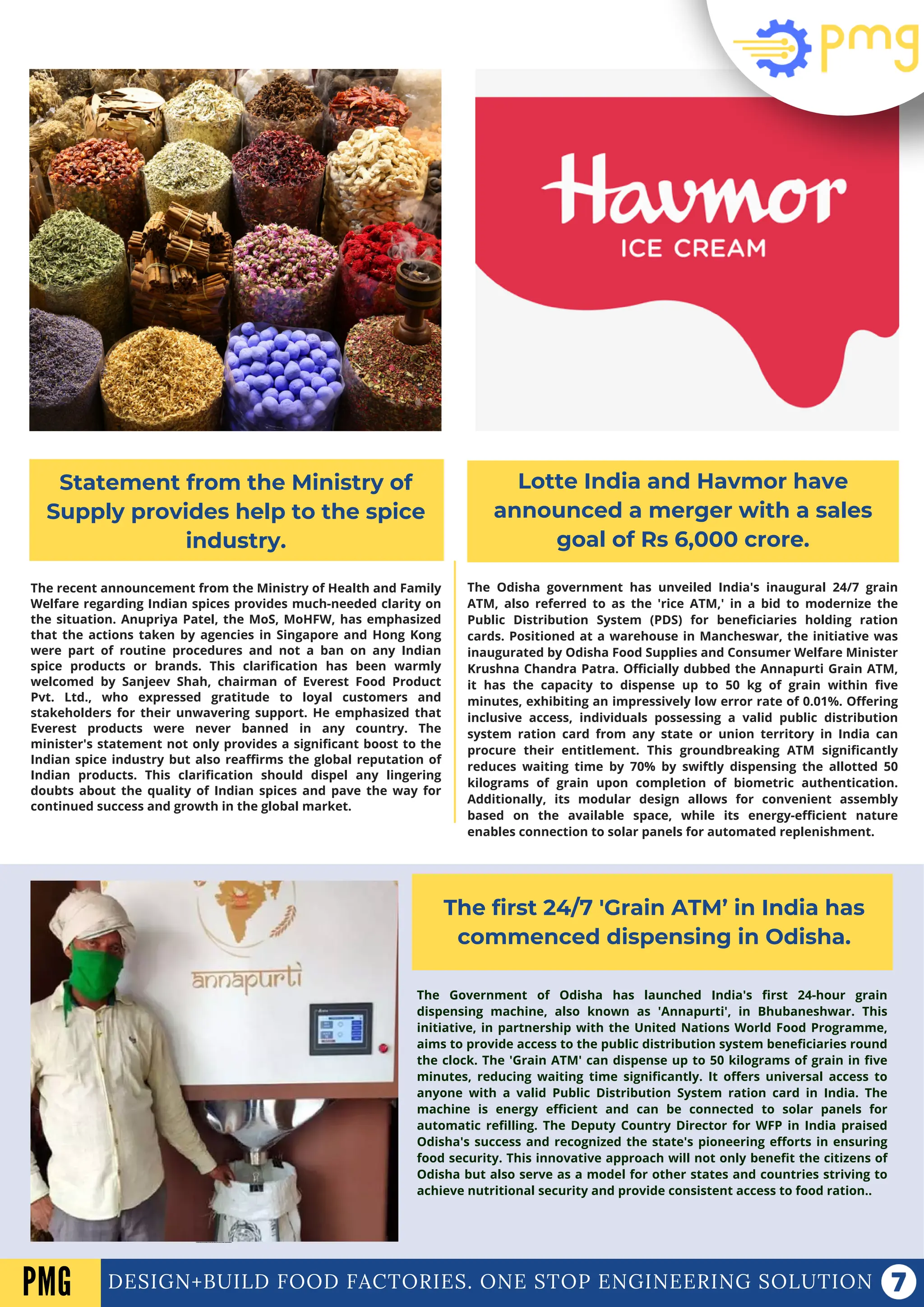
Statement from the Ministry of
Supply provides help to the spice
industry.
Lotte India and Havmor have
announced a merger with a sales
goal of Rs 6,000 crore.
The first 24/7 'Grain ATM’ in India has
commenced dispensing in Odisha.
The recent announcement from the Ministry of Health and Family
Welfare regarding Indian spices provides much-needed clarity on
the situation. Anupriya Patel, the MoS, MoHFW, has emphasized
that the actions taken by agencies in Singapore and Hong Kong
were part of routine procedures and not a ban on any Indian
spice products or brands. This clarification has been warmly
welcomed by Sanjeev Shah, chairman of Everest Food Product
Pvt. Ltd., who expressed gratitude to loyal customers and
stakeholders for their unwavering support. He emphasized that
Everest products were never banned in any country. The
minister's statement not only provides a significant boost to the
Indian spice industry but also reaffirms the global reputation of
Indian products. This clarification should dispel any lingering
doubts about the quality of Indian spices and pave the way for
continued success and growth in the global market.
The Odisha government has unveiled India's inaugural 24/7 grain
ATM, also referred to as the 'rice ATM,' in a bid to modernize the
Public Distribution System (PDS) for beneficiaries holding ration
cards. Positioned at a warehouse in Mancheswar, the initiative was
inaugurated by Odisha Food Supplies and Consumer Welfare Minister
Krushna Chandra Patra. Officially dubbed the Annapurti Grain ATM,
it has the capacity to dispense up to 50 kg of grain within five
minutes, exhibiting an impressively low error rate of 0.01%. Offering
inclusive access, individuals possessing a valid public distribution
system ration card from any state or union territory in India can
procure their entitlement. This groundbreaking ATM significantly
reduces waiting time by 70% by swiftly dispensing the allotted 50
kilograms of grain upon completion of biometric authentication.
Additionally, its modular design allows for convenient assembly
based on the available space, while its energy-efficient nature
enables connection to solar panels for automated replenishment.
PMG
The Government of Odisha has launched India's first 24-hour grain
dispensing machine, also known as 'Annapurti', in Bhubaneshwar. This
initiative, in partnership with the United Nations World Food Programme,
aims to provide access to the public distribution system beneficiaries round
the clock. The 'Grain ATM' can dispense up to 50 kilograms of grain in five
minutes, reducing waiting time significantly. It offers universal access to
anyone with a valid Public Distribution System ration card in India. The
machine is energy efficient and can be connected to solar panels for
automatic refilling. The Deputy Country Director for WFP in India praised
Odisha's success and recognized the state's pioneering efforts in ensuring
food security. This innovative approach will not only benefit the citizens of
Odisha but also serve as a model for other states and countries striving to
achieve nutritional security and provide consistent access to food ration..
T
HE UNION MINISTER FOR FARMERS' WELFARE AND AGRICULTURE ASSESSES KHARIF SEASON READINESS.
N
O
N
-
T
E
C
H
N
I
C
A
L
C
O
N
T
E
N
T
WEEKS
HIGHLIGHT
DESIGN+BUILD FOOD FACTORIES. ONE STOP ENGINEERING SOLUTION
A
U
G
U
S
T
PMG
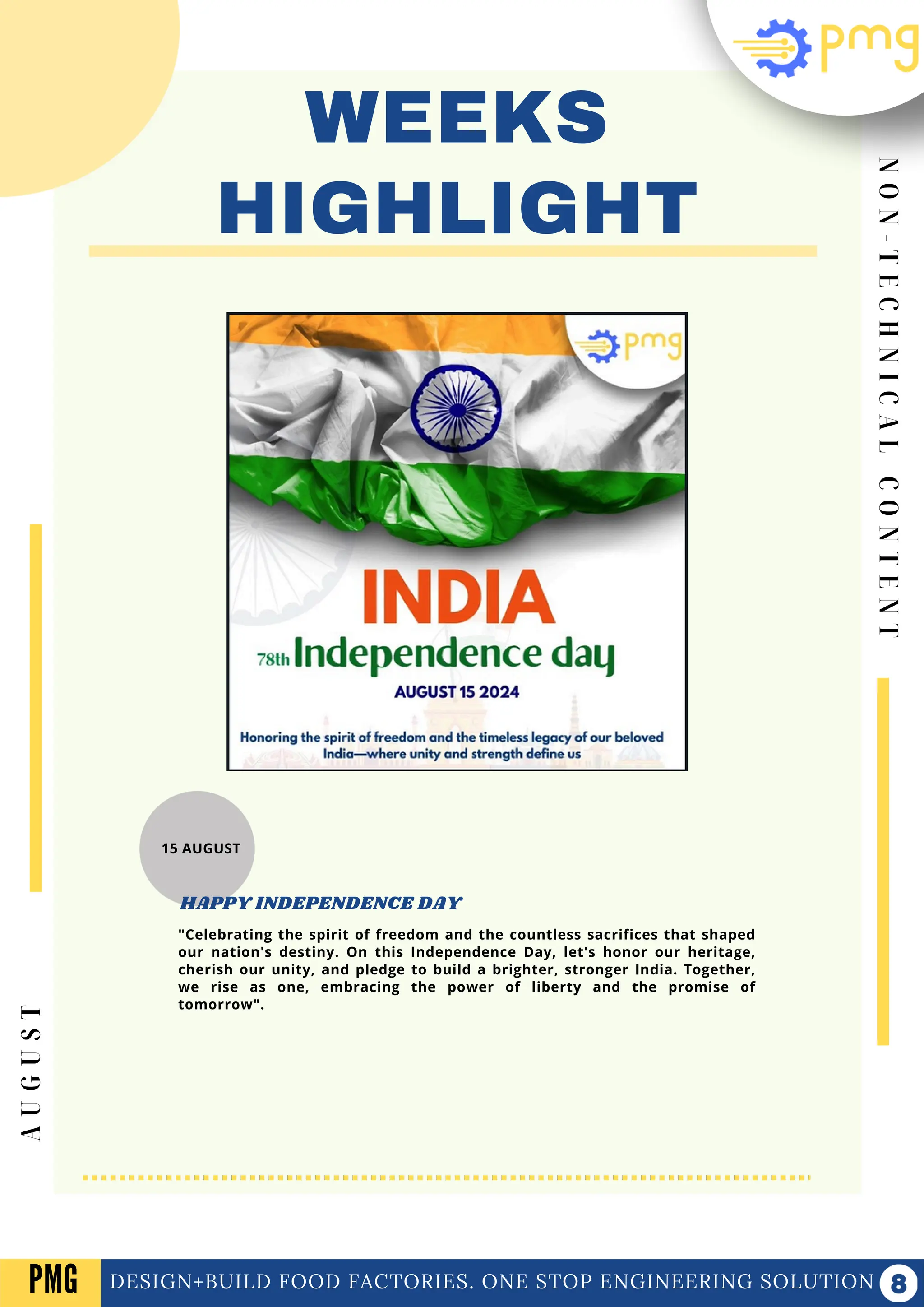
15 AUGUST
"Celebrating the spirit of freedom and the countless sacrifices that shaped
our nation's destiny. On this Independence Day, let's honor our heritage,
cherish our unity, and pledge to build a brighter, stronger India. Together,
we rise as one, embracing the power of liberty and the promise of
tomorrow".
HAPPY INDEPENDENCE DAY
DID YOU KNOW?
3/4
2/4
1/4
Fact 1
4/4
T
E
C
H
N
I
C
A
L
C
O
N
T
E
N
T
DESIGN+BUILD FOOD FACTORIES. ONE STOP ENGINEERING SOLUTION
PMG
A
U
G
U
S
T
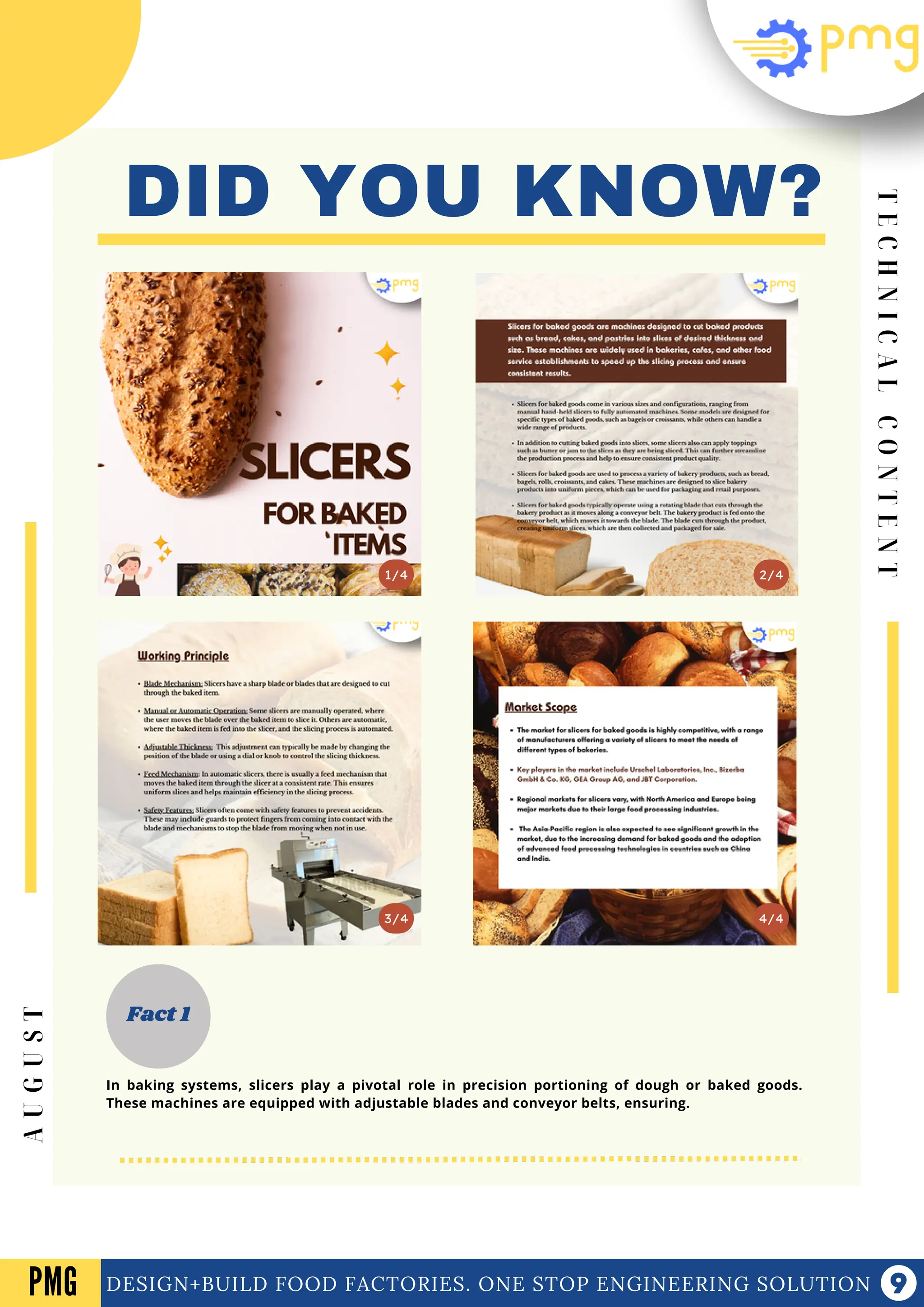
In baking systems, slicers play a pivotal role in precision portioning of dough or baked goods.
These machines are equipped with adjustable blades and conveyor belts, ensuring.
T
E
C
H
N
I
C
A
L
C
O
N
T
E
N
T
Vol .01 Newsletter
DESIGN+BUILD FOOD FACTORIES. ONE STOP ENGINEERING SOLUTION
3/4
2/4
1/4
Fact 2
4/4
PMG
A
U
G
U
S
T
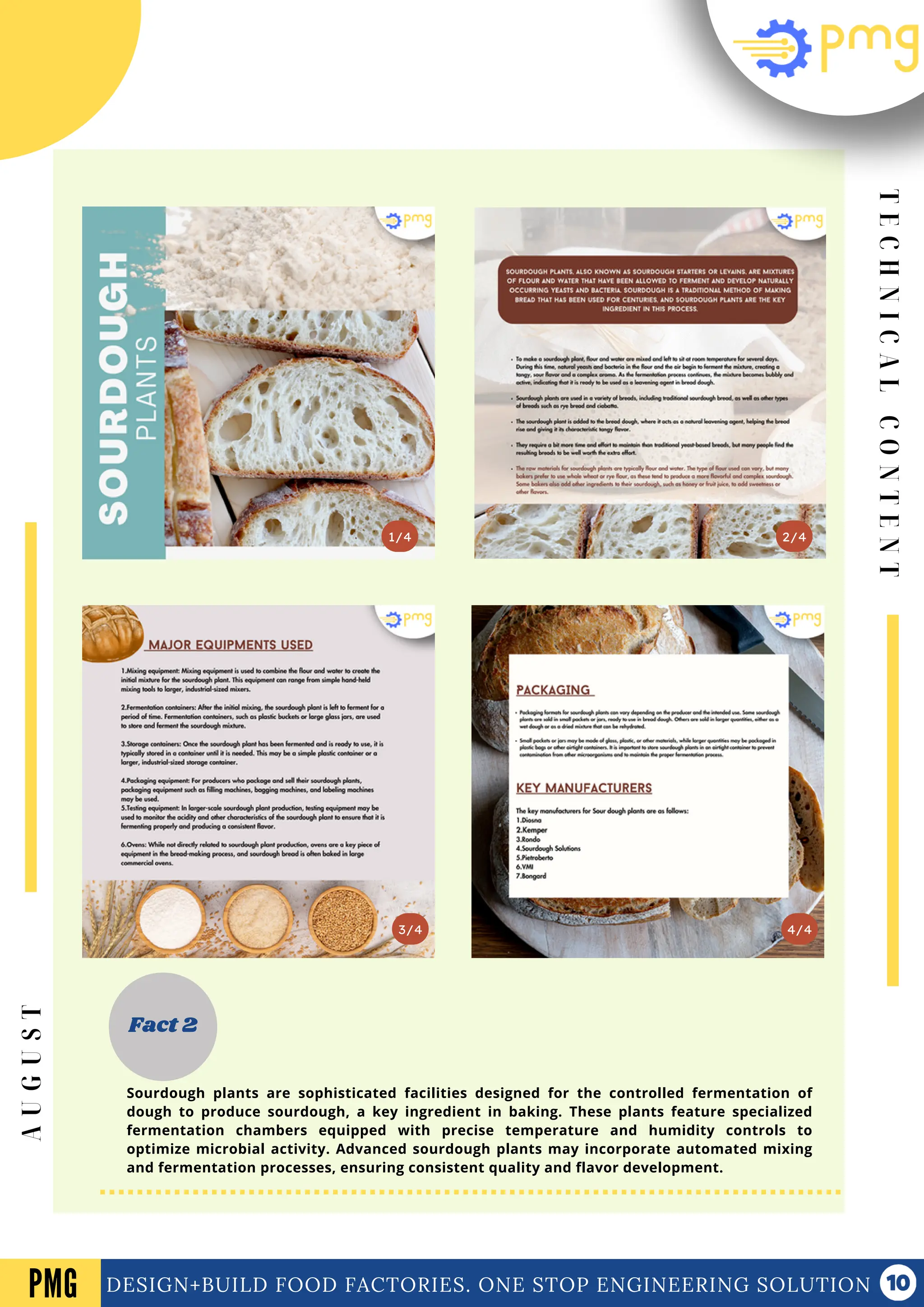
Sourdough plants are sophisticated facilities designed for the controlled fermentation of
dough to produce sourdough, a key ingredient in baking. These plants feature specialized
fermentation chambers equipped with precise temperature and humidity controls to
optimize microbial activity. Advanced sourdough plants may incorporate automated mixing
and fermentation processes, ensuring consistent quality and flavor development.
T
E
C
H
N
I
C
A
L
C
O
N
T
E
N
T
Vol .01 Newsletter
DESIGN+BUILD FOOD FACTORIES. ONE STOP ENGINEERING SOLUTION
3/4
2/4
1/4
Fact 3
4/4
PMG
A
U
G
U
S
T
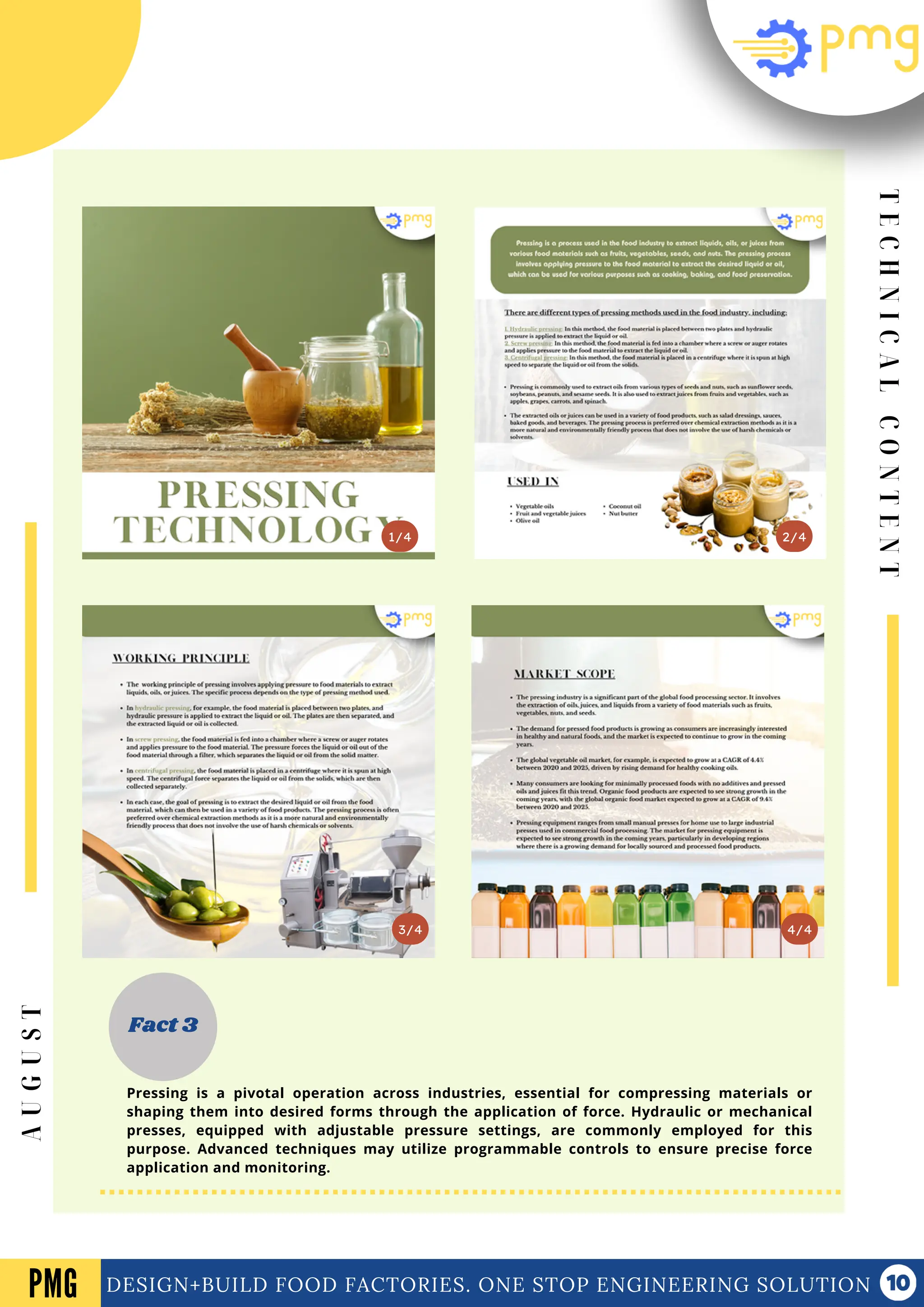
Pressing is a pivotal operation across industries, essential for compressing materials or
shaping them into desired forms through the application of force. Hydraulic or mechanical
presses, equipped with adjustable pressure settings, are commonly employed for this
purpose. Advanced techniques may utilize programmable controls to ensure precise force
application and monitoring.
T
E
C
H
N
I
C
A
L
C
O
N
T
E
N
T
Vol .01 Newsletter
DESIGN+BUILD FOOD FACTORIES. ONE STOP ENGINEERING SOLUTION
3/4
2/4
1/4
Fact 4
4/4
PMG
A
U
G
U
S
T
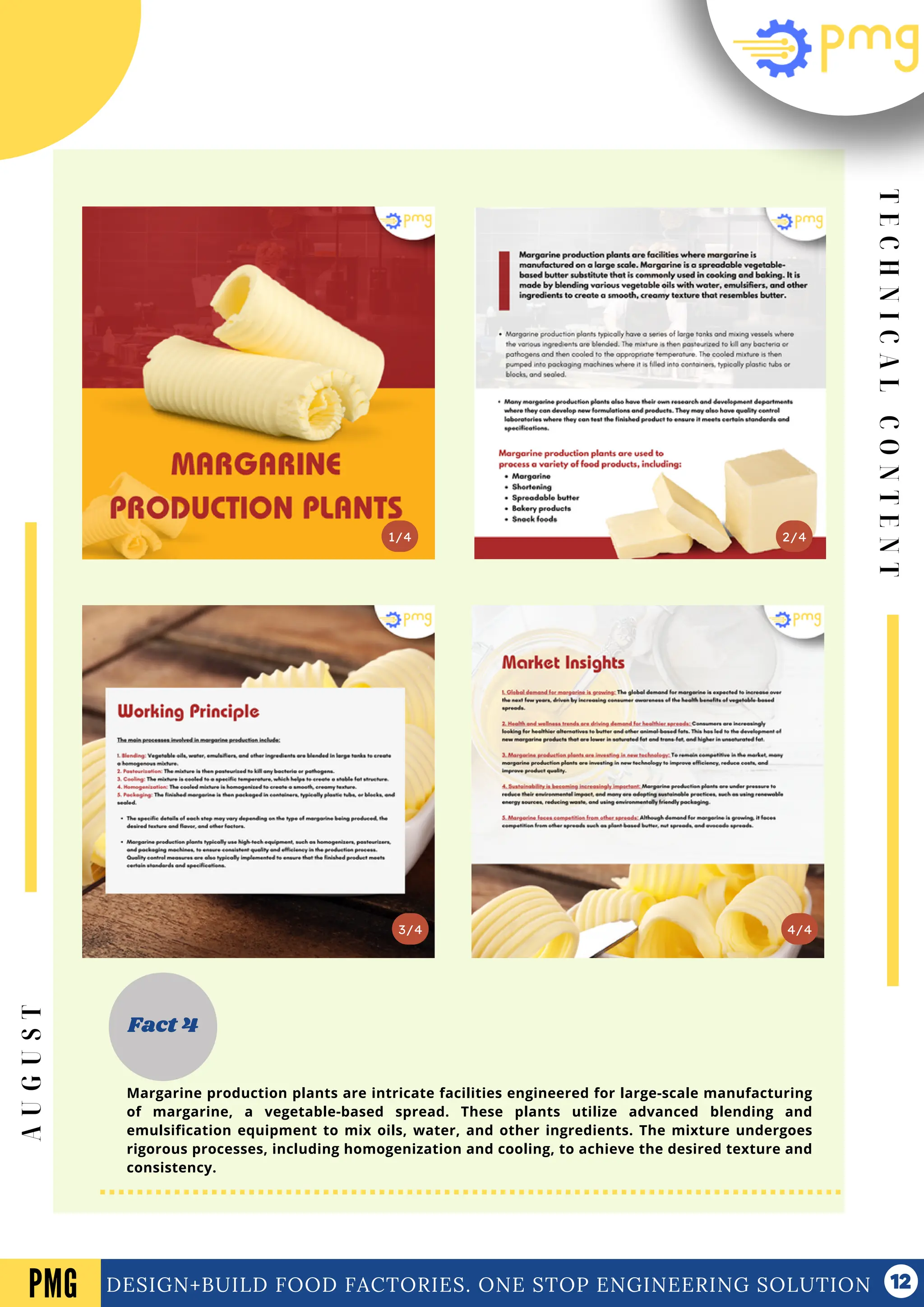
Margarine production plants are intricate facilities engineered for large-scale manufacturing
of margarine, a vegetable-based spread. These plants utilize advanced blending and
emulsification equipment to mix oils, water, and other ingredients. The mixture undergoes
rigorous processes, including homogenization and cooling, to achieve the desired texture and
consistency.
DESIGN+BUILD FOOD FACTORIES. ONE STOP ENGINEERING SOLUTION
PMG
B
U
I
L
D
W
O
R
L
D
C
L
A
S
S
F
O
O
D
F
A
C
T
O
R
I
E
S
PMG ENGINEERING
About PMG
Delivering End-to-End Engineering
Design & Construction Management in
Food & Beverage Industry
Website Link Follow Us on
Click Here
MAKING CUSTOMERS THE INDUSTRY LEADERS
ENGINEERING MUST CREATE BUSINESS VALUE
MEET THE EXPECTATIONS OF ALL STAKEHOLDERS
OPTIMAL ENGINEERING
About PMG
Vol.05-Issue.32-August 2024
PEOPLE DELIVERING RESULTS
Safe-by-choice. First Time Quality. Maximize Value. Objectivity.
Ownership. Reliable and Trustworthy Business.
Process Engineering I Project Management I Mechanical I Electrical I Automation I Food Safety
Meeting Global Benchmarks

PMG Newsletter (Volume 05. Issue 32) (1).pdf

  • 1.
    DESIGN+BUILD FOOD FACTORIES.ONE STOP ENGINEERING SOLUTION TECH-KNOWLEDGE Vol.05-Issue.32-August 2024 www.pmg.engineering PMG FOOD & BEVERAGE INDUSTRY ENGINEERING & DESIGN SCIENCE & TECHNOLOGY A The Official PMG Engineering Newsletter
  • 2.
    DESIGN+BUILD FOOD FACTORIES.ONE STOP ENGINEERING SOLUTION PMG B U I L D W O R L D C L A S S F O O D F A C T O R I E S
  • 3.
    1. WHITE PAPER 2.INDUSTRY BUZZ 4. DID YOU KNOW? 3. WEEKS HIGHLIGHT Fascinating Food Facts To Expand Knowledge Latest Food Industry News Updates A Look Into The Main Events Of The Week A. Electrical panel B. Frozen Dessert CONTENTS 8 9-12 2-5 6-7 Vol.05-Issue.32-August 2024 DESIGN+BUILD FOOD FACTORIES. ONE STOP ENGINEERING SOLUTION PMG 2. INDUSTRY BUZZ Latest Food Industry News Updates 3. WEEKS HIGHLIGHT A Look Into The Main Events Of The Week 4. DID YOU KNOW? Fascinating Food Facts To Expand Knowledge 1. WHITE PAPER A.Tunnel Pasteurization of Carbonated Drink B.Tuckman: Forming, Storming, Norming, Performing Model
  • 4.
    Tunnel Pasteurization ofCarbonated Drink DESIGN+BUILD FOOD FACTORIES. ONE STOP ENGINEERING SOLUTION Introduction READ MORE.... PMG Pasteurization is a heat treatment method used to increase the shelf life of foods by deactivating the microbes present in it. It is a food stabilization operation to reduce the population of microorganisms, thereby extending the shelf life of the foods. This process slows spoilage caused by microbial growth in the food by an elevation of temperature during a specific time, with the application of heat. This technique employs sub- 100°C temperature and short time of contact with the heat achieving a moderate prolongation of shelf life of the product. Vol.05-Issue.32-August 2024 The Process of Tunnel Pasteurization Shelf life study of products varies on the type of the food product .During the shelf life span,the food product should remain safe .The manufacturing Once bottles are filled and capped, they’re sent on a conveyor belt from one side of the chamber to the other. Within the tunnel, they are subjected to the actual pasteurization process in order to inhibit the enzymes that encourages spoilage and control pathogenic microbes. and expiry date is mentioned on every packaged product . Advantages and Disadvantages of Tunnel Pasteurization 1. Tunnel pasteurization offers numerous benefits in carbonated beverage manufacturing. Product in a TP is not likely to be adversely affected during a short stoppage that is downstream. Unlike heat treatment methods like hot filling, which don’t allow CO2 to be added to the beverage since it causes too much foaming during the process, tunnel pasteurization is compatible with most carbonated drink with limited carbonation till 2.5 g CO2/L in cans and 3.5 g CO2/L in glass bottles. under sprays of hot water, sit in a hot water bath or are subjected to steam. The bottles undergo increasingly hot water temperature until they reach pasteurization temperature. The bottles continue until they reach the other side of the chamber. There, they’re cooled with cold water. The heating and cooling of the product is by convection set up by the external temperature changers along the tunnel bed. In the heating cycle, as the hot water jets contact the surface of the bottles, they heat up the surface. Through the container wall, a temperature gradient exists due to the conduction of heat through the wall. This increase in temperature sets up convection currents within the bottle.
  • 5.
    DESIGN+BUILD FOOD FACTORIES.ONE STOP ENGINEERING SOLUTION Vol.05-Issue.32-August 2024 DESIGN+BUILD FOOD FACTORIES. ONE STOP ENGINEERING SOLUTION PMG 2. However, despite the advantages, it also has a few cons: Limitations on the amount of CO2 that can be added to the product. TP is only used for low carbonated products (less than 1 – 1.25 CO2 gas volume) as the pressure built up during pasteurization would otherwise exceed the internal pressure resistance of the container. Can occasionally require additional equipment leading to additional expenses. Within a TP, the temperature of the various water sprays that are the source of heat and cooling can be monitored in the usual way, but the temperature of individual closed packages cannot be measured, thus it is usually difficult to monitor and validate the efficacy of the process for individual entities. 1. Walking Beam: This configuration employs alternating strips, picking and stepping product forward. 2. Belt: This configuration uses belts constructed from SS to convey the product forward through the tunnel. 3. Carrier: These are formed carrier channels that are mounted to roller chains on each side. The channels support the product and transfers it through the tunnel. Tunnel Pasteurizers available commercially Some of the good options available for tunnel pasteurizers are tabulated below. There are however many more good players one can choose from, which is not mentioned in this list. Types of Tunnel Pasteurizer Effect of temperature on carbonation Carbonation refers to carbon dioxide dissolved in a liquid, and the rate at which CO2 dissolves or is soluble depends on temperature. When the temperature is raised, the rate of dissolution in liquid is decreased, and vice versa when the temperature is lowered. This basic principle explains how temperature affects carbonation. Tunnel pasteurization because of its gradual nature of heating does not affect the carbonation of low carbonated products. However, great care should be taken to ensure that the bottles are adequately cooled. Products that are not adequately cooled before the discharge area of the TP may retain heat in the middle for sufficient time to develop a loss in the amount of carbonation and may develop a noticeable cooked flavor.
  • 6.
    Tuckman: Forming, Storming,Norming, Performing Model Vol.05-Issue.32-August 2024 DESIGN+BUILD FOOD FACTORIES. ONE STOP ENGINEERING SOLUTION Introduction READ MORE.... PMG Forming, Storming, Norming, performing model was first developed by Bruce Tuckman in 1965. It is one of the most common team development theories and had formed many ideas since its conception. Tuckman’s theory focuses on the way how a team tackles a task from an initial stage to throughout to the completion of the project. Tuckman’s theory mainly focuses on Team Building Challenges. One of the most useful concepts of team building activities is that the team has an opportunity to observe their behaviour within a measurable time frame. Tuckman said that these phases are all necessary and inevitable in order for a team to grow, face up to challenges, tackle problems, find solutions, plan work, and deliver results. PROTEIN FUNCTIONALIZATION PROTEIN FUNCTIONALIZATION Stages in Tuckman Theory The forming stage is to create a team with goal directions and roles to work upon so that members can start building their trust. The energy level is very high in this stage and a good leader can help the members to work accordingly and focus on the goals. 2. Storming: In the second stage as the team begins to move towards its goals member found that they are unable to get their goal due to this they are very frustrated and disappointed by the team’s performance due to these conflicts arises. There is a slight change in the behaviour as compared to stage one. During the Storming stage, team members may argue or become critical of the team's original mission or goals. Members show their concerns as they are not able to meet their goals. Now the team needs to refocus on their goals has to keep all the conflicts, disappointments aside and start all over again. The team may need to develop both task-related skills and group process and conflict management skills. 3. Norming: In the third stage, the members start to resolve their issues as soon as they resolve and start again with the same excitement, they will see the team performing again and trying to reach their goal. Behaviours during the Norming stage may include members making a conscious effort to resolve problems and achieve group harmony. Communication is more fluent and meaningful teams may begin to develop their own language (nicknames) or inside jokes. Now they will enjoy working with each other. 1. Forming: During the Forming stage, team members are usually very excited to be part of the team and eager about the work ahead. Members often have high positive expectations and attitudes for the team experience. At the same time, they may also feel some anxiety, wondering how they will fit into the team and if their performance will measure up or not. Forming stage has a lot of questions from team members as they are excited to work with the new team.
  • 7.
    DESIGN+BUILD FOOD FACTORIES.ONE STOP ENGINEERING SOLUTION PMG Vol.05-Issue.32-August 2024 Now members shift their energy to the team's goals and show an increase in productivity, in both individual and collective work. The team may find that this is an appropriate time for an evaluation of team processes and productivity. 4. Performing: In the fourth stage, members now start feeling satisfaction in their work as well as with teams’ performance. Now they are well aware of their strength and weaknesses, and they distribute work accordingly. As now they help each other Members feel confident in their individual abilities and those of their teammates. Roles on the team may have become more fluid, with members taking on various roles and responsibilities as needed. Differences among members are appreciated and used to enhance the team's performance. Team members should continue to deepen their knowledge and skills, including working to continuously improve team development. Accomplishments in team processes or progress are measured and celebrated. Is the "Performing" stage the end of the process? Working with a high-performing team is a truly pleasurable and growth experience. This is not the end of the process the team should still work and focus on new upcoming goals Changes, such as members coming or going or large-scale changes in the external environment, can lead a team to cycle back to an earlier stage. But if the changes are recognized and addressed directly, teams may successfully remain in the Performing stage indefinitely. 5. Adjourning: Some teams do come to an end, when their work is completed or when the organization’s needs change. While not part of Tuckman’s original model, it is important for any team to pay attention to the end or termination process. Members may feel sad or have a sense of loss about the changes coming to their team relationships. And at the same time, the team will feel a sense of deep satisfaction at the accomplishments of the team. Conclusion During the last, some team members may become less focussed on the team's tasks and their productivity may drop. Alternatively, some team members may be focused on the task and their task productivity may increase.
  • 8.
    Coca-Cola and Oreohave joined forces to introduce two exclusive, limited-edition products: Oreo Coca-Cola Sandwich Cookies and Coca-Cola Oreo Zero Sugar Limited Edition soda. This collaboration, named “Besties,” aims to blend the best qualities of each brand to create exceptional offerings. In a recent press release, the brands expressed that this unique partnership is designed to ignite joy among friends through the introduction of two extraordinary products and a range of exclusive digital and physical experiences. The Coca-Cola Oreo Zero Sugar Limited Edition soda infuses Coca-Cola with delightful hints inspired by Oreo cookies, while the Oreo Coca-Cola Sandwich Cookie features two distinct base cookies, one infused with Coca-Cola syrup and the other embossed with Coca-Cola designs. Moreover, these cookies are infused with popping candies to deliver a fizzy sensation with every bite. This exciting collaboration is generating buzz and anticipation among fans worldwide. DESIGN+BUILD FOOD FACTORIES. ONE STOP ENGINEERING SOLUTION FOOD INDUSTRY INDUSTRY BUZZ Oreo and Coca-Cola are collaborating on carbonated cookies and chocolate-flavoured soda. FSSAI has initiated a project to tackle the issue of microplastic contamination in food. The Food Safety and Standards Authority of India (FSSAI) initiated a significant project on August 18, 2024, in New Delhi to address the growing issue of microplastic contamination in food. The project, titled "Micro-and Nano-Plastics as Emerging Food Contaminants: Establishing Validated Methodologies and Understanding the Prevalence in Different Food Matrices," began in March of the same year. Its main objectives are to develop and validate analytical methods for identifying micro and nano-plastics in various food products, as well as to evaluate their prevalence and exposure levels in India. The project aims to establish standard protocols for micro/nano-plastic analysis and carry out intra- and inter-laboratory comparisons. Collaborating with esteemed research institutions such as the CSIR-Indian Institute of Toxicology Research (Lucknow), ICAR-Central Institute of Fisheries Technology (Kochi), and the Birla Institute of Technology and Science (Pilani), this study also seeks to produce vital data on microplastic exposure levels among consumers. PMG
  • 9.
    DESIGN+BUILD FOOD FACTORIES.ONE STOP ENGINEERING SOLUTION Statement from the Ministry of Supply provides help to the spice industry. Lotte India and Havmor have announced a merger with a sales goal of Rs 6,000 crore. The first 24/7 'Grain ATM’ in India has commenced dispensing in Odisha. The recent announcement from the Ministry of Health and Family Welfare regarding Indian spices provides much-needed clarity on the situation. Anupriya Patel, the MoS, MoHFW, has emphasized that the actions taken by agencies in Singapore and Hong Kong were part of routine procedures and not a ban on any Indian spice products or brands. This clarification has been warmly welcomed by Sanjeev Shah, chairman of Everest Food Product Pvt. Ltd., who expressed gratitude to loyal customers and stakeholders for their unwavering support. He emphasized that Everest products were never banned in any country. The minister's statement not only provides a significant boost to the Indian spice industry but also reaffirms the global reputation of Indian products. This clarification should dispel any lingering doubts about the quality of Indian spices and pave the way for continued success and growth in the global market. The Odisha government has unveiled India's inaugural 24/7 grain ATM, also referred to as the 'rice ATM,' in a bid to modernize the Public Distribution System (PDS) for beneficiaries holding ration cards. Positioned at a warehouse in Mancheswar, the initiative was inaugurated by Odisha Food Supplies and Consumer Welfare Minister Krushna Chandra Patra. Officially dubbed the Annapurti Grain ATM, it has the capacity to dispense up to 50 kg of grain within five minutes, exhibiting an impressively low error rate of 0.01%. Offering inclusive access, individuals possessing a valid public distribution system ration card from any state or union territory in India can procure their entitlement. This groundbreaking ATM significantly reduces waiting time by 70% by swiftly dispensing the allotted 50 kilograms of grain upon completion of biometric authentication. Additionally, its modular design allows for convenient assembly based on the available space, while its energy-efficient nature enables connection to solar panels for automated replenishment. PMG The Government of Odisha has launched India's first 24-hour grain dispensing machine, also known as 'Annapurti', in Bhubaneshwar. This initiative, in partnership with the United Nations World Food Programme, aims to provide access to the public distribution system beneficiaries round the clock. The 'Grain ATM' can dispense up to 50 kilograms of grain in five minutes, reducing waiting time significantly. It offers universal access to anyone with a valid Public Distribution System ration card in India. The machine is energy efficient and can be connected to solar panels for automatic refilling. The Deputy Country Director for WFP in India praised Odisha's success and recognized the state's pioneering efforts in ensuring food security. This innovative approach will not only benefit the citizens of Odisha but also serve as a model for other states and countries striving to achieve nutritional security and provide consistent access to food ration.. T HE UNION MINISTER FOR FARMERS' WELFARE AND AGRICULTURE ASSESSES KHARIF SEASON READINESS.
  • 10.
    N O N - T E C H N I C A L C O N T E N T WEEKS HIGHLIGHT DESIGN+BUILD FOOD FACTORIES.ONE STOP ENGINEERING SOLUTION A U G U S T PMG 15 AUGUST "Celebrating the spirit of freedom and the countless sacrifices that shaped our nation's destiny. On this Independence Day, let's honor our heritage, cherish our unity, and pledge to build a brighter, stronger India. Together, we rise as one, embracing the power of liberty and the promise of tomorrow". HAPPY INDEPENDENCE DAY
  • 11.
    DID YOU KNOW? 3/4 2/4 1/4 Fact1 4/4 T E C H N I C A L C O N T E N T DESIGN+BUILD FOOD FACTORIES. ONE STOP ENGINEERING SOLUTION PMG A U G U S T In baking systems, slicers play a pivotal role in precision portioning of dough or baked goods. These machines are equipped with adjustable blades and conveyor belts, ensuring.
  • 12.
    T E C H N I C A L C O N T E N T Vol .01 Newsletter DESIGN+BUILDFOOD FACTORIES. ONE STOP ENGINEERING SOLUTION 3/4 2/4 1/4 Fact 2 4/4 PMG A U G U S T Sourdough plants are sophisticated facilities designed for the controlled fermentation of dough to produce sourdough, a key ingredient in baking. These plants feature specialized fermentation chambers equipped with precise temperature and humidity controls to optimize microbial activity. Advanced sourdough plants may incorporate automated mixing and fermentation processes, ensuring consistent quality and flavor development.
  • 13.
    T E C H N I C A L C O N T E N T Vol .01 Newsletter DESIGN+BUILDFOOD FACTORIES. ONE STOP ENGINEERING SOLUTION 3/4 2/4 1/4 Fact 3 4/4 PMG A U G U S T Pressing is a pivotal operation across industries, essential for compressing materials or shaping them into desired forms through the application of force. Hydraulic or mechanical presses, equipped with adjustable pressure settings, are commonly employed for this purpose. Advanced techniques may utilize programmable controls to ensure precise force application and monitoring.
  • 14.
    T E C H N I C A L C O N T E N T Vol .01 Newsletter DESIGN+BUILDFOOD FACTORIES. ONE STOP ENGINEERING SOLUTION 3/4 2/4 1/4 Fact 4 4/4 PMG A U G U S T Margarine production plants are intricate facilities engineered for large-scale manufacturing of margarine, a vegetable-based spread. These plants utilize advanced blending and emulsification equipment to mix oils, water, and other ingredients. The mixture undergoes rigorous processes, including homogenization and cooling, to achieve the desired texture and consistency.
  • 15.
    DESIGN+BUILD FOOD FACTORIES.ONE STOP ENGINEERING SOLUTION PMG B U I L D W O R L D C L A S S F O O D F A C T O R I E S
  • 16.
    PMG ENGINEERING About PMG DeliveringEnd-to-End Engineering Design & Construction Management in Food & Beverage Industry Website Link Follow Us on Click Here MAKING CUSTOMERS THE INDUSTRY LEADERS ENGINEERING MUST CREATE BUSINESS VALUE MEET THE EXPECTATIONS OF ALL STAKEHOLDERS OPTIMAL ENGINEERING About PMG Vol.05-Issue.32-August 2024 PEOPLE DELIVERING RESULTS Safe-by-choice. First Time Quality. Maximize Value. Objectivity. Ownership. Reliable and Trustworthy Business. Process Engineering I Project Management I Mechanical I Electrical I Automation I Food Safety Meeting Global Benchmarks