DESIGN+BUILD FOOD FACTORIES. ONE STOP ENGINEERING SOLUTION
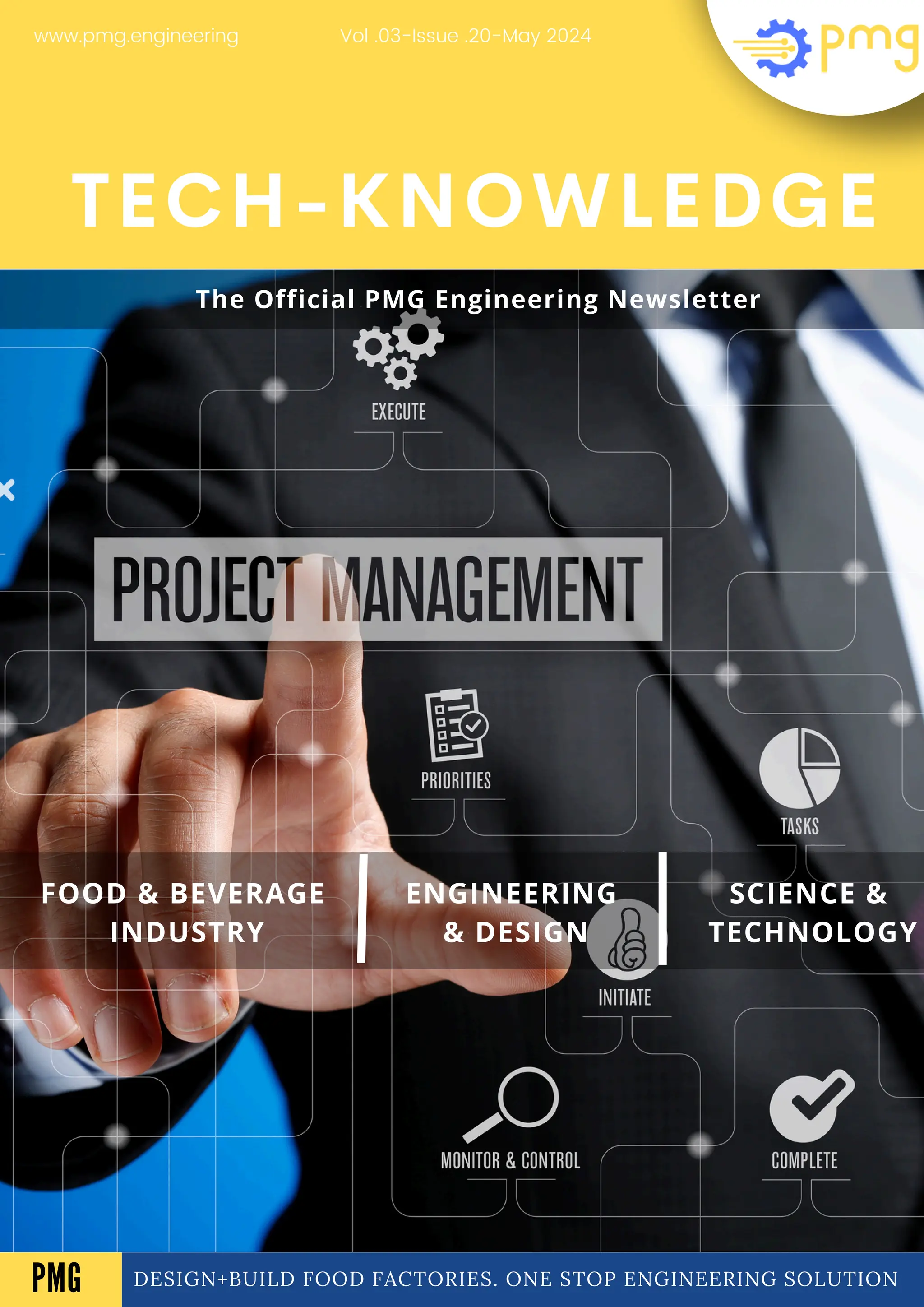
TECH-KNOWLEDGE
Vol .03-Issue .20-May 2024
www.pmg.engineering
PMG
FOOD & BEVERAGE
INDUSTRY
ENGINEERING
& DESIGN
SCIENCE &
TECHNOLOGY
A
The Official PMG Engineering Newsletter
1. WHITE PAPER
2. INDUSTRY BUZZ
4. DID YOU KNOW?
3. WEEKS HIGHLIGHT
Fascinating Food Facts To Expand
Knowledge
Latest Food Industry News Updates
A Look Into The Main Events Of The Week
A. Electrical panel
B. Frozen Dessert
CONTENTS
8
9-13
2-5
6-7
Vol .03-Issue .20-May 2024
DESIGN+BUILD FOOD FACTORIES. ONE STOP ENGINEERING SOLUTION
PMG
2. INDUSTRY BUZZ
Latest Food Industry News Updates
3. WEEKS HIGHLIGHT
A Look Into The Main Events Of The Week
4. DID YOU KNOW?
Fascinating Food Facts To Expand
Knowledge
1. WHITE PAPER
A. An introduction to Project Management
B. Antimicrobial Coatings and Films
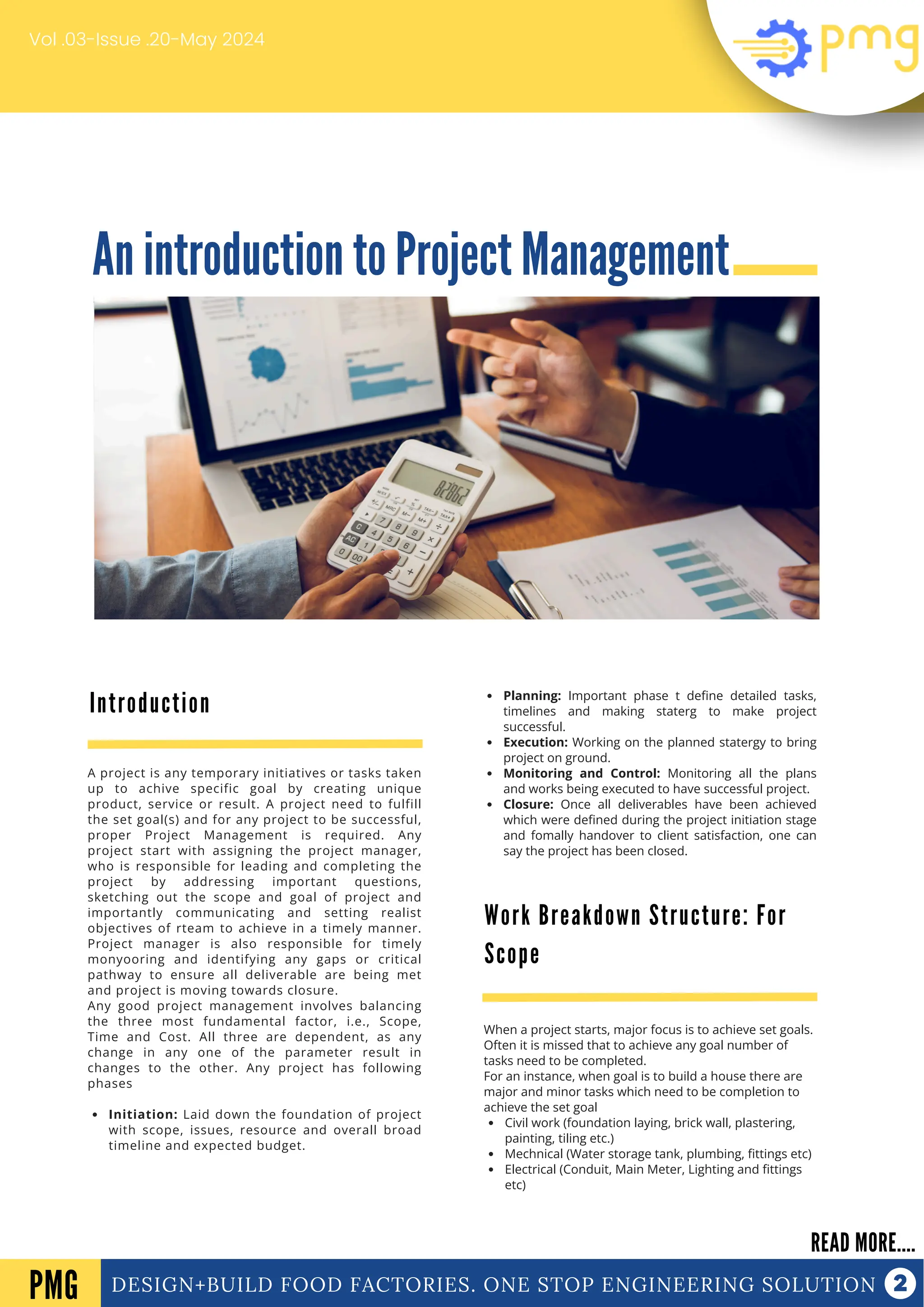
An introduction to Project Management
DESIGN+BUILD FOOD FACTORIES. ONE STOP ENGINEERING SOLUTION
Introduction
READ MORE....
PMG
A project is any temporary initiatives or tasks taken
up to achive specific goal by creating unique
product, service or result. A project need to fulfill
the set goal(s) and for any project to be successful,
proper Project Management is required. Any
project start with assigning the project manager,
who is responsible for leading and completing the
project by addressing important questions,
sketching out the scope and goal of project and
importantly communicating and setting realist
objectives of rteam to achieve in a timely manner.
Project manager is also responsible for timely
monyooring and identifying any gaps or critical
pathway to ensure all deliverable are being met
and project is moving towards closure.
Any good project management involves balancing
the three most fundamental factor, i.e., Scope,
Time and Cost. All three are dependent, as any
change in any one of the parameter result in
changes to the other. Any project has following
phases
Initiation: Laid down the foundation of project
with scope, issues, resource and overall broad
timeline and expected budget.
Planning: Important phase t define detailed tasks,
timelines and making staterg to make project
successful.
Execution: Working on the planned statergy to bring
project on ground.
Monitoring and Control: Monitoring all the plans
and works being executed to have successful project.
Closure: Once all deliverables have been achieved
which were defined during the project initiation stage
and fomally handover to client satisfaction, one can
say the project has been closed.
Vol .03-Issue .20-May 2024
Work Breakdown Structure: For
Scope
When a project starts, major focus is to achieve set goals.
Often it is missed that to achieve any goal number of
tasks need to be completed.
For an instance, when goal is to build a house there are
major and minor tasks which need to be completion to
achieve the set goal
Civil work (foundation laying, brick wall, plastering,
painting, tiling etc.)
Mechnical (Water storage tank, plumbing, fittings etc)
Electrical (Conduit, Main Meter, Lighting and fittings
etc)
DESIGN+BUILD FOOD FACTORIES. ONE STOP ENGINEERING SOLUTION
Vol .03-Issue .20-May 2024
Conclusion
Project management is a very vast topic and this
topic only gives a brief idea on the project
management. Project success depends on the
experience of Project manager to handle the project
along with his/her expertise to use the various
project management tools.
DESIGN+BUILD FOOD FACTORIES. ONE STOP ENGINEERING SOLUTION
PMG
Once the scope has been broken down into smaller
tasks, it is important to set duration for each
smaller task and to set them in a manner that they
are trackable an dnot exceeding the set overall
project timelines. To do this in any project
Estimate the duration of each task
Add realistic buffer timeline
Put task in sequesnce of their occurnace during
the project and link them basis there
dependency to each other.
Human Resources
Apart from planning budget, scope and time –
resource management plays important role in the
successful completion of work. While a project is
formed, resources are alloated to project manager.
Project Manager is responsible for defining the
needed resource by estimating the efforts needed,
validate resource availability and define roles and
responsibility of each to attacin the target. RACI
(Responsible, Accountable, Consulted, Informed)
Matrix is one common approach for managing larger
size projects involving more people.
Risk Planning
In real time, unpredictable events can happen which
can lead to project stagnation, like loss, injury, or
other unavoidable curcuimtances and all these are
considered as risk in project. These risk can be
extended to cost, time, scope, quality etc. Project
Manager is to identify the project risk, analyze it and
develop risk mitigation statergies to avoid them.
Project Schedule and Timelines
Antimicrobial Coatings and Films
Vol .03-Issue .20-May 2024
DESIGN+BUILD FOOD FACTORIES. ONE STOP ENGINEERING SOLUTION
Introduction
READ MORE....
PMG
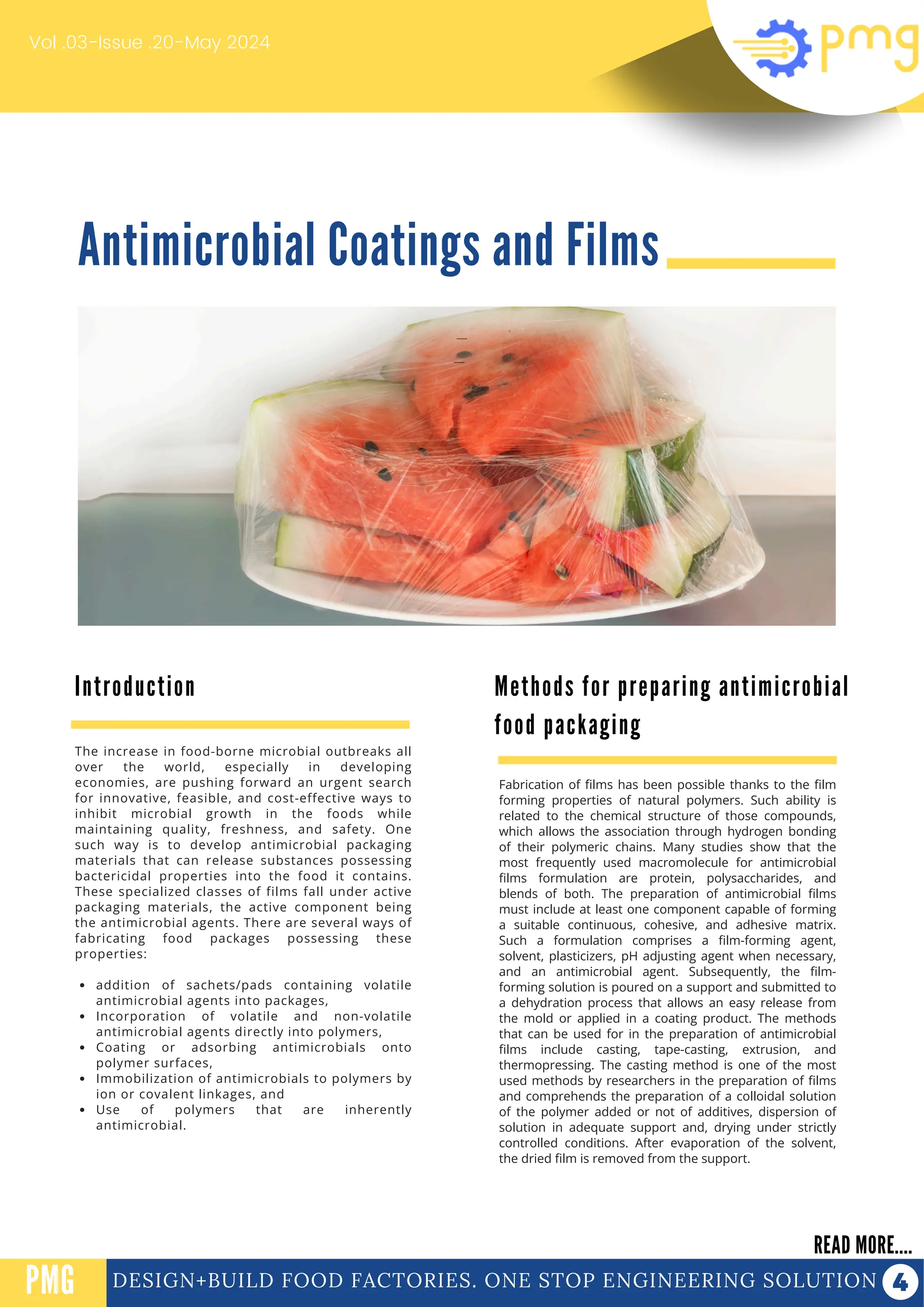
The increase in food-borne microbial outbreaks all
over the world, especially in developing
economies, are pushing forward an urgent search
for innovative, feasible, and cost-effective ways to
inhibit microbial growth in the foods while
maintaining quality, freshness, and safety. One
such way is to develop antimicrobial packaging
materials that can release substances possessing
bactericidal properties into the food it contains.
These specialized classes of films fall under active
packaging materials, the active component being
the antimicrobial agents. There are several ways of
fabricating food packages possessing these
properties:
addition of sachets/pads containing volatile
antimicrobial agents into packages,
Incorporation of volatile and non-volatile
antimicrobial agents directly into polymers,
Coating or adsorbing antimicrobials onto
polymer surfaces,
Immobilization of antimicrobials to polymers by
ion or covalent linkages, and
Use of polymers that are inherently
antimicrobial.
Fabrication of films has been possible thanks to the film
forming properties of natural polymers. Such ability is
related to the chemical structure of those compounds,
which allows the association through hydrogen bonding
of their polymeric chains. Many studies show that the
most frequently used macromolecule for antimicrobial
films formulation are protein, polysaccharides, and
blends of both. The preparation of antimicrobial films
must include at least one component capable of forming
a suitable continuous, cohesive, and adhesive matrix.
Such a formulation comprises a film-forming agent,
solvent, plasticizers, pH adjusting agent when necessary,
and an antimicrobial agent. Subsequently, the film-
forming solution is poured on a support and submitted to
a dehydration process that allows an easy release from
the mold or applied in a coating product. The methods
that can be used for in the preparation of antimicrobial
films include casting, tape-casting, extrusion, and
thermopressing. The casting method is one of the most
used methods by researchers in the preparation of films
and comprehends the preparation of a colloidal solution
of the polymer added or not of additives, dispersion of
solution in adequate support and, drying under strictly
controlled conditions. After evaporation of the solvent,
the dried film is removed from the support.
PROTEIN FUNCTIONALIZATION
Methods for preparing antimicrobial
food packaging
DESIGN+BUILD FOOD FACTORIES. ONE STOP ENGINEERING SOLUTION
PMG
Vol .03-Issue .20-May 2024
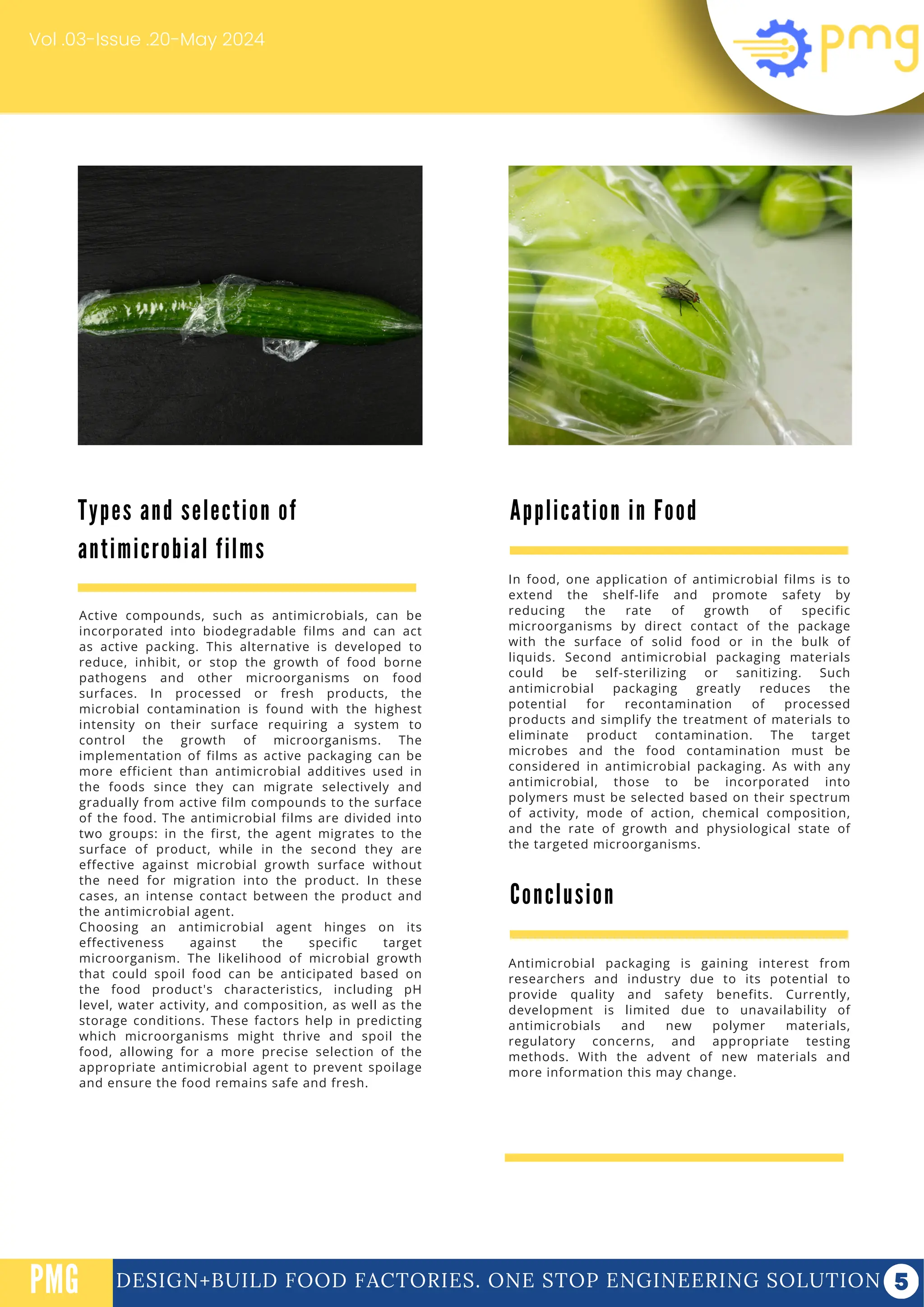
Active compounds, such as antimicrobials, can be
incorporated into biodegradable films and can act
as active packing. This alternative is developed to
reduce, inhibit, or stop the growth of food borne
pathogens and other microorganisms on food
surfaces. In processed or fresh products, the
microbial contamination is found with the highest
intensity on their surface requiring a system to
control the growth of microorganisms. The
implementation of films as active packaging can be
more efficient than antimicrobial additives used in
the foods since they can migrate selectively and
gradually from active film compounds to the surface
of the food. The antimicrobial films are divided into
two groups: in the first, the agent migrates to the
surface of product, while in the second they are
effective against microbial growth surface without
the need for migration into the product. In these
cases, an intense contact between the product and
the antimicrobial agent.
Choosing an antimicrobial agent hinges on its
effectiveness against the specific target
microorganism. The likelihood of microbial growth
that could spoil food can be anticipated based on
the food product's characteristics, including pH
level, water activity, and composition, as well as the
storage conditions. These factors help in predicting
which microorganisms might thrive and spoil the
food, allowing for a more precise selection of the
appropriate antimicrobial agent to prevent spoilage
and ensure the food remains safe and fresh.
Conclusion
Antimicrobial packaging is gaining interest from
researchers and industry due to its potential to
provide quality and safety benefits. Currently,
development is limited due to unavailability of
antimicrobials and new polymer materials,
regulatory concerns, and appropriate testing
methods. With the advent of new materials and
more information this may change.
Types and selection of
antimicrobial films
Application in Food
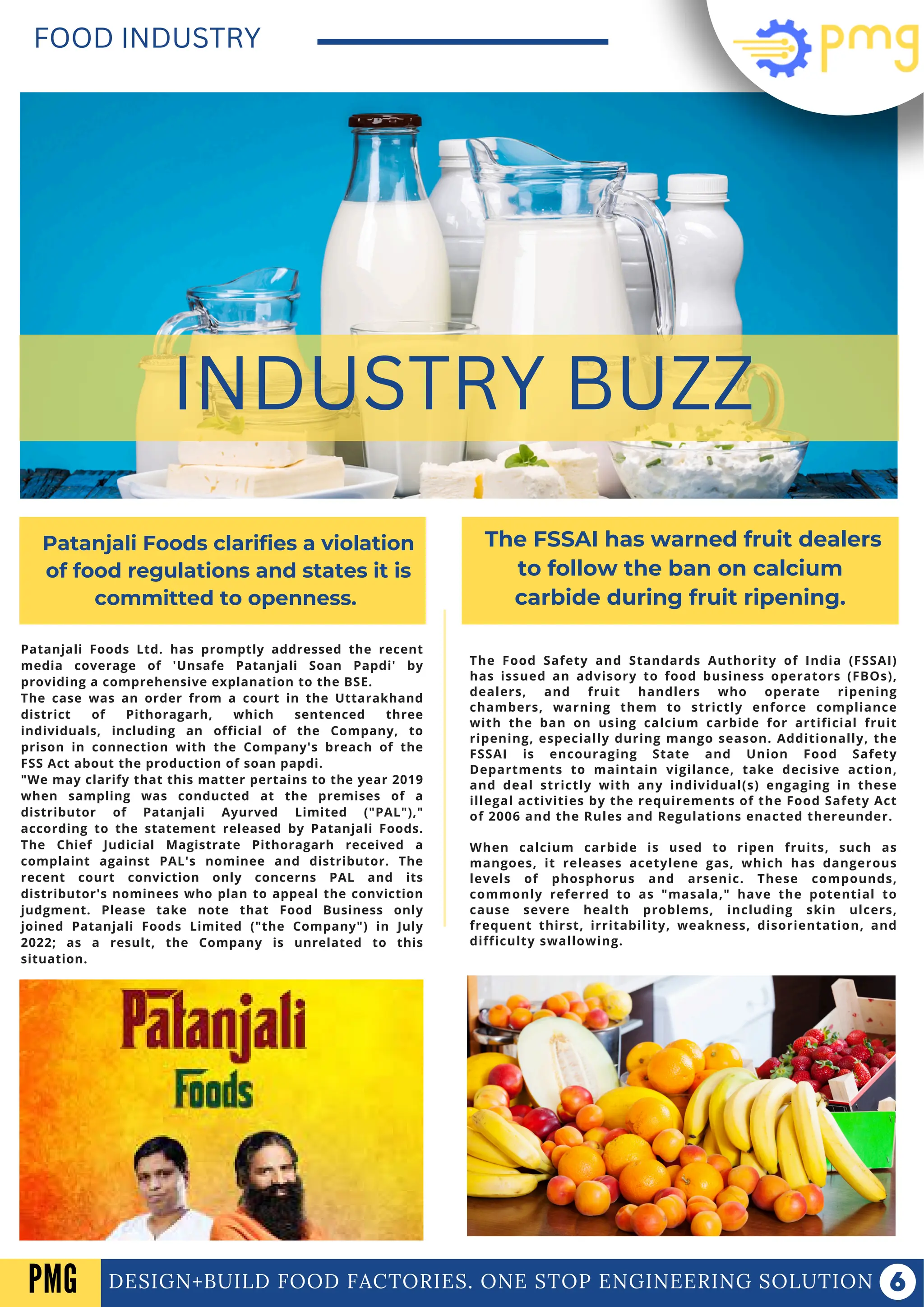
In food, one application of antimicrobial films is to
extend the shelf-life and promote safety by
reducing the rate of growth of specific
microorganisms by direct contact of the package
with the surface of solid food or in the bulk of
liquids. Second antimicrobial packaging materials
could be self-sterilizing or sanitizing. Such
antimicrobial packaging greatly reduces the
potential for recontamination of processed
products and simplify the treatment of materials to
eliminate product contamination. The target
microbes and the food contamination must be
considered in antimicrobial packaging. As with any
antimicrobial, those to be incorporated into
polymers must be selected based on their spectrum
of activity, mode of action, chemical composition,
and the rate of growth and physiological state of
the targeted microorganisms.
Patanjali Foods Ltd. has promptly addressed the recent
media coverage of 'Unsafe Patanjali Soan Papdi' by
providing a comprehensive explanation to the BSE.
The case was an order from a court in the Uttarakhand
district of Pithoragarh, which sentenced three
individuals, including an official of the Company, to
prison in connection with the Company's breach of the
FSS Act about the production of soan papdi.
"We may clarify that this matter pertains to the year 2019
when sampling was conducted at the premises of a
distributor of Patanjali Ayurved Limited ("PAL"),"
according to the statement released by Patanjali Foods.
The Chief Judicial Magistrate Pithoragarh received a
complaint against PAL's nominee and distributor. The
recent court conviction only concerns PAL and its
distributor's nominees who plan to appeal the conviction
judgment. Please take note that Food Business only
joined Patanjali Foods Limited ("the Company") in July
2022; as a result, the Company is unrelated to this
situation.
DESIGN+BUILD FOOD FACTORIES. ONE STOP ENGINEERING SOLUTION
FOOD INDUSTRY
INDUSTRY BUZZ
Patanjali Foods clarifies a violation
of food regulations and states it is
committed to openness.
The FSSAI has warned fruit dealers
to follow the ban on calcium
carbide during fruit ripening.
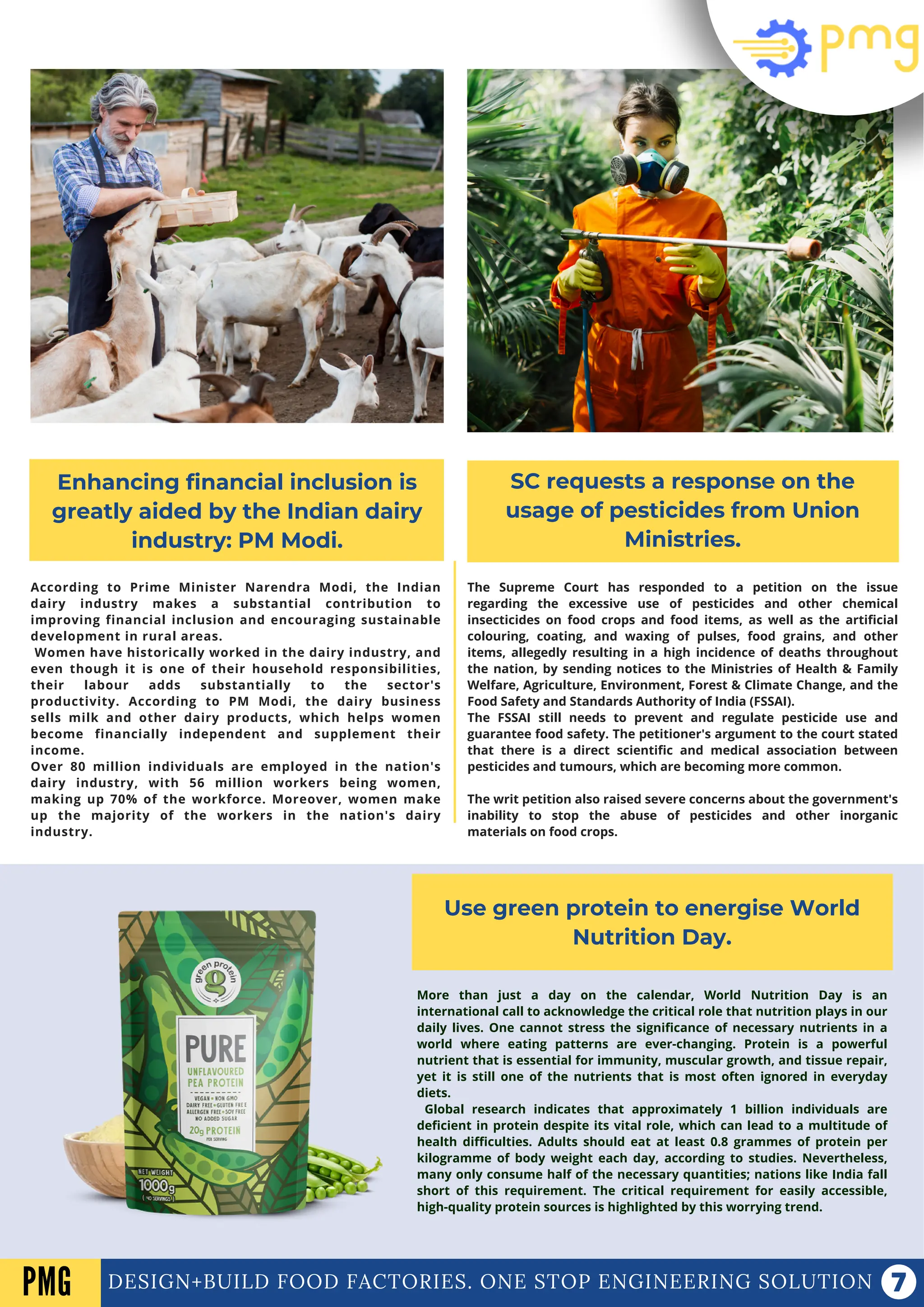
The Food Safety and Standards Authority of India (FSSAI)
has issued an advisory to food business operators (FBOs),
dealers, and fruit handlers who operate ripening
chambers, warning them to strictly enforce compliance
with the ban on using calcium carbide for artificial fruit
ripening, especially during mango season. Additionally, the
FSSAI is encouraging State and Union Food Safety
Departments to maintain vigilance, take decisive action,
and deal strictly with any individual(s) engaging in these
illegal activities by the requirements of the Food Safety Act
of 2006 and the Rules and Regulations enacted thereunder.
When calcium carbide is used to ripen fruits, such as
mangoes, it releases acetylene gas, which has dangerous
levels of phosphorus and arsenic. These compounds,
commonly referred to as "masala," have the potential to
cause severe health problems, including skin ulcers,
frequent thirst, irritability, weakness, disorientation, and
difficulty swallowing.
PMG
DESIGN+BUILD FOOD FACTORIES. ONE STOP ENGINEERING SOLUTION
Enhancing financial inclusion is
greatly aided by the Indian dairy
industry: PM Modi.
SC requests a response on the
usage of pesticides from Union
Ministries.
Use green protein to energise World
Nutrition Day.
According to Prime Minister Narendra Modi, the Indian
dairy industry makes a substantial contribution to
improving financial inclusion and encouraging sustainable
development in rural areas.
Women have historically worked in the dairy industry, and
even though it is one of their household responsibilities,
their labour adds substantially to the sector's
productivity. According to PM Modi, the dairy business
sells milk and other dairy products, which helps women
become financially independent and supplement their
income.
Over 80 million individuals are employed in the nation's
dairy industry, with 56 million workers being women,
making up 70% of the workforce. Moreover, women make
up the majority of the workers in the nation's dairy
industry.
The Supreme Court has responded to a petition on the issue
regarding the excessive use of pesticides and other chemical
insecticides on food crops and food items, as well as the artificial
colouring, coating, and waxing of pulses, food grains, and other
items, allegedly resulting in a high incidence of deaths throughout
the nation, by sending notices to the Ministries of Health & Family
Welfare, Agriculture, Environment, Forest & Climate Change, and the
Food Safety and Standards Authority of India (FSSAI).
The FSSAI still needs to prevent and regulate pesticide use and
guarantee food safety. The petitioner's argument to the court stated
that there is a direct scientific and medical association between
pesticides and tumours, which are becoming more common.
The writ petition also raised severe concerns about the government's
inability to stop the abuse of pesticides and other inorganic
materials on food crops.
PMG
More than just a day on the calendar, World Nutrition Day is an
international call to acknowledge the critical role that nutrition plays in our
daily lives. One cannot stress the significance of necessary nutrients in a
world where eating patterns are ever-changing. Protein is a powerful
nutrient that is essential for immunity, muscular growth, and tissue repair,
yet it is still one of the nutrients that is most often ignored in everyday
diets.
Global research indicates that approximately 1 billion individuals are
deficient in protein despite its vital role, which can lead to a multitude of
health difficulties. Adults should eat at least 0.8 grammes of protein per
kilogramme of body weight each day, according to studies. Nevertheless,
many only consume half of the necessary quantities; nations like India fall
short of this requirement. The critical requirement for easily accessible,
high-quality protein sources is highlighted by this worrying trend.
N
O
N
-
T
E
C
H
N
I
C
A
L
C
O
N
T
E
N
T
WEEKS
HIGHLIGHT
DESIGN+BUILD FOOD FACTORIES. ONE STOP ENGINEERING SOLUTION
M
A
Y
PMG
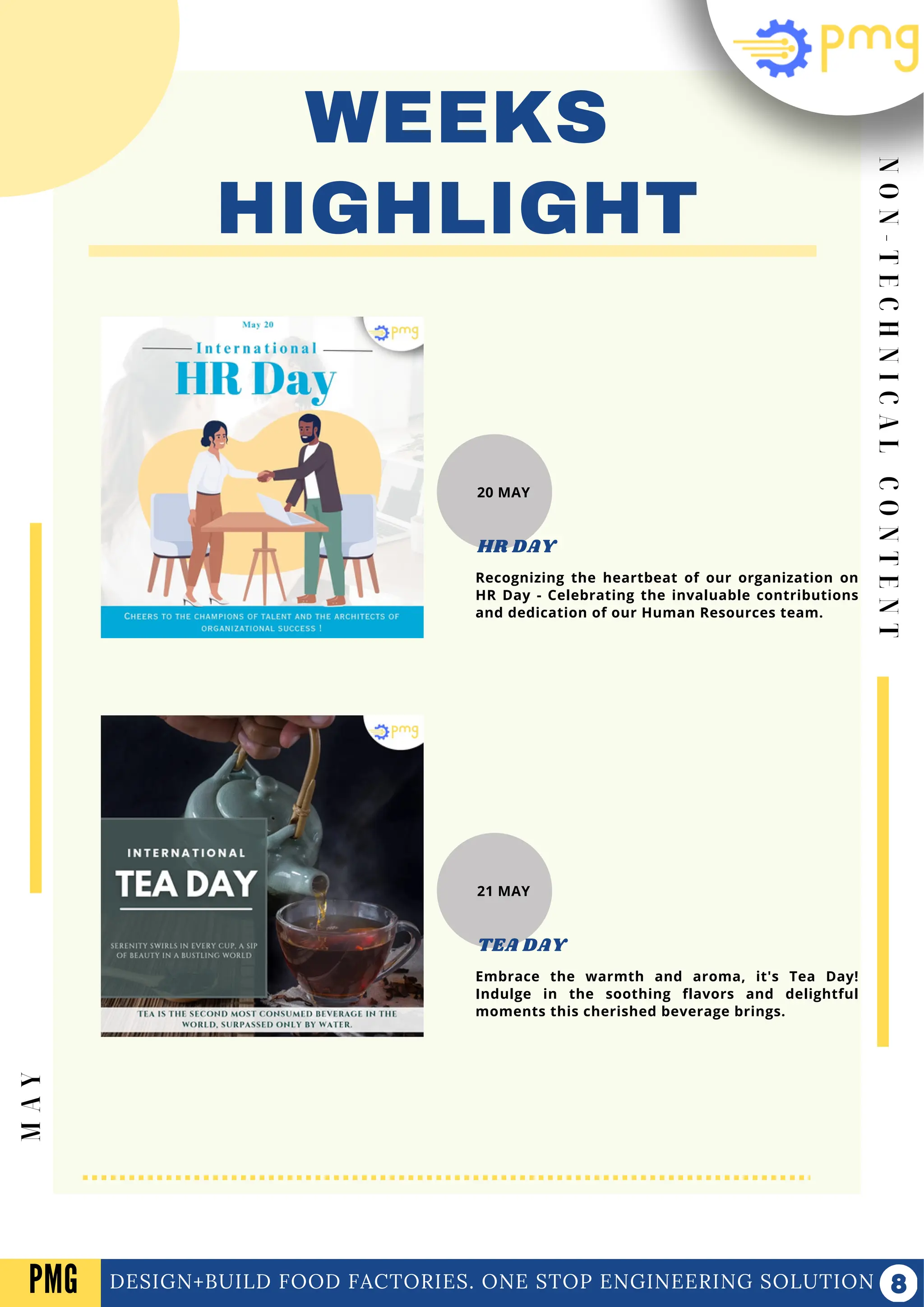
20 MAY
Recognizing the heartbeat of our organization on
HR Day - Celebrating the invaluable contributions
and dedication of our Human Resources team.
HR DAY
21 MAY
Embrace the warmth and aroma, it's Tea Day!
Indulge in the soothing flavors and delightful
moments this cherished beverage brings.
TEA DAY
3/3
2/3
1/3
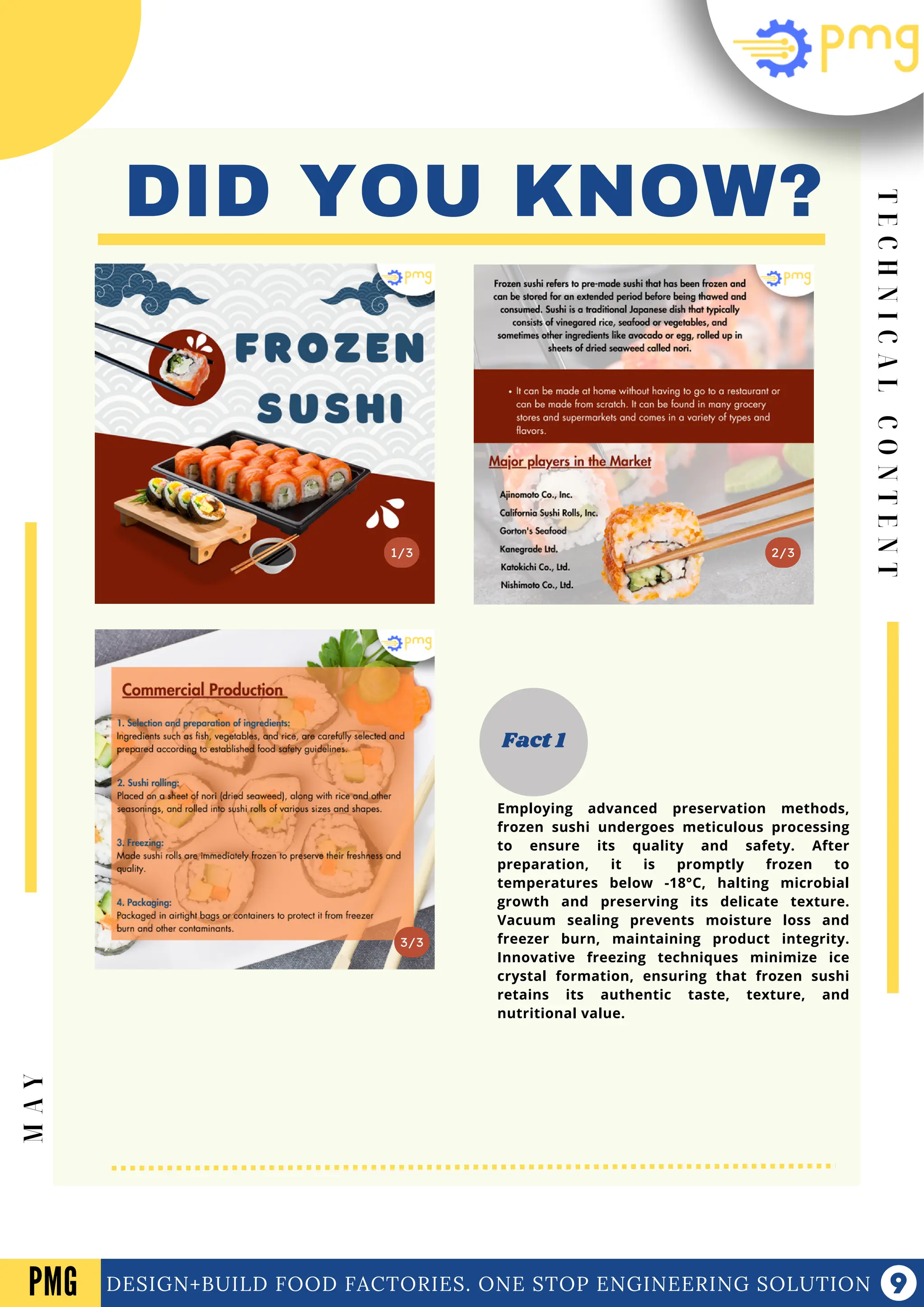
Fact 1
Employing advanced preservation methods,
frozen sushi undergoes meticulous processing
to ensure its quality and safety. After
preparation, it is promptly frozen to
temperatures below -18°C, halting microbial
growth and preserving its delicate texture.
Vacuum sealing prevents moisture loss and
freezer burn, maintaining product integrity.
Innovative freezing techniques minimize ice
crystal formation, ensuring that frozen sushi
retains its authentic taste, texture, and
nutritional value.
T
E
C
H
N
I
C
A
L
C
O
N
T
E
N
T
DESIGN+BUILD FOOD FACTORIES. ONE STOP ENGINEERING SOLUTION
DID YOU KNOW?
PMG
M
A
Y
T
E
C
H
N
I
C
A
L
C
O
N
T
E
N
T
DESIGN+BUILD FOOD FACTORIES. ONE STOP ENGINEERING SOLUTION
1/3
3/3
2/3
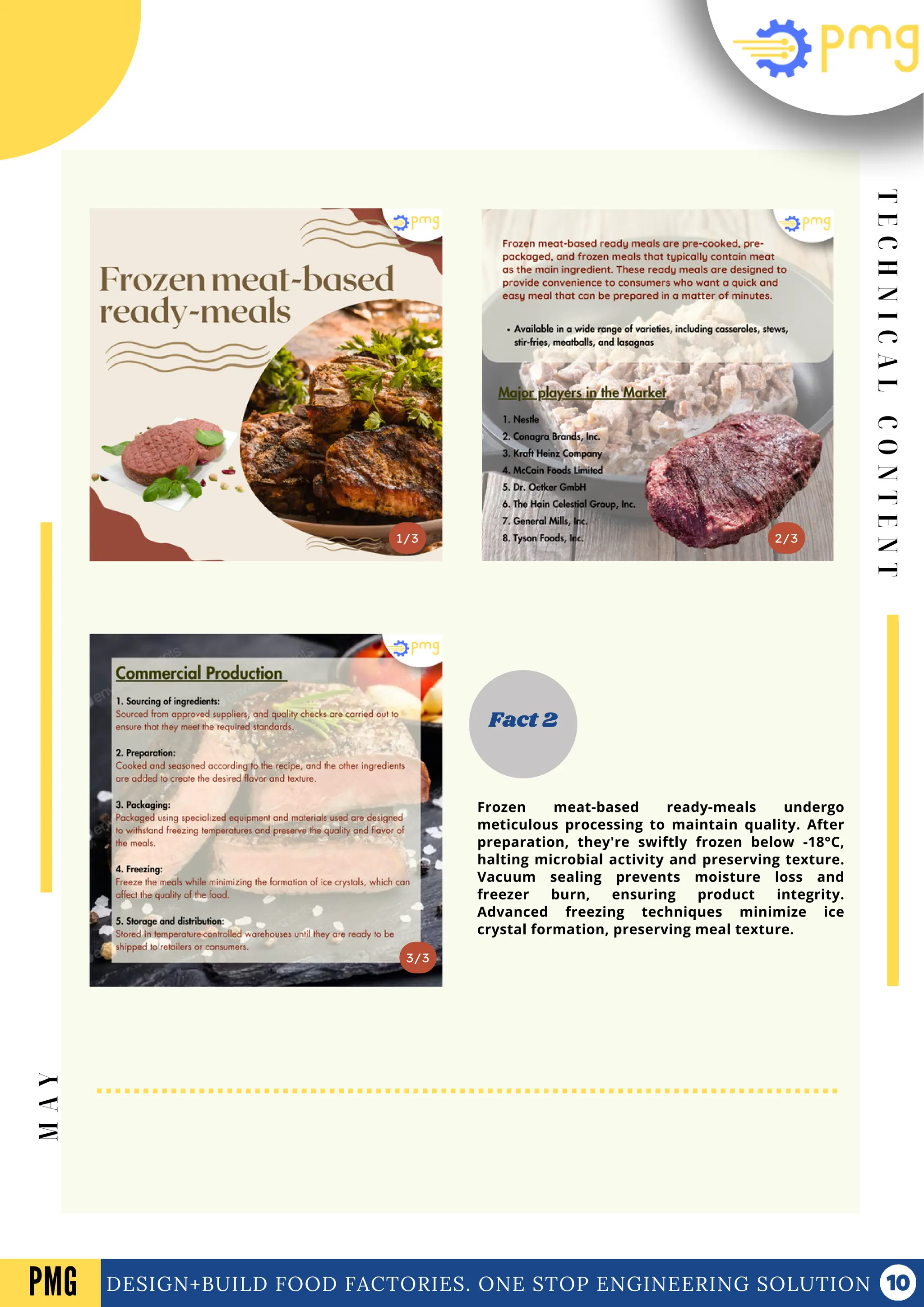
Fact 2
PMG
M
A
Y
Frozen meat-based ready-meals undergo
meticulous processing to maintain quality. After
preparation, they're swiftly frozen below -18°C,
halting microbial activity and preserving texture.
Vacuum sealing prevents moisture loss and
freezer burn, ensuring product integrity.
Advanced freezing techniques minimize ice
crystal formation, preserving meal texture.
T
E
C
H
N
I
C
A
L
C
O
N
T
E
N
T
DESIGN+BUILD FOOD FACTORIES. ONE STOP ENGINEERING SOLUTION
1/3
3/3
2/3
Fact 3
PMG
M
A
Y
Employing advanced preservation techniques,
frozen vegetarian/vegan ready-meals undergo
meticulous processing to maintain quality. After
preparation, they're swiftly frozen below -18°C,
halting microbial growth and preserving texture.
Vacuum sealing prevents moisture loss and
freezer burn, ensuring product integrity.
Advanced freezing techniques minimize ice
crystal formation, preserving meal texture.
T
E
C
H
N
I
C
A
L
C
O
N
T
E
N
T
DESIGN+BUILD FOOD FACTORIES. ONE STOP ENGINEERING SOLUTION
1/3
3/3
2/3
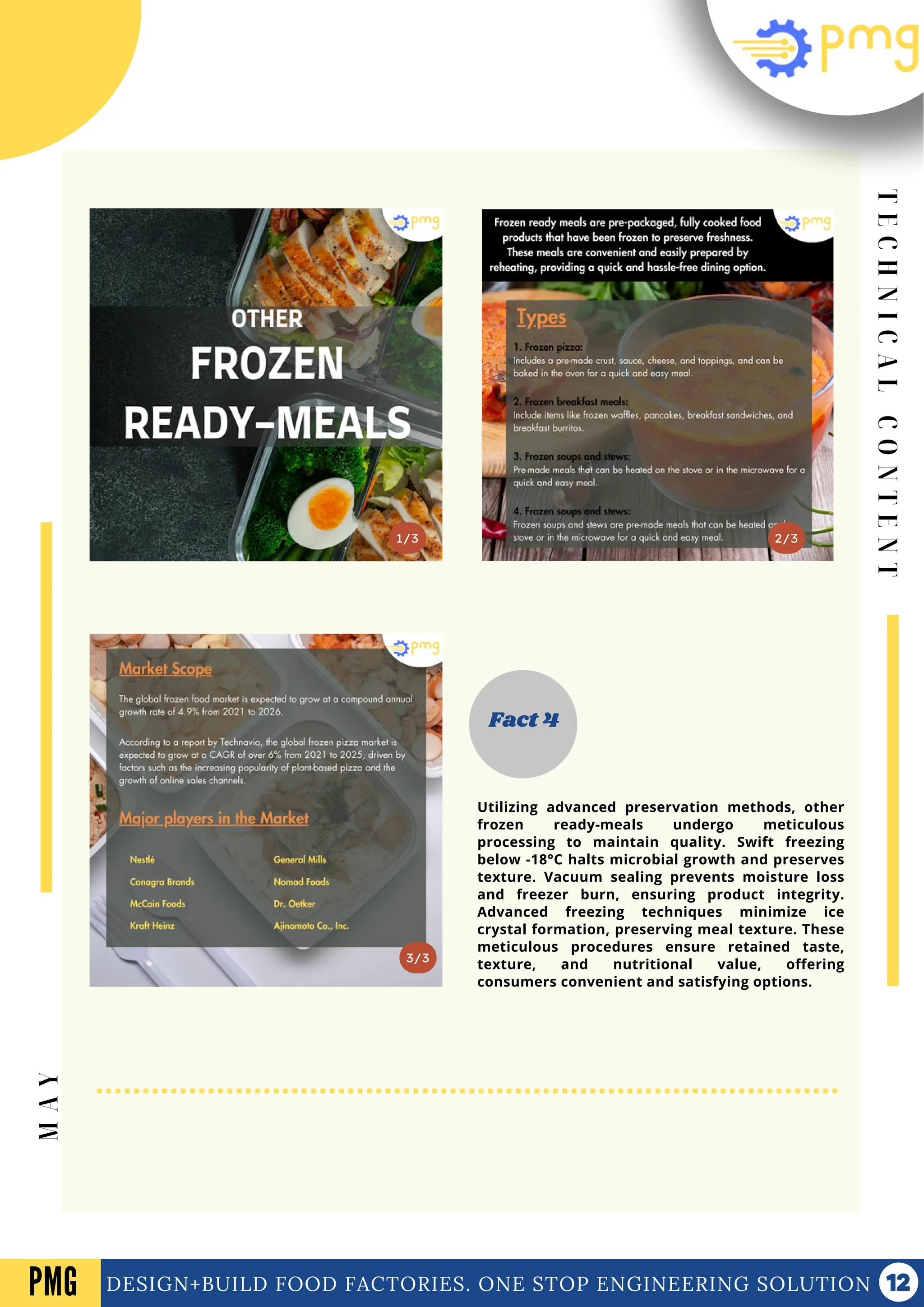
Fact 4
PMG
M
A
Y
Utilizing advanced preservation methods, other
frozen ready-meals undergo meticulous
processing to maintain quality. Swift freezing
below -18°C halts microbial growth and preserves
texture. Vacuum sealing prevents moisture loss
and freezer burn, ensuring product integrity.
Advanced freezing techniques minimize ice
crystal formation, preserving meal texture. These
meticulous procedures ensure retained taste,
texture, and nutritional value, offering
consumers convenient and satisfying options.
T
E
C
H
N
I
C
A
L
C
O
N
T
E
N
T
DESIGN+BUILD FOOD FACTORIES. ONE STOP ENGINEERING SOLUTION
1/3
3/3
2/3
Fact 5
PMG
M
A
Y
Frozen tarts undergo precise preparation and
rapid freezing below -18°C, arresting microbial
activity and preserving texture. Vacuum sealing
prevents moisture loss and freezer burn, ensuring
product integrity. Advanced freezing methods
minimize ice crystal formation, maintaining tart
texture. These meticulous procedures safeguard
taste, texture, and quality, offering consumers
convenient and appetizing options with extended
shelf life.
PMG ENGINEERING
About PMG
Delivering End-to-End Engineering
Design & Construction Management in
Food & Beverage Industry
Website Link Follow Us on
Click Here
MAKING CUSTOMERS THE INDUSTRY LEADERS
ENGINEERING MUST CREATE BUSINESS VALUE
MEET THE EXPECTATIONS OF ALL STAKEHOLDERS
OPTIMAL ENGINEERING
About PMG
Vol .03-Issue .20-May 2024
PEOPLE DELIVERING RESULTS
Safe-by-choice. First Time Quality. Maximize Value. Objectivity.
Ownership. Reliable and Trustworthy Business.
Process Engineering I Project Management I Mechanical I Electrical I Automation I Food Safety
Meeting Global Benchmarks

PMG Newsletter (Volume 03. Issue 20 PDF)

  • 1.
    DESIGN+BUILD FOOD FACTORIES.ONE STOP ENGINEERING SOLUTION TECH-KNOWLEDGE Vol .03-Issue .20-May 2024 www.pmg.engineering PMG FOOD & BEVERAGE INDUSTRY ENGINEERING & DESIGN SCIENCE & TECHNOLOGY A The Official PMG Engineering Newsletter
  • 2.
    1. WHITE PAPER 2.INDUSTRY BUZZ 4. DID YOU KNOW? 3. WEEKS HIGHLIGHT Fascinating Food Facts To Expand Knowledge Latest Food Industry News Updates A Look Into The Main Events Of The Week A. Electrical panel B. Frozen Dessert CONTENTS 8 9-13 2-5 6-7 Vol .03-Issue .20-May 2024 DESIGN+BUILD FOOD FACTORIES. ONE STOP ENGINEERING SOLUTION PMG 2. INDUSTRY BUZZ Latest Food Industry News Updates 3. WEEKS HIGHLIGHT A Look Into The Main Events Of The Week 4. DID YOU KNOW? Fascinating Food Facts To Expand Knowledge 1. WHITE PAPER A. An introduction to Project Management B. Antimicrobial Coatings and Films
  • 3.
    An introduction toProject Management DESIGN+BUILD FOOD FACTORIES. ONE STOP ENGINEERING SOLUTION Introduction READ MORE.... PMG A project is any temporary initiatives or tasks taken up to achive specific goal by creating unique product, service or result. A project need to fulfill the set goal(s) and for any project to be successful, proper Project Management is required. Any project start with assigning the project manager, who is responsible for leading and completing the project by addressing important questions, sketching out the scope and goal of project and importantly communicating and setting realist objectives of rteam to achieve in a timely manner. Project manager is also responsible for timely monyooring and identifying any gaps or critical pathway to ensure all deliverable are being met and project is moving towards closure. Any good project management involves balancing the three most fundamental factor, i.e., Scope, Time and Cost. All three are dependent, as any change in any one of the parameter result in changes to the other. Any project has following phases Initiation: Laid down the foundation of project with scope, issues, resource and overall broad timeline and expected budget. Planning: Important phase t define detailed tasks, timelines and making staterg to make project successful. Execution: Working on the planned statergy to bring project on ground. Monitoring and Control: Monitoring all the plans and works being executed to have successful project. Closure: Once all deliverables have been achieved which were defined during the project initiation stage and fomally handover to client satisfaction, one can say the project has been closed. Vol .03-Issue .20-May 2024 Work Breakdown Structure: For Scope When a project starts, major focus is to achieve set goals. Often it is missed that to achieve any goal number of tasks need to be completed. For an instance, when goal is to build a house there are major and minor tasks which need to be completion to achieve the set goal Civil work (foundation laying, brick wall, plastering, painting, tiling etc.) Mechnical (Water storage tank, plumbing, fittings etc) Electrical (Conduit, Main Meter, Lighting and fittings etc)
  • 4.
    DESIGN+BUILD FOOD FACTORIES.ONE STOP ENGINEERING SOLUTION Vol .03-Issue .20-May 2024 Conclusion Project management is a very vast topic and this topic only gives a brief idea on the project management. Project success depends on the experience of Project manager to handle the project along with his/her expertise to use the various project management tools. DESIGN+BUILD FOOD FACTORIES. ONE STOP ENGINEERING SOLUTION PMG Once the scope has been broken down into smaller tasks, it is important to set duration for each smaller task and to set them in a manner that they are trackable an dnot exceeding the set overall project timelines. To do this in any project Estimate the duration of each task Add realistic buffer timeline Put task in sequesnce of their occurnace during the project and link them basis there dependency to each other. Human Resources Apart from planning budget, scope and time – resource management plays important role in the successful completion of work. While a project is formed, resources are alloated to project manager. Project Manager is responsible for defining the needed resource by estimating the efforts needed, validate resource availability and define roles and responsibility of each to attacin the target. RACI (Responsible, Accountable, Consulted, Informed) Matrix is one common approach for managing larger size projects involving more people. Risk Planning In real time, unpredictable events can happen which can lead to project stagnation, like loss, injury, or other unavoidable curcuimtances and all these are considered as risk in project. These risk can be extended to cost, time, scope, quality etc. Project Manager is to identify the project risk, analyze it and develop risk mitigation statergies to avoid them. Project Schedule and Timelines
  • 5.
    Antimicrobial Coatings andFilms Vol .03-Issue .20-May 2024 DESIGN+BUILD FOOD FACTORIES. ONE STOP ENGINEERING SOLUTION Introduction READ MORE.... PMG The increase in food-borne microbial outbreaks all over the world, especially in developing economies, are pushing forward an urgent search for innovative, feasible, and cost-effective ways to inhibit microbial growth in the foods while maintaining quality, freshness, and safety. One such way is to develop antimicrobial packaging materials that can release substances possessing bactericidal properties into the food it contains. These specialized classes of films fall under active packaging materials, the active component being the antimicrobial agents. There are several ways of fabricating food packages possessing these properties: addition of sachets/pads containing volatile antimicrobial agents into packages, Incorporation of volatile and non-volatile antimicrobial agents directly into polymers, Coating or adsorbing antimicrobials onto polymer surfaces, Immobilization of antimicrobials to polymers by ion or covalent linkages, and Use of polymers that are inherently antimicrobial. Fabrication of films has been possible thanks to the film forming properties of natural polymers. Such ability is related to the chemical structure of those compounds, which allows the association through hydrogen bonding of their polymeric chains. Many studies show that the most frequently used macromolecule for antimicrobial films formulation are protein, polysaccharides, and blends of both. The preparation of antimicrobial films must include at least one component capable of forming a suitable continuous, cohesive, and adhesive matrix. Such a formulation comprises a film-forming agent, solvent, plasticizers, pH adjusting agent when necessary, and an antimicrobial agent. Subsequently, the film- forming solution is poured on a support and submitted to a dehydration process that allows an easy release from the mold or applied in a coating product. The methods that can be used for in the preparation of antimicrobial films include casting, tape-casting, extrusion, and thermopressing. The casting method is one of the most used methods by researchers in the preparation of films and comprehends the preparation of a colloidal solution of the polymer added or not of additives, dispersion of solution in adequate support and, drying under strictly controlled conditions. After evaporation of the solvent, the dried film is removed from the support. PROTEIN FUNCTIONALIZATION PROTEIN FUNCTIONALIZATION Methods for preparing antimicrobial food packaging
  • 6.
    DESIGN+BUILD FOOD FACTORIES.ONE STOP ENGINEERING SOLUTION PMG Vol .03-Issue .20-May 2024 Active compounds, such as antimicrobials, can be incorporated into biodegradable films and can act as active packing. This alternative is developed to reduce, inhibit, or stop the growth of food borne pathogens and other microorganisms on food surfaces. In processed or fresh products, the microbial contamination is found with the highest intensity on their surface requiring a system to control the growth of microorganisms. The implementation of films as active packaging can be more efficient than antimicrobial additives used in the foods since they can migrate selectively and gradually from active film compounds to the surface of the food. The antimicrobial films are divided into two groups: in the first, the agent migrates to the surface of product, while in the second they are effective against microbial growth surface without the need for migration into the product. In these cases, an intense contact between the product and the antimicrobial agent. Choosing an antimicrobial agent hinges on its effectiveness against the specific target microorganism. The likelihood of microbial growth that could spoil food can be anticipated based on the food product's characteristics, including pH level, water activity, and composition, as well as the storage conditions. These factors help in predicting which microorganisms might thrive and spoil the food, allowing for a more precise selection of the appropriate antimicrobial agent to prevent spoilage and ensure the food remains safe and fresh. Conclusion Antimicrobial packaging is gaining interest from researchers and industry due to its potential to provide quality and safety benefits. Currently, development is limited due to unavailability of antimicrobials and new polymer materials, regulatory concerns, and appropriate testing methods. With the advent of new materials and more information this may change. Types and selection of antimicrobial films Application in Food In food, one application of antimicrobial films is to extend the shelf-life and promote safety by reducing the rate of growth of specific microorganisms by direct contact of the package with the surface of solid food or in the bulk of liquids. Second antimicrobial packaging materials could be self-sterilizing or sanitizing. Such antimicrobial packaging greatly reduces the potential for recontamination of processed products and simplify the treatment of materials to eliminate product contamination. The target microbes and the food contamination must be considered in antimicrobial packaging. As with any antimicrobial, those to be incorporated into polymers must be selected based on their spectrum of activity, mode of action, chemical composition, and the rate of growth and physiological state of the targeted microorganisms.
  • 7.
    Patanjali Foods Ltd.has promptly addressed the recent media coverage of 'Unsafe Patanjali Soan Papdi' by providing a comprehensive explanation to the BSE. The case was an order from a court in the Uttarakhand district of Pithoragarh, which sentenced three individuals, including an official of the Company, to prison in connection with the Company's breach of the FSS Act about the production of soan papdi. "We may clarify that this matter pertains to the year 2019 when sampling was conducted at the premises of a distributor of Patanjali Ayurved Limited ("PAL")," according to the statement released by Patanjali Foods. The Chief Judicial Magistrate Pithoragarh received a complaint against PAL's nominee and distributor. The recent court conviction only concerns PAL and its distributor's nominees who plan to appeal the conviction judgment. Please take note that Food Business only joined Patanjali Foods Limited ("the Company") in July 2022; as a result, the Company is unrelated to this situation. DESIGN+BUILD FOOD FACTORIES. ONE STOP ENGINEERING SOLUTION FOOD INDUSTRY INDUSTRY BUZZ Patanjali Foods clarifies a violation of food regulations and states it is committed to openness. The FSSAI has warned fruit dealers to follow the ban on calcium carbide during fruit ripening. The Food Safety and Standards Authority of India (FSSAI) has issued an advisory to food business operators (FBOs), dealers, and fruit handlers who operate ripening chambers, warning them to strictly enforce compliance with the ban on using calcium carbide for artificial fruit ripening, especially during mango season. Additionally, the FSSAI is encouraging State and Union Food Safety Departments to maintain vigilance, take decisive action, and deal strictly with any individual(s) engaging in these illegal activities by the requirements of the Food Safety Act of 2006 and the Rules and Regulations enacted thereunder. When calcium carbide is used to ripen fruits, such as mangoes, it releases acetylene gas, which has dangerous levels of phosphorus and arsenic. These compounds, commonly referred to as "masala," have the potential to cause severe health problems, including skin ulcers, frequent thirst, irritability, weakness, disorientation, and difficulty swallowing. PMG
  • 8.
    DESIGN+BUILD FOOD FACTORIES.ONE STOP ENGINEERING SOLUTION Enhancing financial inclusion is greatly aided by the Indian dairy industry: PM Modi. SC requests a response on the usage of pesticides from Union Ministries. Use green protein to energise World Nutrition Day. According to Prime Minister Narendra Modi, the Indian dairy industry makes a substantial contribution to improving financial inclusion and encouraging sustainable development in rural areas. Women have historically worked in the dairy industry, and even though it is one of their household responsibilities, their labour adds substantially to the sector's productivity. According to PM Modi, the dairy business sells milk and other dairy products, which helps women become financially independent and supplement their income. Over 80 million individuals are employed in the nation's dairy industry, with 56 million workers being women, making up 70% of the workforce. Moreover, women make up the majority of the workers in the nation's dairy industry. The Supreme Court has responded to a petition on the issue regarding the excessive use of pesticides and other chemical insecticides on food crops and food items, as well as the artificial colouring, coating, and waxing of pulses, food grains, and other items, allegedly resulting in a high incidence of deaths throughout the nation, by sending notices to the Ministries of Health & Family Welfare, Agriculture, Environment, Forest & Climate Change, and the Food Safety and Standards Authority of India (FSSAI). The FSSAI still needs to prevent and regulate pesticide use and guarantee food safety. The petitioner's argument to the court stated that there is a direct scientific and medical association between pesticides and tumours, which are becoming more common. The writ petition also raised severe concerns about the government's inability to stop the abuse of pesticides and other inorganic materials on food crops. PMG More than just a day on the calendar, World Nutrition Day is an international call to acknowledge the critical role that nutrition plays in our daily lives. One cannot stress the significance of necessary nutrients in a world where eating patterns are ever-changing. Protein is a powerful nutrient that is essential for immunity, muscular growth, and tissue repair, yet it is still one of the nutrients that is most often ignored in everyday diets. Global research indicates that approximately 1 billion individuals are deficient in protein despite its vital role, which can lead to a multitude of health difficulties. Adults should eat at least 0.8 grammes of protein per kilogramme of body weight each day, according to studies. Nevertheless, many only consume half of the necessary quantities; nations like India fall short of this requirement. The critical requirement for easily accessible, high-quality protein sources is highlighted by this worrying trend.
  • 9.
    N O N - T E C H N I C A L C O N T E N T WEEKS HIGHLIGHT DESIGN+BUILD FOOD FACTORIES.ONE STOP ENGINEERING SOLUTION M A Y PMG 20 MAY Recognizing the heartbeat of our organization on HR Day - Celebrating the invaluable contributions and dedication of our Human Resources team. HR DAY 21 MAY Embrace the warmth and aroma, it's Tea Day! Indulge in the soothing flavors and delightful moments this cherished beverage brings. TEA DAY
  • 10.
    3/3 2/3 1/3 Fact 1 Employing advancedpreservation methods, frozen sushi undergoes meticulous processing to ensure its quality and safety. After preparation, it is promptly frozen to temperatures below -18°C, halting microbial growth and preserving its delicate texture. Vacuum sealing prevents moisture loss and freezer burn, maintaining product integrity. Innovative freezing techniques minimize ice crystal formation, ensuring that frozen sushi retains its authentic taste, texture, and nutritional value. T E C H N I C A L C O N T E N T DESIGN+BUILD FOOD FACTORIES. ONE STOP ENGINEERING SOLUTION DID YOU KNOW? PMG M A Y
  • 11.
    T E C H N I C A L C O N T E N T DESIGN+BUILD FOOD FACTORIES.ONE STOP ENGINEERING SOLUTION 1/3 3/3 2/3 Fact 2 PMG M A Y Frozen meat-based ready-meals undergo meticulous processing to maintain quality. After preparation, they're swiftly frozen below -18°C, halting microbial activity and preserving texture. Vacuum sealing prevents moisture loss and freezer burn, ensuring product integrity. Advanced freezing techniques minimize ice crystal formation, preserving meal texture.
  • 12.
    T E C H N I C A L C O N T E N T DESIGN+BUILD FOOD FACTORIES.ONE STOP ENGINEERING SOLUTION 1/3 3/3 2/3 Fact 3 PMG M A Y Employing advanced preservation techniques, frozen vegetarian/vegan ready-meals undergo meticulous processing to maintain quality. After preparation, they're swiftly frozen below -18°C, halting microbial growth and preserving texture. Vacuum sealing prevents moisture loss and freezer burn, ensuring product integrity. Advanced freezing techniques minimize ice crystal formation, preserving meal texture.
  • 13.
    T E C H N I C A L C O N T E N T DESIGN+BUILD FOOD FACTORIES.ONE STOP ENGINEERING SOLUTION 1/3 3/3 2/3 Fact 4 PMG M A Y Utilizing advanced preservation methods, other frozen ready-meals undergo meticulous processing to maintain quality. Swift freezing below -18°C halts microbial growth and preserves texture. Vacuum sealing prevents moisture loss and freezer burn, ensuring product integrity. Advanced freezing techniques minimize ice crystal formation, preserving meal texture. These meticulous procedures ensure retained taste, texture, and nutritional value, offering consumers convenient and satisfying options.
  • 14.
    T E C H N I C A L C O N T E N T DESIGN+BUILD FOOD FACTORIES.ONE STOP ENGINEERING SOLUTION 1/3 3/3 2/3 Fact 5 PMG M A Y Frozen tarts undergo precise preparation and rapid freezing below -18°C, arresting microbial activity and preserving texture. Vacuum sealing prevents moisture loss and freezer burn, ensuring product integrity. Advanced freezing methods minimize ice crystal formation, maintaining tart texture. These meticulous procedures safeguard taste, texture, and quality, offering consumers convenient and appetizing options with extended shelf life.
  • 15.
    PMG ENGINEERING About PMG DeliveringEnd-to-End Engineering Design & Construction Management in Food & Beverage Industry Website Link Follow Us on Click Here MAKING CUSTOMERS THE INDUSTRY LEADERS ENGINEERING MUST CREATE BUSINESS VALUE MEET THE EXPECTATIONS OF ALL STAKEHOLDERS OPTIMAL ENGINEERING About PMG Vol .03-Issue .20-May 2024 PEOPLE DELIVERING RESULTS Safe-by-choice. First Time Quality. Maximize Value. Objectivity. Ownership. Reliable and Trustworthy Business. Process Engineering I Project Management I Mechanical I Electrical I Automation I Food Safety Meeting Global Benchmarks