Please don’t make me draw!
Lesson learned during the development of a software
 to support early analysis of object-oriented systems.


                         Andrea Valente
        Department of Electronic Systems, Automation & Control,
          Aalborg University - Esbjerg Institute of Technology
                           Esbjerg, Denmark
                             av@aaue.dk

                      Emanuela Marchetti
             Mads Clausen Institute of Product Innovation,
                  University of Southern Denmark
                       Sønderborg, Denmark
                       e.manum@gmail.com
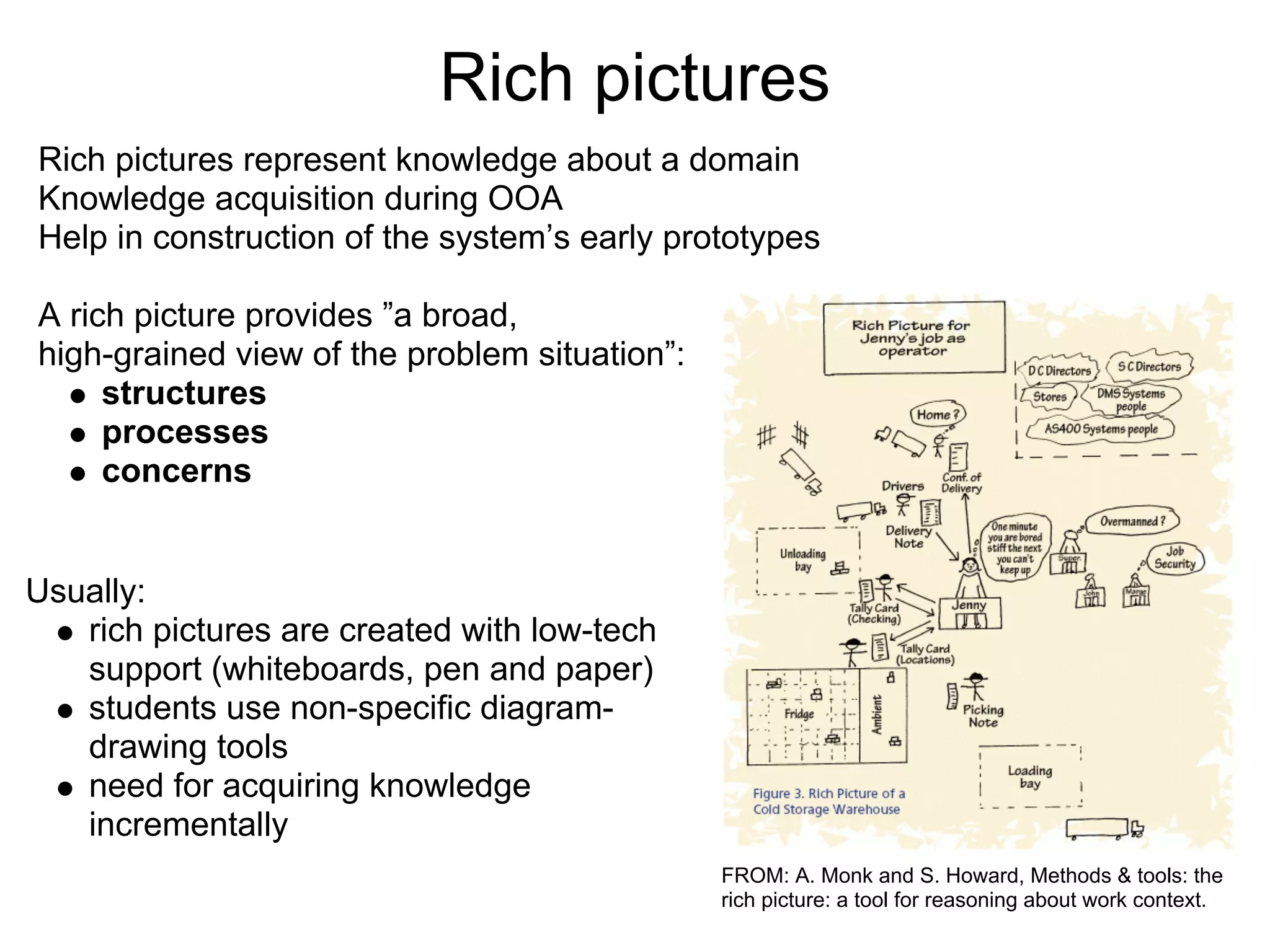
Rich pictures
Rich pictures represent knowledge about a domain
Knowledge acquisition during OOA
Help in construction of the system’s early prototypes

A rich picture provides ”a broad,
high-grained view of the problem situation”:
     structures
     processes
     concerns


Usually:
   rich pictures are created with low-tech
   support (whiteboards, pen and paper)
   students use non-specific diagram-
   drawing tools
   need for acquiring knowledge
   incrementally
                                               FROM: A. Monk and S. Howard, Methods & tools: the
                                               rich picture: a tool for reasoning about work context.
Concept Maps and Text Graphs
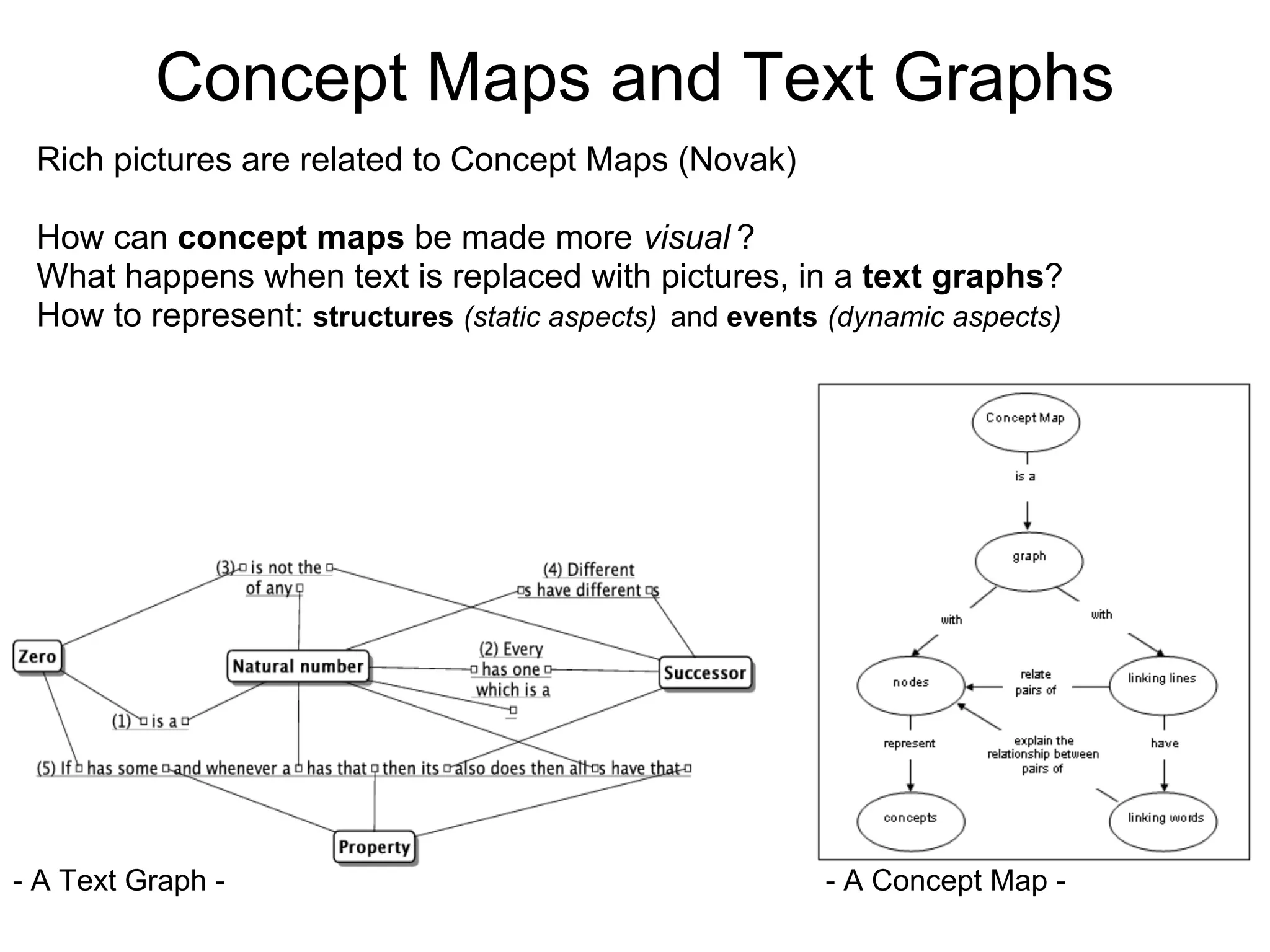
 Rich pictures are related to Concept Maps (Novak)

 How can concept maps be made more visual ?
 What happens when text is replaced with pictures, in a text graphs?
 How to represent: structures (static aspects) and events (dynamic aspects)


- A Text Graph -                                         - A Concept Map -
The (prototype) tool
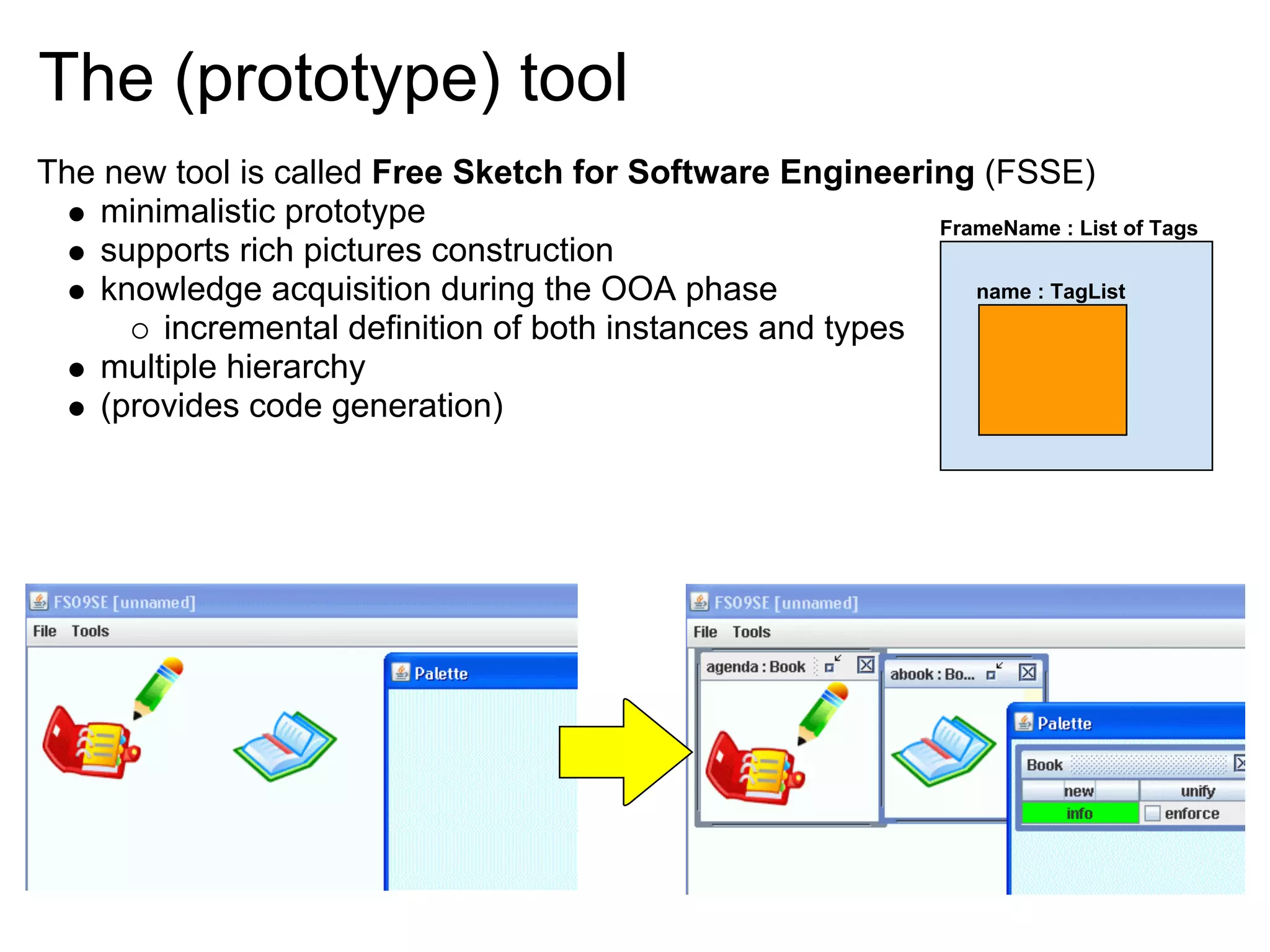
The new tool is called Free Sketch for Software Engineering (FSSE)
    minimalistic prototype                                 FrameName : List of Tags
    supports rich pictures construction
    knowledge acquisition during the OOA phase                name : TagList
        incremental definition of both instances and types
    multiple hierarchy
    (provides code generation)
DEMO
The Test
Problem:
  transposing the manual rich picture practice into a software tool was difcult

Solution:
  follow a user-centered approach -> involve students (EARLY) in a usability test

Aim of test:
    evaluate how users may perceive a tool for rich pictures
    easy to use
    if it adequately supports work-ow (for individuals and groups)
    collect suggestions for new features (to expand minimalistic prototype)


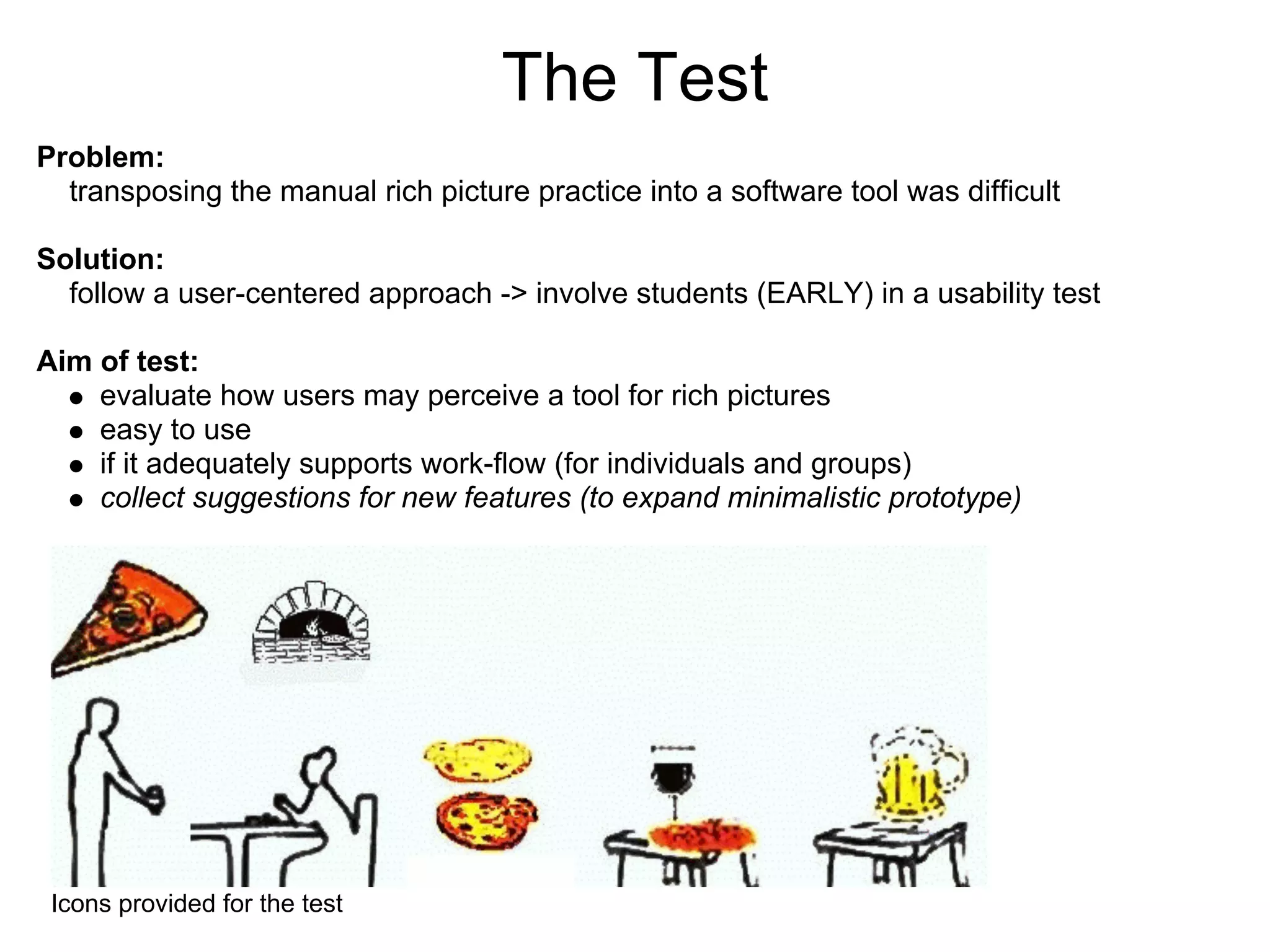
 Icons provided for the test
(testing methods and ... )                  Results
Findings:
    don't make me draw!
         especially on paper
         provide pre-made icons
         support for arrows
         keep focus on knowledge modelling
    works like "think aloud" -> nice for team work
    software tool is good -> given iterative nature of OOA, paper requires (re)drawing
    tags VS types (?)
    tags VS frame names (?)
    emergent usage pattern: prototypes and prototype clustering -> EVENTS!

Standard qualitative methodologies from the Design field
Questions:
    method of situated interviews (interview users in their context of practice)
    start with open questions, then gradually focus on details of users’ statements. Ask for examples.
    Interviews VS questionnaires:
           give more possibility to express freely
           show them that we cared for their contribution -> more direct feedback
    leverage on reection in action (a process of critical thinking while performing a skilled practice)
Quick look at new
features and GUI
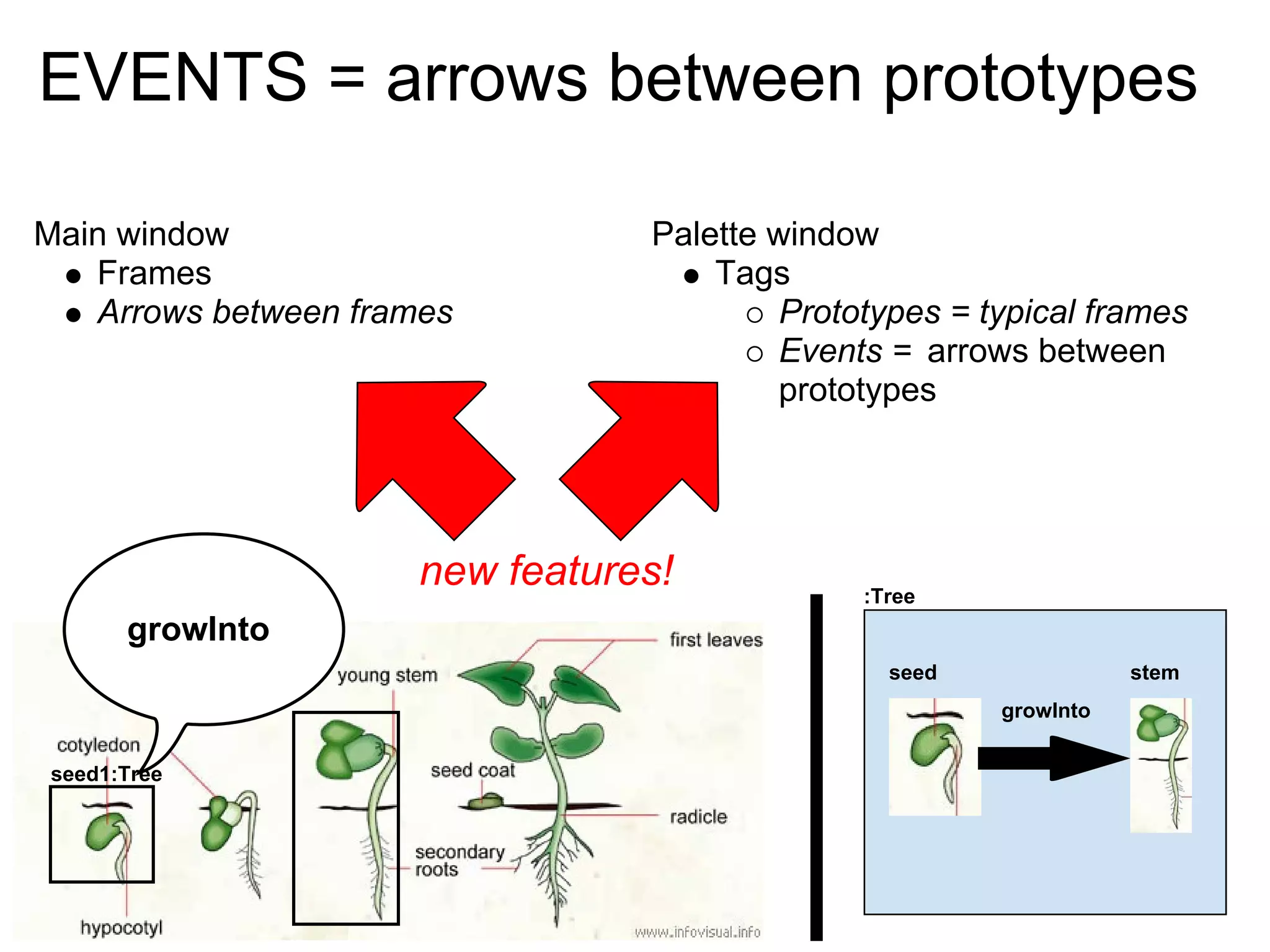
EVENTS = arrows between prototypes

Main window                      Palette window
   Frames                            Tags
   Arrows between frames                  Prototypes = typical frames
                                          Events = arrows between
                                          prototypes


                      new features!            :Tree
      growInto
                                                 seed              stem
                                                        growInto


seed1:Tree
Conclusion / future work
    No tools to support rich pictures creation, for object-oriented analysis
    How to validate and complete the initial prototype of the tool?
         involve users (i.e. students) -> usability test
         small group is not a problem -> we got meaningful feedback for new iteration
    Emergent patterns of use suggested new/better features: e.g. events
    Discovery: programmers' values/skills do not include drawing!

Long term plan:
    improve FSSE and test it further
    propose FSSE as the main tool for the OOA&D course

Future work:
    Free external painter VS internal painting capabilities: provide a more uniform
    environment for drawing rich pictures
    Events will be used to validate one’s understanding of a system
    Plug-in mechanism: users will dene their own mapping from rich pictures to external
    formats/code
    multiple (remote) users -> CSCW

Please don't make me draw (eKnow 2010)

  • 1.
    Please don’t makeme draw! Lesson learned during the development of a software to support early analysis of object-oriented systems. Andrea Valente Department of Electronic Systems, Automation & Control, Aalborg University - Esbjerg Institute of Technology Esbjerg, Denmark av@aaue.dk Emanuela Marchetti Mads Clausen Institute of Product Innovation, University of Southern Denmark Sønderborg, Denmark e.manum@gmail.com
  • 2.
    Rich pictures Rich picturesrepresent knowledge about a domain Knowledge acquisition during OOA Help in construction of the system’s early prototypes A rich picture provides ”a broad, high-grained view of the problem situation”: structures processes concerns Usually: rich pictures are created with low-tech support (whiteboards, pen and paper) students use non-specific diagram- drawing tools need for acquiring knowledge incrementally FROM: A. Monk and S. Howard, Methods & tools: the rich picture: a tool for reasoning about work context.
  • 3.
    Concept Maps andText Graphs Rich pictures are related to Concept Maps (Novak) How can concept maps be made more visual ? What happens when text is replaced with pictures, in a text graphs? How to represent: structures (static aspects) and events (dynamic aspects) - A Text Graph - - A Concept Map -
  • 4.
    The (prototype) tool Thenew tool is called Free Sketch for Software Engineering (FSSE) minimalistic prototype FrameName : List of Tags supports rich pictures construction knowledge acquisition during the OOA phase name : TagList incremental definition of both instances and types multiple hierarchy (provides code generation)
  • 5.
  • 6.
    The Test Problem: transposing the manual rich picture practice into a software tool was difcult Solution: follow a user-centered approach -> involve students (EARLY) in a usability test Aim of test: evaluate how users may perceive a tool for rich pictures easy to use if it adequately supports work-ow (for individuals and groups) collect suggestions for new features (to expand minimalistic prototype) Icons provided for the test
  • 7.
    (testing methods and... ) Results Findings: don't make me draw! especially on paper provide pre-made icons support for arrows keep focus on knowledge modelling works like "think aloud" -> nice for team work software tool is good -> given iterative nature of OOA, paper requires (re)drawing tags VS types (?) tags VS frame names (?) emergent usage pattern: prototypes and prototype clustering -> EVENTS! Standard qualitative methodologies from the Design field Questions: method of situated interviews (interview users in their context of practice) start with open questions, then gradually focus on details of users’ statements. Ask for examples. Interviews VS questionnaires: give more possibility to express freely show them that we cared for their contribution -> more direct feedback leverage on reection in action (a process of critical thinking while performing a skilled practice)
  • 8.
    Quick look atnew features and GUI
  • 9.
    EVENTS = arrowsbetween prototypes Main window Palette window Frames Tags Arrows between frames Prototypes = typical frames Events = arrows between prototypes new features! :Tree growInto seed stem growInto seed1:Tree
  • 10.
    Conclusion / futurework No tools to support rich pictures creation, for object-oriented analysis How to validate and complete the initial prototype of the tool? involve users (i.e. students) -> usability test small group is not a problem -> we got meaningful feedback for new iteration Emergent patterns of use suggested new/better features: e.g. events Discovery: programmers' values/skills do not include drawing! Long term plan: improve FSSE and test it further propose FSSE as the main tool for the OOA&D course Future work: Free external painter VS internal painting capabilities: provide a more uniform environment for drawing rich pictures Events will be used to validate one’s understanding of a system Plug-in mechanism: users will dene their own mapping from rich pictures to external formats/code multiple (remote) users -> CSCW