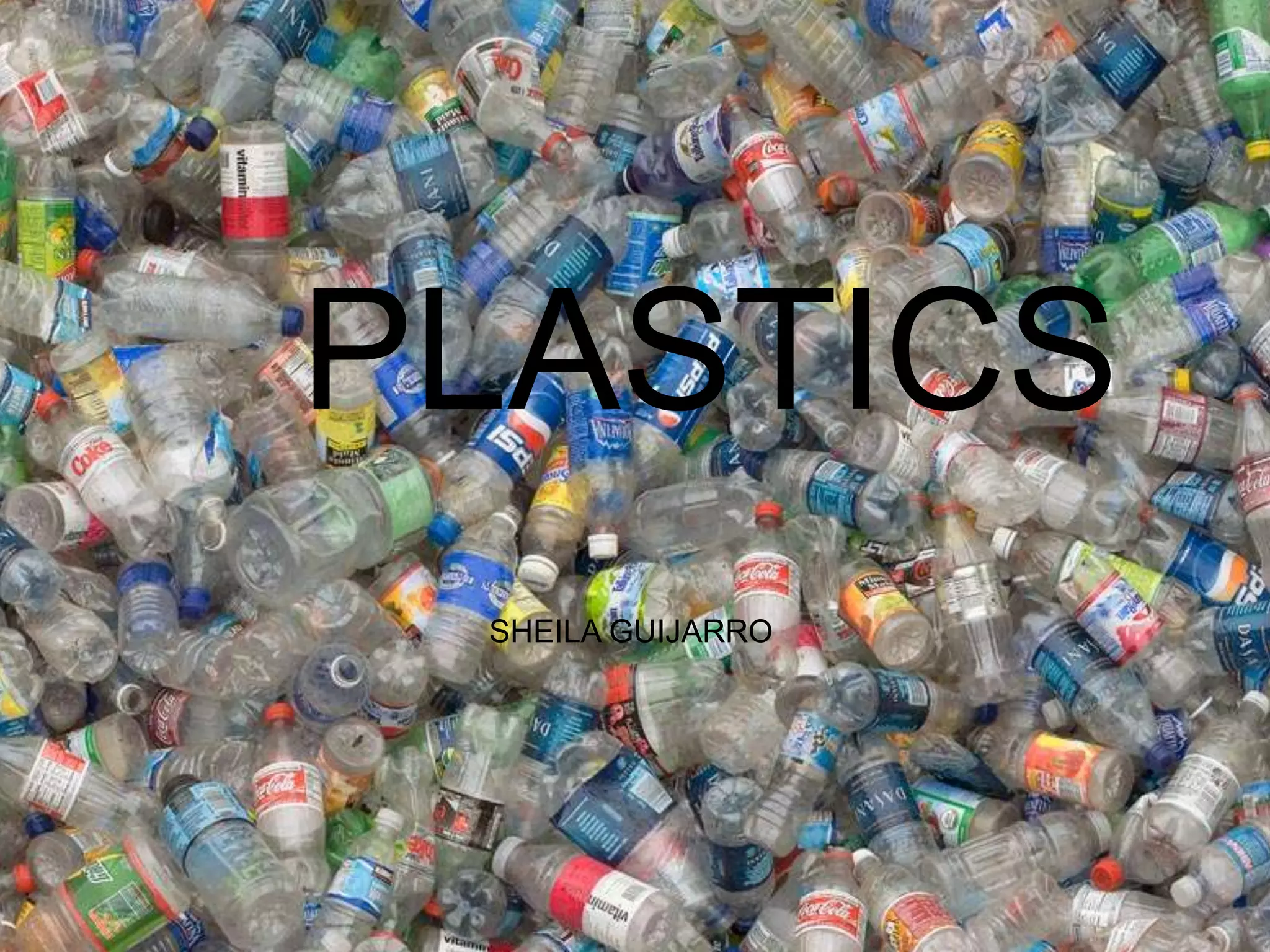
PLASTICS
SHEILA GUIJARRO
 Polymers and plastics
 Types of plastics
 The properties of plastics
 Identifying plastics
 The transformation of plastics

 plastics and the environment
POLYMERS& PLASTICS
 Polymers are very large molecules

made up of smaller ones called
monomers
 There are:
-Natural polymers: plant-based such
as latex,
cotton, cellulose..
-Animal based such as silk
 Synthetic polymers: mineral-based from
petroleum, globally these are called
plastics
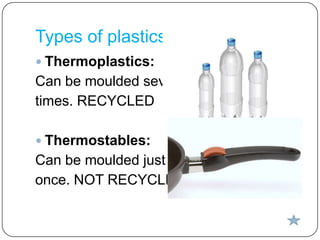
Types of plastics
 Thermoplastics:

Can be moulded several
times. RECYCLED
 Thermostables:

Can be moulded just
once. NOT RECYCLED
THE PROPERTIES OF
PLASTICS
Plastics have certain common
characteristics:
 They are flexible and malleable.
 They are lightweight materials.
 They show good resistance to impact.
 They are good thermal and electrical
insulators.
 They are resistant to oxidation.
 They are resistant to moisture.
IDENTIFYING PLASTICS
 You can identify the hardest plastics

because they are more difficult to
scratch.
 Some plastics have more density than
water.
 Others plastics can be observed by
burning.
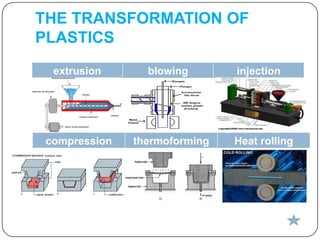
THE TRANSFORMATION OF
PLASTICS
extrusion

compression

blowing

thermoforming

injection

Heat rolling
PLASTICS AND THE
ENVIRONMENT
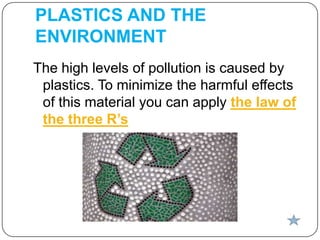
The high levels of pollution is caused by
plastics. To minimize the harmful effects
of this material you can apply the law of
the three R’s

Plastics

  • 1.
  • 2.
     Polymers andplastics  Types of plastics  The properties of plastics  Identifying plastics  The transformation of plastics  plastics and the environment
  • 3.
    POLYMERS& PLASTICS  Polymersare very large molecules made up of smaller ones called monomers  There are: -Natural polymers: plant-based such as latex, cotton, cellulose.. -Animal based such as silk  Synthetic polymers: mineral-based from petroleum, globally these are called plastics
  • 4.
    Types of plastics Thermoplastics: Can be moulded several times. RECYCLED  Thermostables: Can be moulded just once. NOT RECYCLED
  • 5.
    THE PROPERTIES OF PLASTICS Plasticshave certain common characteristics:  They are flexible and malleable.  They are lightweight materials.  They show good resistance to impact.  They are good thermal and electrical insulators.  They are resistant to oxidation.  They are resistant to moisture.
  • 6.
    IDENTIFYING PLASTICS  Youcan identify the hardest plastics because they are more difficult to scratch.  Some plastics have more density than water.  Others plastics can be observed by burning.
  • 7.
  • 8.
    PLASTICS AND THE ENVIRONMENT Thehigh levels of pollution is caused by plastics. To minimize the harmful effects of this material you can apply the law of the three R’s