I. The word plastic was derived from the words
plasticus ( Latin for ‘capable of moulding’) and
plastikos ( Greek for ‘fit for moulding’).
II. Plastics are organic polymers (synthetic or
natural) of high molecular weight.
III. The plastic is basically formless material which
can be moulded under heat and pressure.
I. Plastics are good electrical /heat
insulators.
II.Plastics do not corrode or decay.
III.Plastics are cheap and dispensable
IV.Plastics are resistant to
chemicals,water or grease.
I. Plastics can either be non-biodegradable or
degrade very slowly.
II. Plastics are flammable and release toxic fumes
when burned .
III. Plastics can contaminate foods with dangerous
chemical compounds.
IV. Plastics usually have low melting point and
therefore expand with heat.
Risk of kidney stones
Scientists say that eating hot meals on melamine crockery could be harmful
to health. Hot temperatures increase the amount of melamine and this can
increase the risk of kidney stones in both children and adults. To be in a
safer side it is recommended to take hot food on ceramic crockery or
stainless steel plates.
Accelerate Breast cancer
Plastics melt when it is exposed to hot sun. we often store water in plastic
bottles while we travel. Many times we leave plastic bottles in car where it
is in direct exposure of sun and we drink the same water. Such heating
releases a toxin called dioxin in the water. Dioxin which accelerate breast
cancer. To avoid this use stainless steel bottles like thermosteel.
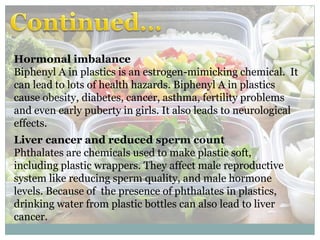
Hormonal imbalance
Biphenyl A in plastics is an estrogen-mimicking chemical. It
can lead to lots of health hazards. Biphenyl A in plastics
cause obesity, diabetes, cancer, asthma, fertility problems
and even early puberty in girls. It also leads to neurological
effects.
Liver cancer and reduced sperm count
Phthalates are chemicals used to make plastic soft,
including plastic wrappers. They affect male reproductive
system like reducing sperm quality, and male hormone
levels. Because of the presence of phthalates in plastics,
drinking water from plastic bottles can also lead to liver
cancer.
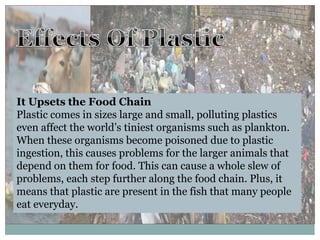
It Upsets the Food Chain
Plastic comes in sizes large and small, polluting plastics
even affect the world’s tiniest organisms such as plankton.
When these organisms become poisoned due to plastic
ingestion, this causes problems for the larger animals that
depend on them for food. This can cause a whole slew of
problems, each step further along the food chain. Plus, it
means that plastic are present in the fish that many people
eat everyday.
Groundwater Pollution
Every time it rains then the garbage dumps that are near our surroundings
make our drinking water contaminated . Groundwater and reservoirs are
susceptible to leaking environmental toxins.
Most of the litter and pollution affecting the world’s oceans also derives from
plastics. This has had terrible consequences on many marine species, which can
lead to consequences for those that eat fish and marine life for nutrients –
including people.
Land Pollution
When plastic is dumped in landfills, it interacts with water and form hazardous
chemicals. When these chemicals seep underground, they degrade the water
quality. Wind carries and deposits plastic from one place to another, increasing
the land litter. It can also get stuck on poles, traffic lights, trees, fences, tower
etc. and animals that may come in the vicinity and might suffocate them to
death.
Air Pollution
Burning of plastic in the open air, leads to environmental
pollution due to the release of poisonous chemicals.
The polluted air when inhaled by humans and animals affect
their health and can cause respiratory problems.
It is Poisonous
Man artificially makes plastic by using a number of toxic
chemicals. Therefore, use of and exposure to plastics has
been linked to a number of health concerns affecting people
around the world. The processes of making, storing,
disposing of, and just being around plastics can be
extremely harmful to living things.
It is Expensive
It costs millions of dollars each year to clean affected areas
after exposure, not to mention the loss of life to plants,
animals, and people. As land becomes more valuable, just
finding a place to put garbage is becoming a problem in many
parts of the world.
Plastic and its harmful effects

Plastic and its harmful effects

  • 2.
    I. The wordplastic was derived from the words plasticus ( Latin for ‘capable of moulding’) and plastikos ( Greek for ‘fit for moulding’). II. Plastics are organic polymers (synthetic or natural) of high molecular weight. III. The plastic is basically formless material which can be moulded under heat and pressure.
  • 3.
    I. Plastics aregood electrical /heat insulators. II.Plastics do not corrode or decay. III.Plastics are cheap and dispensable IV.Plastics are resistant to chemicals,water or grease.
  • 4.
    I. Plastics caneither be non-biodegradable or degrade very slowly. II. Plastics are flammable and release toxic fumes when burned . III. Plastics can contaminate foods with dangerous chemical compounds. IV. Plastics usually have low melting point and therefore expand with heat.
  • 5.
    Risk of kidneystones Scientists say that eating hot meals on melamine crockery could be harmful to health. Hot temperatures increase the amount of melamine and this can increase the risk of kidney stones in both children and adults. To be in a safer side it is recommended to take hot food on ceramic crockery or stainless steel plates. Accelerate Breast cancer Plastics melt when it is exposed to hot sun. we often store water in plastic bottles while we travel. Many times we leave plastic bottles in car where it is in direct exposure of sun and we drink the same water. Such heating releases a toxin called dioxin in the water. Dioxin which accelerate breast cancer. To avoid this use stainless steel bottles like thermosteel.
  • 6.
    Hormonal imbalance Biphenyl Ain plastics is an estrogen-mimicking chemical. It can lead to lots of health hazards. Biphenyl A in plastics cause obesity, diabetes, cancer, asthma, fertility problems and even early puberty in girls. It also leads to neurological effects. Liver cancer and reduced sperm count Phthalates are chemicals used to make plastic soft, including plastic wrappers. They affect male reproductive system like reducing sperm quality, and male hormone levels. Because of the presence of phthalates in plastics, drinking water from plastic bottles can also lead to liver cancer.
  • 7.
    It Upsets theFood Chain Plastic comes in sizes large and small, polluting plastics even affect the world’s tiniest organisms such as plankton. When these organisms become poisoned due to plastic ingestion, this causes problems for the larger animals that depend on them for food. This can cause a whole slew of problems, each step further along the food chain. Plus, it means that plastic are present in the fish that many people eat everyday.
  • 8.
    Groundwater Pollution Every timeit rains then the garbage dumps that are near our surroundings make our drinking water contaminated . Groundwater and reservoirs are susceptible to leaking environmental toxins. Most of the litter and pollution affecting the world’s oceans also derives from plastics. This has had terrible consequences on many marine species, which can lead to consequences for those that eat fish and marine life for nutrients – including people. Land Pollution When plastic is dumped in landfills, it interacts with water and form hazardous chemicals. When these chemicals seep underground, they degrade the water quality. Wind carries and deposits plastic from one place to another, increasing the land litter. It can also get stuck on poles, traffic lights, trees, fences, tower etc. and animals that may come in the vicinity and might suffocate them to death.
  • 9.
    Air Pollution Burning ofplastic in the open air, leads to environmental pollution due to the release of poisonous chemicals. The polluted air when inhaled by humans and animals affect their health and can cause respiratory problems. It is Poisonous Man artificially makes plastic by using a number of toxic chemicals. Therefore, use of and exposure to plastics has been linked to a number of health concerns affecting people around the world. The processes of making, storing, disposing of, and just being around plastics can be extremely harmful to living things.
  • 10.
    It is Expensive Itcosts millions of dollars each year to clean affected areas after exposure, not to mention the loss of life to plants, animals, and people. As land becomes more valuable, just finding a place to put garbage is becoming a problem in many parts of the world.