PLANNING FOR
COLLEGE
By Michael Porter
Admissions Counselor
University of Tennessee, Knoxville
Factors Affecting Your College Choice
 College environment
 Extracurricular opportunities
 Profession
 Major
 Geographic location
 Community
 College size
 Concerns
What are your top 4-6 criteria in selecting a college?
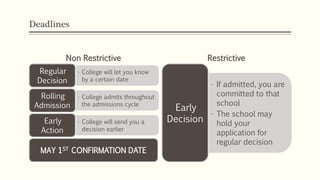
Deadlines
Non Restrictive
• College will let you know
by a certain date
Regular
Decision
• College admits throughout
the admissions cycle
Rolling
Admission
• College will send you a
decision earlier
Early
Action
MAY 1ST CONFIRMATION DATE
Restrictive
• If admitted, you are
committed to that
school
• The school may
hold your
application for
regular decision
Early
Decision
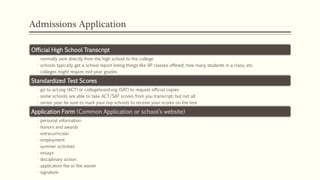
Admissions Application
Official High School Transcript
• normally sent directly from the high school to the college
• schools typically get a school report listing things like AP classes offered, how many students in a class, etc.
• colleges might require mid-year grades
Standardized Test Scores
• go to act.org (ACT) or collegeboard.org (SAT) to request official copies
• some schools are able to take ACT/SAT scores from you transcript, but not all
• senior year be sure to mark your top schools to receive your scores on the test
Application Form (Common Application or school’s website)
• personal information
• honors and awards
• extracurricular
• employment
• summer activities
• essays
• disciplinary action
• application fee or fee waiver
• signature
Essay
 Tell a Story
 don’t write what you think they want to hear
 show your personality
 Proofread
 strategy: read essay from bottom to top
 no “thnx” or “B4”
 grammarly.com
 Get a Second Opinion
 listen with an open mind
 Stay Focused
 really read the essay prompt
 add substance to some of your
achievements
Testing
 ACT
 SAT
 AP Exams
 IB Exams
 FREE TEST PREP
 Khan Academy, khanacademy.org
 ACT, act.org
 SAT, satpractice.org
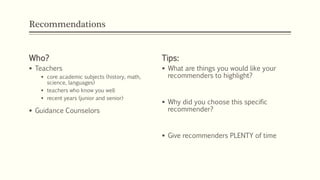
Recommendations
Who?
 Teachers
 core academic subjects (history, math,
science, languages)
 teachers who know you well
 recent years (junior and senior)
 Guidance Counselors
Tips:
 What are things you would like your
recommenders to highlight?
 Why did you choose this specific
recommender?
 Give recommenders PLENTY of time
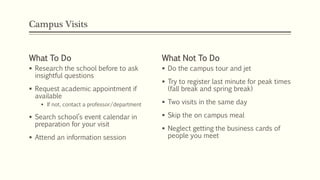
Campus Visits
What To Do
 Research the school before to ask
insightful questions
 Request academic appointment if
available
 If not, contact a professor/department
 Search school’s event calendar in
preparation for your visit
 Attend an information session
What Not To Do
 Do the campus tour and jet
 Try to register last minute for peak times
(fall break and spring break)
 Two visits in the same day
 Skip the on campus meal
 Neglect getting the business cards of
people you meet
PLANNING FOR
COLLEGE
Michael Porter // michaelp@utk.edu // 865-946-8687
A copy of this presentation is available at
tinyurl.com/Life-After-School

Planning for College

  • 1.
    PLANNING FOR COLLEGE By MichaelPorter Admissions Counselor University of Tennessee, Knoxville
  • 3.
    Factors Affecting YourCollege Choice  College environment  Extracurricular opportunities  Profession  Major  Geographic location  Community  College size  Concerns What are your top 4-6 criteria in selecting a college?
  • 4.
    Deadlines Non Restrictive • Collegewill let you know by a certain date Regular Decision • College admits throughout the admissions cycle Rolling Admission • College will send you a decision earlier Early Action MAY 1ST CONFIRMATION DATE Restrictive • If admitted, you are committed to that school • The school may hold your application for regular decision Early Decision
  • 6.
    Admissions Application Official HighSchool Transcript • normally sent directly from the high school to the college • schools typically get a school report listing things like AP classes offered, how many students in a class, etc. • colleges might require mid-year grades Standardized Test Scores • go to act.org (ACT) or collegeboard.org (SAT) to request official copies • some schools are able to take ACT/SAT scores from you transcript, but not all • senior year be sure to mark your top schools to receive your scores on the test Application Form (Common Application or school’s website) • personal information • honors and awards • extracurricular • employment • summer activities • essays • disciplinary action • application fee or fee waiver • signature
  • 7.
    Essay  Tell aStory  don’t write what you think they want to hear  show your personality  Proofread  strategy: read essay from bottom to top  no “thnx” or “B4”  grammarly.com  Get a Second Opinion  listen with an open mind  Stay Focused  really read the essay prompt  add substance to some of your achievements
  • 8.
    Testing  ACT  SAT AP Exams  IB Exams  FREE TEST PREP  Khan Academy, khanacademy.org  ACT, act.org  SAT, satpractice.org
  • 9.
    Recommendations Who?  Teachers  coreacademic subjects (history, math, science, languages)  teachers who know you well  recent years (junior and senior)  Guidance Counselors Tips:  What are things you would like your recommenders to highlight?  Why did you choose this specific recommender?  Give recommenders PLENTY of time
  • 10.
    Campus Visits What ToDo  Research the school before to ask insightful questions  Request academic appointment if available  If not, contact a professor/department  Search school’s event calendar in preparation for your visit  Attend an information session What Not To Do  Do the campus tour and jet  Try to register last minute for peak times (fall break and spring break)  Two visits in the same day  Skip the on campus meal  Neglect getting the business cards of people you meet
  • 11.
    PLANNING FOR COLLEGE Michael Porter// michaelp@utk.edu // 865-946-8687 A copy of this presentation is available at tinyurl.com/Life-After-School