Junior
 College
Planning
 Timeline
  So it begins…
What are your              ?
“It isn’t about getting
in—it’s about getting
out with a degree,
about being able to
read, write, think, lead
and follow(and know
when to do those
things). It’s about
making the most of your
talents and skills in and
out of the classroom.”
   Self-discovery: learning styles, favorite subjects,
    possible majors and career paths. What do you
    need from a college in order to learn and be
    successful? to get out with an appropriate degree
    and skills?

   Visits to ”types” of schools: big, small, technical,
    liberal arts


                                         Explore
                                           Now
Test Planning

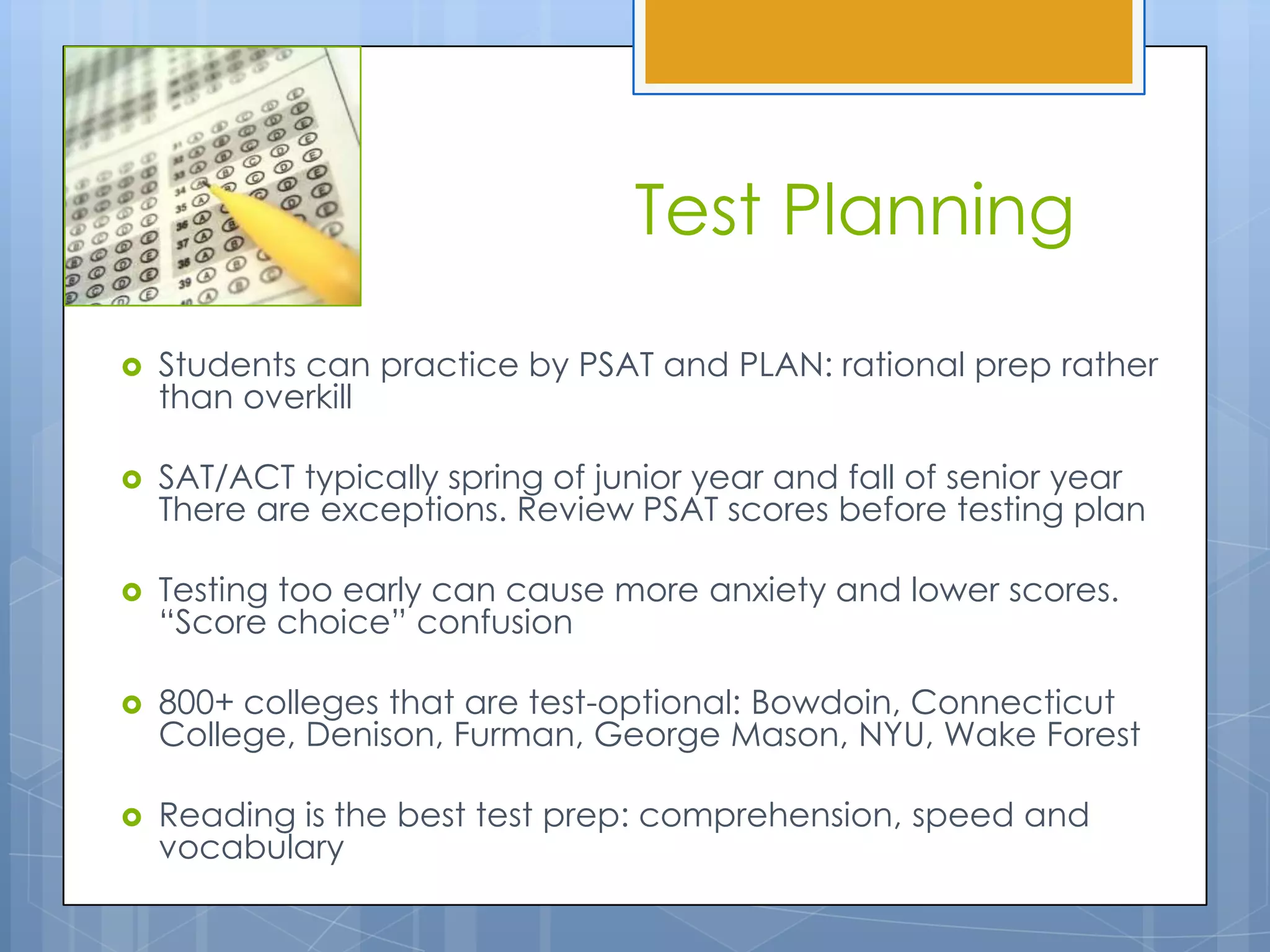
   Students can practice by PSAT and PLAN: rational prep rather
    than overkill

   SAT/ACT typically spring of junior year and fall of senior year
    There are exceptions. Review PSAT scores before testing plan

   Testing too early can cause more anxiety and lower scores.
    “Score choice” confusion

   800+ colleges that are test-optional: Bowdoin, Connecticut
    College, Denison, Furman, George Mason, NYU, Wake Forest

   Reading is the best test prep: comprehension, speed and
    vocabulary
Junior College Workshop

 November   30, all day

 Studentsneed to bring 1.5”
 binder with 4-5 pocket
 dividers

 CollegePlanning Manual,
 with handouts and room to
 add and store materials and
 information
Workshop
 Self   exploration: How to define your needs

 Generalresearch: How to find colleges that
  meet your criteria

 Focused  research: How to learn about those
  colleges through print and websites

 Campus     based research: visits and interviews

 Testing:   What, where and when
Workshop con’t
 Application:
     Common App
     Extracurricular/Activities Lists
     Transcripts
     Profile
     Teacher Recommendations
     Counselor/Secondary School Report
     Student Portal
     Mock Admissions Committee with
     complete applications
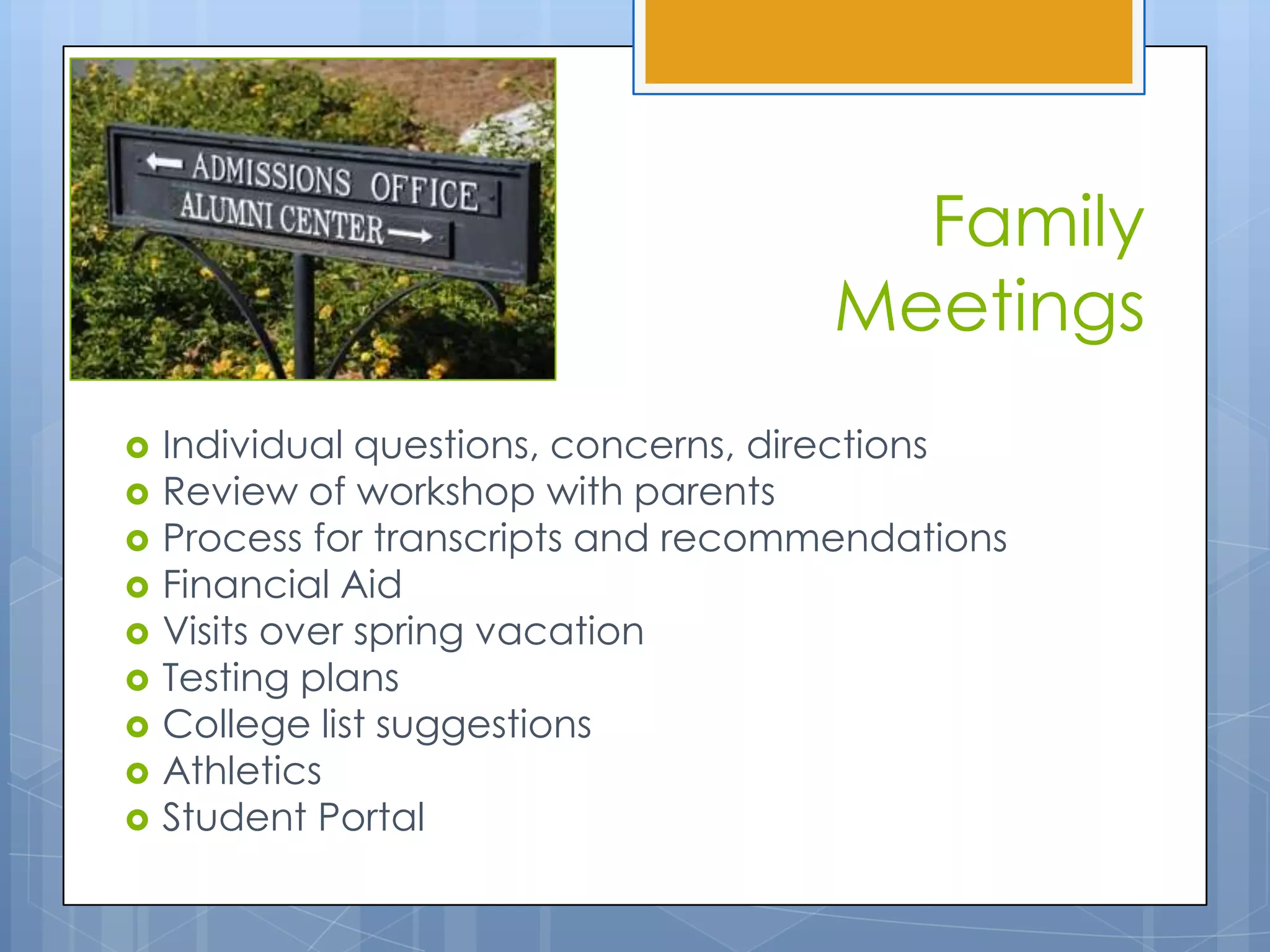
Family
                                      Meetings
   Individual questions, concerns, directions
   Review of workshop with parents
   Process for transcripts and recommendations
   Financial Aid
   Visits over spring vacation
   Testing plans
   College list suggestions
   Athletics
   Student Portal
Additional Scheduled Meetings
 March/April:Family meeting to review visits,
 testing and college list

 May:   Essay writing workshop with students

 September:   Family meetings to finalize list

 Whenever    you need to meet!
Roles and Responsibilities
   Counselor: To facilitate student learning and
    exploration, serve as information and support
    resource for parents and students, coordinate
    transcripts and write school reports.

   Parents: Encourage and support your student in this
    process. Discuss financial and geographic
    constraints now. Arrange campus visits. Allow
    student to have control.

   Student: Drives this process, and is ultimately the
    one responsible for deadlines, ethical behavior and
    final outcomes, whether positive or negative
How to use the
                 College Counselor

 ThroughDecember, I am on campus all day
 Mondays and Wednesdays, other times by
 appointment. Email is the best way to
 schedule an appointment.

 Forquick questions, email is best. But you can
 also text at 704-458-8929.

Junior timeline

  • 1.
  • 2.
    What are your ? “It isn’t about getting in—it’s about getting out with a degree, about being able to read, write, think, lead and follow(and know when to do those things). It’s about making the most of your talents and skills in and out of the classroom.”
  • 3.
    Self-discovery: learning styles, favorite subjects, possible majors and career paths. What do you need from a college in order to learn and be successful? to get out with an appropriate degree and skills?  Visits to ”types” of schools: big, small, technical, liberal arts Explore Now
  • 4.
    Test Planning  Students can practice by PSAT and PLAN: rational prep rather than overkill  SAT/ACT typically spring of junior year and fall of senior year There are exceptions. Review PSAT scores before testing plan  Testing too early can cause more anxiety and lower scores. “Score choice” confusion  800+ colleges that are test-optional: Bowdoin, Connecticut College, Denison, Furman, George Mason, NYU, Wake Forest  Reading is the best test prep: comprehension, speed and vocabulary
  • 5.
    Junior College Workshop November 30, all day  Studentsneed to bring 1.5” binder with 4-5 pocket dividers  CollegePlanning Manual, with handouts and room to add and store materials and information
  • 6.
    Workshop  Self exploration: How to define your needs  Generalresearch: How to find colleges that meet your criteria  Focused research: How to learn about those colleges through print and websites  Campus based research: visits and interviews  Testing: What, where and when
  • 7.
    Workshop con’t  Application: Common App Extracurricular/Activities Lists Transcripts Profile Teacher Recommendations Counselor/Secondary School Report Student Portal Mock Admissions Committee with complete applications
  • 8.
    Family Meetings  Individual questions, concerns, directions  Review of workshop with parents  Process for transcripts and recommendations  Financial Aid  Visits over spring vacation  Testing plans  College list suggestions  Athletics  Student Portal
  • 9.
    Additional Scheduled Meetings March/April:Family meeting to review visits, testing and college list  May: Essay writing workshop with students  September: Family meetings to finalize list  Whenever you need to meet!
  • 10.
    Roles and Responsibilities  Counselor: To facilitate student learning and exploration, serve as information and support resource for parents and students, coordinate transcripts and write school reports.  Parents: Encourage and support your student in this process. Discuss financial and geographic constraints now. Arrange campus visits. Allow student to have control.  Student: Drives this process, and is ultimately the one responsible for deadlines, ethical behavior and final outcomes, whether positive or negative
  • 11.
    How to usethe College Counselor  ThroughDecember, I am on campus all day Mondays and Wednesdays, other times by appointment. Email is the best way to schedule an appointment.  Forquick questions, email is best. But you can also text at 704-458-8929.