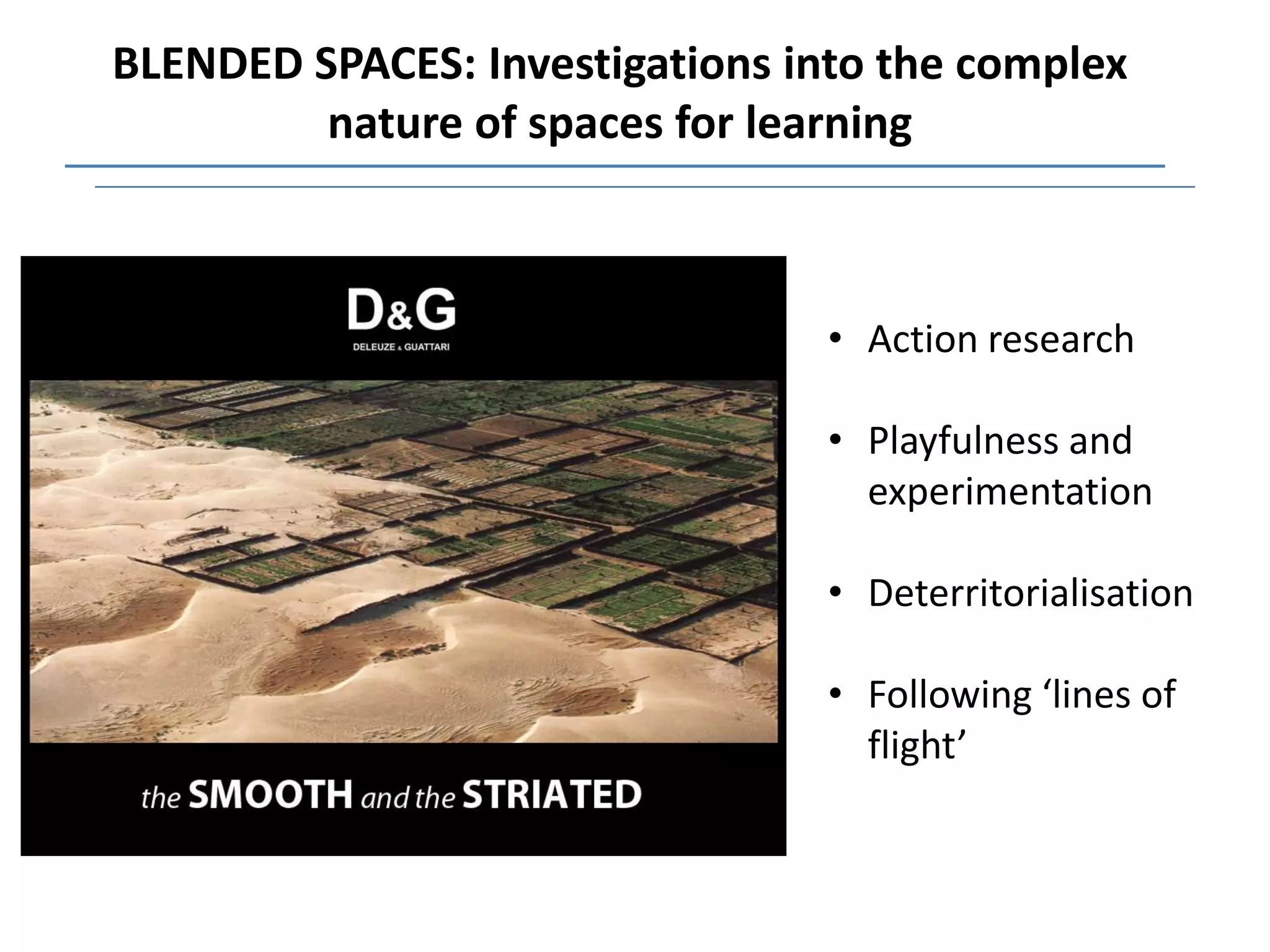
BLENDED SPACES: Investigations into the complex
         nature of spaces for learning


                                 • Action research

                                 • Playfulness and
                                   experimentation

                                 • Deterritorialisation

                                 • Following ‘lines of
                                   flight’
Learning – a rhizomatic process?


Learning is a complex process in:
  - time (e.g. threshold concepts)
  - space (e.g. experiential)
  - ubiquitous (e.g. cognitive, emotional, social (Illeris))
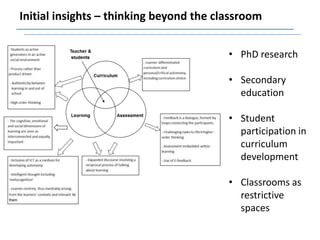
Initial insights – thinking beyond the classroom


                                         • PhD research

                                         • Secondary
                                           education

                                         • Student
                                           participation in
                                           curriculum
                                           development

                                         • Classrooms as
                                           restrictive
                                           spaces
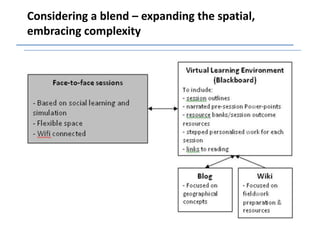
Considering a blend – expanding the spatial,
embracing complexity
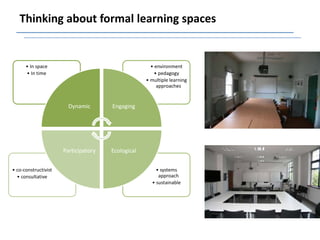
Thinking about formal learning spaces


      • In space                                     • environment
      • In time                                        • pedagogy
                                                   • multiple learning
                                                        approaches


                        Dynamic       Engaging


                      Participatory   Ecological


• co-constructivist                                    • systems
  • consultative                                        approach
                                                     • sustainable
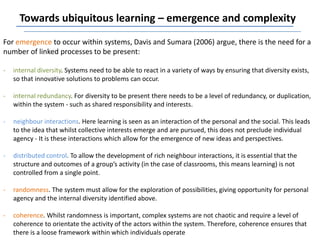
Towards ubiquitous learning – emergence and complexity
For emergence to occur within systems, Davis and Sumara (2006) argue, there is the need for a
number of linked processes to be present:

-   internal diversity. Systems need to be able to react in a variety of ways by ensuring that diversity exists,
    so that innovative solutions to problems can occur.

-   internal redundancy. For diversity to be present there needs to be a level of redundancy, or duplication,
    within the system - such as shared responsibility and interests.

-   neighbour interactions. Here learning is seen as an interaction of the personal and the social. This leads
    to the idea that whilst collective interests emerge and are pursued, this does not preclude individual
    agency - It is these interactions which allow for the emergence of new ideas and perspectives.

-   distributed control. To allow the development of rich neighbour interactions, it is essential that the
    structure and outcomes of a group’s activity (in the case of classrooms, this means learning) is not
    controlled from a single point.

-   randomness. The system must allow for the exploration of possibilities, giving opportunity for personal
    agency and the internal diversity identified above.

-   coherence. Whilst randomness is important, complex systems are not chaotic and require a level of
    coherence to orientate the activity of the actors within the system. Therefore, coherence ensures that
    there is a loose framework within which individuals operate
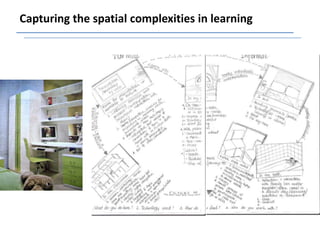
Capturing the spatial complexities in learning
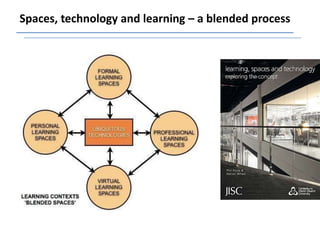
Spaces, technology and learning – a blended process
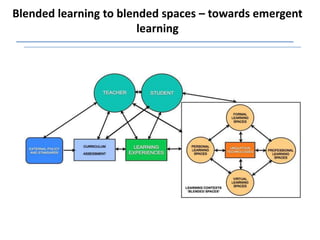
Blended learning to blended spaces – towards emergent
                        learning
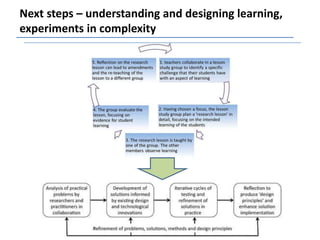
Next steps – understanding and designing learning,
experiments in complexity

Blended spaces presentation

  • 1.
    BLENDED SPACES: Investigationsinto the complex nature of spaces for learning • Action research • Playfulness and experimentation • Deterritorialisation • Following ‘lines of flight’
  • 2.
    Learning – arhizomatic process? Learning is a complex process in: - time (e.g. threshold concepts) - space (e.g. experiential) - ubiquitous (e.g. cognitive, emotional, social (Illeris))
  • 3.
    Initial insights –thinking beyond the classroom • PhD research • Secondary education • Student participation in curriculum development • Classrooms as restrictive spaces
  • 4.
    Considering a blend– expanding the spatial, embracing complexity
  • 5.
    Thinking about formallearning spaces • In space • environment • In time • pedagogy • multiple learning approaches Dynamic Engaging Participatory Ecological • co-constructivist • systems • consultative approach • sustainable
  • 6.
    Towards ubiquitous learning– emergence and complexity For emergence to occur within systems, Davis and Sumara (2006) argue, there is the need for a number of linked processes to be present: - internal diversity. Systems need to be able to react in a variety of ways by ensuring that diversity exists, so that innovative solutions to problems can occur. - internal redundancy. For diversity to be present there needs to be a level of redundancy, or duplication, within the system - such as shared responsibility and interests. - neighbour interactions. Here learning is seen as an interaction of the personal and the social. This leads to the idea that whilst collective interests emerge and are pursued, this does not preclude individual agency - It is these interactions which allow for the emergence of new ideas and perspectives. - distributed control. To allow the development of rich neighbour interactions, it is essential that the structure and outcomes of a group’s activity (in the case of classrooms, this means learning) is not controlled from a single point. - randomness. The system must allow for the exploration of possibilities, giving opportunity for personal agency and the internal diversity identified above. - coherence. Whilst randomness is important, complex systems are not chaotic and require a level of coherence to orientate the activity of the actors within the system. Therefore, coherence ensures that there is a loose framework within which individuals operate
  • 7.
    Capturing the spatialcomplexities in learning
  • 8.
    Spaces, technology andlearning – a blended process
  • 9.
    Blended learning toblended spaces – towards emergent learning
  • 10.
    Next steps –understanding and designing learning, experiments in complexity