


Pitching Workshop


  Presenter: Peter Christo
OVERVIEW - Evaluation
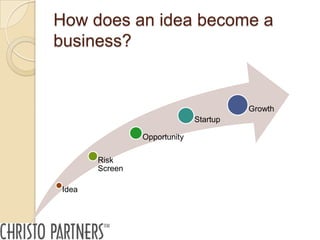
How does an idea become a
business?


                                        Growth
                              Startup

                Opportunity

       Risk
       Screen

Idea
Three things need to come
together!


           ?

      $          !
A Metaphor
   It’s a journey not unlike driving from
    Melbourne to Perth at night in the fog
    without a GPS or Map. We know
    where west is that’s about it. Each
    wind in the road appears
    unexpectedly, the fog lifts occasionally
    then comes down thick as pea soup
    and you wonder whether it would be
    better to stop and go back. If you keep
    going you will get there, but Perth may
    have changed in the process!
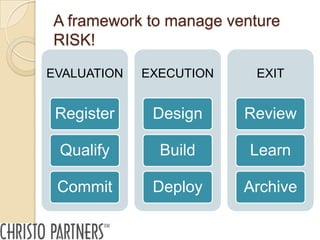
A framework to manage venture
RISK!

EVALUATION   EXECUTION    EXIT


 Register     Design     Review

 Qualify       Build     Learn

 Commit       Deploy     Archive
Idea v Opportunity
 Ideas are not necessarily opportunities
 Opportunities may not be commercial
 Commercial opportunities are relative
  to the idea owner (Opportunity Cost)
    ◦   Skills
    ◦   Passion
    ◦   Stage of life
    ◦   Net worth
    ◦   Risk tolerance/appetite
Key elements of a commercial
idea!
 Taps into demand that is quantified
  and understood (what is that?)
 Includes a clear value proposition
  (what is that?)
 Has a business model that results in
  value being created for the business
  ($$)
 It is protectable
 Can deliver value to the
  investors/shareholders
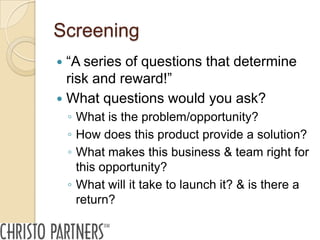
Screening
 “A series of questions that determine
  risk and reward!”
 What questions would you ask?
    ◦ What is the problem/opportunity?
    ◦ How does this product provide a solution?
    ◦ What makes this business & team right for
      this opportunity?
    ◦ What will it take to launch it? & is there a
      return?
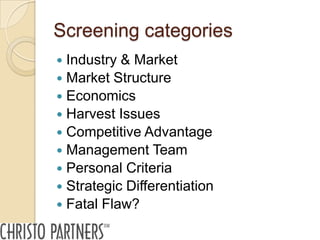
Screening categories
 Industry & Market
 Market Structure
 Economics
 Harvest Issues
 Competitive Advantage
 Management Team
 Personal Criteria
 Strategic Differentiation
 Fatal Flaw?
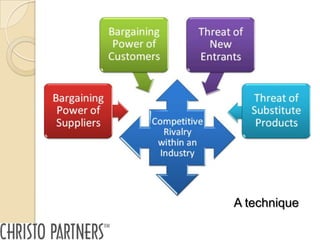
A technique
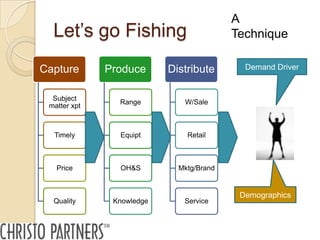
A
  Let’s go Fishing                        Technique

Capture       Produce      Distribute       Demand Driver


  Subject
                Range         W/Sale
 matter xpt


  Timely        Equipt         Retail


   Price        OH&S         Mktg/Brand


                                           Demographics
  Quality      Knowledge      Service
Economics
 A clear demand driver
 A way to drive demands
 A way to deliver quantifiable value
 A sales model
 A margin
 A known break even point
Valuations
 The idea
 The opportunity
 The Startup
    ◦   No revenues
    ◦   revenue, no B/E
    ◦   B/E + Full costed
    ◦   Profit Trajectory
 Going & Growing Concern
 Established Business few growth
  prospects
PITCHING YOUR IDEA!
Concepts around pitching
   Purpose of the Pitch
   Use of aids
   Context
    ◦   In the lift/BBQ
    ◦   Informal business
    ◦   Formal but brief
    ◦   Full presentation
   Reading from notes
   An idea v’s an opportunity
Key Criteria before you can
PITCH
 The problem/opportunity
 Industry and market.
 Economics (Business model)
 Harvesting (can you sell the
  business?)
 Competitive Advantage (protect
  yourself)
 Who is with you? The Team.
 Any fatal flaws?
Audience
   Unsophisticated investors
   Sophisticated Investor/s
   Business Angel/s
   Committees (Govt)
   Venture Capitalists
   Suppliers
   Customers
   Business Partners
   Other stakeholders
Objectives
 Getting a meeting
 Getting the second meeting with the
  decision makers
 Qualifying that who you are pitching to
  is the right target
 Forcing you to be clear and
  commercial in your presentation
 Closing the deal and getting the
  outcome you want.
EXAMPLE of a pitch
Dummy Pitch
   You are a seasoned software engineer. You
    have come up with a way to quadruple the
    efficiency of any solar panel via software and
    so supply all the average homes power,
    including power up the electric car every
    night. You have done your numbers and
    believe that an investment of $5Million would
    allow you to kick off and is the best way
    forward for you from a power of energy
    company. On your way to a friends office for
    a lunch meeting, James Packer enters the
    elevator you are in. You are on the ground
    floor, and he is heading to the 22nd. You get
    off on the 23rd. You have your business plan
    in your bag!
Review your own pitches
   Does it cover the key criteria?
   Is it succinct?
   Does it include unnecessary
    information?
   Can you cover the key points fast
    (elevator pitch)
   Do you have the extended version?
   Other factors?
    ◦ How you dress
    ◦ How you communicate verbally
    ◦ You confident you are
Screen your opportunity
 Use a template or tool
 What are the key areas that need
  work
 CHECK
    ◦   Business Model Economics
    ◦   Demand Drivers
    ◦   The management team
    ◦   Validation of assumptions
    ◦   Actions forward
Key things to remember
   What are you pitching for?
    ◦   Time
    ◦   Money
    ◦   Knowledge?
    ◦   Relationships?
       Is your evaluation rational/sensible
    ◦ Get a 2nd opinion
    ◦ Get a 3rd opinion
    ◦ Keep it simple
Screen Tool
Questions?

Clarifications?

Challenges?
Christo Partners Op Eval, Screen and Evaluation

Christo Partners Op Eval, Screen and Evaluation

  • 1.
    Pitching Workshop Presenter: Peter Christo
  • 2.
  • 3.
    How does anidea become a business? Growth Startup Opportunity Risk Screen Idea
  • 4.
    Three things needto come together! ? $ !
  • 5.
    A Metaphor  It’s a journey not unlike driving from Melbourne to Perth at night in the fog without a GPS or Map. We know where west is that’s about it. Each wind in the road appears unexpectedly, the fog lifts occasionally then comes down thick as pea soup and you wonder whether it would be better to stop and go back. If you keep going you will get there, but Perth may have changed in the process!
  • 6.
    A framework tomanage venture RISK! EVALUATION EXECUTION EXIT Register Design Review Qualify Build Learn Commit Deploy Archive
  • 7.
    Idea v Opportunity Ideas are not necessarily opportunities  Opportunities may not be commercial  Commercial opportunities are relative to the idea owner (Opportunity Cost) ◦ Skills ◦ Passion ◦ Stage of life ◦ Net worth ◦ Risk tolerance/appetite
  • 8.
    Key elements ofa commercial idea!  Taps into demand that is quantified and understood (what is that?)  Includes a clear value proposition (what is that?)  Has a business model that results in value being created for the business ($$)  It is protectable  Can deliver value to the investors/shareholders
  • 9.
    Screening  “A seriesof questions that determine risk and reward!”  What questions would you ask? ◦ What is the problem/opportunity? ◦ How does this product provide a solution? ◦ What makes this business & team right for this opportunity? ◦ What will it take to launch it? & is there a return?
  • 10.
    Screening categories  Industry& Market  Market Structure  Economics  Harvest Issues  Competitive Advantage  Management Team  Personal Criteria  Strategic Differentiation  Fatal Flaw?
  • 11.
  • 12.
    A Let’sgo Fishing Technique Capture Produce Distribute Demand Driver Subject Range W/Sale matter xpt Timely Equipt Retail Price OH&S Mktg/Brand Demographics Quality Knowledge Service
  • 13.
    Economics  A cleardemand driver  A way to drive demands  A way to deliver quantifiable value  A sales model  A margin  A known break even point
  • 14.
    Valuations  The idea The opportunity  The Startup ◦ No revenues ◦ revenue, no B/E ◦ B/E + Full costed ◦ Profit Trajectory  Going & Growing Concern  Established Business few growth prospects
  • 15.
  • 16.
    Concepts around pitching  Purpose of the Pitch  Use of aids  Context ◦ In the lift/BBQ ◦ Informal business ◦ Formal but brief ◦ Full presentation  Reading from notes  An idea v’s an opportunity
  • 17.
    Key Criteria beforeyou can PITCH  The problem/opportunity  Industry and market.  Economics (Business model)  Harvesting (can you sell the business?)  Competitive Advantage (protect yourself)  Who is with you? The Team.  Any fatal flaws?
  • 18.
    Audience  Unsophisticated investors  Sophisticated Investor/s  Business Angel/s  Committees (Govt)  Venture Capitalists  Suppliers  Customers  Business Partners  Other stakeholders
  • 19.
    Objectives  Getting ameeting  Getting the second meeting with the decision makers  Qualifying that who you are pitching to is the right target  Forcing you to be clear and commercial in your presentation  Closing the deal and getting the outcome you want.
  • 20.
  • 21.
    Dummy Pitch  You are a seasoned software engineer. You have come up with a way to quadruple the efficiency of any solar panel via software and so supply all the average homes power, including power up the electric car every night. You have done your numbers and believe that an investment of $5Million would allow you to kick off and is the best way forward for you from a power of energy company. On your way to a friends office for a lunch meeting, James Packer enters the elevator you are in. You are on the ground floor, and he is heading to the 22nd. You get off on the 23rd. You have your business plan in your bag!
  • 22.
    Review your ownpitches  Does it cover the key criteria?  Is it succinct?  Does it include unnecessary information?  Can you cover the key points fast (elevator pitch)  Do you have the extended version?  Other factors? ◦ How you dress ◦ How you communicate verbally ◦ You confident you are
  • 23.
    Screen your opportunity Use a template or tool  What are the key areas that need work  CHECK ◦ Business Model Economics ◦ Demand Drivers ◦ The management team ◦ Validation of assumptions ◦ Actions forward
  • 24.
    Key things toremember  What are you pitching for? ◦ Time ◦ Money ◦ Knowledge? ◦ Relationships?  Is your evaluation rational/sensible ◦ Get a 2nd opinion ◦ Get a 3rd opinion ◦ Keep it simple
  • 25.
  • 26.

Editor's Notes

  • #18 I am assuming all this s sorted. You have a business plan.