PILONIDAL SINUS OR JEEP
DRIVERS DISEASE
SURGICAL MANAGEMENT
Sahil tariq
Intern GMC
Handwara
Department of
surgery
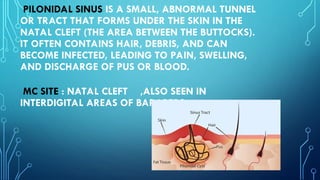
PILONIDAL SINUS IS A SMALL, ABNORMAL TUNNEL
OR TRACT THAT FORMS UNDER THE SKIN IN THE
NATAL CLEFT (THE AREA BETWEEN THE BUTTOCKS).
IT OFTEN CONTAINS HAIR, DEBRIS, AND CAN
BECOME INFECTED, LEADING TO PAIN, SWELLING,
AND DISCHARGE OF PUS OR BLOOD.
MC SITE : NATAL CLEFT ,ALSO SEEN IN
INTERDIGITAL AREAS OF BARABERS
ETIOLOGY:THOUGHT TO BE CAUSED BY HAIR
PENETRATING THE SKIN, LEADING TO A FOREIGN
BODY REACTION. DUE TO FRICTION THERE IS INWARD
GROWTH OF HAIR WHICH LEADS TO THE FORMATION
OF ABSCESS
AND SINUS
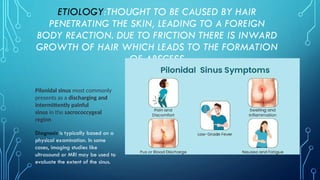
Pilonidal sinus most commonly
presents as a discharging and
intermittently painful
sinus in the sacrococcygeal
region
Diagnosis is typically based on a
physical examination. In some
cases, imaging studies like
ultrasound or MRI may be used to
evaluate the extent of the sinus.
SURGICAL MANAGEMENT
• Surgical management of a pilonidal sinus is a critical aspect of treatment,
especially for recurrent or complex cases. The main goal is to remove the
sinus tract(s), prevent recurrence, and promote healing
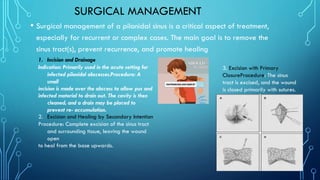
1. Incision and Drainage
Indication: Primarily used in the acute setting for
infected pilonidal abscesses.Procedure: A
small
incision is made over the abscess to allow pus and
infected material to drain out. The cavity is then
cleaned, and a drain may be placed to
prevent re- accumulation.
2. Excision and Healing by Secondary Intention
Procedure: Complete excision of the sinus tract
and surrounding tissue, leaving the wound
open
to heal from the base upwards.
3. Excision with Primary
ClosureProcedure: The sinus
tract is excised, and the wound
is closed primarily with sutures.
. FLAP PROCEDURES THESE ARE MORE COMPLEX SURGICAL OPTIONS, OFTEN
USED FOR RECURRENT OR COMPLICATED CASES
* BASCOM CLEFT LIFT:
PROCEDURE: THE SINUS TRACT IS EXCISED, AND THE CLEFT IS FLATTENED BY
LIFTING AND REATTACHING THE SKIN
ADVANTAGES: LOW RECURRENCE RATES AND RELATIVELY QUICK
RECOVERY.
DISADVANTAGES: REQUIRES MORE SURGICAL EXPERTISE.
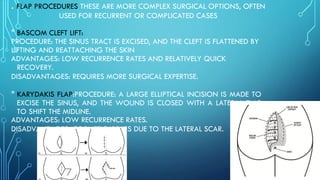
* KARYDAKIS FLAP:PROCEDURE: A LARGE ELLIPTICAL INCISION IS MADE TO
EXCISE THE SINUS, AND THE WOUND IS CLOSED WITH A LATERAL FLAP
TO SHIFT THE MIDLINE.
ADVANTAGES: LOW RECURRENCE RATES.
DISADVANTAGES: COSMETIC ISSUES DUE TO THE LATERAL SCAR.
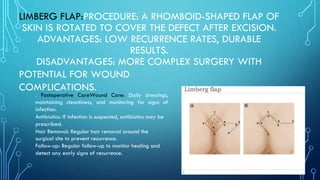
LIMBERG FLAP:PROCEDURE: A RHOMBOID-SHAPED FLAP OF
SKIN IS ROTATED TO COVER THE DEFECT AFTER EXCISION.
ADVANTAGES: LOW RECURRENCE RATES, DURABLE
RESULTS.
DISADVANTAGES: MORE COMPLEX SURGERY WITH
POTENTIAL FOR WOUND
COMPLICATIONS.
. Postoperative CareWound Care: Daily dressings,
maintaining cleanliness, and monitoring for signs of
infection.
Antibiotics: If infection is suspected, antibiotics may be
prescribed.
Hair Removal: Regular hair removal around the
surgical site to prevent recurrence.
Follow-up: Regular follow-up to monitor healing and
detect any early signs of recurrence.

pilonidal sinus presentation(anatomy,pathology and management).ppt

  • 1.
    PILONIDAL SINUS ORJEEP DRIVERS DISEASE SURGICAL MANAGEMENT Sahil tariq Intern GMC Handwara Department of surgery
  • 2.
    PILONIDAL SINUS ISA SMALL, ABNORMAL TUNNEL OR TRACT THAT FORMS UNDER THE SKIN IN THE NATAL CLEFT (THE AREA BETWEEN THE BUTTOCKS). IT OFTEN CONTAINS HAIR, DEBRIS, AND CAN BECOME INFECTED, LEADING TO PAIN, SWELLING, AND DISCHARGE OF PUS OR BLOOD. MC SITE : NATAL CLEFT ,ALSO SEEN IN INTERDIGITAL AREAS OF BARABERS
  • 3.
    ETIOLOGY:THOUGHT TO BECAUSED BY HAIR PENETRATING THE SKIN, LEADING TO A FOREIGN BODY REACTION. DUE TO FRICTION THERE IS INWARD GROWTH OF HAIR WHICH LEADS TO THE FORMATION OF ABSCESS AND SINUS Pilonidal sinus most commonly presents as a discharging and intermittently painful sinus in the sacrococcygeal region Diagnosis is typically based on a physical examination. In some cases, imaging studies like ultrasound or MRI may be used to evaluate the extent of the sinus.
  • 4.
    SURGICAL MANAGEMENT • Surgicalmanagement of a pilonidal sinus is a critical aspect of treatment, especially for recurrent or complex cases. The main goal is to remove the sinus tract(s), prevent recurrence, and promote healing 1. Incision and Drainage Indication: Primarily used in the acute setting for infected pilonidal abscesses.Procedure: A small incision is made over the abscess to allow pus and infected material to drain out. The cavity is then cleaned, and a drain may be placed to prevent re- accumulation. 2. Excision and Healing by Secondary Intention Procedure: Complete excision of the sinus tract and surrounding tissue, leaving the wound open to heal from the base upwards. 3. Excision with Primary ClosureProcedure: The sinus tract is excised, and the wound is closed primarily with sutures.
  • 5.
    . FLAP PROCEDURESTHESE ARE MORE COMPLEX SURGICAL OPTIONS, OFTEN USED FOR RECURRENT OR COMPLICATED CASES * BASCOM CLEFT LIFT: PROCEDURE: THE SINUS TRACT IS EXCISED, AND THE CLEFT IS FLATTENED BY LIFTING AND REATTACHING THE SKIN ADVANTAGES: LOW RECURRENCE RATES AND RELATIVELY QUICK RECOVERY. DISADVANTAGES: REQUIRES MORE SURGICAL EXPERTISE. * KARYDAKIS FLAP:PROCEDURE: A LARGE ELLIPTICAL INCISION IS MADE TO EXCISE THE SINUS, AND THE WOUND IS CLOSED WITH A LATERAL FLAP TO SHIFT THE MIDLINE. ADVANTAGES: LOW RECURRENCE RATES. DISADVANTAGES: COSMETIC ISSUES DUE TO THE LATERAL SCAR.
  • 6.
    LIMBERG FLAP:PROCEDURE: ARHOMBOID-SHAPED FLAP OF SKIN IS ROTATED TO COVER THE DEFECT AFTER EXCISION. ADVANTAGES: LOW RECURRENCE RATES, DURABLE RESULTS. DISADVANTAGES: MORE COMPLEX SURGERY WITH POTENTIAL FOR WOUND COMPLICATIONS. . Postoperative CareWound Care: Daily dressings, maintaining cleanliness, and monitoring for signs of infection. Antibiotics: If infection is suspected, antibiotics may be prescribed. Hair Removal: Regular hair removal around the surgical site to prevent recurrence. Follow-up: Regular follow-up to monitor healing and detect any early signs of recurrence.