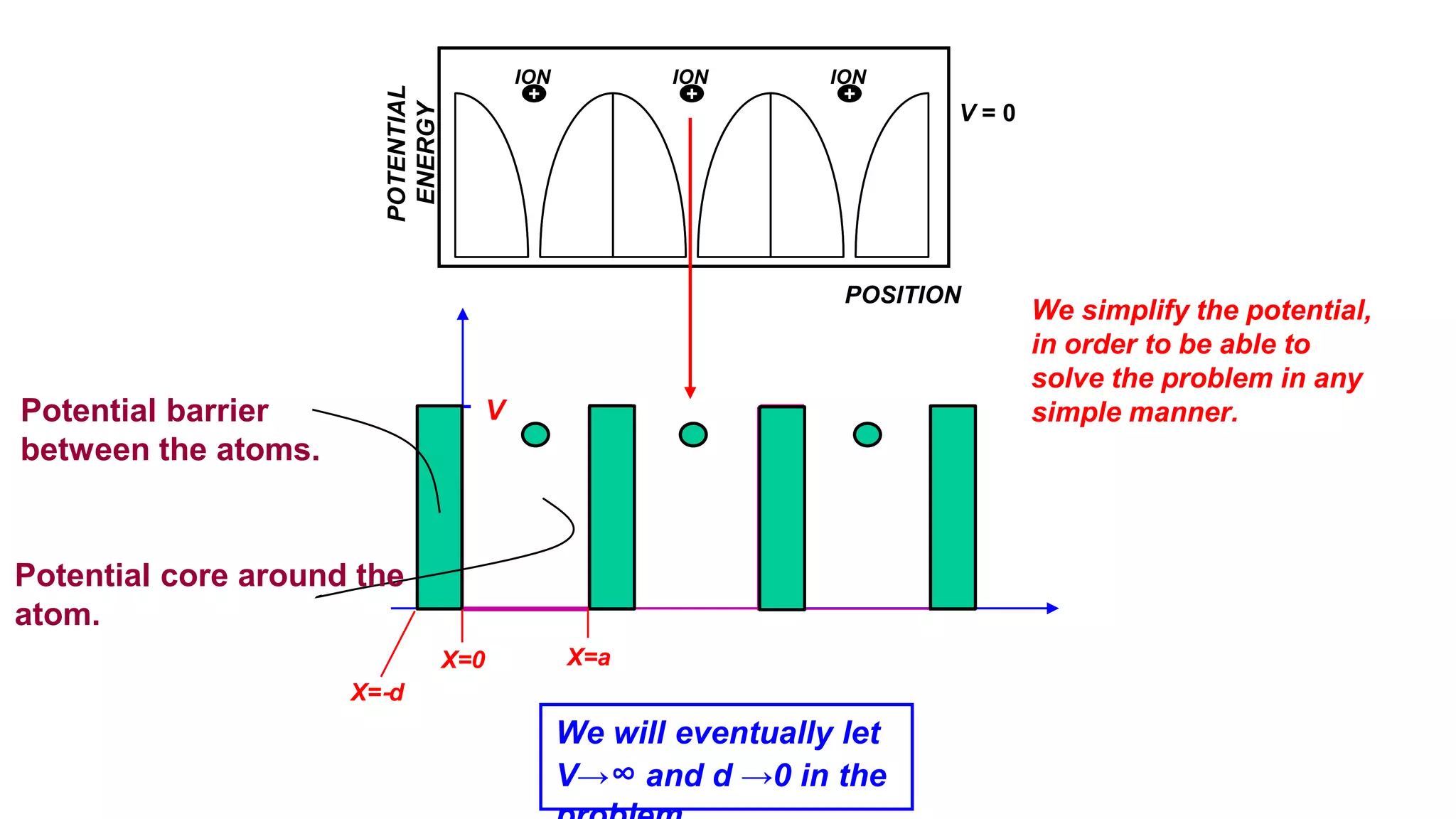
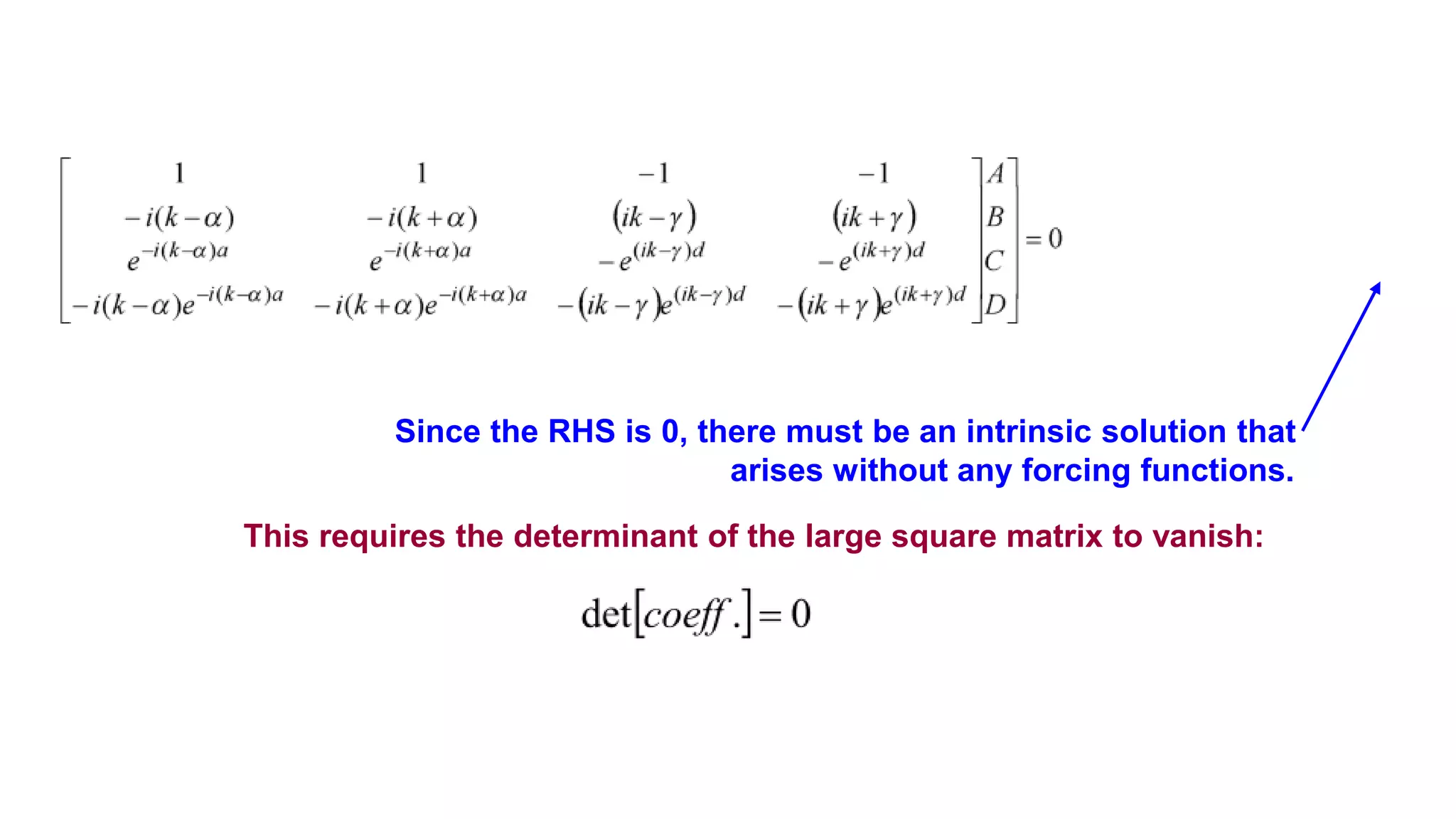
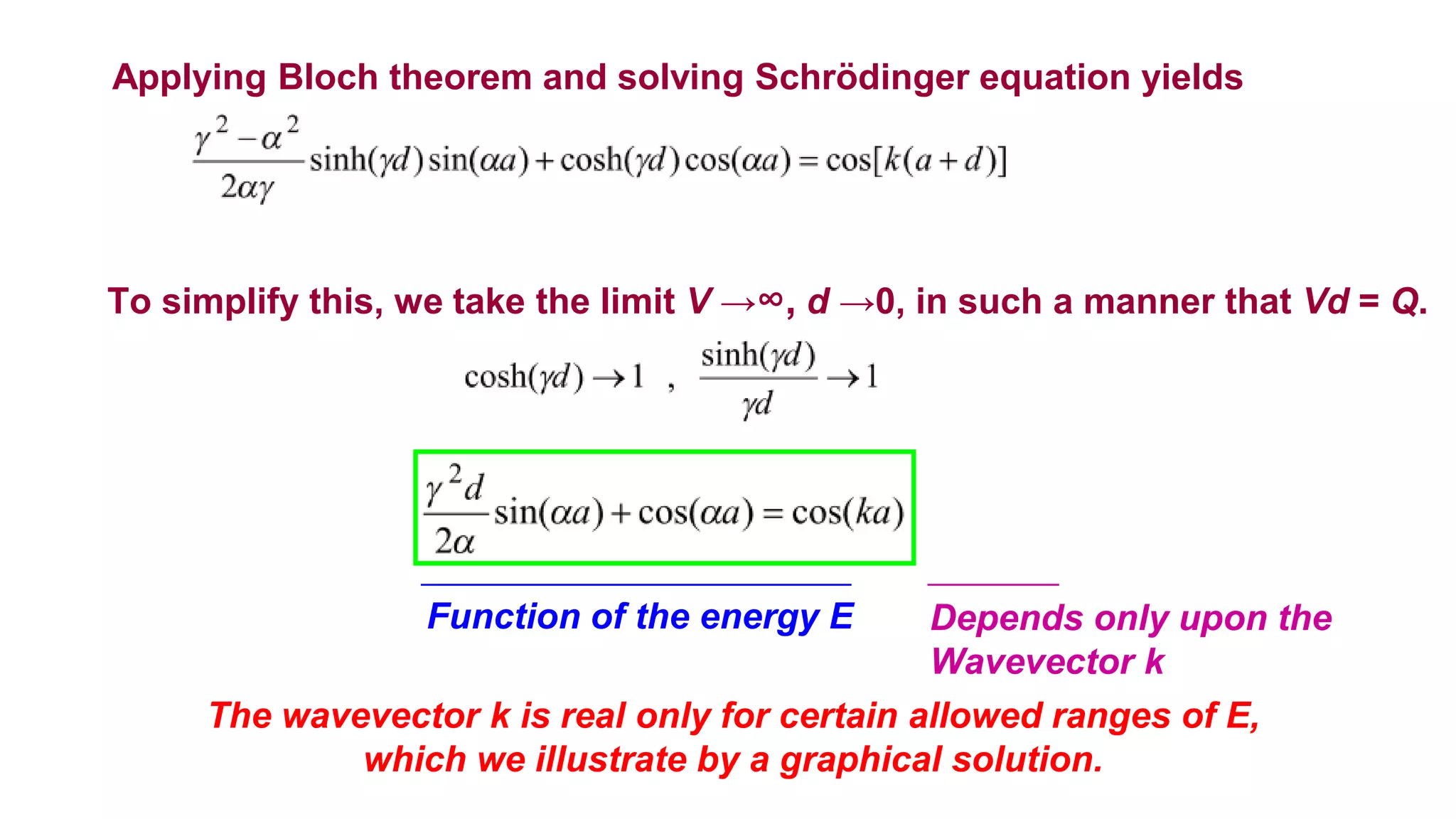
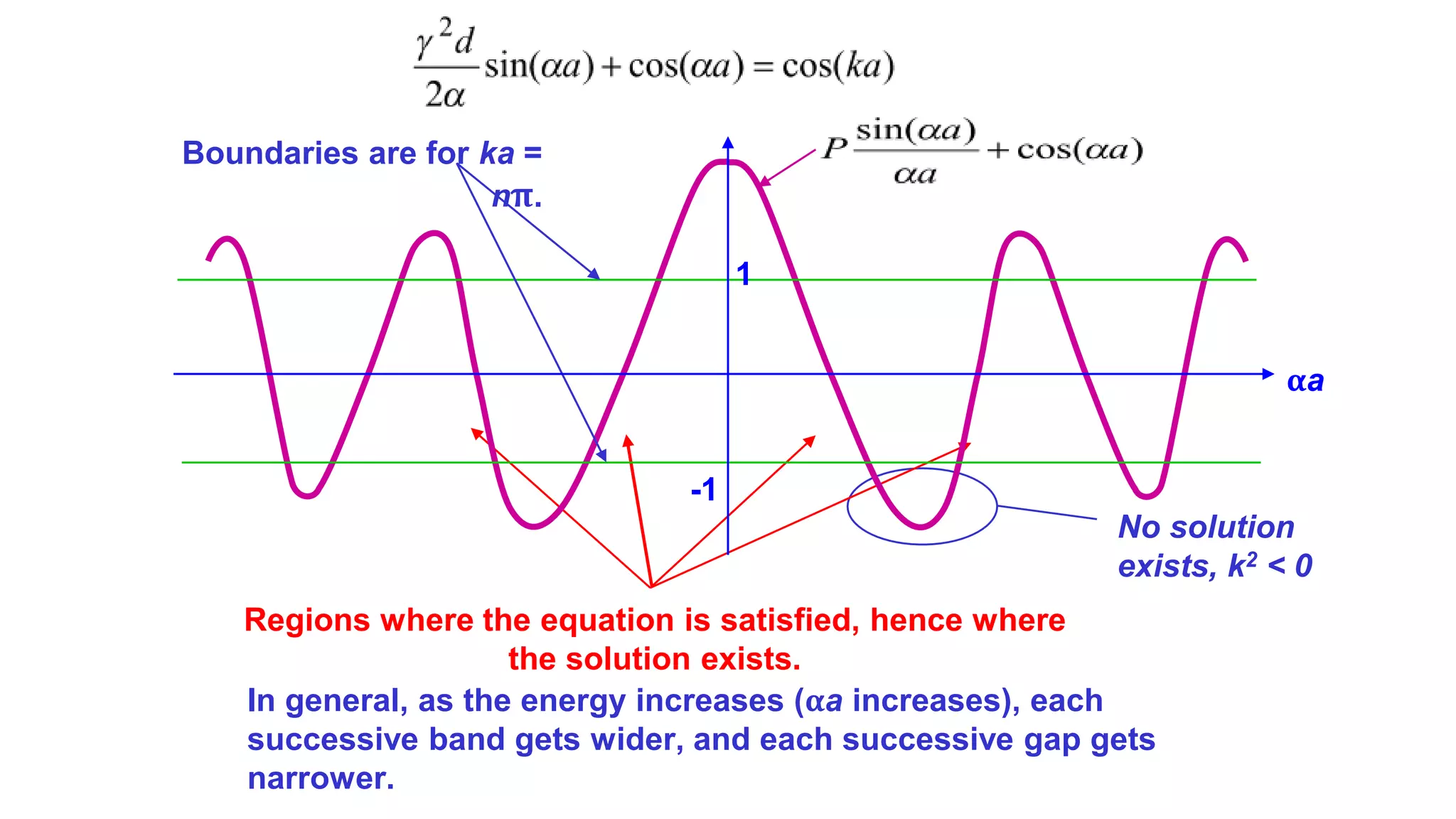
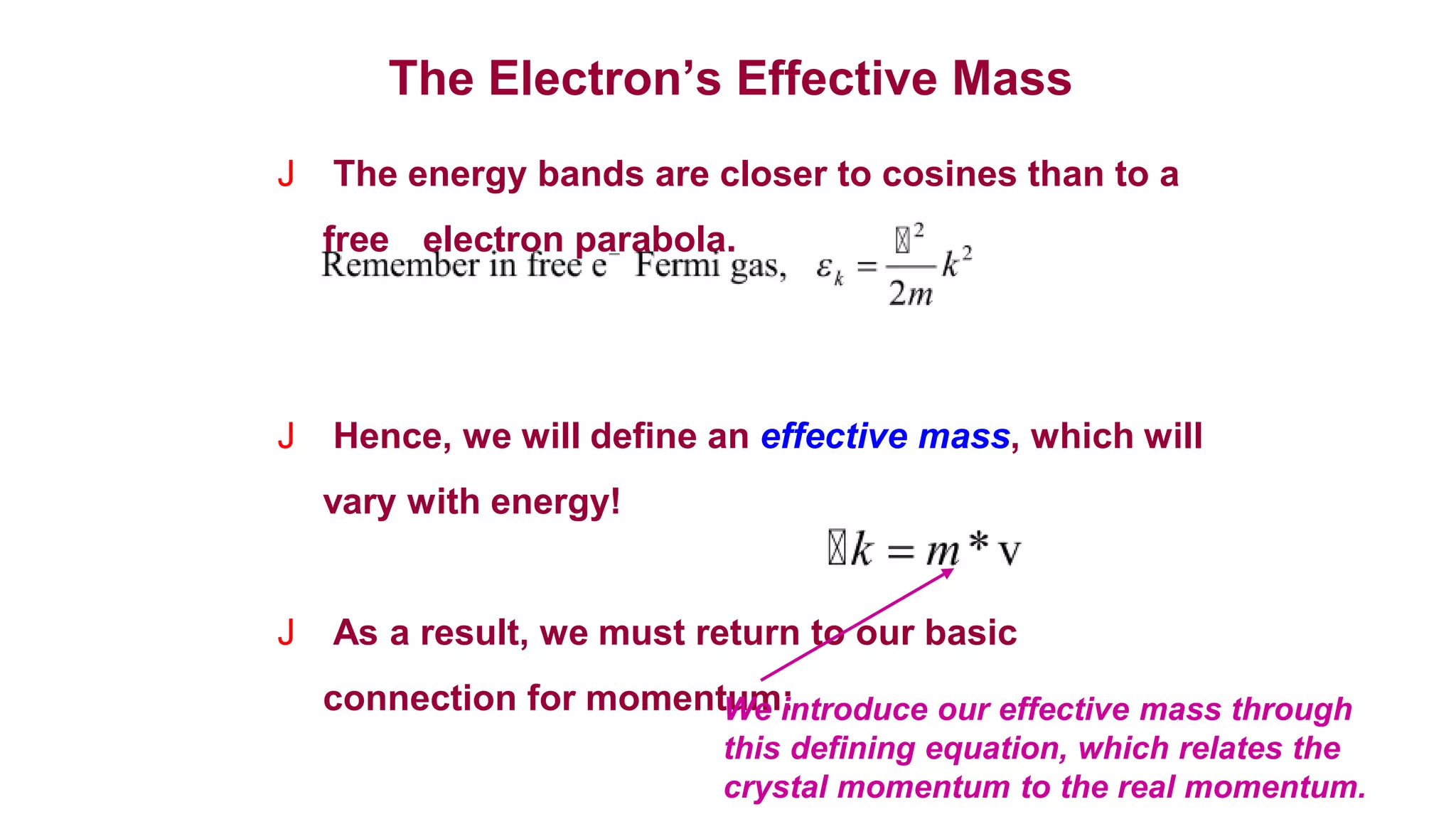
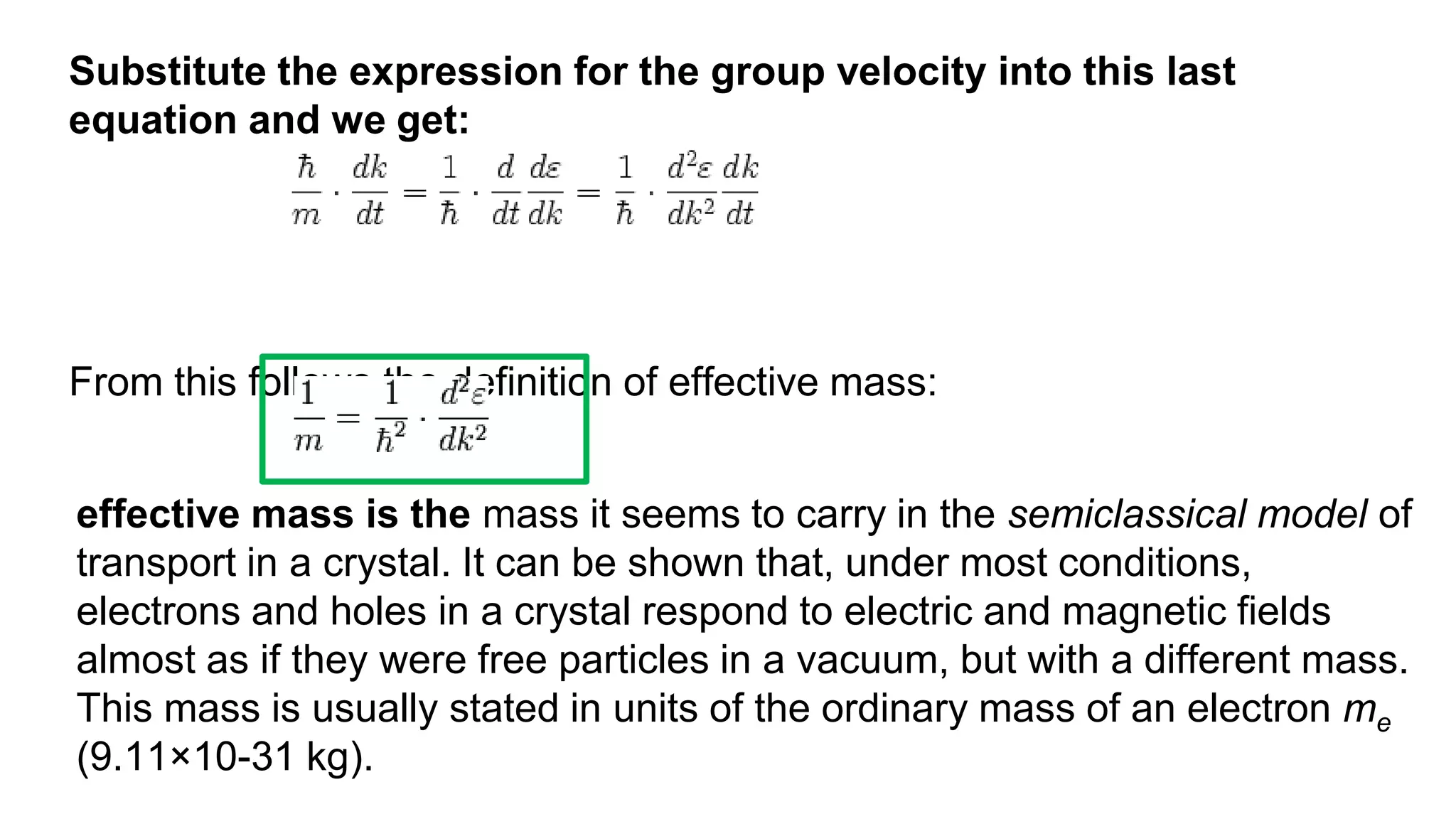
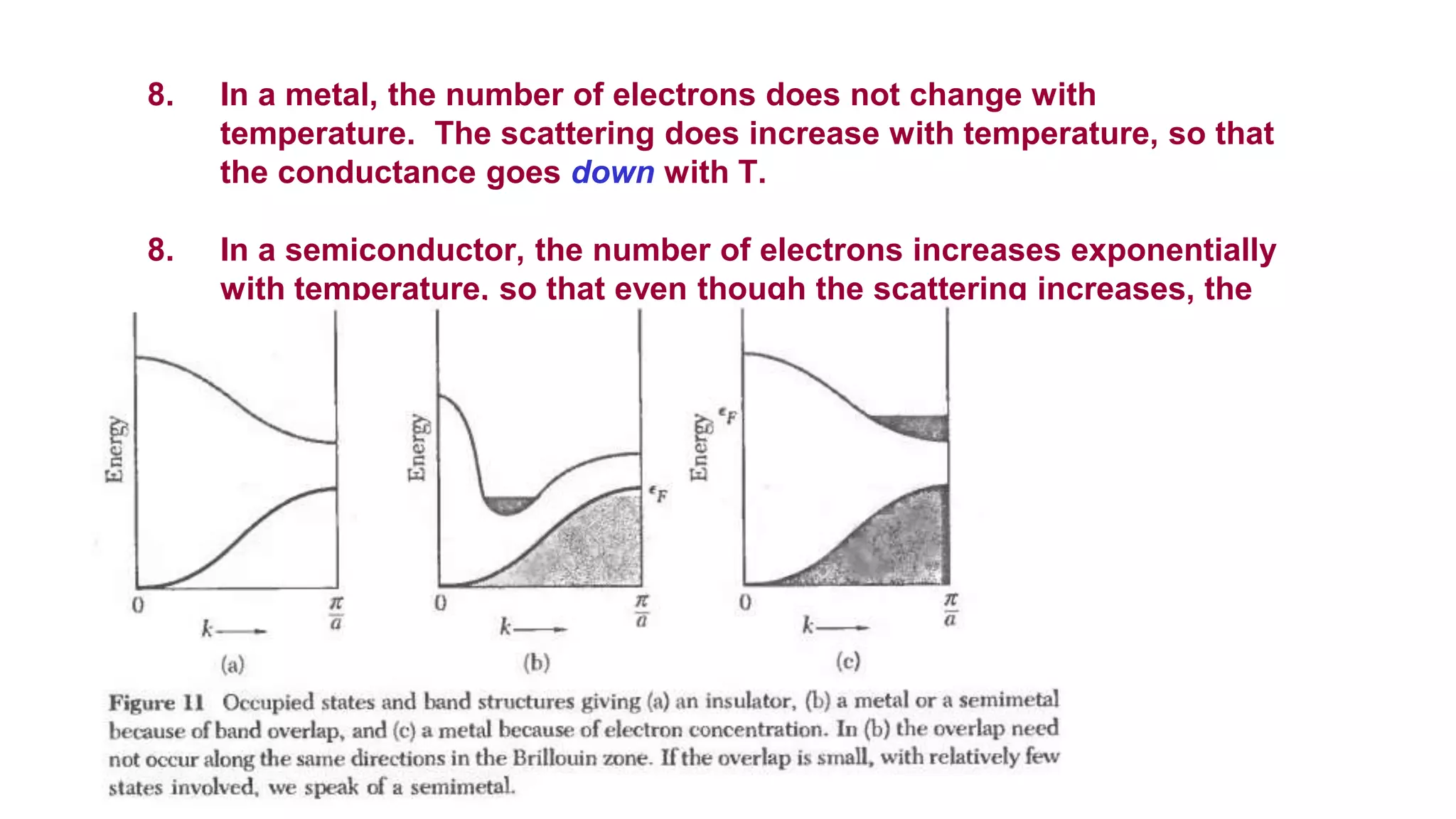
The Kronig-Penney model describes electron behavior in periodic solid structures by modeling the potential as a series of barriers and wells. Solving the time-independent Schrodinger equation under these conditions yields allowed energy bands separated by gaps. As the energy increases, the bands get wider and the gaps get narrower. The model also introduces the concept of effective mass to describe how electrons behave as if they have a different mass inside solid materials. Based on how the energy bands are filled, materials can be classified as metals, insulators, or semiconductors.