PHYSICAL METHODS
OF
INSECT CONTROL
KADATHATLA PERSIS HERALD
SHUATS
 Manipulation of temperature:
 Application of heat :
Eg: For most stored grain insects the temperature of 25-330 C is
optimal for development
 Stored grain insects will die at higher than 35°C
 Exposure to sun: Exposing infested grain to the sun kills
stored grain insects in the adult and pupal stage.
 Treatment of sugarcane setts with heat kills the scale insects
carried over through the setts.
 Superheating: of empty godowns to a temperature above 500
C
for 10 - 12 hours kills the hibernating stored grain pests.
 Application of cold
 The first use of cold temperatures was in 1889 to control
apple maggots. All eggs and larvae of apple maggots
were killed at 00 C.
 Low temperature (below 4 ºC) makes the insects
inactive.
 Cold storage (1 - 2°C for 12 - 20 days) of fruits and
vegetables kills fruit flies.
 Stored grains pests are killed when stored grains are
exposed to subzero temperatures.
 Manipulation of moisture
Raising or lowering the moisture content of food and
other material creates unfavorable conditions for insect
pests.
 Drying grains (moisture content < 10%) prevents insect
damage by stored grain pests.
 Draining stagnant water kills the breeding mosquitoes.
 Draining of water from paddy field for 3-5 day is useful to
control BPH and paddy case worm
 Flooding the field for the control of cutworms, white
grubs, termites etc.
 Manipulation of light
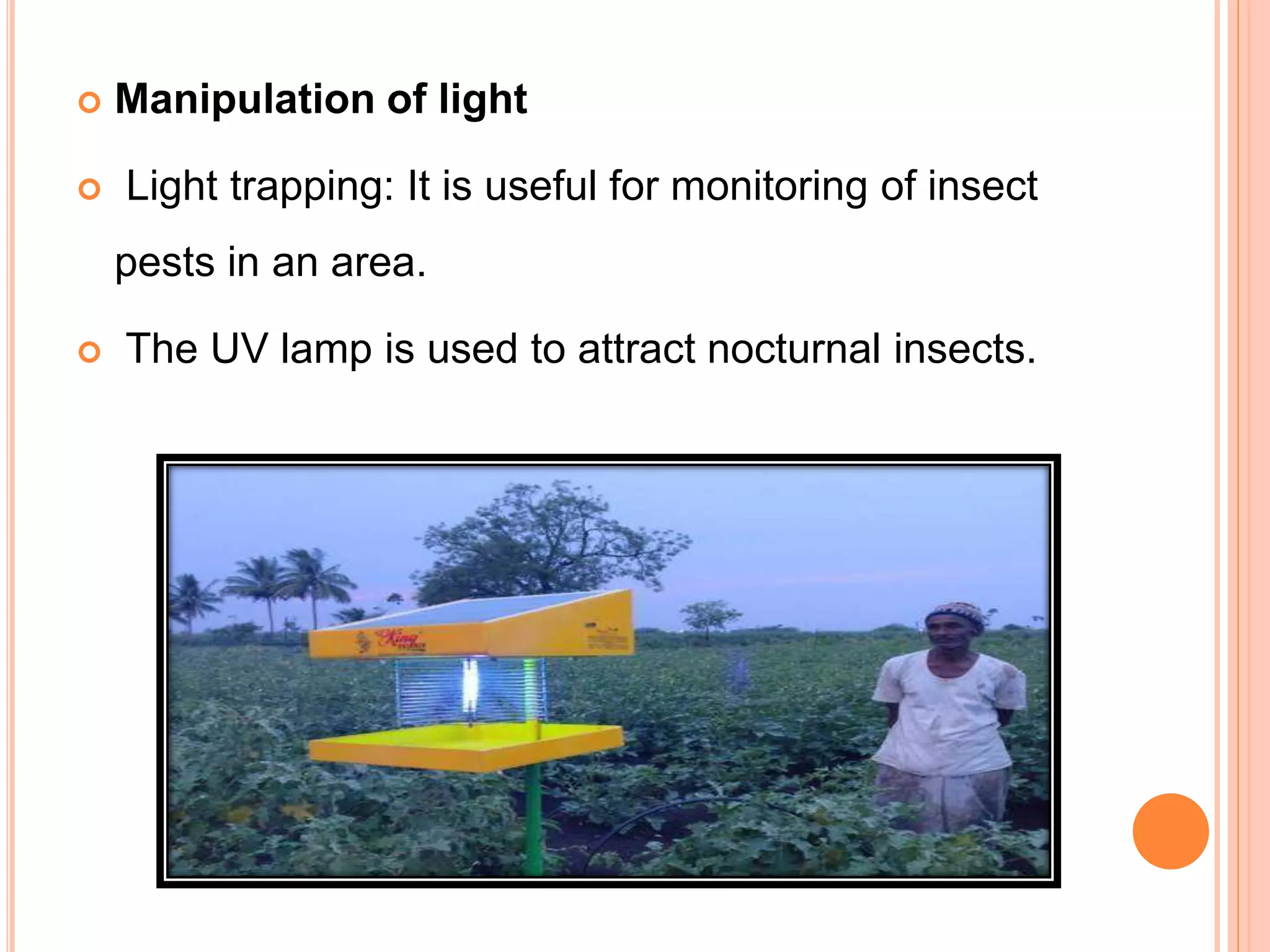
 Light trapping: It is useful for monitoring of insect
pests in an area.
 The UV lamp is used to attract nocturnal insects.
 Manipulation of air:
 Eggs and adults of pulse beetle die when exposed to
100% CO2 at 320 C and relative humidity of 70%.
 Increasing the CO2 concentration in controlled
atmosphere of stored grains to cause asphyxiation in
stored product pests.
 Carbon dioxide under high pressure is found to be
effective against stored grain pests.
 Use of sound:
 By producing sound waves some insects/birds/rodents
can be influenced.
 ➢ Ultrsonic sound waves can be used against nocturnal
insects like mosquitoes and cockroaches.
 ➢ Birds and rodents that thrive on grains can be scared
by producing sounds.
.
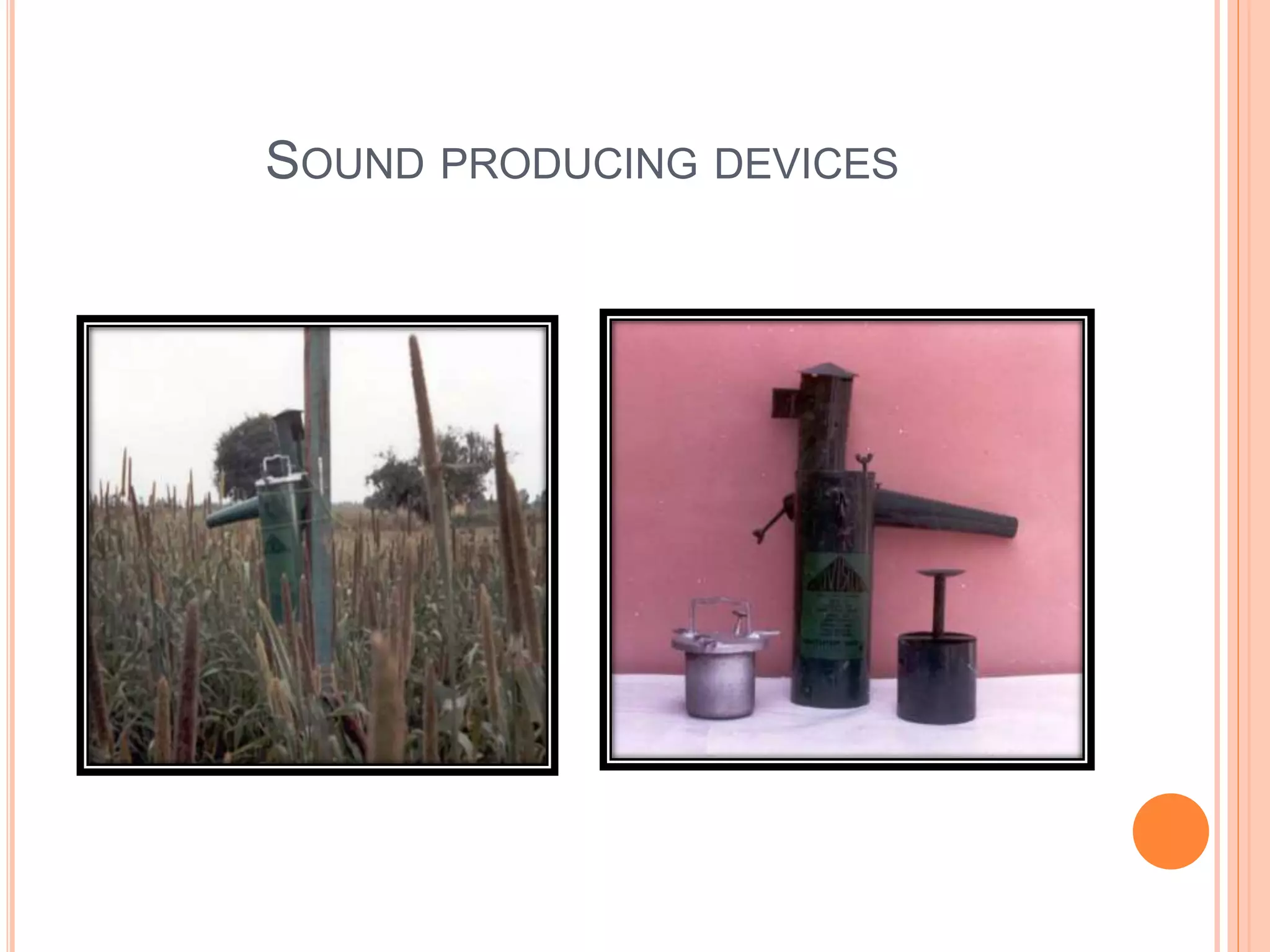
SOUND PRODUCING DEVICES
 Producing alarming signals:
 By producing dreadful sounds of bird's enemies, birds
may go away from that area.
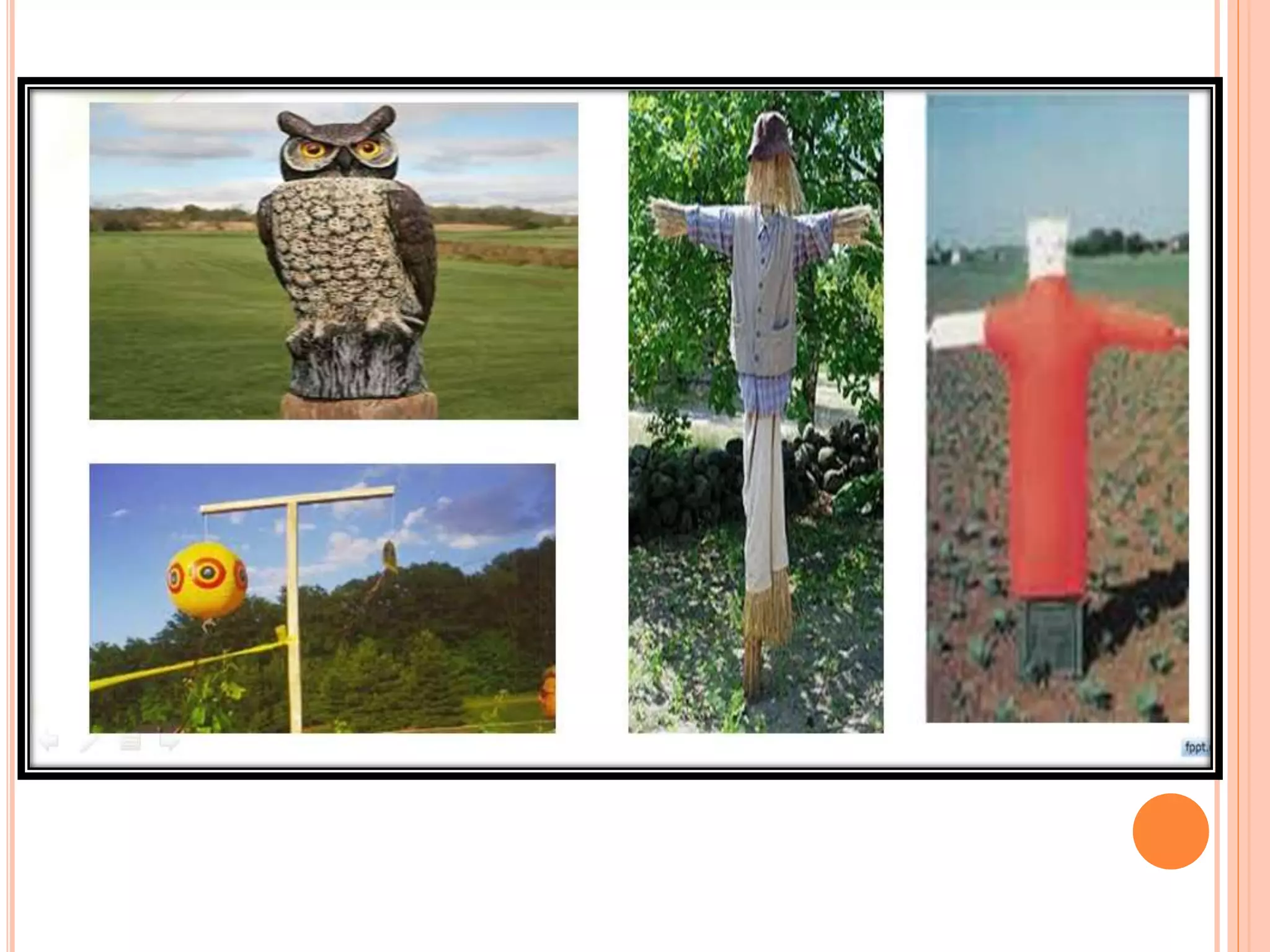
 Use of frightening devices: eg. Birds
 Use of Abrasive dusts
 Applying ash over aphid infested plant parts reduce its
incidence.
 Drie-Die: This is a porous finely divided silica gel causes
abrasion of the insect cuticle and the loss of moisture
from its body, resulting into its death. It is used against
stored pests.
THANK YOU

PHYSICAL METHODS OF INSECT CONTROL.pptx

  • 1.
  • 2.
     Manipulation oftemperature:  Application of heat : Eg: For most stored grain insects the temperature of 25-330 C is optimal for development  Stored grain insects will die at higher than 35°C  Exposure to sun: Exposing infested grain to the sun kills stored grain insects in the adult and pupal stage.  Treatment of sugarcane setts with heat kills the scale insects carried over through the setts.  Superheating: of empty godowns to a temperature above 500 C for 10 - 12 hours kills the hibernating stored grain pests.
  • 3.
     Application ofcold  The first use of cold temperatures was in 1889 to control apple maggots. All eggs and larvae of apple maggots were killed at 00 C.  Low temperature (below 4 ºC) makes the insects inactive.  Cold storage (1 - 2°C for 12 - 20 days) of fruits and vegetables kills fruit flies.  Stored grains pests are killed when stored grains are exposed to subzero temperatures.
  • 4.
     Manipulation ofmoisture Raising or lowering the moisture content of food and other material creates unfavorable conditions for insect pests.  Drying grains (moisture content < 10%) prevents insect damage by stored grain pests.  Draining stagnant water kills the breeding mosquitoes.  Draining of water from paddy field for 3-5 day is useful to control BPH and paddy case worm  Flooding the field for the control of cutworms, white grubs, termites etc.
  • 5.
     Manipulation oflight  Light trapping: It is useful for monitoring of insect pests in an area.  The UV lamp is used to attract nocturnal insects.
  • 6.
     Manipulation ofair:  Eggs and adults of pulse beetle die when exposed to 100% CO2 at 320 C and relative humidity of 70%.  Increasing the CO2 concentration in controlled atmosphere of stored grains to cause asphyxiation in stored product pests.  Carbon dioxide under high pressure is found to be effective against stored grain pests.
  • 7.
     Use ofsound:  By producing sound waves some insects/birds/rodents can be influenced.  ➢ Ultrsonic sound waves can be used against nocturnal insects like mosquitoes and cockroaches.  ➢ Birds and rodents that thrive on grains can be scared by producing sounds. .
  • 8.
  • 10.
     Producing alarmingsignals:  By producing dreadful sounds of bird's enemies, birds may go away from that area.  Use of frightening devices: eg. Birds
  • 12.
     Use ofAbrasive dusts  Applying ash over aphid infested plant parts reduce its incidence.  Drie-Die: This is a porous finely divided silica gel causes abrasion of the insect cuticle and the loss of moisture from its body, resulting into its death. It is used against stored pests.
  • 14.