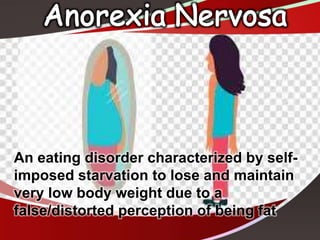
An eating disorder characterized by self-
imposed starvation to lose and maintain
very low body weight due to a
false/distorted perception of being fat
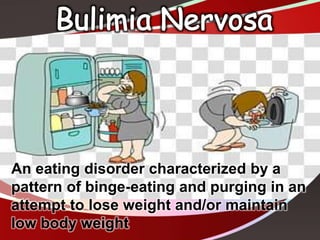
An eating disorder characterized by a
pattern of binge-eating and purging in an
attempt to lose weight and/or maintain
low body weight
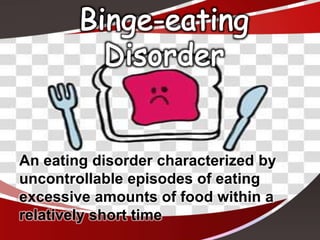
An eating disorder characterized by
uncontrollable episodes of eating
excessive amounts of food within a
relatively short time
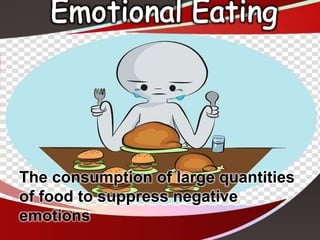
The consumption of large quantities
of food to suppress negative
emotions
You shouldn’t increase the dose or
amount of physical activity or exercise
to see changes in your fitness level.
This is OVERLOAD PRINCIPLE, which
is guided by the FITT Principle that is
composed of the following
It refers to how often you involve yourself
in regular physical activity or exercise.
It refers to how hard you should exercise
or the level of difficulty of your physical
activity.
It refers to how long you should engage
in a specific physical activity
It refers to the kind of exercise or
physical activity you should engage in.
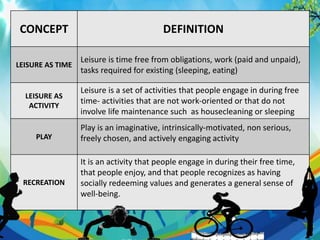
CONCEPT DEFINITION
LEISURE AS TIME
Leisure is time free from obligations, work (paid and unpaid),
tasks required for existing (sleeping, eating)
LEISURE AS
ACTIVITY
Leisure is a set of activities that people engage in during free
time- activities that are not work-oriented or that do not
involve life maintenance such as housecleaning or sleeping
PLAY
Play is an imaginative, intrinsically-motivated, non serious,
freely chosen, and actively engaging activity
RECREATION
It is an activity that people engage in during their free time,
that people enjoy, and that people recognizes as having
socially redeeming values and generates a general sense of
well-being.
Walking is generally considered
as a moderate physical activity,
but it is effective in promoting
metabolic fitness and overall
health. T o achieve
cardiovascular fitness, walking
must be done intensely enough
to elevate the heart rate to target
zone levels. Take a look at its
health and fitness benefits:
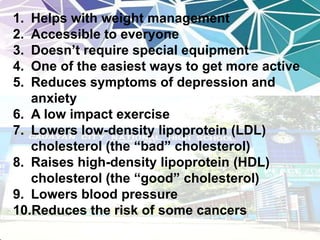
1. Helps with weight management
2. Accessible to everyone
3. Doesn’t require special equipment
4. One of the easiest ways to get more active
5. Reduces symptoms of depression and
anxiety
6. A low impact exercise
7. Lowers low-density lipoprotein (LDL)
cholesterol (the “bad” cholesterol)
8. Raises high-density lipoprotein (HDL)
cholesterol (the “good” cholesterol)
9. Lowers blood pressure
10.Reduces the risk of some cancers
11. Helps reduce risk an/or aids with the
management of type 2 diabetes
12. Help maintains strong bones
13. Reduces the risk of heart disease
14. Less likely to lead to injuries
15. Reduces stress
16. Reduces the risk of heart disease
17. You don’t have to pay for it
18. Builds aerobic fitness
19. Helps maintain lean muscle tissue
1. Select exercises that will involve all major
muscle groups: chest, shoulders, back, legs,
arms, hip and trunk
2. Select exercises that will strengthen the core.
Use controlled movements and start with the
light-to moderate resistance
3. Never lift weights alone. Always have someone
work out with you in case you need a spotter or
help with an injury.
4. Warp-up properly before performing to light-to
moderate intensity aerobic activity (5 to 7
minutes) and some gentle stretches for a few
minutes
5. Maintain proper body balance that
involves good posture, a stable body
position and correct posture in sitting,
lying and other exercise positions
6. Breath naturally. Inhale during the
eccentric phase (bringing the weight
down) and exhale during the concentric
phase (lifting or pushing the weight up.)
7. At the end of each strength-training
workout, stretch out for a few minutes to
help your muscles return to their normal
resting length and to minimize muscle
soreness and risk of injury

PHYSICAL EDUCATION MODULE 2 FOURTH QUARTER

  • 5.
    An eating disordercharacterized by self- imposed starvation to lose and maintain very low body weight due to a false/distorted perception of being fat
  • 6.
    An eating disordercharacterized by a pattern of binge-eating and purging in an attempt to lose weight and/or maintain low body weight
  • 7.
    An eating disordercharacterized by uncontrollable episodes of eating excessive amounts of food within a relatively short time
  • 8.
    The consumption oflarge quantities of food to suppress negative emotions
  • 9.
    You shouldn’t increasethe dose or amount of physical activity or exercise to see changes in your fitness level. This is OVERLOAD PRINCIPLE, which is guided by the FITT Principle that is composed of the following
  • 10.
    It refers tohow often you involve yourself in regular physical activity or exercise.
  • 11.
    It refers tohow hard you should exercise or the level of difficulty of your physical activity.
  • 12.
    It refers tohow long you should engage in a specific physical activity
  • 13.
    It refers tothe kind of exercise or physical activity you should engage in.
  • 14.
    CONCEPT DEFINITION LEISURE ASTIME Leisure is time free from obligations, work (paid and unpaid), tasks required for existing (sleeping, eating) LEISURE AS ACTIVITY Leisure is a set of activities that people engage in during free time- activities that are not work-oriented or that do not involve life maintenance such as housecleaning or sleeping PLAY Play is an imaginative, intrinsically-motivated, non serious, freely chosen, and actively engaging activity RECREATION It is an activity that people engage in during their free time, that people enjoy, and that people recognizes as having socially redeeming values and generates a general sense of well-being.
  • 15.
    Walking is generallyconsidered as a moderate physical activity, but it is effective in promoting metabolic fitness and overall health. T o achieve cardiovascular fitness, walking must be done intensely enough to elevate the heart rate to target zone levels. Take a look at its health and fitness benefits:
  • 16.
    1. Helps withweight management 2. Accessible to everyone 3. Doesn’t require special equipment 4. One of the easiest ways to get more active 5. Reduces symptoms of depression and anxiety 6. A low impact exercise 7. Lowers low-density lipoprotein (LDL) cholesterol (the “bad” cholesterol) 8. Raises high-density lipoprotein (HDL) cholesterol (the “good” cholesterol) 9. Lowers blood pressure 10.Reduces the risk of some cancers
  • 17.
    11. Helps reducerisk an/or aids with the management of type 2 diabetes 12. Help maintains strong bones 13. Reduces the risk of heart disease 14. Less likely to lead to injuries 15. Reduces stress 16. Reduces the risk of heart disease 17. You don’t have to pay for it 18. Builds aerobic fitness 19. Helps maintain lean muscle tissue
  • 18.
    1. Select exercisesthat will involve all major muscle groups: chest, shoulders, back, legs, arms, hip and trunk 2. Select exercises that will strengthen the core. Use controlled movements and start with the light-to moderate resistance 3. Never lift weights alone. Always have someone work out with you in case you need a spotter or help with an injury. 4. Warp-up properly before performing to light-to moderate intensity aerobic activity (5 to 7 minutes) and some gentle stretches for a few minutes
  • 19.
    5. Maintain properbody balance that involves good posture, a stable body position and correct posture in sitting, lying and other exercise positions 6. Breath naturally. Inhale during the eccentric phase (bringing the weight down) and exhale during the concentric phase (lifting or pushing the weight up.) 7. At the end of each strength-training workout, stretch out for a few minutes to help your muscles return to their normal resting length and to minimize muscle soreness and risk of injury