Photojournalism is the
documentation of events or
people through photographs
that tell a story.
Photojournalism can fall under
all subjects of photography but
the image needs to be news
worthy to end up being
published.
Two Types of Photojournalism.
• The first type is where an image is
used to illustrate a story. Many feature
journalists work closely with
photographers and commission them to
produce images that will be published
with their articles.
Two Types of Photojournalism.
• The second is where an image is
used to tell a story without any
words. One single image may be
used or as many as ten images are
often used in magazines.
One of the most important
qualities of a photojournalist is
his ability to react quickly
when he comes along a scene
that may be news worthy.
Elements of Photojournalism
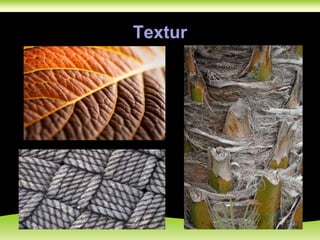
Textur
e
Selective Focus
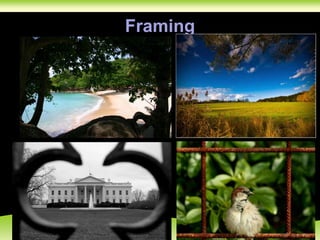
Framing
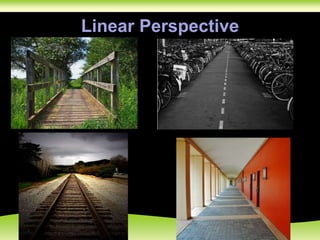
Linear Perspective
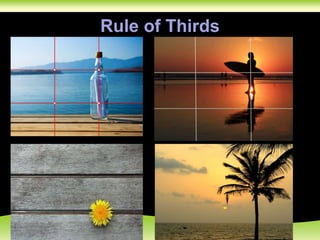
Rule of Thirds
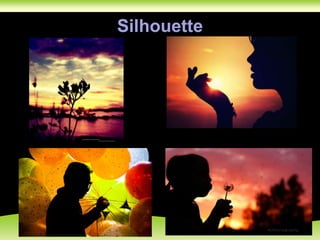
Silhouette
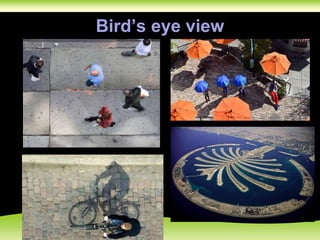
Bird’s eye view
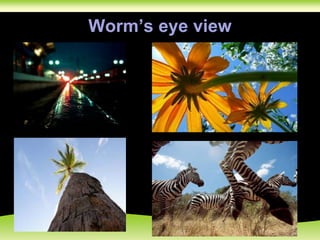
Worm’s eye view
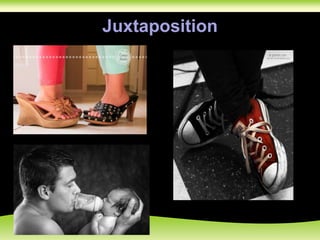
Juxtaposition
Factors Affecting the Quality of Pictures
1. The taking of pictures.
a. Be sure to know the workmanship of your camera,
its every part and function.
a. There is a need for mind-eyes coordination
when taking pictures
2. Pictures to be set for layout
a.Sharp pictures
b.Message-laden
c.Well-cropped
3. The quality of printing press
Things to Remember in Photojournalism
1. An action photo can vividly tell its own story
that does not need caption to go with it.
Editorial cartoon as an illustration does not
have caption, but it tells a story or make a
point.
1. A series of pictures can tell a story with
minimum caption. This is known as a picture
story. This is usually used to illustrate “how to”
article.
Elements of Effective Pictures
1. Prominence
2. Timeliness
3. Action
4. Human interest
5. Nature
Tips for Better Pictures
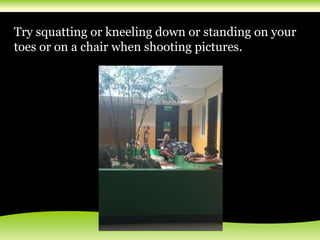
Try squatting or kneeling down or standing on your
toes or on a chair when shooting pictures.
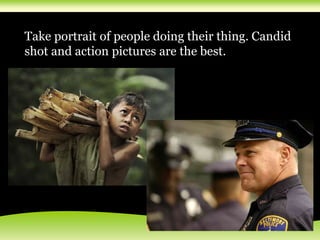
Take portrait of people doing their thing. Candid
shot and action pictures are the best.
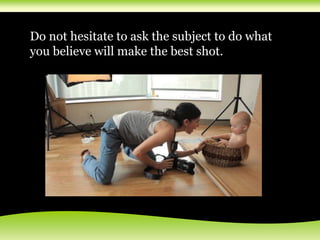
Do not hesitate to ask the subject to do what
you believe will make the best shot.
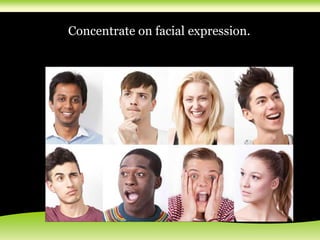
Concentrate on facial expression.
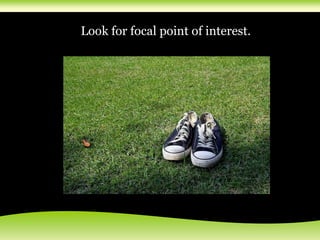
Look for focal point of interest.
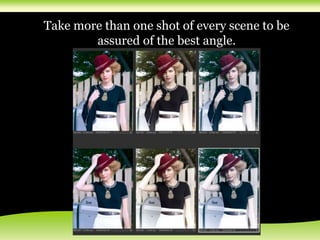
Take more than one shot of every scene to be
assured of the best angle.
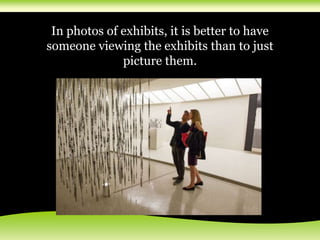
In photos of exhibits, it is better to have
someone viewing the exhibits than to just
picture them.
Be always at the look out to take unusual
pictures.
Read manuals of photography to learn
techniques in picture taking.
8. 9. 10. Avoid.
a. Ribbon cutting picture
b. Handshaking during awarding celebration
c. Posed picture (firing squad pictures)
d. Group pictures that say nothing
e. Speaker whose face is hidden by the
microphone
Parts of a Caption
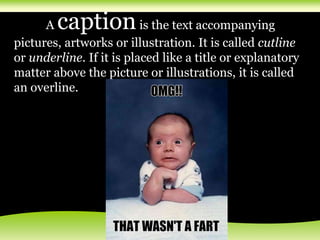
A captionis the text accompanying
pictures, artworks or illustration. It is called cutline
or underline. If it is placed like a title or explanatory
matter above the picture or illustrations, it is called
an overline.
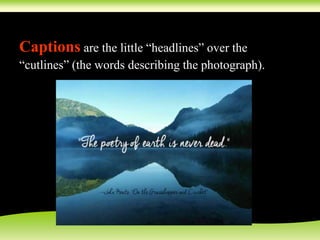
Captions are the little “headlines” over the
“cutlines” (the words describing the photograph).
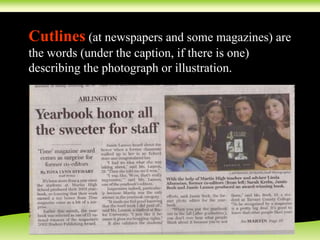
Cutlines (at newspapers and some magazines) are
the words (under the caption, if there is one)
describing the photograph or illustration.
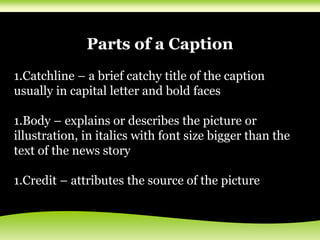
Parts of a Caption
1.Catchline – a brief catchy title of the caption
usually in capital letter and bold faces
1.Body – explains or describes the picture or
illustration, in italics with font size bigger than the
text of the news story
1.Credit – attributes the source of the picture
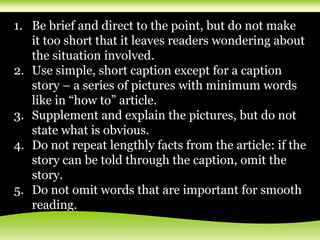
Tips on Writing Captions or Cutlines
1. Be brief and direct to the point, but do not make
it too short that it leaves readers wondering about
the situation involved.
2. Use simple, short caption except for a caption
story – a series of pictures with minimum words
like in “how to” article.
3. Supplement and explain the pictures, but do not
state what is obvious.
4. Do not repeat lengthly facts from the article: if the
story can be told through the caption, omit the
story.
5. Do not omit words that are important for smooth
reading.
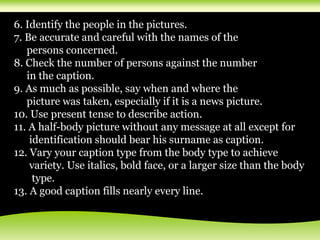
6. Identify the people in the pictures.
7. Be accurate and careful with the names of the
persons concerned.
8. Check the number of persons against the number
in the caption.
9. As much as possible, say when and where the
picture was taken, especially if it is a news picture.
10. Use present tense to describe action.
11. A half-body picture without any message at all except for
identification should bear his surname as caption.
12. Vary your caption type from the body type to achieve
variety. Use italics, bold face, or a larger size than the body
type.
13. A good caption fills nearly every line.
Thank You!
Good Luck……

326189486-Photojournalism.pptx

  • 2.
    Photojournalism is the documentationof events or people through photographs that tell a story.
  • 3.
    Photojournalism can fallunder all subjects of photography but the image needs to be news worthy to end up being published.
  • 4.
    Two Types ofPhotojournalism. • The first type is where an image is used to illustrate a story. Many feature journalists work closely with photographers and commission them to produce images that will be published with their articles.
  • 5.
    Two Types ofPhotojournalism. • The second is where an image is used to tell a story without any words. One single image may be used or as many as ten images are often used in magazines.
  • 6.
    One of themost important qualities of a photojournalist is his ability to react quickly when he comes along a scene that may be news worthy.
  • 7.
  • 8.
  • 9.
  • 10.
  • 11.
  • 12.
  • 13.
  • 14.
  • 15.
  • 16.
  • 17.
    Factors Affecting theQuality of Pictures
  • 18.
    1. The takingof pictures. a. Be sure to know the workmanship of your camera, its every part and function. a. There is a need for mind-eyes coordination when taking pictures
  • 19.
    2. Pictures tobe set for layout a.Sharp pictures b.Message-laden c.Well-cropped 3. The quality of printing press
  • 20.
    Things to Rememberin Photojournalism
  • 21.
    1. An actionphoto can vividly tell its own story that does not need caption to go with it. Editorial cartoon as an illustration does not have caption, but it tells a story or make a point. 1. A series of pictures can tell a story with minimum caption. This is known as a picture story. This is usually used to illustrate “how to” article.
  • 22.
  • 23.
    1. Prominence 2. Timeliness 3.Action 4. Human interest 5. Nature
  • 24.
  • 25.
    Try squatting orkneeling down or standing on your toes or on a chair when shooting pictures.
  • 26.
    Take portrait ofpeople doing their thing. Candid shot and action pictures are the best.
  • 27.
    Do not hesitateto ask the subject to do what you believe will make the best shot.
  • 28.
  • 29.
    Look for focalpoint of interest.
  • 30.
    Take more thanone shot of every scene to be assured of the best angle.
  • 31.
    In photos ofexhibits, it is better to have someone viewing the exhibits than to just picture them.
  • 32.
    Be always atthe look out to take unusual pictures.
  • 33.
    Read manuals ofphotography to learn techniques in picture taking.
  • 34.
    8. 9. 10.Avoid. a. Ribbon cutting picture b. Handshaking during awarding celebration c. Posed picture (firing squad pictures) d. Group pictures that say nothing e. Speaker whose face is hidden by the microphone
  • 35.
    Parts of aCaption
  • 36.
    A captionis thetext accompanying pictures, artworks or illustration. It is called cutline or underline. If it is placed like a title or explanatory matter above the picture or illustrations, it is called an overline.
  • 37.
    Captions are thelittle “headlines” over the “cutlines” (the words describing the photograph).
  • 38.
    Cutlines (at newspapersand some magazines) are the words (under the caption, if there is one) describing the photograph or illustration.
  • 39.
    Parts of aCaption 1.Catchline – a brief catchy title of the caption usually in capital letter and bold faces 1.Body – explains or describes the picture or illustration, in italics with font size bigger than the text of the news story 1.Credit – attributes the source of the picture
  • 40.
    Tips on WritingCaptions or Cutlines
  • 41.
    1. Be briefand direct to the point, but do not make it too short that it leaves readers wondering about the situation involved. 2. Use simple, short caption except for a caption story – a series of pictures with minimum words like in “how to” article. 3. Supplement and explain the pictures, but do not state what is obvious. 4. Do not repeat lengthly facts from the article: if the story can be told through the caption, omit the story. 5. Do not omit words that are important for smooth reading.
  • 42.
    6. Identify thepeople in the pictures. 7. Be accurate and careful with the names of the persons concerned. 8. Check the number of persons against the number in the caption. 9. As much as possible, say when and where the picture was taken, especially if it is a news picture. 10. Use present tense to describe action. 11. A half-body picture without any message at all except for identification should bear his surname as caption. 12. Vary your caption type from the body type to achieve variety. Use italics, bold face, or a larger size than the body type. 13. A good caption fills nearly every line.
  • 43.