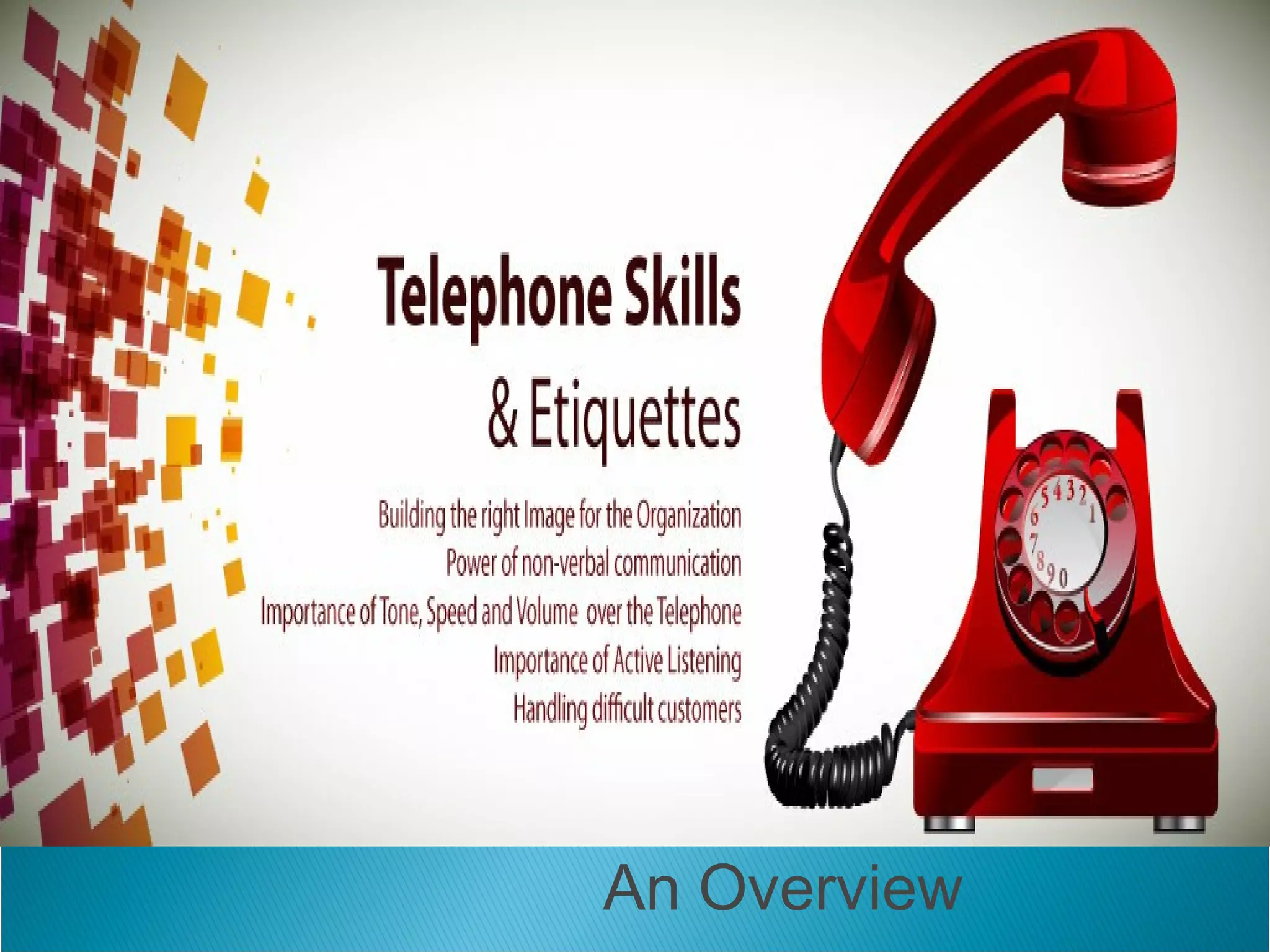


An Overview
 Provide helpful hints and proven techniques 
 Part of doing business means doing business over 
the phone 
 Phone is an important instrument in daily business
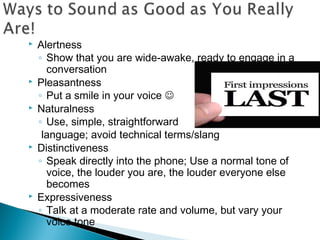
 Alertness 
◦ Show that you are wide-awake, ready to engage in a 
conversation 
 Pleasantness 
◦ Put a smile in your voice  
 Naturalness 
◦ Use, simple, straightforward 
language; avoid technical terms/slang 
 Distinctiveness 
◦ Speak directly into the phone; Use a normal tone of 
voice, the louder you are, the louder everyone else 
becomes 
 Expressiveness 
◦ Talk at a moderate rate and volume, but vary your 
voice tone
 Frown  
 Mutter 
 Sound Tired 
 Speak in a Shrill Voice 
 Speak Negatively 
 Ramble
 Smile  (they really can hear it!) 
 Speak Clearly and Concisely 
 Be Enthusiastic 
 Lower the Pitch of your Voice 
 Talk in a Positive Mood 
 Listen/Discuss
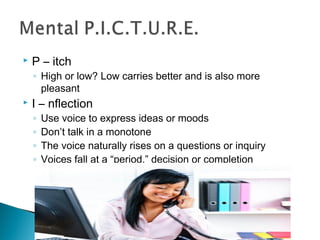
 P – itch 
◦ High or low? Low carries better and is also more 
pleasant 
 I – nflection 
◦ Use voice to express ideas or moods 
◦ Don’t talk in a monotone 
◦ The voice naturally rises on a questions or inquiry 
◦ Voices fall at a “period,” decision or completion
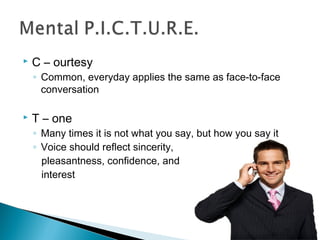
 C – ourtesy 
◦ Common, everyday applies the same as face-to-face 
conversation 
 T – one 
◦ Many times it is not what you say, but how you say it 
◦ Voice should reflect sincerity, 
pleasantness, confidence, and 
interest
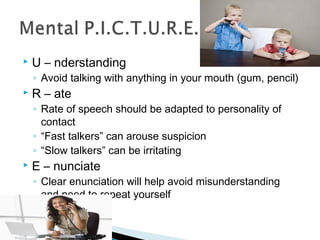
 U – nderstanding 
◦ Avoid talking with anything in your mouth (gum, pencil) 
 R – ate 
◦ Rate of speech should be adapted to personality of 
contact 
◦ “Fast talkers” can arouse suspicion 
◦ “Slow talkers” can be irritating 
 E – nunciate 
◦ Clear enunciation will help avoid misunderstanding 
and need to repeat yourself
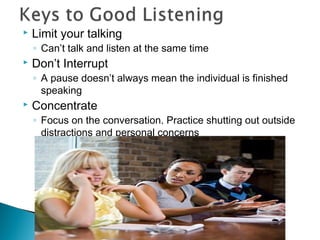
 Limit your talking 
◦ Can’t talk and listen at the same time 
 Don’t Interrupt 
◦ A pause doesn’t always mean the individual is finished 
speaking 
 Concentrate 
◦ Focus on the conversation. Practice shutting out outside 
distractions and personal concerns
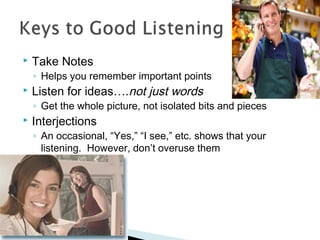
 Take Notes 
◦ Helps you remember important points 
 Listen for ideas….not just words 
◦ Get the whole picture, not isolated bits and pieces 
 Interjections 
◦ An occasional, “Yes,” “I see,” etc. shows that your 
listening. However, don’t overuse them
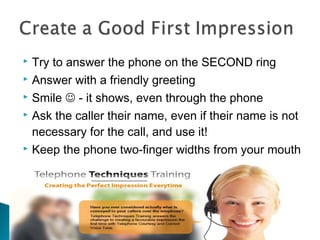
 Try to answer the phone on the SECOND ring 
 Answer with a friendly greeting 
 Smile  - it shows, even through the phone 
 Ask the caller their name, even if their name is not 
necessary for the call, and use it! 
 Keep the phone two-finger widths from your mouth
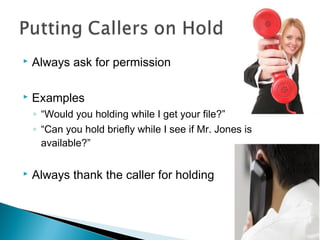
 Always ask for permission 
 Examples 
◦ “Would you holding while I get your file?” 
◦ “Can you hold briefly while I see if Mr. Jones is 
available?” 
 Always thank the caller for holding
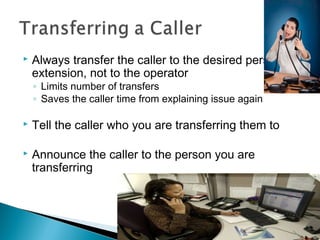
 Always transfer the caller to the desired person’s 
extension, not to the operator 
◦ Limits number of transfers 
◦ Saves the caller time from explaining issue again 
 Tell the caller who you are transferring them to 
 Announce the caller to the person you are 
transferring
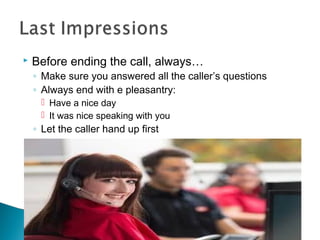
 Before ending the call, always… 
◦ Make sure you answered all the caller’s questions 
◦ Always end with e pleasantry: 
 Have a nice day 
 It was nice speaking with you 
◦ Let the caller hand up first
 Don’t give more than your first name 
 Don’t get personal, even if they do 
 Be prepared for rejection – just apologize for 
bothering them and graciously get off the phone 
 Your Phone Message Greeting – make it 
professional

Phone etiquette

  • 1.
  • 2.
     Provide helpfulhints and proven techniques  Part of doing business means doing business over the phone  Phone is an important instrument in daily business
  • 3.
     Alertness ◦Show that you are wide-awake, ready to engage in a conversation  Pleasantness ◦ Put a smile in your voice   Naturalness ◦ Use, simple, straightforward language; avoid technical terms/slang  Distinctiveness ◦ Speak directly into the phone; Use a normal tone of voice, the louder you are, the louder everyone else becomes  Expressiveness ◦ Talk at a moderate rate and volume, but vary your voice tone
  • 4.
     Frown   Mutter  Sound Tired  Speak in a Shrill Voice  Speak Negatively  Ramble
  • 5.
     Smile (they really can hear it!)  Speak Clearly and Concisely  Be Enthusiastic  Lower the Pitch of your Voice  Talk in a Positive Mood  Listen/Discuss
  • 6.
     P –itch ◦ High or low? Low carries better and is also more pleasant  I – nflection ◦ Use voice to express ideas or moods ◦ Don’t talk in a monotone ◦ The voice naturally rises on a questions or inquiry ◦ Voices fall at a “period,” decision or completion
  • 7.
     C –ourtesy ◦ Common, everyday applies the same as face-to-face conversation  T – one ◦ Many times it is not what you say, but how you say it ◦ Voice should reflect sincerity, pleasantness, confidence, and interest
  • 8.
     U –nderstanding ◦ Avoid talking with anything in your mouth (gum, pencil)  R – ate ◦ Rate of speech should be adapted to personality of contact ◦ “Fast talkers” can arouse suspicion ◦ “Slow talkers” can be irritating  E – nunciate ◦ Clear enunciation will help avoid misunderstanding and need to repeat yourself
  • 9.
     Limit yourtalking ◦ Can’t talk and listen at the same time  Don’t Interrupt ◦ A pause doesn’t always mean the individual is finished speaking  Concentrate ◦ Focus on the conversation. Practice shutting out outside distractions and personal concerns
  • 10.
     Take Notes ◦ Helps you remember important points  Listen for ideas….not just words ◦ Get the whole picture, not isolated bits and pieces  Interjections ◦ An occasional, “Yes,” “I see,” etc. shows that your listening. However, don’t overuse them
  • 11.
     Try toanswer the phone on the SECOND ring  Answer with a friendly greeting  Smile  - it shows, even through the phone  Ask the caller their name, even if their name is not necessary for the call, and use it!  Keep the phone two-finger widths from your mouth
  • 12.
     Always askfor permission  Examples ◦ “Would you holding while I get your file?” ◦ “Can you hold briefly while I see if Mr. Jones is available?”  Always thank the caller for holding
  • 13.
     Always transferthe caller to the desired person’s extension, not to the operator ◦ Limits number of transfers ◦ Saves the caller time from explaining issue again  Tell the caller who you are transferring them to  Announce the caller to the person you are transferring
  • 14.
     Before endingthe call, always… ◦ Make sure you answered all the caller’s questions ◦ Always end with e pleasantry:  Have a nice day  It was nice speaking with you ◦ Let the caller hand up first
  • 15.
     Don’t givemore than your first name  Don’t get personal, even if they do  Be prepared for rejection – just apologize for bothering them and graciously get off the phone  Your Phone Message Greeting – make it professional